
Protecting Your Investment During the Off-Season
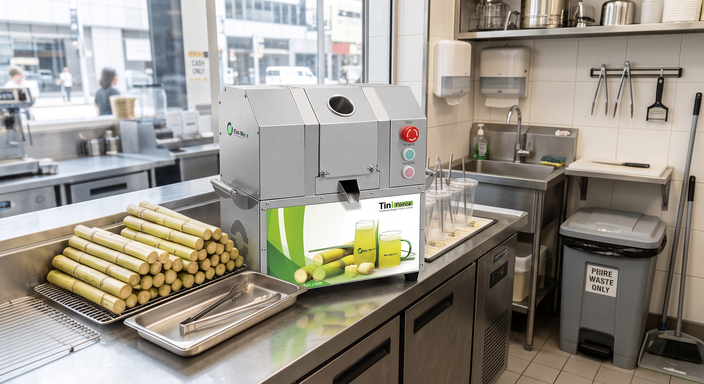
For seasonal beverage businesses, the transition into the colder months means winding down operations and preparing equipment for storage. A commercial electric sugarcane juicer is a significant capital investment. Leaving it idle without proper winterization can lead to severe operational issues by spring, including rust, seized bearings, and degraded electrical components.
Sugarcane juice is naturally high in sucrose, which is hygroscopic (attracts moisture) and mildly acidic. If residual juice or bagasse is left on the machine’s components, it creates an environment ripe for bacterial growth and rapid oxidation—even on high-grade stainless steel. This guide provides a comprehensive, step-by-step process to deep clean, lubricate, and safely store your sugarcane juicer for the off-season.
Step 1: Comprehensive Deep Cleaning
The foundation of off-season machine maintenance is the complete removal of all organic matter. Do not rely on a standard end-of-day rinse; a winterization clean requires disassembly of accessible parts.
Disassembly and Washing
- Power Down: Ensure the machine is completely disconnected from the power source before opening any panels.
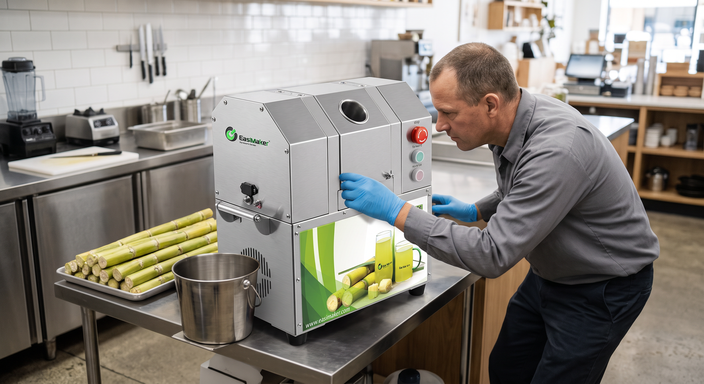
- Remove Exterior Components: Detach the juice collection trays, filter screens, and any removable feeding chutes. Wash these separately using warm water and a mild, food-safe commercial detergent.
- Clean the Rollers: The crushing rollers harbor the most residue. Use a stiff-bristled nylon brush (avoid steel wool, which can embed iron particles and cause rust) to scrub the rollers. Rotate them manually if the design allows, ensuring all 360 degrees of the roller surface are scrubbed clean.
Complete Drying (Critical Step)
Moisture is the primary catalyst for rust. After washing, wipe down all surfaces with a clean microfiber cloth. Use compressed air to blow out trapped water from crevices, bolt heads, and the spaces between the rollers and the chassis. Leave the machine in a warm, dry environment for at least 24 hours before moving to the next step.
Step 2: Lubrication and Rust Prevention
Once the machine is bone-dry, you must create a barrier against ambient moisture. This is especially important for unpainted metal surfaces and moving mechanical parts.
Applying Food-Grade Protectants
- Roller Coating: Apply a light coat of food-grade mineral oil to the stainless steel rollers. This prevents surface oxidation while the machine sits idle.
- Gear and Chain Maintenance: Open the transmission panel to access the gears and drive chains. Clean off any old, contaminated grease. Apply a fresh layer of heavy-duty, food-grade synthetic grease. This prevents the gears from seizing and protects against ambient humidity.
- Bearing Lubrication: If your machine features grease zerks (fittings) for the roller bearings, use a grease gun to inject fresh food-grade grease until you see a small amount purge from the seals. This pushes out any trapped moisture or acidic juice ingress.
Step 3: Protecting Electrical Components
Winter storage often involves environments with fluctuating temperatures, which can cause condensation inside the motor housing and electrical control boxes.
- Moisture Control: Place several large industrial silica gel desiccant packets inside the motor compartment and near the electrical switches. These will absorb trapped moisture and prevent condensation from corroding the wiring terminals or the motor windings.
- Pest Prevention: Rodents are notorious for chewing through electrical insulation during the winter. Inspect the cable entry points and ensure all grommets are intact. You can place natural rodent repellents near the base of the machine, but avoid placing chemical baits directly inside the food-processing equipment.
- Cord Care: Loosely coil the power cable and secure it with a Velcro tie. Do not wrap it tightly around the machine, as this can stress the internal copper wires and the plug connection.
Step 4: Proper Storage Environment
Where and how you store the commercial juicer dictates how well it will survive the winter.
- Elevate the Machine: Never store the juicer directly on a concrete floor. Concrete wicks moisture and stays cold, transferring dampness directly to the machine’s base. Place the juicer on a wooden pallet or a heavy-duty storage rack.
- Climate Considerations: Ideally, store the machine in a climate-controlled warehouse. If storing in an unheated facility, the desiccant packets and lubrication steps become absolutely vital.
- Breathable Covering: Cover the juicer with a heavy-duty, breathable canvas or cotton tarp to protect it from dust. Do not use tightly sealed plastic wrap or garbage bags. Plastic traps condensation against the cold metal, creating a greenhouse effect that accelerates rust.
Off-Season Maintenance Checklist
Use this quick checklist before locking up your facility for the winter:
- [ ] Machine disconnected from power.
- [ ] All bagasse and juice residue completely removed.
- [ ] Machine dried completely (compressed air used on crevices).
- [ ] Food-grade mineral oil applied to rollers.
- [ ] Drive chains and gears re-greased.
- [ ] Desiccant packets placed near the motor/electricals.
- [ ] Machine elevated on a pallet.
- [ ] Covered with a breathable canvas tarp.
Frequently Asked Questions (FAQs)
Can I use WD-40 to prevent rust on the rollers?
No. Standard WD-40 is not food-safe and leaves a toxic residue that is difficult to completely remove before the next season. Always use food-grade mineral oil or NSF H1 registered food-grade lubricants on any part of the machine that contacts the sugarcane.
How do I remove surface rust if it has already formed?
If you notice light surface rust, use a mixture of baking soda and water to form a paste, apply it to the affected area, and scrub with a non-abrasive nylon pad. For stubborn spots, a specialized food-safe stainless steel cleaner can be used. Never use bleach, as it causes pitting in stainless steel.
Should I turn the machine on periodically during the winter?
If the machine is stored in a clean, dry environment, it is not strictly necessary. However, briefly running the electric motor (for 30-60 seconds) once a month can help redistribute grease in the bearings and prevent flat spots, provided the machine is fully re-covered afterward.
Does freezing temperature damage the motor?
Electric motors themselves are generally resilient to freezing temperatures when not in use. The danger lies in the condensation that forms when temperatures rapidly shift from freezing to thawing. Proper use of desiccants mitigates this risk.
How do I prep the machine for use again in the spring?
Remove the breathable cover and desiccant packets. Perform a thorough hot-water wash with commercial detergent to remove the protective layer of mineral oil from the rollers. Run a few test stalks of sugarcane through the machine and discard the juice to ensure all residual oil is cleared before serving customers.
Need Reliable Equipment for Your Next Season?
Proper maintenance extends the life of your equipment, but starting with high-quality, precision-engineered machinery makes all the difference. If you are looking to upgrade your operations with durable, easy-to-maintain electric sugarcane juicers designed for commercial longevity, we can help. Request a quote / Get a sample today to learn more about our robust extraction solutions.