Table of Contents
- What OEM Sugarcane Juicer Manufacturing Means
- When an OEM Program Is the Right Choice
- Start With the Correct Machine Specification
- Define Customization Before Quoting
- How to Evaluate an OEM Sugarcane Juicer Manufacturer
- Quality Control, Testing, and Documentation
- Plan the Commercial Details of Your Order
- Build After-Sales Support Into the Program
- OEM Sugarcane Juicer Buyer Checklist
Choosing an OEM sugarcane juicer manufacturer requires more than selecting a machine design. This guide explains how B2B buyers can assess technical fit, customization scope, quality control, documentation, service planning, and commercial terms before placing an order.
What OEM Sugarcane Juicer Manufacturing Means
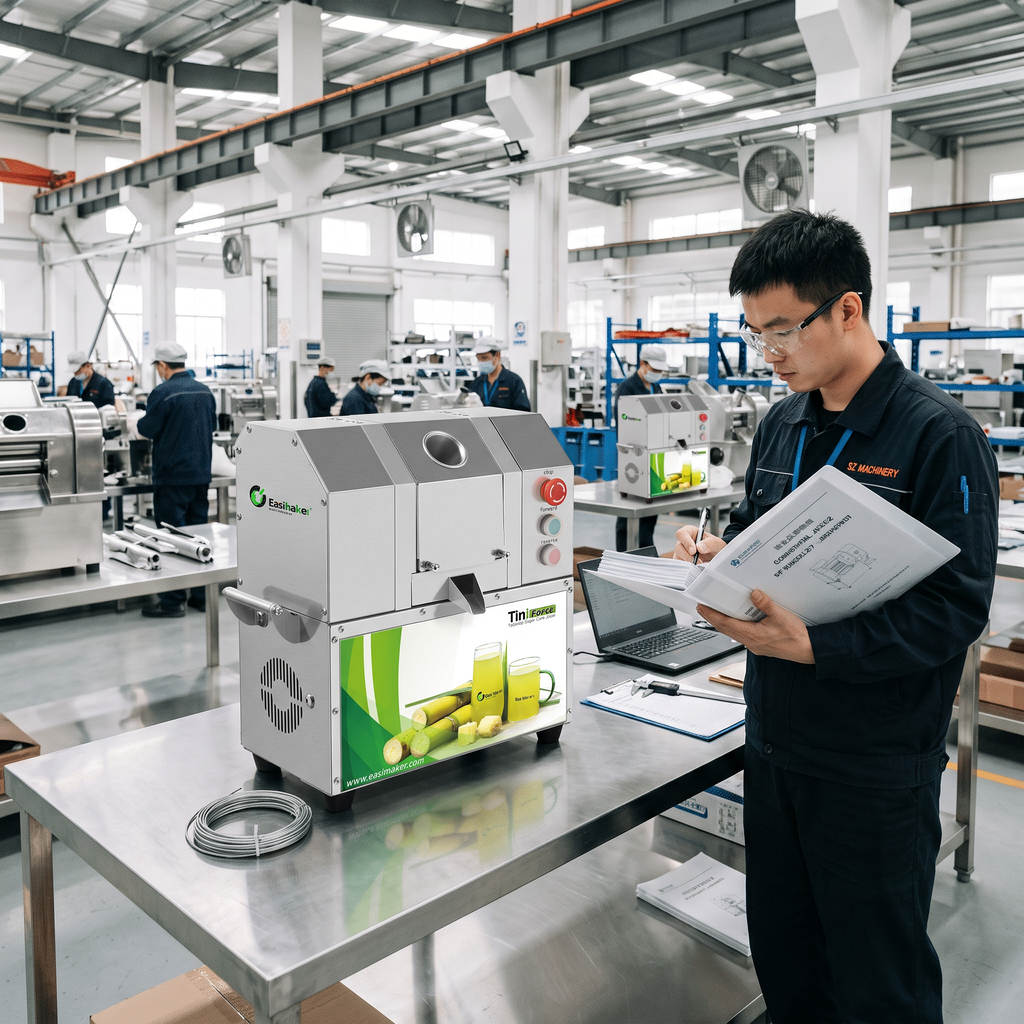
An OEM sugarcane juicer manufacturer produces commercial sugarcane juice equipment for sale under a buyer’s brand, sales channel, or distribution program. Depending on the project, OEM work may include branded labels, packaging, manuals, voltage configuration, selected cosmetic changes, or a broader product-development discussion.
OEM does not automatically mean that every part of the machine is newly designed. In many practical B2B projects, the most dependable route is to begin with a proven commercial platform and define controlled brand and market adaptations. This approach can reduce unnecessary development risk while giving distributors, importers, foodservice suppliers, and franchise operators a product line that fits their market identity.
The buyer’s task is to turn a commercial idea into a clear requirement: where the machine will operate, what cane it will process, how operators will clean it, which electrical supply is available, what branding is needed, and how service will be handled after delivery. A capable manufacturing partner should help clarify these points rather than rely on vague assumptions.
When an OEM Program Is the Right Choice
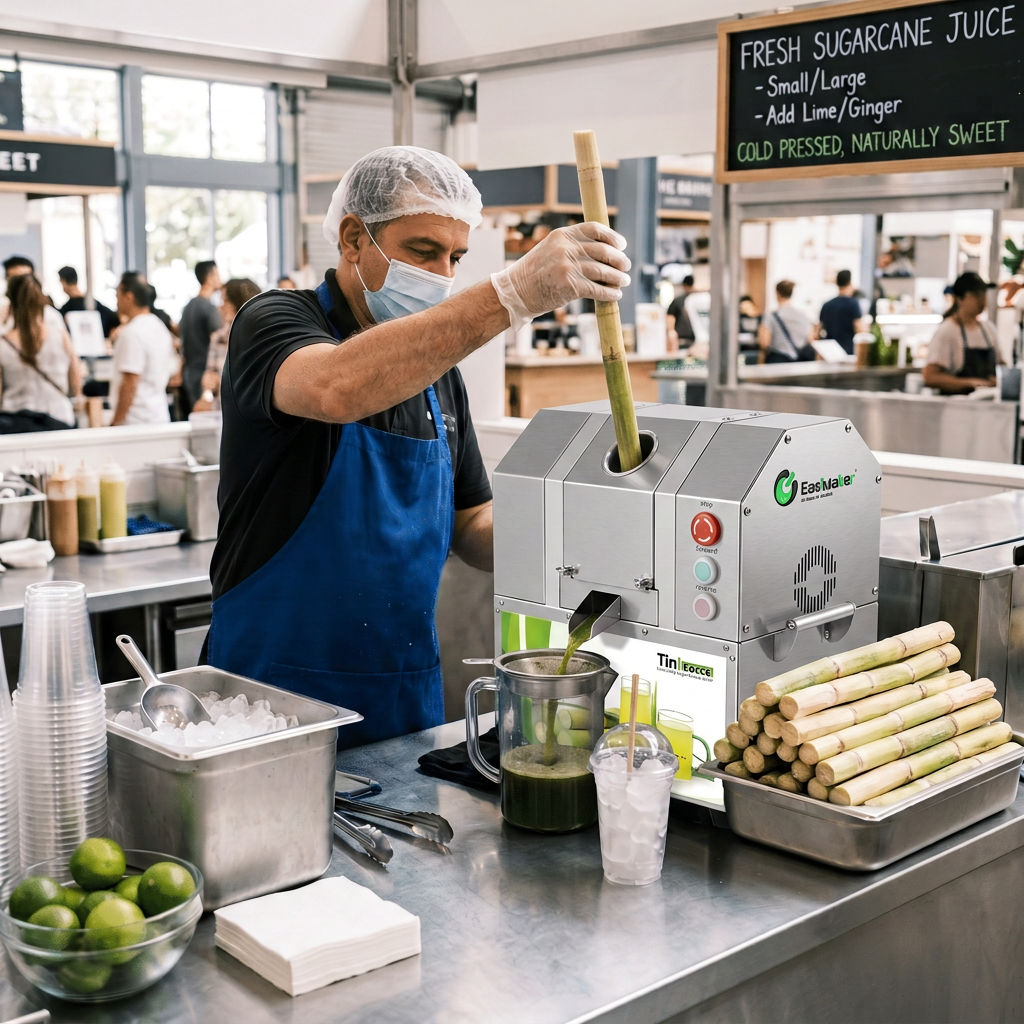
OEM sourcing is generally suitable when you need a repeatable product offering rather than a one-time machine purchase. It can fit importers building a local equipment range, distributors serving juice bars and hospitality customers, franchise groups standardizing store equipment, and established brands introducing sugarcane juice service.
It may be less suitable for a small trial operation that only needs one machine quickly. In that case, a standard commercial model with available support may be the simpler choice. The distinction between commercial and occasional-use equipment matters: daily service involves repeated feeding, cleaning, staff handover, and downtime risk. Review the practical differences in this guide to commercial versus home sugarcane juicers before selecting a base platform for a branded program.
A useful early question is whether your business needs private-label presentation, product consistency across multiple locations, a country-specific electrical configuration, or a defined spare-parts plan. If the answer is yes, an OEM conversation is worth starting.
Start With the Correct Machine Specification
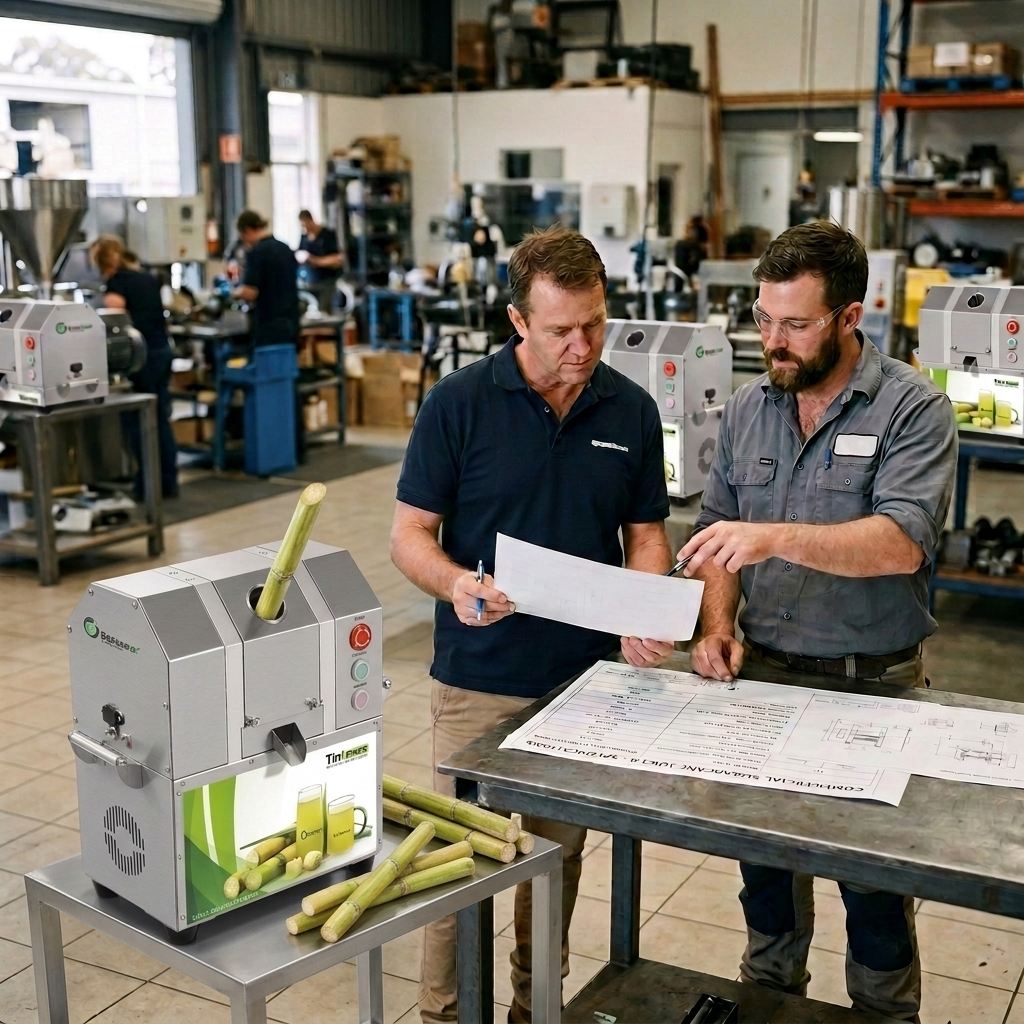
Branding should follow machine selection, not replace it. Before requesting an OEM quotation, document the operating conditions and the intended workflow. The right specification depends on the application, not on appearance alone.
Key technical and operational questions
- Duty pattern: Will the unit be used for occasional service, steady daily trading, or peak-period production?
- Cane preparation: What typical cane diameter, length, condition, and local variety will operators handle? Is cutting or splitting required before extraction?
- Installation: What voltage, frequency, plug format, counter space, drainage arrangement, and ventilation conditions apply at the site?
- Operator workflow: Who feeds cane, collects juice, handles bagasse, and cleans the machine during a shift?
- Hygiene process: Which food-contact surfaces require routine access, and what cleaning chemicals or water conditions will be used locally?
- Market expectations: What language, warning labels, instructions, packaging information, and local import requirements need to be considered?
Do not assume a machine will accept unprepared cane simply because it is marketed for sugarcane. Cane geometry, fibrous condition, and preparation affect workflow. If your operation requires preparatory equipment, discuss it as part of the line design. Our guide on how to choose a sugarcane juice machine provides a practical starting framework for defining the application.
Define Customization Before Quoting
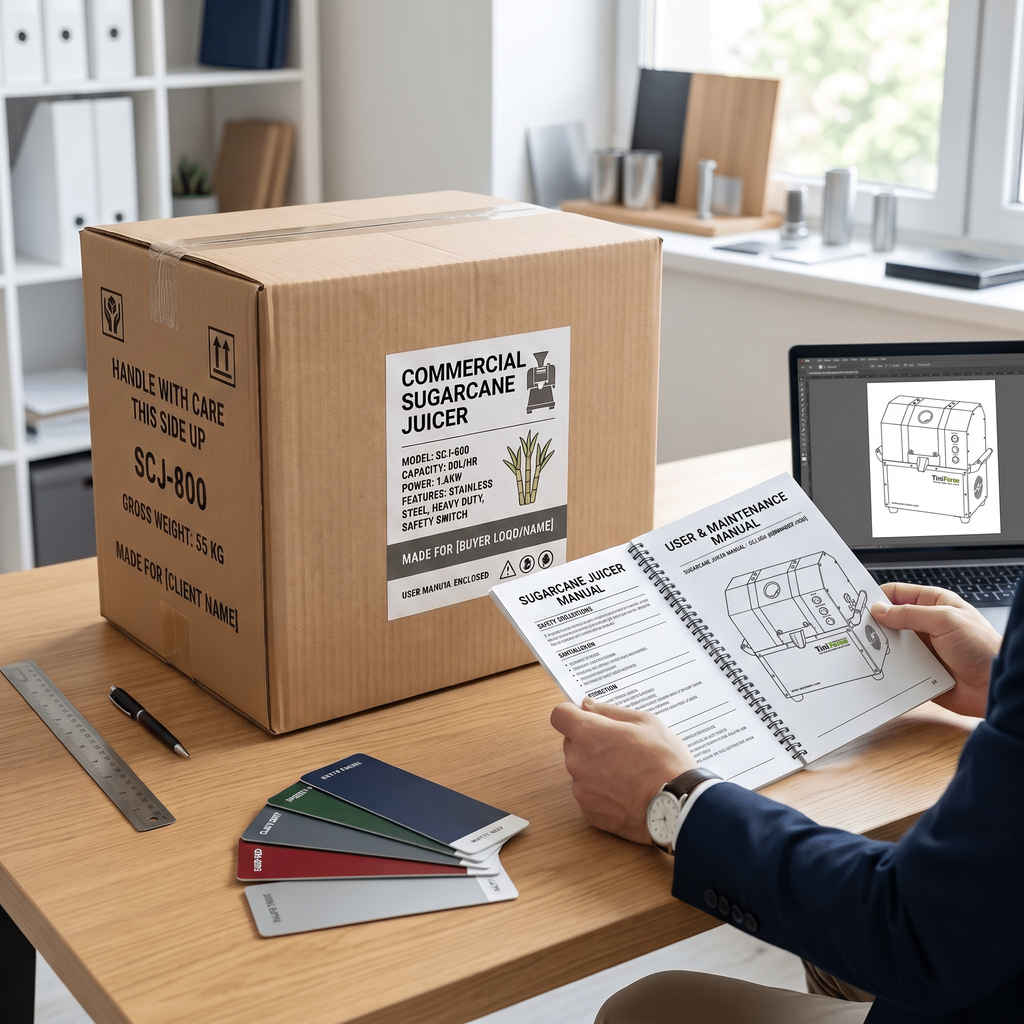
A clear customization brief avoids preventable revisions later. Separate requests into categories so both buyer and manufacturer understand what is being changed and what must remain validated within the base machine design.
Common OEM customization areas
- Brand identity: logo placement, nameplates, decals, colours, carton artwork, and printed inserts.
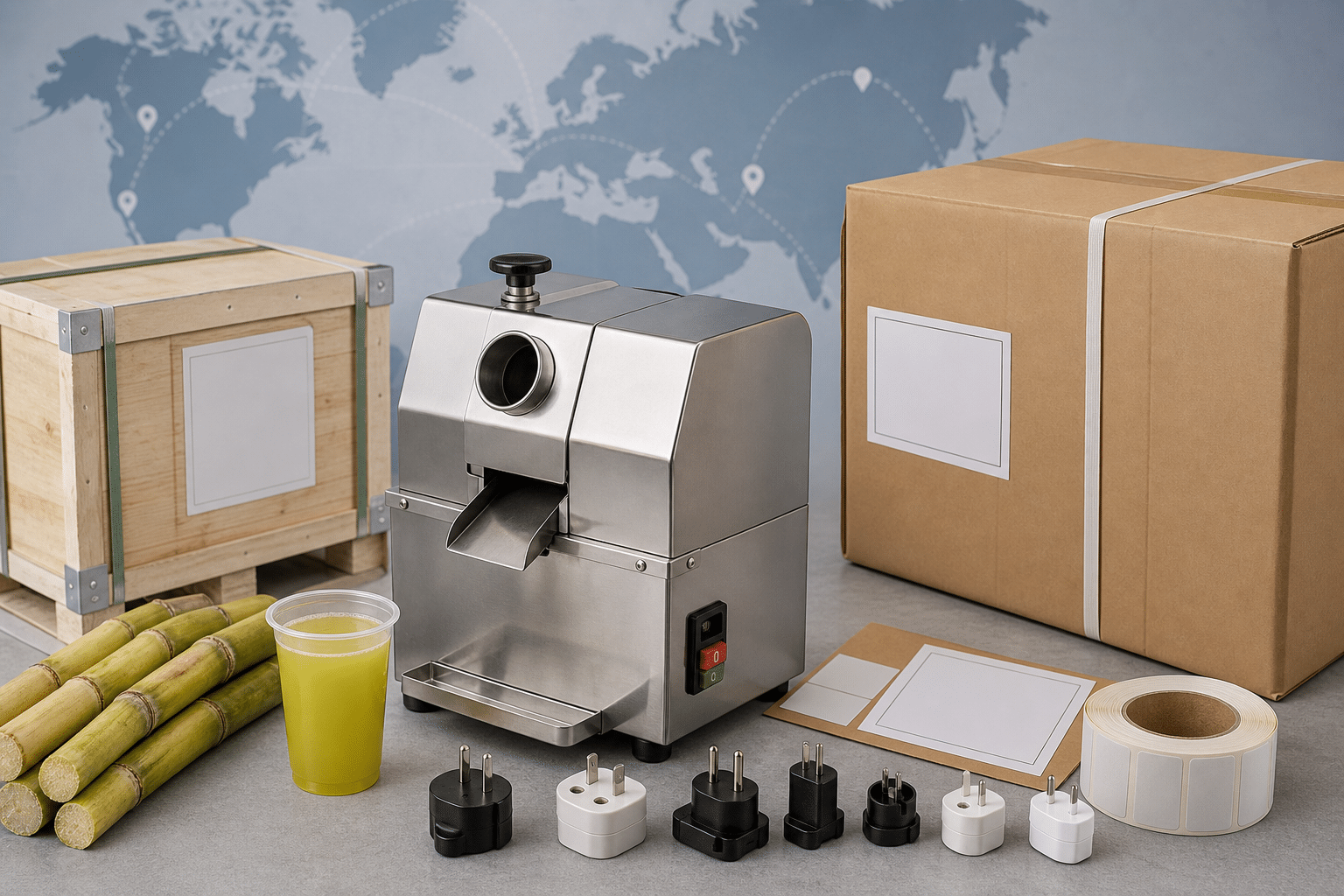
- Market configuration: voltage and frequency options, plug type, language versions, warning labels, and destination-market packaging marks.
- Commercial packaging: private-label cartons, protective packing requirements, accessory packs, and dealer-ready documentation.
- Product options: selected accessories or workflow-related options that are compatible with the agreed machine platform.
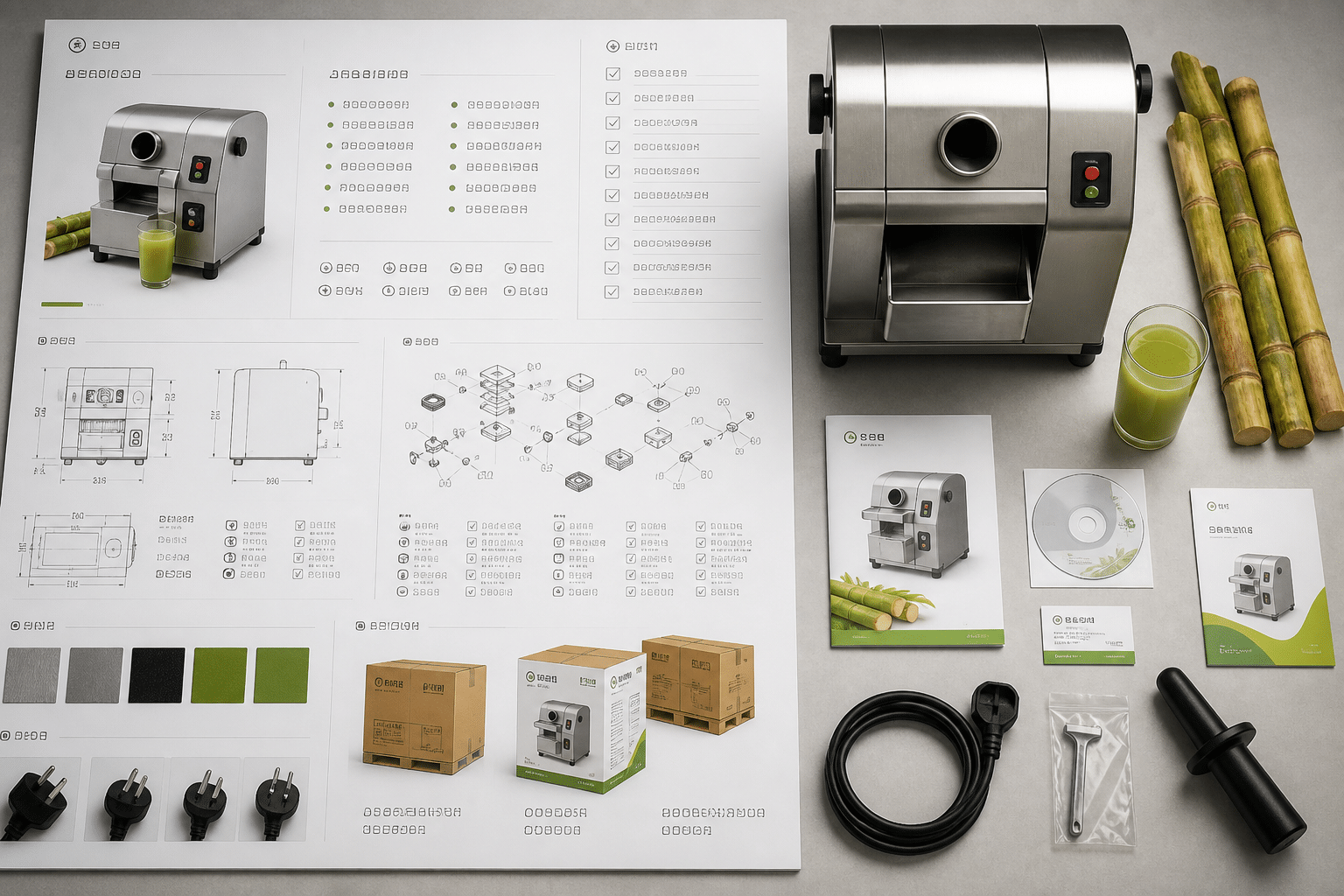
- Documentation: operating instructions, cleaning guidance, parts identification, warranty wording, and service contact information.
Provide artwork in the agreed file format and confirm ownership or permission to use all logos and trademarks. For any request affecting electrical components, guards, food-contact parts, structural elements, or the operating sequence, ask the manufacturer to explain the engineering review, prototype process, and resulting documentation. A cosmetic change and a functional redesign should not be treated as the same type of request.
Buyers considering a broader branded equipment program can also review the operational perspective in the benefits of becoming an OEM sugarcane machine dealer.
How to Evaluate an OEM Sugarcane Juicer Manufacturer
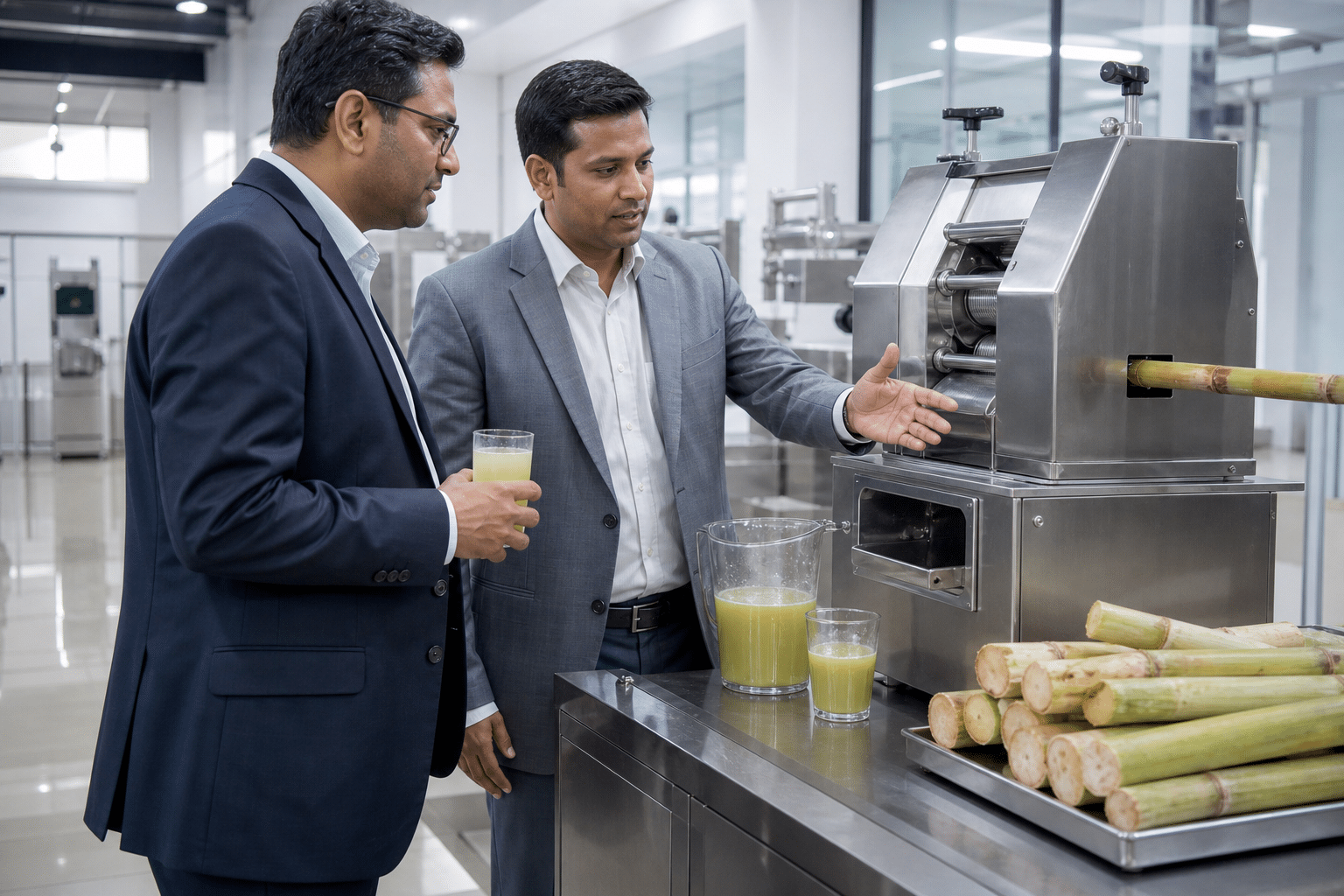
Choose an OEM partner based on evidence of manufacturing control and communication quality, not only on the initial unit price. The supplier should be able to discuss the proposed machine in operational terms and identify information that is still unknown.
Questions to ask during supplier evaluation
- Which machine platform is proposed, and why is it suitable for the stated use case?
- Which components and materials are relevant to food contact, cleaning, wear, and routine servicing?
- What customization is available within the existing platform, and what requires separate engineering approval?
- How are incoming materials, assembly steps, electrical checks, and final inspection controlled?
- Can the supplier provide drawings, photographs, sample documents, or a sample unit where appropriate?
- What spare parts can be supplied, how are parts identified, and what information is needed when requesting service?
- Who is the named contact for technical questions, order coordination, and after-sales support?
Request answers in writing and compare like with like. A lower quotation may not include branded documentation, export packing, spare parts, local electrical configuration, or pre-shipment inspection arrangements. A reliable comparison starts with the same scope, delivery terms, and acceptance expectations for every supplier.
Quality Control, Testing, and Documentation
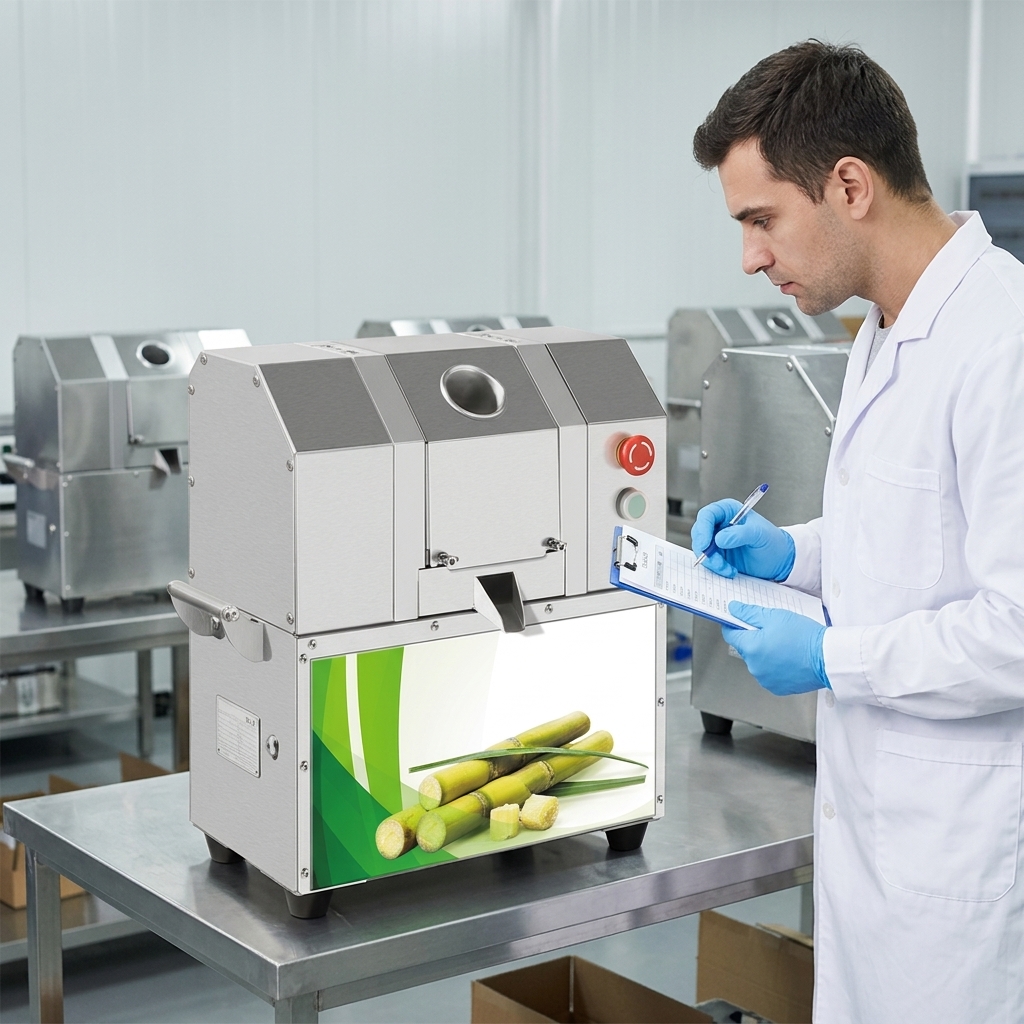
Quality control should be discussed as a defined process rather than a general promise. The exact checks depend on the product configuration and purchase agreement, but buyers should understand how the manufacturer controls the sequence from material receipt to final packing.
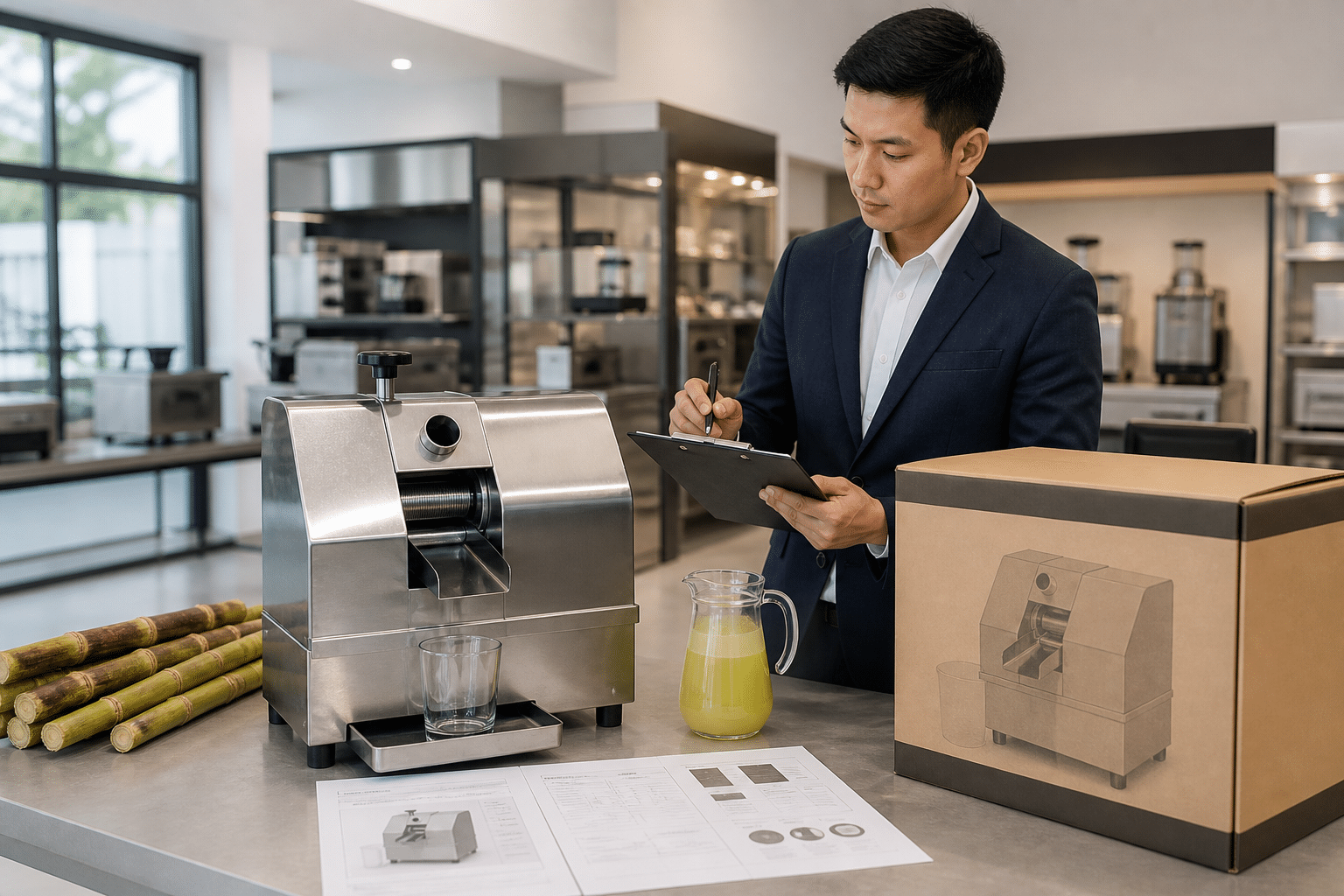
Ask for the proposed inspection points and acceptance criteria. These may cover visual condition, assembly completeness, operation of relevant controls, electrical configuration, packaging completeness, identification labels, and the documentation supplied with the unit. Where practical, agree on how the buyer or a nominated inspector will review samples or finished goods before shipment.
Documentation is part of product usability. At minimum, consider the language and clarity of operating instructions, cleaning guidance, safety notices, parts reference information, packing lists, and commercial shipping documents. Do not assume that documentation written for one destination will suit another. Local regulations and import requirements vary, so buyers should confirm their own destination-market obligations with appropriate local professionals or authorities.
If a project requires testing, marks, declarations, or other compliance evidence, define the requirement early and confirm exactly what the manufacturer can provide for the proposed configuration. Avoid treating broad claims or product photographs as proof of market compliance.
Plan the Commercial Details of Your Order
An OEM order should have a written scope that links the machine configuration, customization, documents, packaging, inspection approach, and delivery terms. This prevents a common problem: the buyer expects a market-ready private-label product while the supplier prices only a standard machine with a logo request.
Clarify the requested quantity, sample process, approval milestones, production schedule, payment structure, trade terms, destination port or delivery point, packing method, and responsibility for freight and import formalities. Lead times can vary with configuration, artwork approval, material availability, and order complexity, so it is better to agree on a current schedule than rely on a generic promise.
Budget beyond the machine purchase price. Consider site preparation, cane preparation tools, installation, consumables, local inspection, freight, duties, packaging, service stock, and operator training. For a broader planning view, see this guide to budgeting for a sugarcane juice business.
For repeat orders, establish a controlled version of the product specification. Record approved artwork, label positions, electrical configuration, carton design, manual revision, spare-parts list, and any agreed sample reference. Version control makes future purchasing more consistent and reduces avoidable variation between batches.
Build After-Sales Support Into the Program
After-sales planning is essential for commercial equipment because a machine is only useful when operators can run, clean, and maintain it correctly. Before placing an OEM order, agree on the support route for installation questions, operation guidance, troubleshooting, parts requests, and warranty communication.
A practical support package may include an operator manual, cleaning instructions, parts identification, recommended routine checks, contact details, and a process for reporting issues with clear photographs or video. Dealers and importers should decide whether they will hold common service parts locally, provide first-line technical assistance, or direct customers to the manufacturer for defined cases.
Staff training should cover safe operation, correct cane preparation, daily cleaning, inspection of accessible areas, and escalation when the machine shows abnormal operation. Operators should not bypass guards, improvise repairs, or continue using equipment that appears damaged or unsafe. Good records of serial numbers, delivery dates, service requests, and parts replacements make support more efficient as the installed base grows.
OEM Sugarcane Juicer Buyer Checklist
Use this checklist before issuing a purchase order to an OEM sugarcane juicer manufacturer:
- Define the commercial use case, expected workflow, installation environment, and destination market.
- Confirm the base machine platform and electrical configuration in writing.
- Document cane preparation needs and operator responsibilities.
- Approve branding artwork, labels, carton design, and manual language.
- Separate standard options from changes requiring engineering review.
- Agree on samples, inspection points, acceptance criteria, and final product version.
- Confirm packing, trade terms, freight responsibility, and import documentation needs.
- Set out spare-parts support, warranty communication, and service escalation procedures.
- Keep approved specifications and artwork under version control for repeat orders.
The best OEM result is not simply a branded machine. It is a controlled equipment program with a suitable commercial platform, clear documentation, realistic operational planning, and dependable communication from manufacture through after-sales support.