Table of Contents
- The sugarcane juice machine break-even formula
- Define the costs in your calculation
- Calculate contribution per cup
- Work through a practical break-even example
- Test sales volume and operating assumptions
- Ways to improve the break-even point
- Use break-even analysis before buying equipment
Calculate a sugarcane juice machine break-even point by dividing total startup investment by contribution per cup, then test the result against realistic daily sales, operating days, waste, and maintenance costs.
The Sugarcane Juice Machine Break-Even Formula
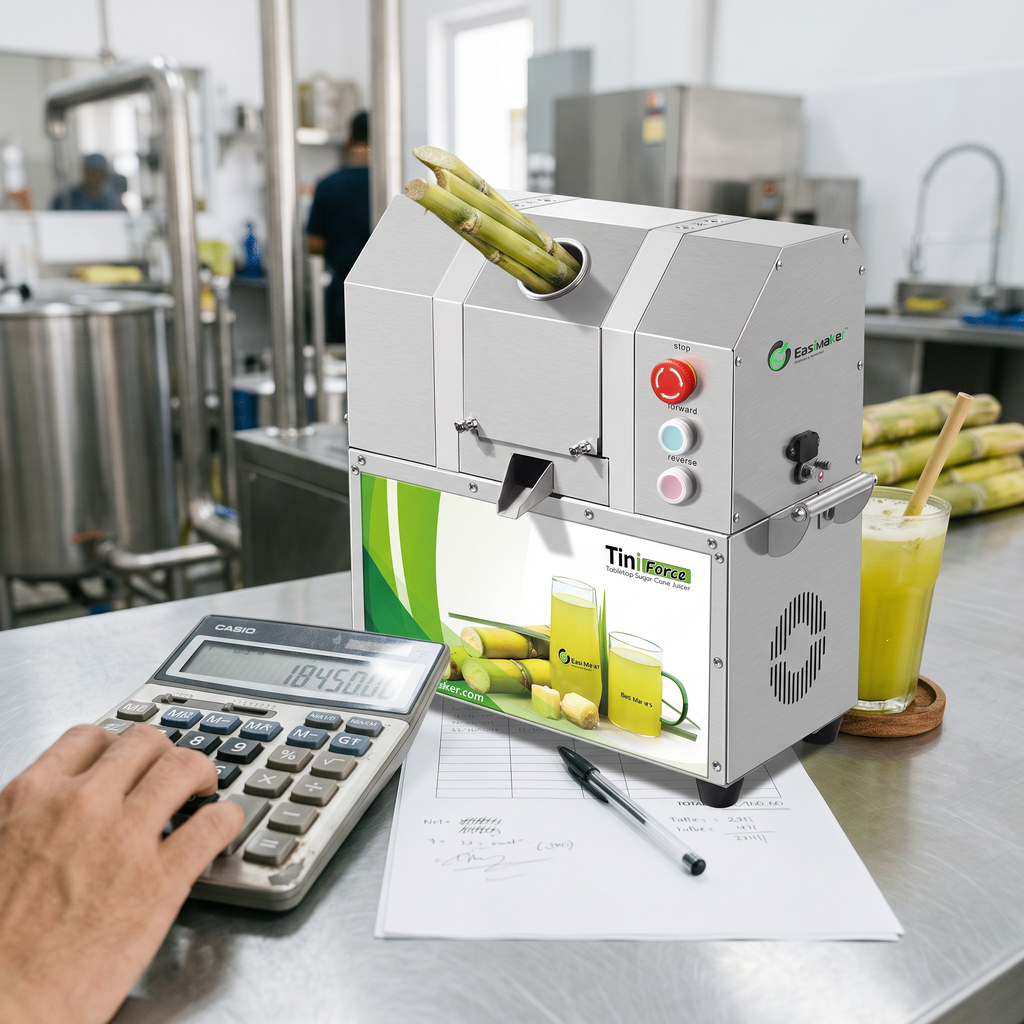
To calculate a sugarcane juice machine break-even point, first find the contribution earned from each cup sold, then divide your total startup investment by that amount.
Break-even cups = Total startup investment / Contribution per cup
Contribution per cup = Selling price per cup – Variable cost per cup
The result is the number of cups you must sell before the initial investment is recovered. To turn this into a time estimate, divide break-even cups by the realistic number of cups you expect to sell per operating day. This is a planning estimate, not a guaranteed result: customer demand, local pricing, cane quality, staffing, waste, rent, and downtime can all change the outcome.
For an established operation, it is often more useful to calculate a monthly break-even point as well. In that case, divide monthly fixed operating costs by contribution per cup. This shows the cups required each month to cover recurring costs after the initial purchase has been made.
Define the Costs in Your Calculation
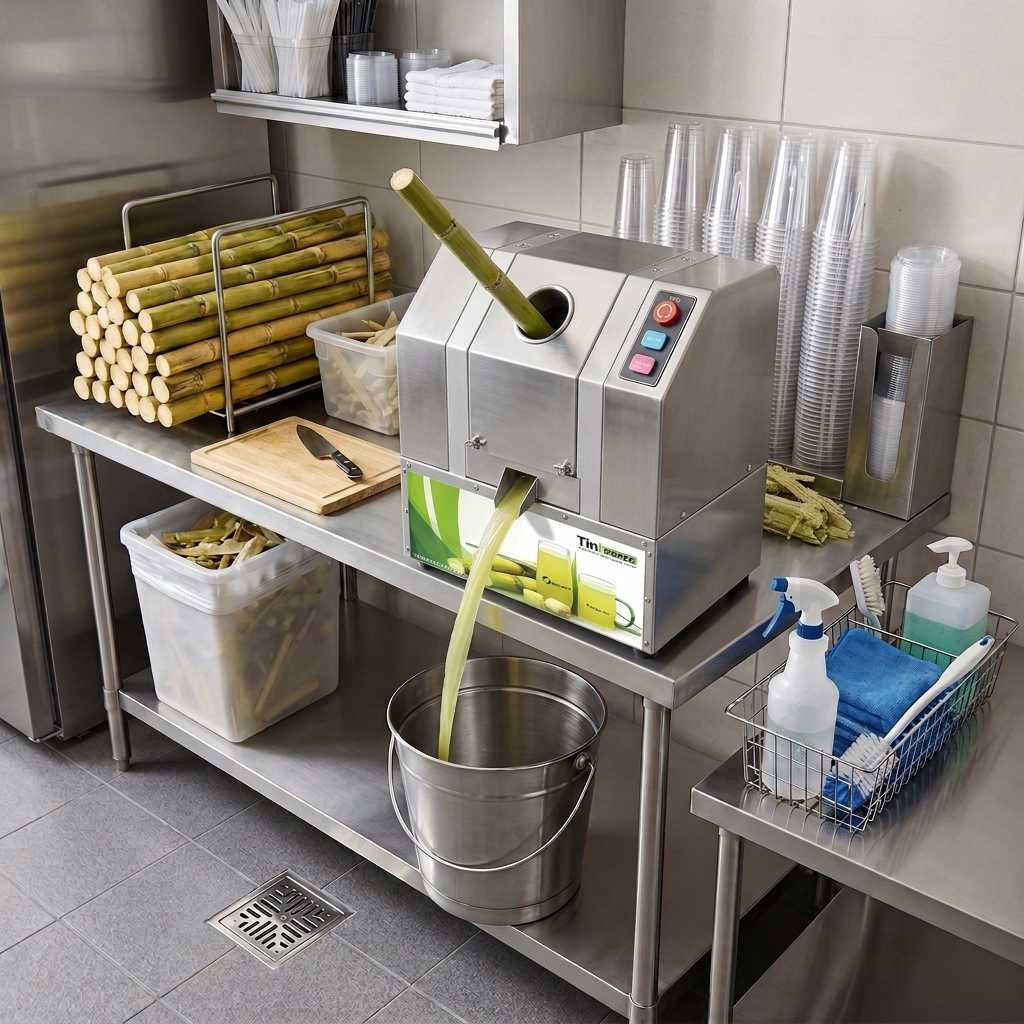
A useful break-even calculation separates one-time startup costs, recurring fixed costs, and costs that rise with every cup sold. Combining all of them in one number can make a result difficult to check or update.
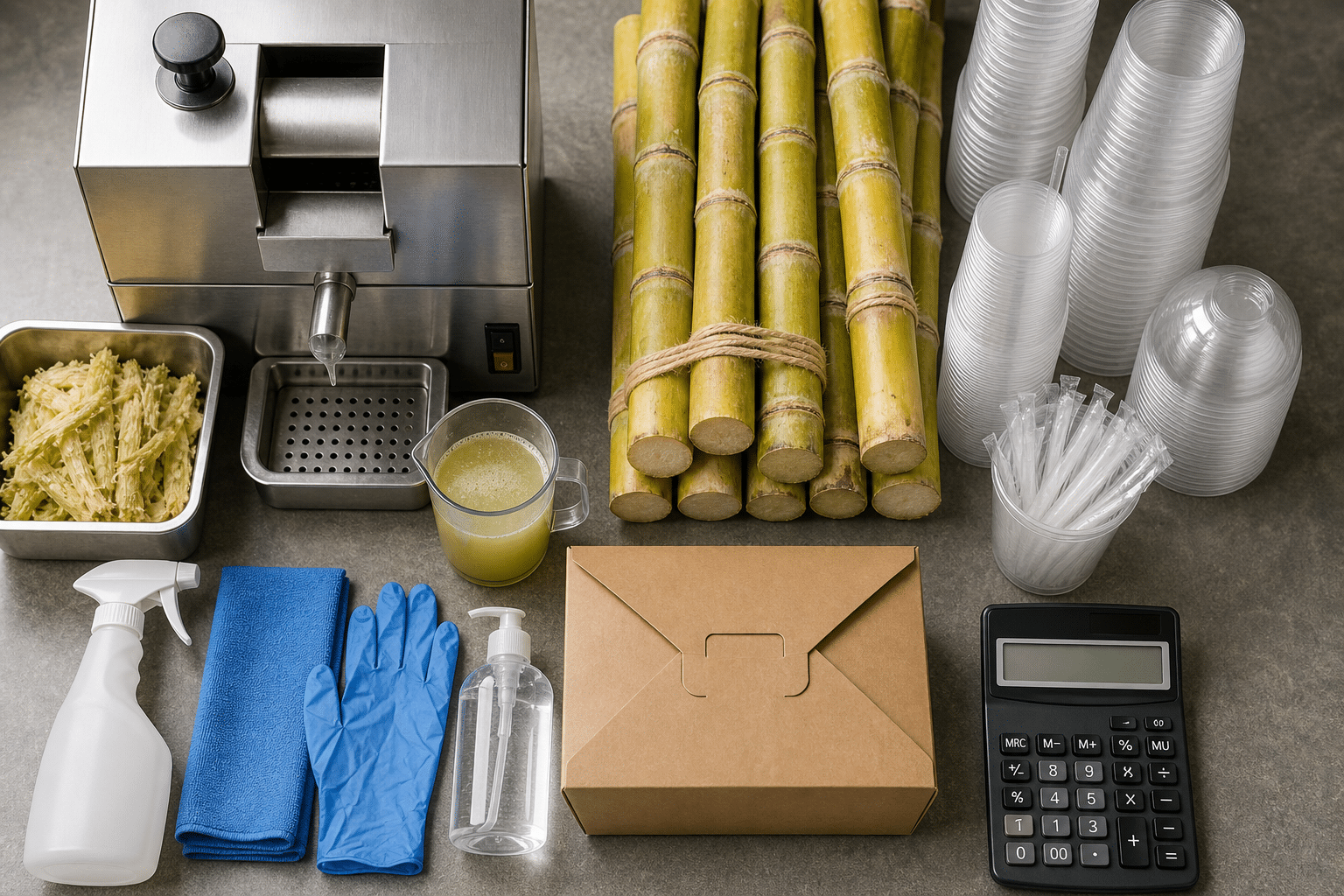
One-time startup investment
- Commercial sugarcane juice machine purchase price
- Freight, import duties, local delivery, and installation where applicable
- Electrical work, water access, drainage, counters, or a kiosk fit-out
- Initial tools, food-safe containers, cleaning supplies, and opening stock
- Permits, deposits, signage, and point-of-sale setup where relevant
Recurring fixed costs
- Rent or site fees
- Base payroll or management costs
- Insurance, licences, communications, and accounting
- Scheduled maintenance allowance and general overhead
Variable cost per cup
- Sugarcane used for that serving, including an allowance for trimming and unusable material
- Cup, lid, straw or alternative, napkin, and seal if used
- Ice, flavour additions, fruit, lemon, or other ingredients sold with the drink
- Payment processing cost when it varies with the transaction value
- Labour directly tied to making and serving each drink, if you choose to model it per cup
Do not assume the machine price is the complete investment. A commercial machine is one part of a working service station. For a closer view of unit economics, see this guide to calculating juice cost per cup for commercial operations.
Calculate Contribution Per Cup Before Forecasting Payback
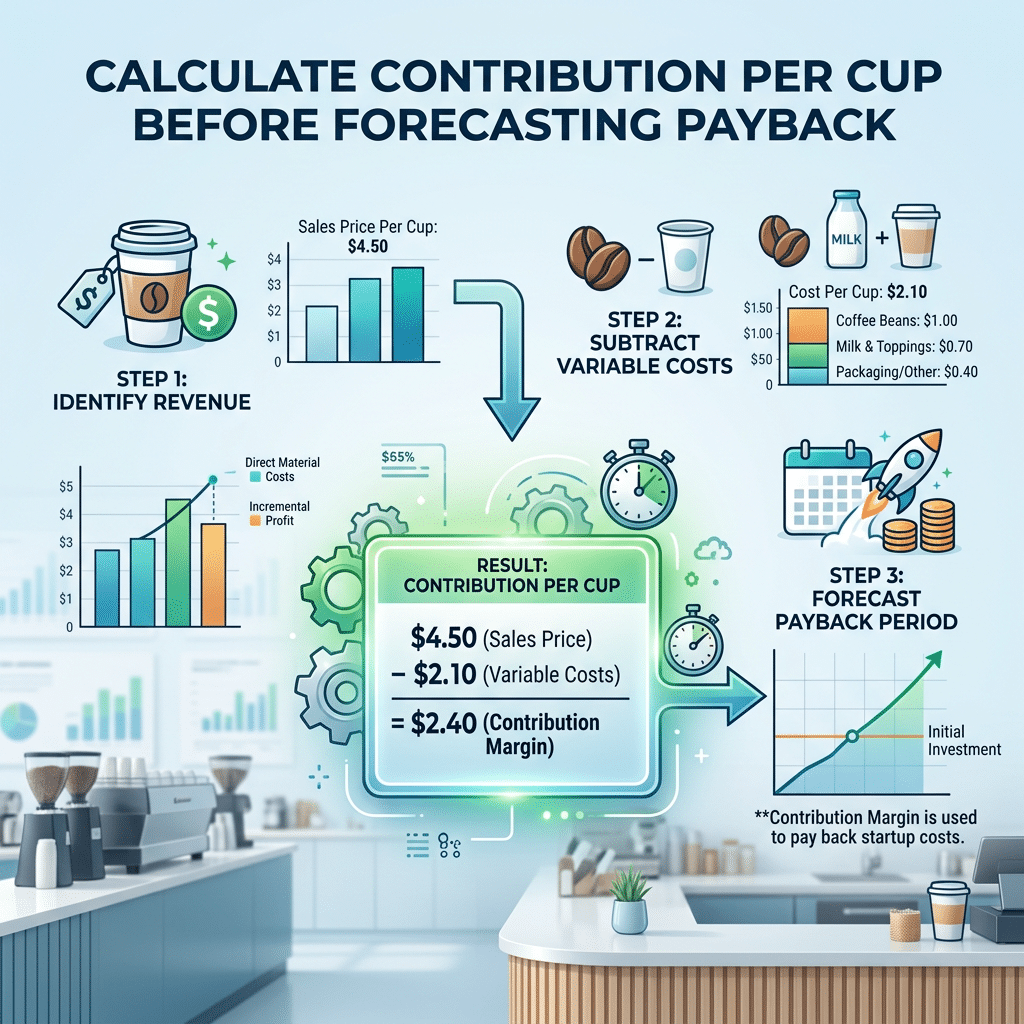
Contribution per cup is the amount remaining from each sale to cover fixed costs and recover startup investment. It is not the same as gross sales and should not be confused with final net profit.
Start with the actual menu price customers pay. Then subtract the variable cost of producing and serving one cup. Where a recipe includes different cup sizes or add-ons, calculate each version separately. A large serving with more cane, ice, packaging, and preparation time may have a different contribution from a standard serving.
Use a recent purchasing period to establish the cane cost. Record the quantity purchased, usable production after trimming, and total cups served. This helps avoid basing the calculation on an ideal extraction assumption. Cane condition, stalk diameter, supplier consistency, preparation method, and operator practice can affect usable output. If you do not yet have operating records, use conservative assumptions and review them after the first weeks of trade.
Include a modest allowance for product loss, remakes, samples, spoilage, and unsold prepared ingredients. It is better to identify uncertainty in the model than to hide it inside an optimistic sales forecast. Review packaging and ingredient costs regularly because they can change independently of the menu price.
When comparing machine options, use the same selling price, ingredient assumptions, and operating hours for each option. The decision then becomes clearer: whether a machine’s purchase cost, workflow, cleaning time, and expected service capacity fit the intended outlet.
Work Through a Practical Break-Even Example
The following example shows the method only. Replace every number with your own supplier quotes, recipe costs, local selling price, and site costs.
Assume a new juice counter has a total startup investment of 12,000 in its local currency. This includes equipment and the direct costs needed to begin service. The standard drink sells for 5.00. Cane, packaging, ice, minor ingredients, and transaction-related variable costs total 2.00 per cup.
- Selling price per cup: 5.00
- Variable cost per cup: 2.00
- Contribution per cup: 3.00
- Total startup investment: 12,000
Break-even cups = 12,000 / 3.00 = 4,000 cups
If the outlet sells an average of 40 cups per day, the simple investment recovery estimate is 100 operating days. At 20 cups per day, it becomes 200 operating days. At 60 cups per day, it becomes about 67 operating days. These figures do not include recurring fixed costs unless they were included in the startup investment, so they should not be presented as a profit forecast.
For a fuller monthly test, assume monthly fixed costs are 3,000 and contribution remains 3.00 per cup. The business needs 1,000 cups per month to cover those monthly fixed costs: 3,000 divided by 3.00. If it operates 25 days per month, that is 40 cups per day before considering recovery of the original investment.
Use realistic local demand rather than choosing a daily sales number simply because it produces an attractive payback period. A sensible forecast can use a low, expected, and high sales case.
Test Sales Volume and Operating Assumptions
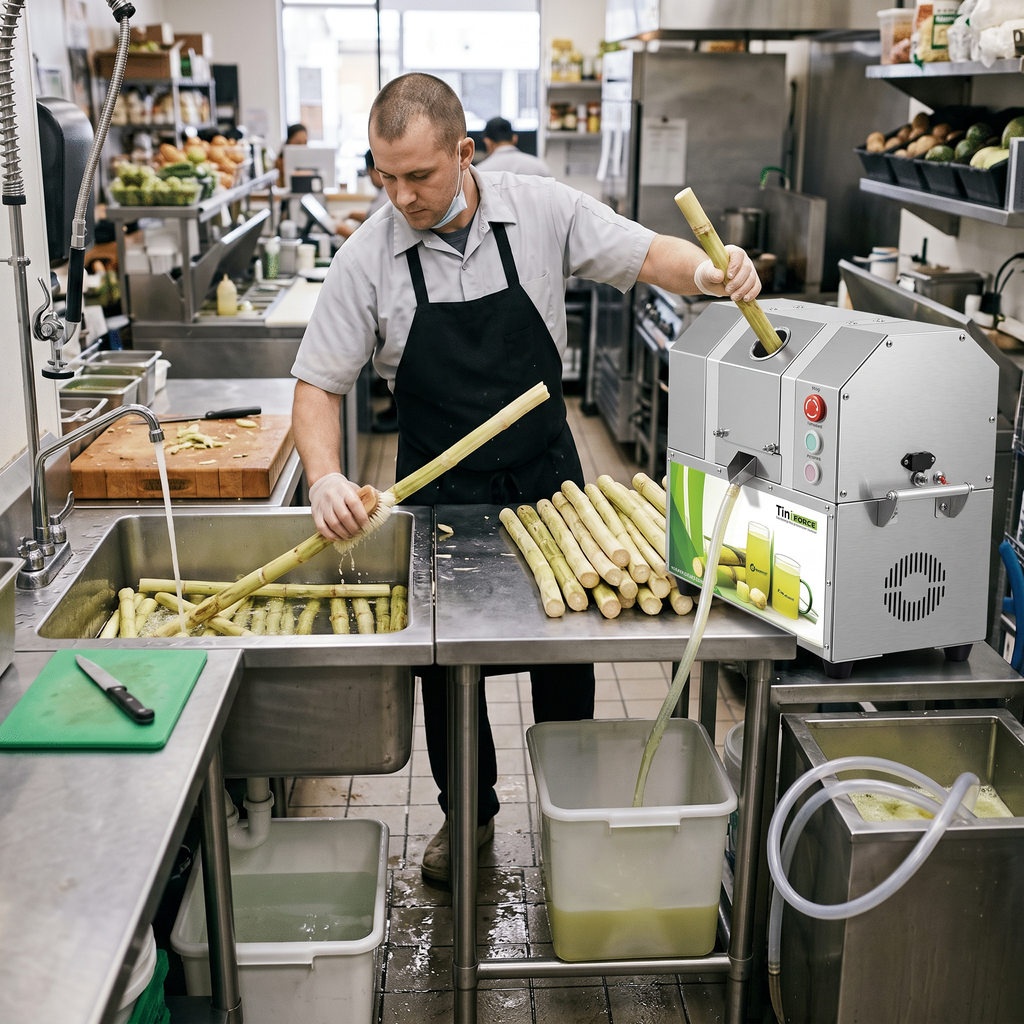
The quality of a sugarcane juice machine break-even calculation depends more on its assumptions than on the formula. Sales volume is often the largest unknown, particularly for a new kiosk, restaurant menu, market stall, or distributor-supported launch.
Build at least three cases:
- Low case: slower footfall, a reduced conversion rate, weather disruption, or a gradual customer adoption period.
- Expected case: the daily sales level supported by your location, trading hours, menu fit, and staff capacity.
- High case: strong demand during peak periods, events, or a successful repeat-customer base.
Use the expected case for purchase planning and keep the low case visible when assessing cash requirements. Also consider seasonality. A location may have high demand in warm months and substantially lower demand in other periods. A daily average drawn only from peak season can distort the decision.
Machine workflow matters because a forecasted sales volume must be operationally achievable. Review cane washing and trimming, feeding, juice collection, drink assembly, payment, cleaning between service periods, and staff handover. A machine with an appropriate workflow for the site can help the team serve demand consistently, while an oversized or poorly matched setup may add cost without solving the main constraint.
Before committing, use a structured purchasing discussion. This list of questions to ask a sugarcane juicer manufacturer can help you confirm electrical requirements, cleaning access, parts planning, and the operating conditions that affect your model.
Ways to Improve the Break-Even Point Without Distorting the Model
A lower break-even point usually comes from increasing contribution per cup, reducing avoidable startup costs, or improving sustainable sales volume. The right action depends on what is limiting the operation.
- Price with local evidence: compare the full offer, serving format, site position, and competitors. Do not raise prices in the spreadsheet without checking whether customers will accept them.
- Control portion and recipe standards: document cup size, ingredients, ice policy, and serving method so staff can produce a consistent product and cost.
- Reduce avoidable waste: improve stock rotation, cane preparation, and purchasing quantities. Track waste separately instead of assuming it does not exist.
- Protect uptime: establish daily cleaning, inspection, and parts procedures. Unplanned downtime can reduce sales and create avoidable expense.
- Plan labour around demand: align staffing with peak periods while maintaining practical cleaning and food-handling routines.
- Use add-ons carefully: only add menu items or formats that fit the available preparation space, operator skill, and customer demand.
Break-even should be reviewed after launch. Compare planned and actual cups sold, average selling price, variable cost, waste, and operating days. Update only the assumptions supported by records. For wider launch planning, the guide on starting a sugarcane juice business covers practical commercial considerations beyond the machine purchase.
Use Break-Even Analysis Before Buying Equipment
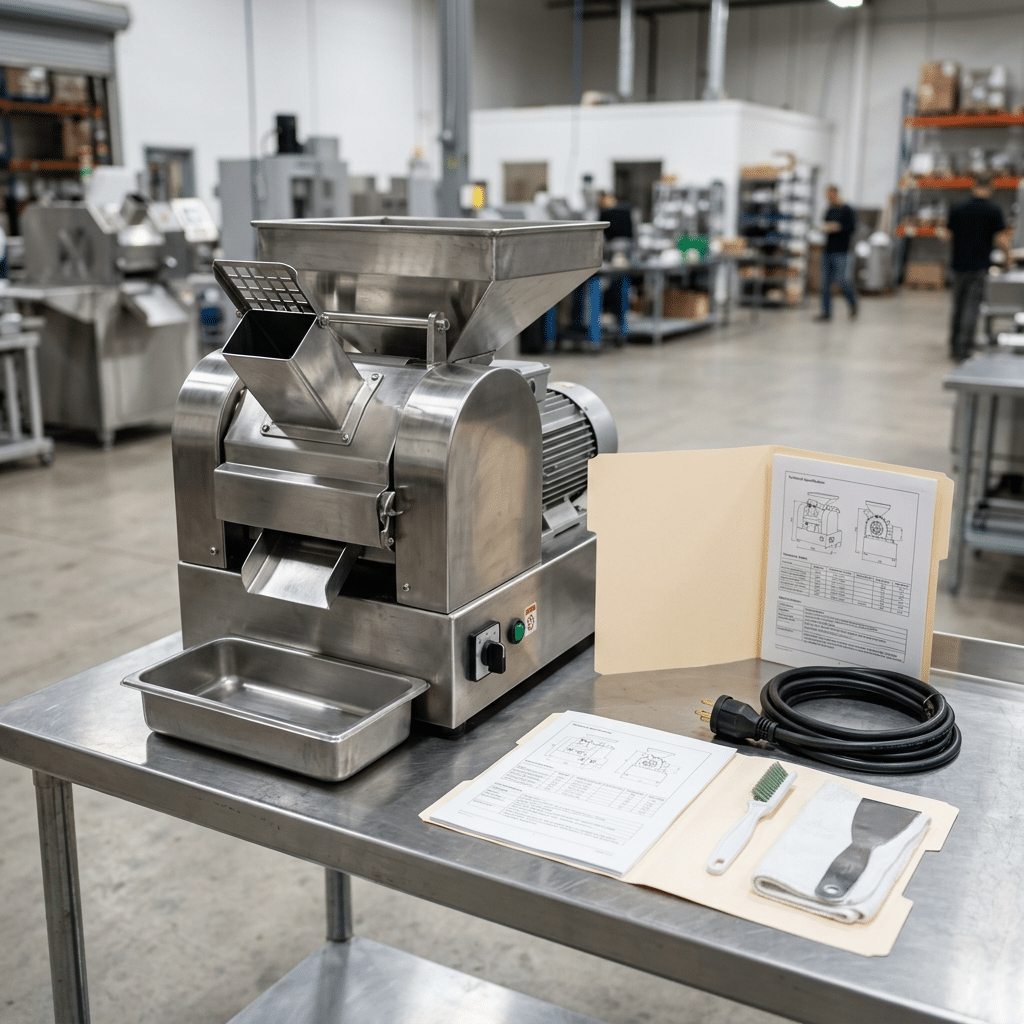
Use the calculation to compare complete operating options, not just quoted machine prices. A lower purchase price can be less suitable if the machine does not match local electrical supply, cane type, daily workflow, cleaning requirements, service access, or expected demand. Conversely, a higher initial investment should be tested against the actual operational benefit it provides, rather than assumed to pay back automatically.
Ask suppliers for the information needed to make the model specific: supplied configuration, electrical compatibility, installation considerations, cleaning routine, available spare parts, warranty terms, and support process. Do not use unsupported extraction, capacity, or payback figures in your calculation. Where an input is uncertain, label it and test a range.
For distributors and brands considering a private-label programme, additional costs may include product configuration, packaging, documentation, market-specific electrical requirements, inventory, and after-sales support. The OEM sugarcane juicer guide for distributors and brands explains the planning questions that should sit alongside a commercial forecast.
A sound model is simple enough to update, conservative enough to withstand normal variation, and detailed enough to support a purchasing decision. Keep source quotes and operating records with the worksheet so each assumption can be checked later.