Table of Contents
- Quick Answer: What Electrical Details Must Match?
- Start With the Machine Rating Plate
- Electrical Buyer Checklist
- Voltage, Frequency, and Phase
- Dedicated Circuit, Protection, and Grounding
- Plug, Socket, and Installation Conditions
- Ordering for Export, Distribution, or OEM
- Commissioning and Daily Operating Checks
Before ordering a commercial sugarcane juice machine, confirm the site power supply against the machine rating plate and supplier documentation. Voltage, frequency, phase, plug type, circuit protection, grounding, and local installation rules must all match.
Quick Answer: What Electrical Details Must Match?
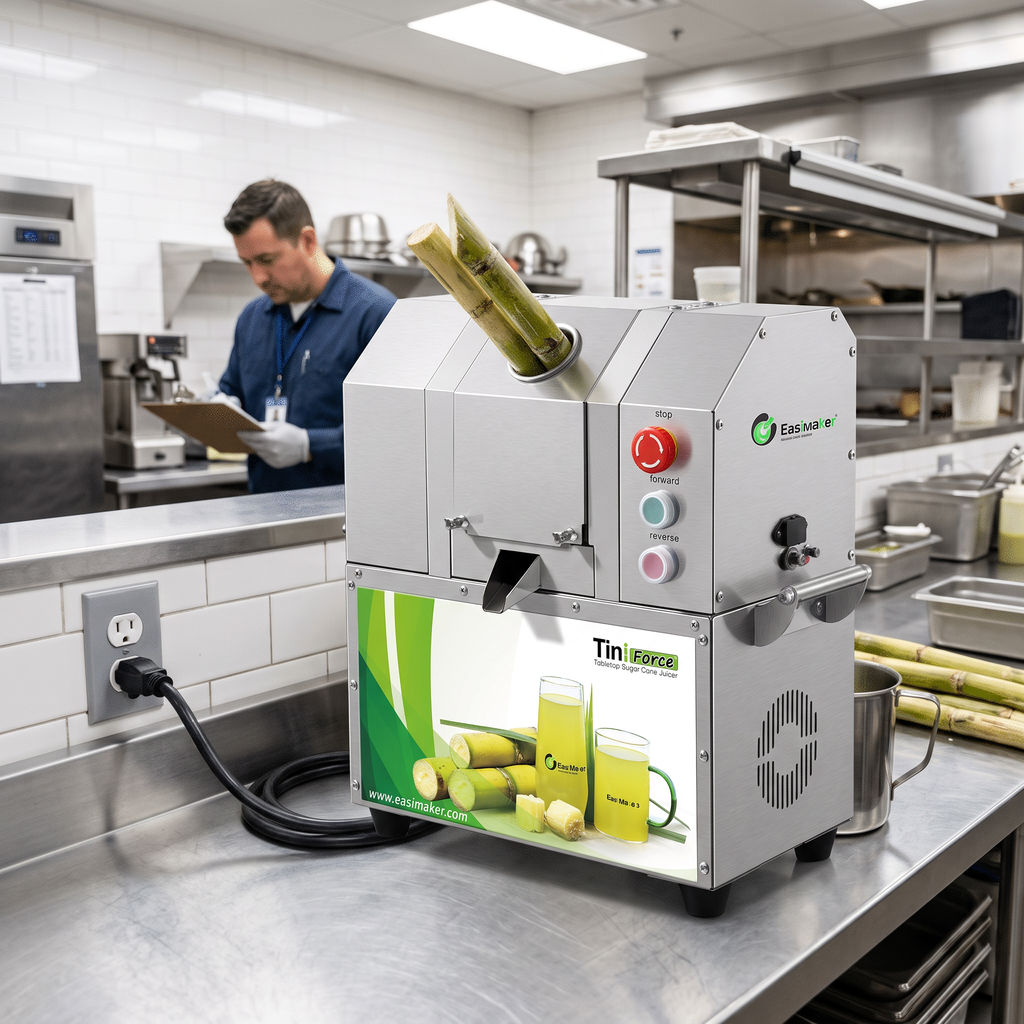
The electrical supply at your site must match the commercial sugarcane juice machine specification supplied for your order. Before purchase, verify the machine’s rated voltage, frequency, phase, power input, plug arrangement, grounding requirement, and recommended circuit protection. Do not assume that a similar-looking outlet or a voltage converter will make an unsuitable machine safe to use.
For buyers, the practical rule is simple: compare the site supply with the machine rating plate and written technical documentation before shipment. If any item differs, ask the supplier and a qualified local electrician to confirm the correct solution before installation. This is especially important for imported equipment, multi-site operations, distributors, and projects where the final installation country differs from the purchasing country.
Electrical compatibility is only one part of a sound buying decision. It should be reviewed alongside cane type, expected service volume, cleaning workflow, available counter space, and local maintenance support. Our guide on choosing a commercial sugarcane juicer covers these wider operating considerations.
Start With the Machine Rating Plate
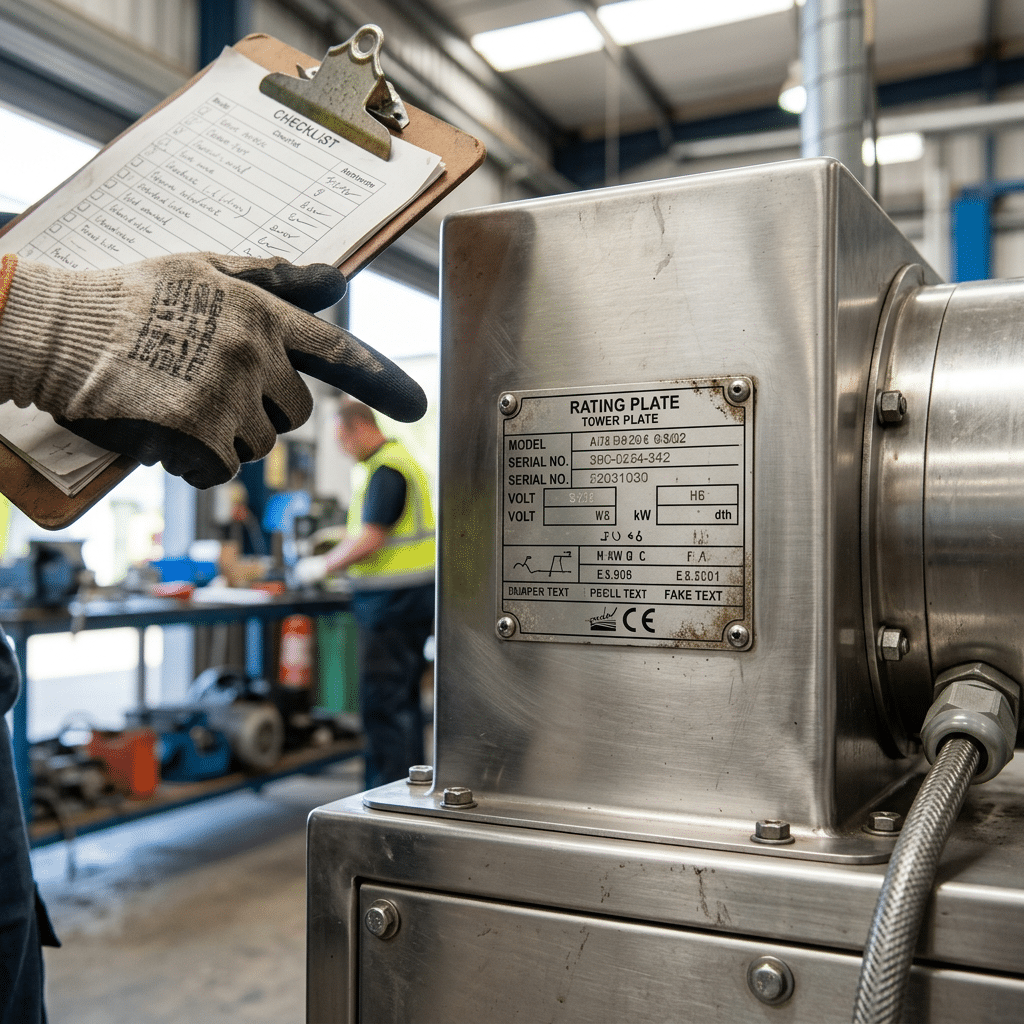
The rating plate is the primary identification point for a machine’s electrical requirements. It is normally fixed to the equipment body and should be readable during receiving, installation, and service. Request a clear rating-plate photo or the applicable technical specification before confirming an order, particularly when a machine will be exported.
Depending on the model and market version, the plate or supporting documentation may state:
- Rated voltage, expressed in volts (V).
- Rated frequency, expressed in hertz (Hz).
- Supply phase, such as single-phase or three-phase.
- Power input, typically expressed in watts (W) or kilowatts (kW).
- Rated current, where provided, expressed in amperes (A).
- Electrical protection information and equipment identification details.
Use the rating plate to verify the delivered machine, not merely the product family name. A supplier may offer different electrical configurations for different markets, so one version of a commercial sugarcane juicer may not have the same requirements as another. The final approval should be based on the agreed order specification and the unit documentation.
Power input is useful for electrical planning, but it does not by itself specify the required outlet, circuit rating, cable size, or protective device. Those decisions must account for local electrical rules, the installation method, and the machine manufacturer’s instructions.
Electrical Buyer Checklist
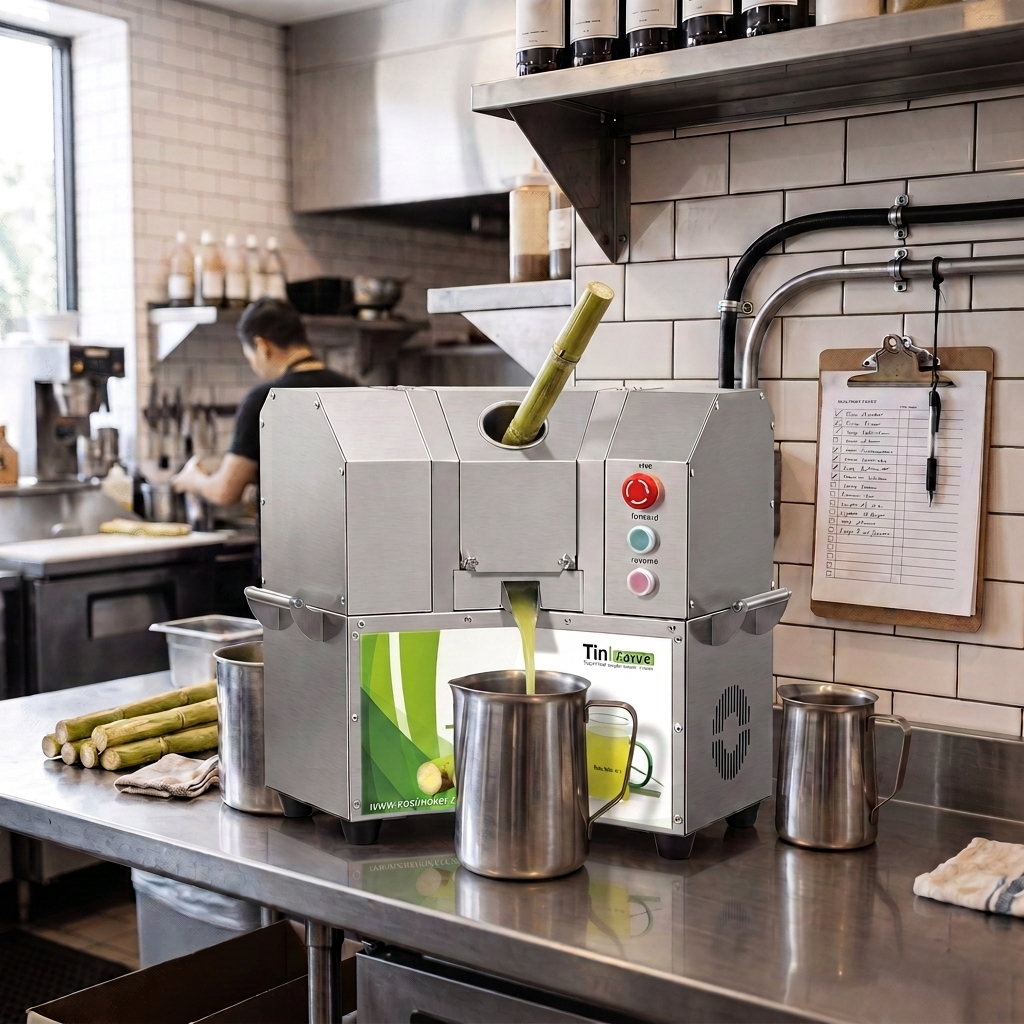
Use this checklist before placing an order or approving production. Record the answers in the purchase specification so the equipment supplier, installer, and operating team are working from the same information.
- Confirm the site supply. Record nominal voltage, frequency, phase, and the available outlet or hard-wired connection at the exact installation location.
- Confirm the machine configuration. Ask which electrical version is quoted and request written confirmation of the rated supply requirements.
- Check the connection method. Establish whether the unit is supplied with a plug, requires a local plug to be fitted, or needs fixed wiring by a qualified electrician.
- Review the circuit. Confirm whether the proposed circuit is dedicated, suitably protected, correctly grounded, and not already carrying other high-load equipment.
- Check local requirements. Electrical work, outlets, disconnects, residual-current protection, and cable selection may be governed by local regulations.
- Plan the physical location. The machine should have a stable, dry, cleanable position with the cable protected from damage and no strained connection.
- Keep documents available. Retain the order specification, manual, rating-plate record, wiring information if supplied, and service contact details.
For a broader supplier discussion, use this list of questions to ask a sugarcane juicer manufacturer before buying. It helps purchasing teams cover electrical compatibility alongside parts, cleaning, workflow, and after-sales expectations.
Voltage, Frequency, and Phase
Voltage must match the supplied machine
Voltage is the electrical potential available at the installation point. A machine built for one nominal voltage may not operate correctly, may be damaged, or may create a safety risk when connected to another voltage. Buyers should provide the supplier with the actual local supply information instead of describing it only as “standard power.”
Where a site has more than one voltage available, identify the intended connection before ordering. Do not rely on a temporary adapter, travel adapter, or unverified transformer arrangement. Any transformer or conversion equipment must be selected and installed by a qualified professional for the complete load and local conditions.
Frequency is not interchangeable by default
Frequency is measured in hertz and commonly varies by country or region. It can affect motor speed, motor heating, and overall machine operation. A voltage match does not automatically mean that the frequency is suitable. Confirm both values against the machine specification.
Phase affects the site connection
Commercial equipment may be configured for single-phase or three-phase supply. These are different supply arrangements and are not interchangeable through an ordinary plug adapter. Confirm the phase available at the actual point of installation, then order the corresponding machine configuration. If a site upgrade is being considered, have the electrical contractor evaluate the whole installation before the equipment is shipped.
When the destination market is not final at the time of purchase, document the expected markets and their electrical supply conditions early. This reduces the risk of holding inventory that is unsuitable for a distributor’s customer base.
Dedicated Circuit, Protection, and Grounding
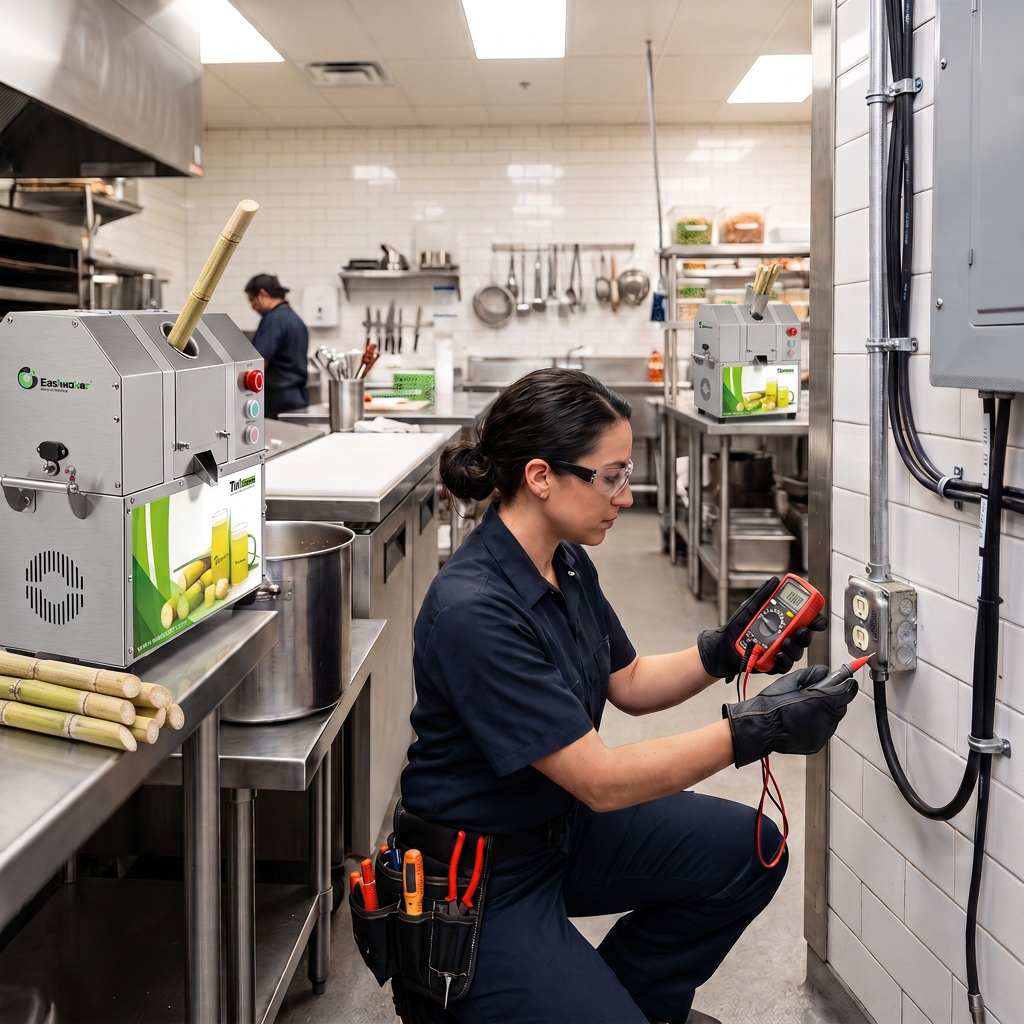
A commercial sugarcane juice machine should be connected to an electrical installation that is appropriate for the machine and local rules. In practice, this means more than finding an available socket. The circuit must be capable of supplying the equipment under normal operating conditions and must include the protective measures required for that installation.
Do not overload a shared circuit
Countertop food-service areas often contain refrigeration, blenders, ice equipment, heating appliances, and point-of-sale devices. Connecting several appliances to one circuit can cause nuisance tripping, voltage drop, interrupted service, or unsafe use of extension leads. A dedicated circuit may be appropriate, but the decision should follow the machine documentation and a qualified electrician’s assessment.
Maintain protective grounding
Where the machine is designed for a grounded connection, the grounding path must remain continuous from the equipment to the building electrical system. Never remove an earth pin, defeat a grounded plug, or use an adapter that eliminates grounding. Grounding is a protective measure, not an optional feature for convenience.
Use local protective devices correctly
Circuit breakers, fuses, residual-current devices, ground-fault protection, local isolators, and cable selection are determined by the equipment requirements and local installation rules. Their terminology and required arrangement vary by market. For this reason, it is not responsible to select a breaker size or wiring method from general online advice alone. Give the electrician the rating-plate details, installation manual, and intended circuit information.
Plug, Socket, and Installation Conditions
Plug and socket formats vary by country, even where nominal voltage is similar. Confirm the supplied plug type in writing. If the equipment is supplied without a local plug, arrange for a qualified electrician to fit a compatible connection in accordance with the manufacturer instructions and local requirements. The plug is only one part of the electrical decision; it must still be compatible with the rated voltage, frequency, phase, current, circuit, and grounding arrangement.
Plan the machine position before delivery. The connection should be accessible for routine isolation and inspection, while remaining protected from washdown, standing water, crushing, heat, and accidental cable damage. Avoid routing a cord across a walkway or beneath equipment where it can be pinched. Do not use a damaged lead, loose socket, overloaded multi-way extension, or improvised connection.
Commercial juice preparation also requires disciplined cleaning. Before cleaning, stop the machine and isolate it from the electrical supply according to the operating instructions. Keep electrical controls and connections protected from unnecessary water exposure, and do not reconnect the machine until the work area is clean, dry, and ready for operation.
Before opening each day, operators should visually check the cord, plug, socket condition, machine casing, and control area. Any unusual noise, damaged insulation, repeated tripping, burning smell, or erratic operation should be treated as a reason to stop using the machine and arrange competent inspection.
Ordering for Export, Distribution, or OEM
Electrical requirements deserve extra attention when equipment will be sold across borders. A distributor may serve customers with different supply conditions, while an OEM programme may need market-specific documentation, plug arrangements, labels, or machine configurations. These points should be agreed before production rather than handled after the equipment arrives.
Provide the destination country or countries, target customer type, expected sales channels, and available site power details. Ask the supplier which electrical configurations are available for the relevant machine, what information will appear on the rating plate, whether the plug is included, and what installation documentation is supplied. Do not imply that an electrical version is suitable for a market without verifying the applicable requirements.
For brand owners and distributors, the OEM sugarcane juicer guide for distributors and brands explains why market power standards should be part of the product brief from the beginning. Clear specifications reduce avoidable rework, shipment delays, and customer installation questions.
Purchasing teams should also decide who owns the final site-readiness check. In many projects, the supplier can confirm the machine specification, while the local installer or buyer remains responsible for verifying the building supply and completing compliant electrical work. Defining that boundary clearly helps commissioning proceed smoothly.
Commissioning and Daily Operating Checks
Installation should end with a controlled handover, not simply with the machine being plugged in. Confirm that the unit received matches the ordered electrical configuration, the connection has been inspected as required locally, and the operating team has access to the applicable manual. Run the initial checks in accordance with the manufacturer’s instructions before normal production begins.
A useful handover record can include the machine model and serial details, rating-plate photograph, installation location, supply information, installer details, date of commissioning, and any notes about the protective device or local isolation point. This record supports future maintenance, relocation, troubleshooting, and warranty communication.
Operators should not modify wiring, bypass safety devices, replace a plug without authorization, or investigate internal electrical faults. Their role is to use the machine as instructed, keep the area clean and dry, report abnormal behaviour promptly, and isolate the unit before cleaning or service. A practical maintenance plan also includes regular checks for cable wear, connection damage, loose external fittings, and changes in operating sound.
When evaluating a supplier, ask how technical questions, manuals, spare parts, and service requests are handled after delivery. Electrical suitability is established before installation, but responsive documentation and support remain important throughout the machine’s working life.