
Table of Contents
- What a mobile sugarcane juice business needs
- Choose the right mobile selling format
- Build the equipment list and service layout
- Plan utilities, hygiene and sugarcane storage
- Budget the setup and test menu pricing
- Use a practical launch checklist
A successful mobile sugarcane juice business needs more than a juicer. Plan the selling format, local permits, machine footprint, electrical supply, cane storage, cleaning workflow and menu pricing before opening.
What a mobile sugarcane juice business needs
A mobile sugarcane juice business combines a commercial juicer with a movable sales point such as a pushcart, trailer, kiosk, market stall or food truck. The best setup is compact enough for transport but organized enough to receive cane, prepare orders, collect juice, manage bagasse and clean equipment without interrupting service.
Before buying machinery, define your operating conditions. Identify where you will sell, how many service hours you expect, whether the site provides electricity and water, and how the unit will be transported. Your local authority may also require food-service registration, vendor permission, wastewater controls, electrical checks or other approvals. Requirements vary by location, so confirm them before finalizing the layout.
The core planning sequence is:
- Choose the target locations and selling schedule.
- Select a cart, trailer, kiosk or food truck format.
- Confirm the available electrical supply, working space and cleaning facilities.
- Choose a commercial sugarcane juicer that fits the cane, workflow and footprint.
- Calculate ingredient, packaging, labor, transport and maintenance costs.
For a broader view of permits, sourcing and operating requirements, review this guide to starting a sugarcane juice business in the USA.
Choose the right mobile selling format
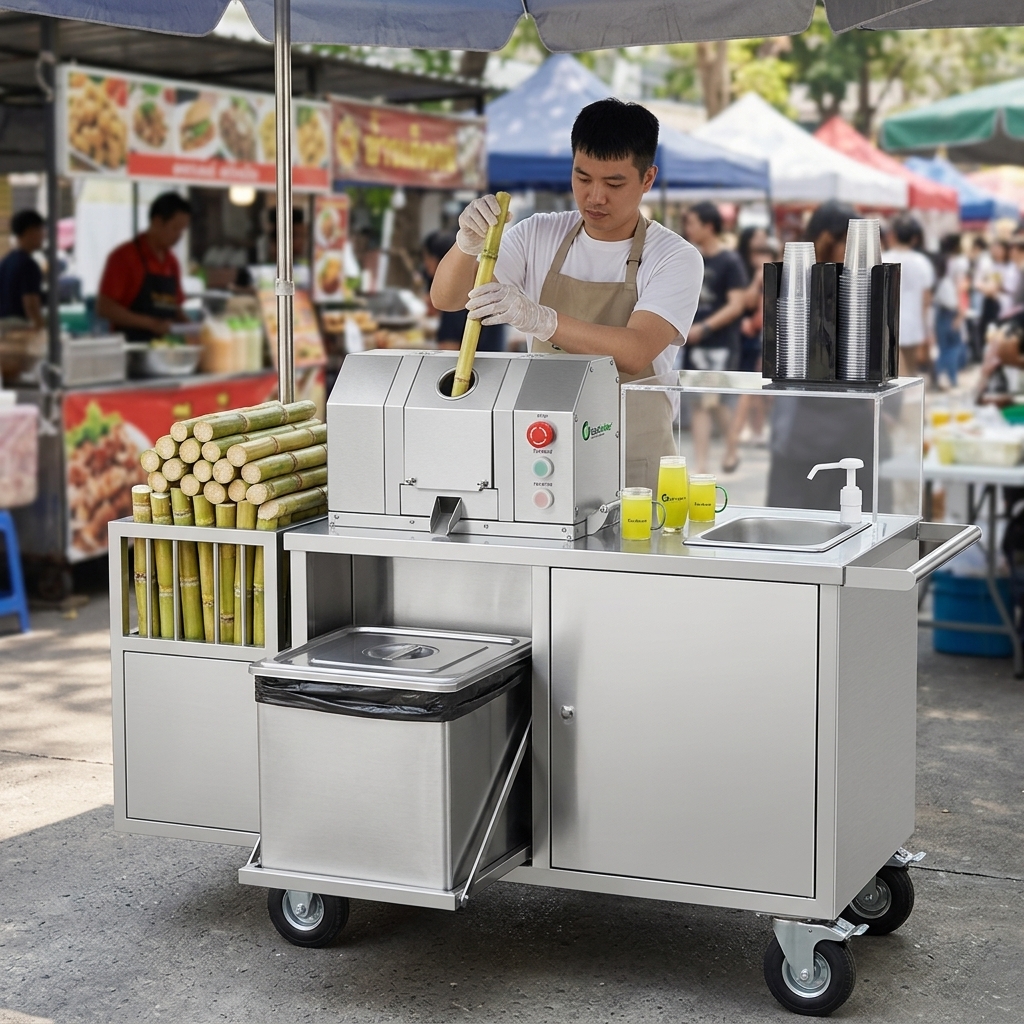
Your sales format determines how much equipment, storage and utility infrastructure you can carry. It also affects setup time, transport requirements and the type of locations you can serve.
Pushcart or compact juice cart
A cart can suit pedestrian areas, markets and short-term events when the menu is focused and the daily stock volume is manageable. The design should provide a stable machine platform, customer-facing service space, covered storage and a controlled area for waste. Check how the cart will be moved, where it will be stored overnight and whether it can be secured at the selling location.
Trailer or mobile kiosk
A trailer or kiosk offers more room for a juicer, cane storage, cups, ice or chilled storage, handwashing equipment and cleaning supplies. It may be a practical middle option for operators who need more work space but do not require a self-propelled vehicle.
Food truck
A food truck provides the most enclosed workspace but requires careful planning around vehicle weight, counter height, ventilation, water tanks, drainage, access doors and electrical load. Food truck power and space planning should be completed before the interior is fabricated.
Draw the proposed layout at full scale. Leave enough room to load cane safely, place a cup under the juice outlet, remove bagasse and access the machine for cleaning. Avoid placing the juicer where customer traffic, rainwater or vehicle movement can interfere with operation.
Build the equipment list and service layout
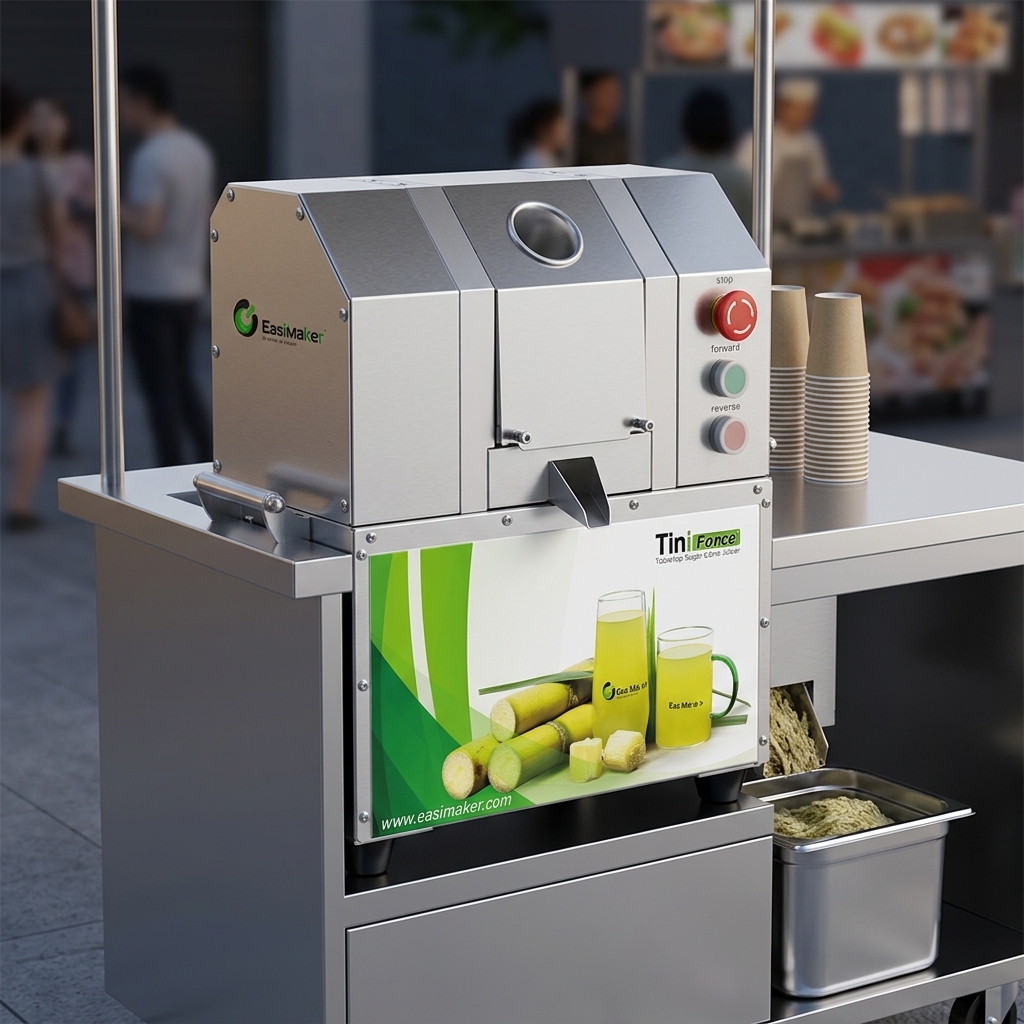
The juicer is the center of the operation, but it is only one part of your sugarcane juice cart equipment. Create the list around the complete order cycle rather than purchasing isolated items.
- Commercial sugarcane juicer: Check the machine dimensions, weight, feed opening, juice outlet position, bagasse discharge direction, cleaning access and compatible power supply.
- Cane preparation tools: Plan a clean receiving area, storage racks or bins, and any approved tools needed to trim or prepare cane safely.
- Service items: Include cups, lids, straws if used, measuring tools, a cashless payment terminal and a protected order handoff area.
- Hygiene equipment: Provide handwashing facilities, food-contact cleaning supplies, sanitizing materials and dedicated waste containers according to local requirements.
- Utility equipment: Confirm extension leads, outlets, breakers, water storage and drainage arrangements with a qualified person where necessary.
A suitable portable sugarcane juicer for business use should be evaluated by workflow, not by the word “portable” alone. A smaller machine may simplify transport, but the real fit depends on the quantity of cane, the available counter space and the operator’s working position. Confirm the actual specification with the manufacturer before ordering.
Place the juicer so the operator can feed cane from one side and serve juice from the other without crossing the clean and dirty work zones. Keep bagasse collection separate from cups and finished drinks. If you are comparing manufacturers, use this list of questions to ask before buying a commercial sugarcane juicer.
Plan utilities, hygiene and sugarcane storage
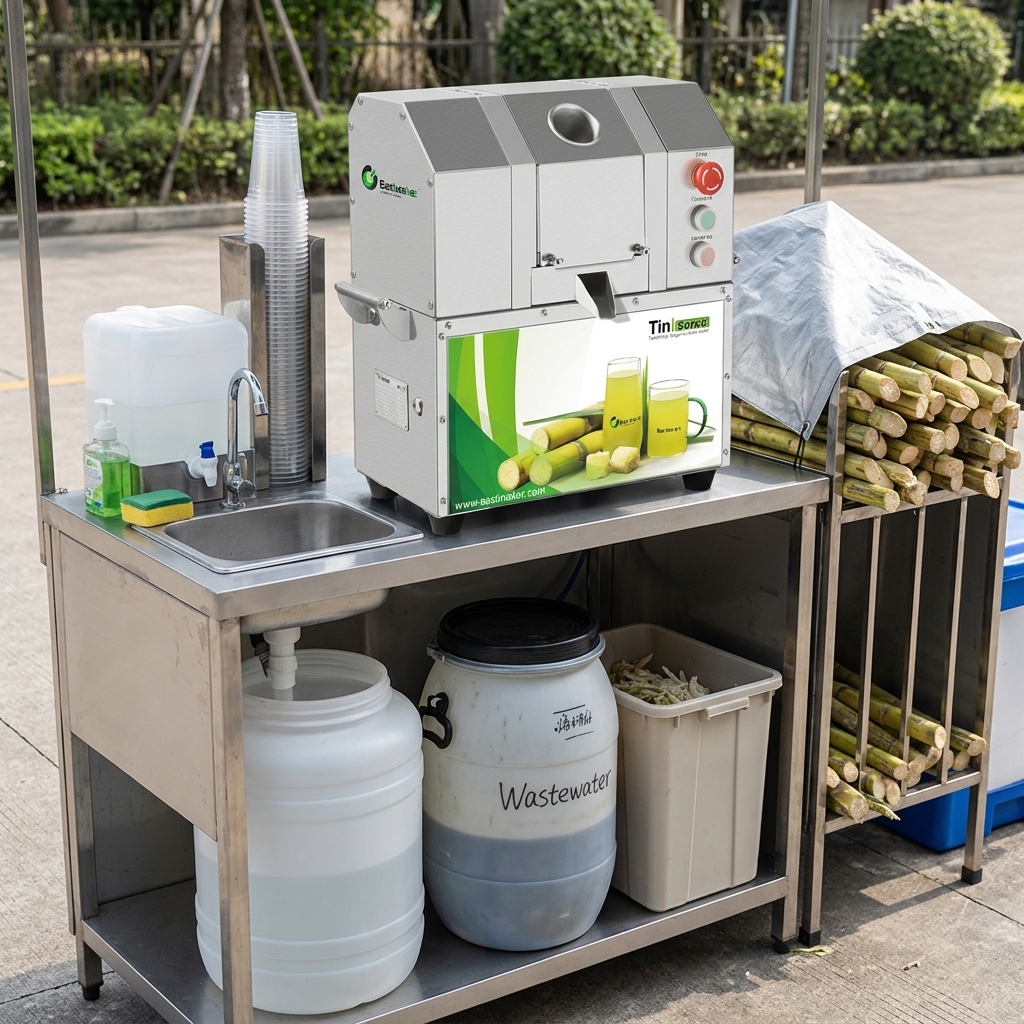
Mobile service makes utility planning more important because the site may change from day to day. Confirm the machine’s voltage, frequency, phase and plug arrangement for the destination market. Do not assume that a truck generator, venue outlet or household extension lead is suitable. The electrical system should be reviewed against the machine specification and installed or checked by a qualified professional when required.
Water and drainage need equal attention. A mobile juice stand setup should have a defined method for handwashing, cleaning utensils, managing spills and disposing of wastewater. Keep clean water, used water and waste containers clearly separated. The exact arrangement must follow local food-service rules.
Clean the machine according to the manufacturer’s instructions after service and whenever the operating procedure requires it. Remove visible cane residue promptly, keep food-contact surfaces clean, and make cleaning access part of the layout rather than an afterthought. Maintain a simple opening and closing checklist so different staff members follow the same routine.
Whole sugarcane should be protected from heat, standing water, pests, soil contamination and physical damage. Buy quantities that match your expected service instead of overloading a small cart with stock. Inspect deliveries, rotate inventory first-in-first-out and record damaged or rejected cane. This sugarcane storage guide explains practical handling principles in more detail.
Budget the setup and test menu pricing
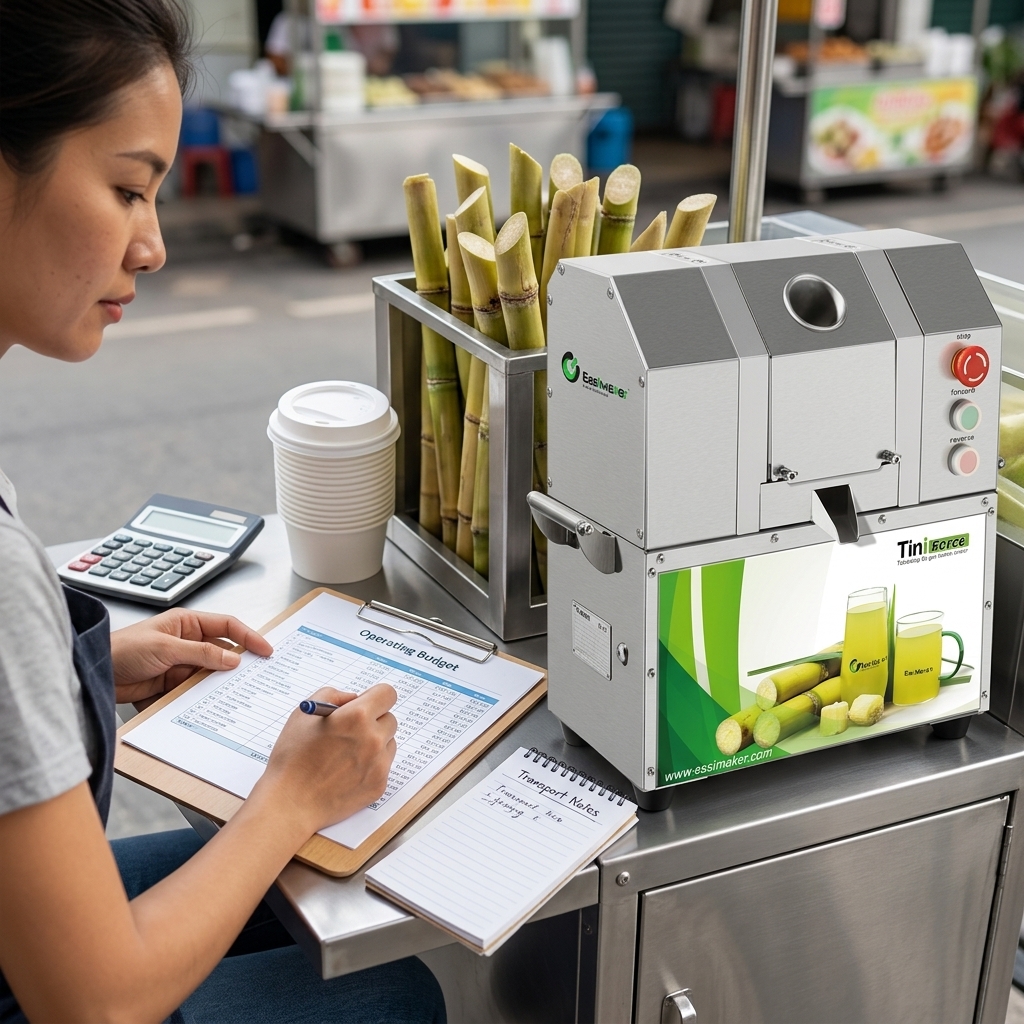
Prepare a complete startup budget before selecting the machine. Include the cart, trailer or truck; commercial juicer; electrical work; water and drainage equipment; storage; signage; permits; transport; packaging; cleaning supplies; initial cane stock; payment systems; insurance where applicable; and a reserve for maintenance or replacement parts.
Separate one-time costs from daily operating costs. Daily costs may include sugarcane, cups and lids, ice or refrigeration, labor, transport, site fees, electricity, water, payment charges, cleaning materials and waste handling. This separation helps you understand how many drinks must be sold to cover the day’s expenses.
Pricing should reflect the full cost per serving rather than only the cane price. Test more than one cup size if your site and workflow can handle it, but avoid a menu that slows production or creates excessive packaging complexity. Track actual sales, waste, discounts and unsold stock during a trial period. Then revise prices or portion sizes based on recorded costs and customer response.
Use this practical resource on calculating sugarcane juice menu pricing to structure your figures. For equipment planning, also account for freight, installation requirements and replacement parts rather than comparing only the initial machine price.
Use a practical launch checklist
Run a controlled test service before committing to a permanent route. Choose a location where you can observe customer flow, queue length, preparation time, stock usage and cleaning requirements. A trial can show whether the counter is high enough, whether the operator can work comfortably and whether the chosen storage capacity is realistic.
Use this checklist before opening:
- Confirm permits, site permissions and insurance requirements.
- Verify the machine specification against the local power supply.
- Measure every doorway, counter, storage bay and transport access point.
- Test the order path from cane storage to feeding, serving and waste removal.
- Prepare opening, service and closing cleaning procedures.
- Set minimum and maximum stock levels for cane, cups and cleaning materials.
- Train staff on safe feeding, emergency shutdown and hygiene practices.
- Record sales, waste, service interruptions and maintenance observations.
Review the results after the first few service days. If queues are slow, examine the layout and menu before assuming that a larger machine is needed. If transport is difficult, reconsider the cart structure, machine weight and storage quantity. If the business will expand into multiple locations, standardize the equipment list, cleaning records and staff training.
A well-planned mobile sugarcane juice business balances mobility with dependable daily operation. Select equipment that fits the real site, confirm technical details before purchase and design the workflow around safe preparation, fast handoff and straightforward cleaning.