Table of Contents
- The Best Counter Layout for a Small Sugarcane Juice Shop
- What a Sugarcane Machine Counter Layout Needs to Do
- Measure the Space Before Choosing Equipment
- Create Clear Work Zones
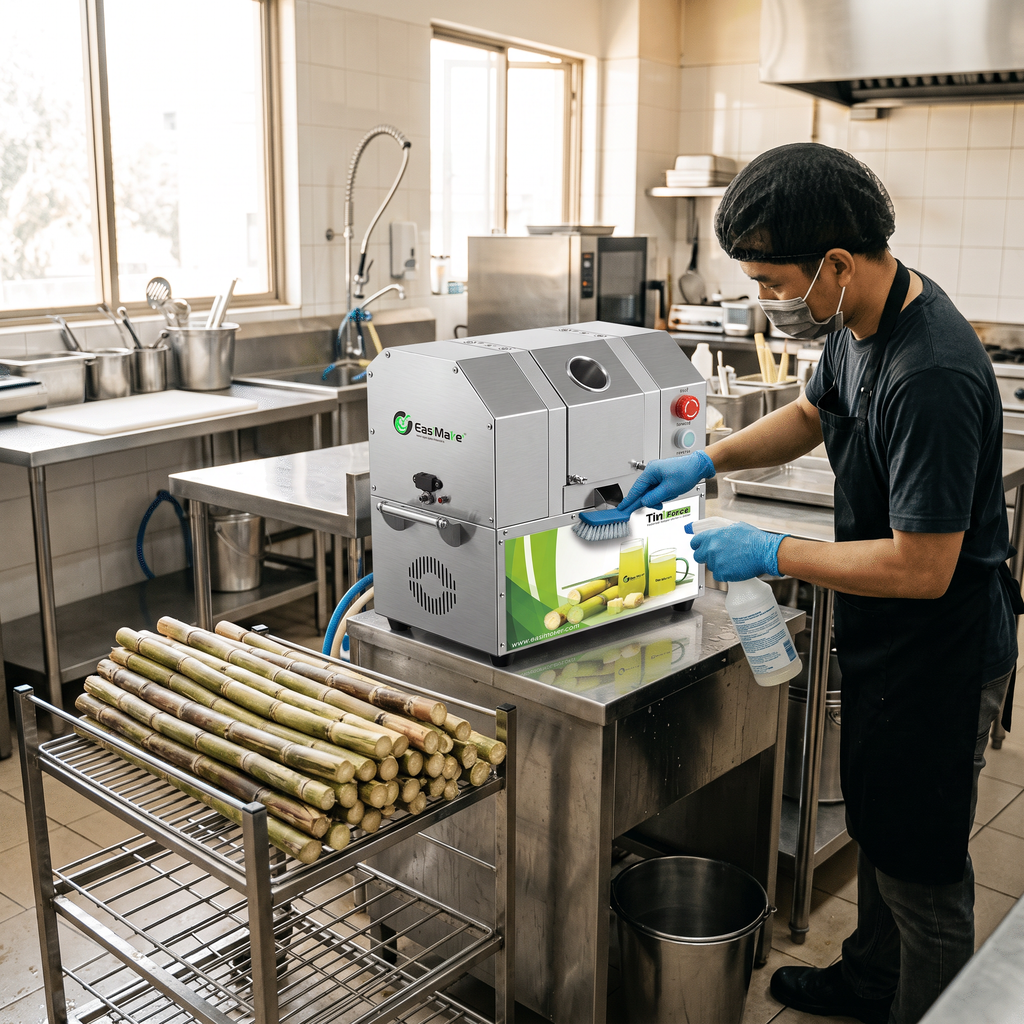
- Position the Sugarcane Juicer Correctly
- Plan Power, Drainage and Hygiene Access
- Practical Layout Options for Small Shops
- Improve Operator Flow During Busy Service
- Counter Layout Checklist Before Opening
- Build the Layout Around Daily Work
A small-shop sugarcane machine counter layout should keep receiving, cane preparation, juicing, serving and cleaning in a logical sequence. This guide explains how to plan a compact, hygienic and workable commercial sugarcane juice counter.
The Best Counter Layout for a Small Sugarcane Juice Shop
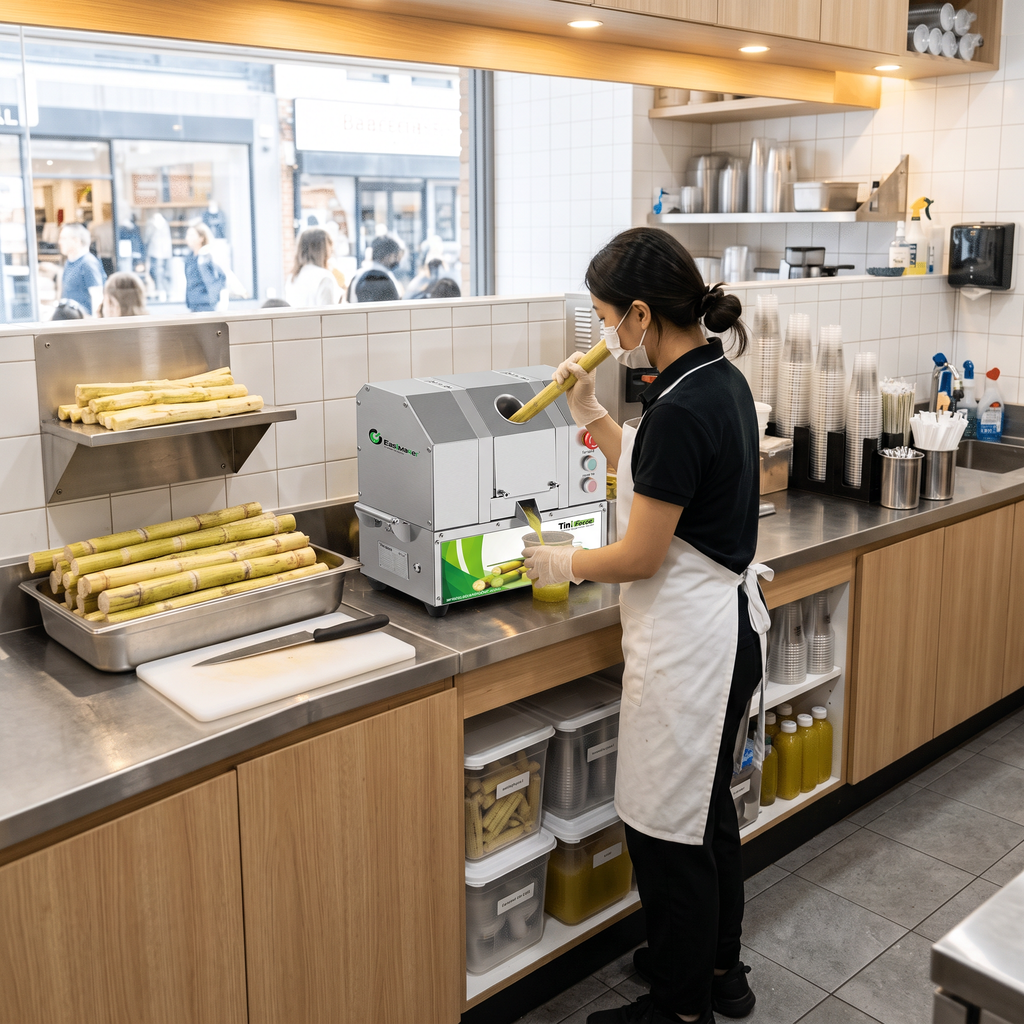
The best sugarcane machine counter layout for a small shop places the commercial juicer at the centre of a short, one-way workflow: store and wash cane at one end, prepare and feed it into the machine in the middle, then strain, pour and hand over drinks at the other end. Keep a separate cleaning point nearby, leave clear access around the machine, and confirm power and drainage before fixing the counter.
For most compact operations, a straight counter or L-shaped counter is easier to manage than a crowded island. The correct arrangement depends on the actual machine dimensions, cane length, operator position, local hygiene rules and expected peak-hour service. Do not design only around the machine footprint; the operator also needs room to load cane, collect juice, remove residue and clean the equipment safely.
What a Sugarcane Machine Counter Layout Needs to Do
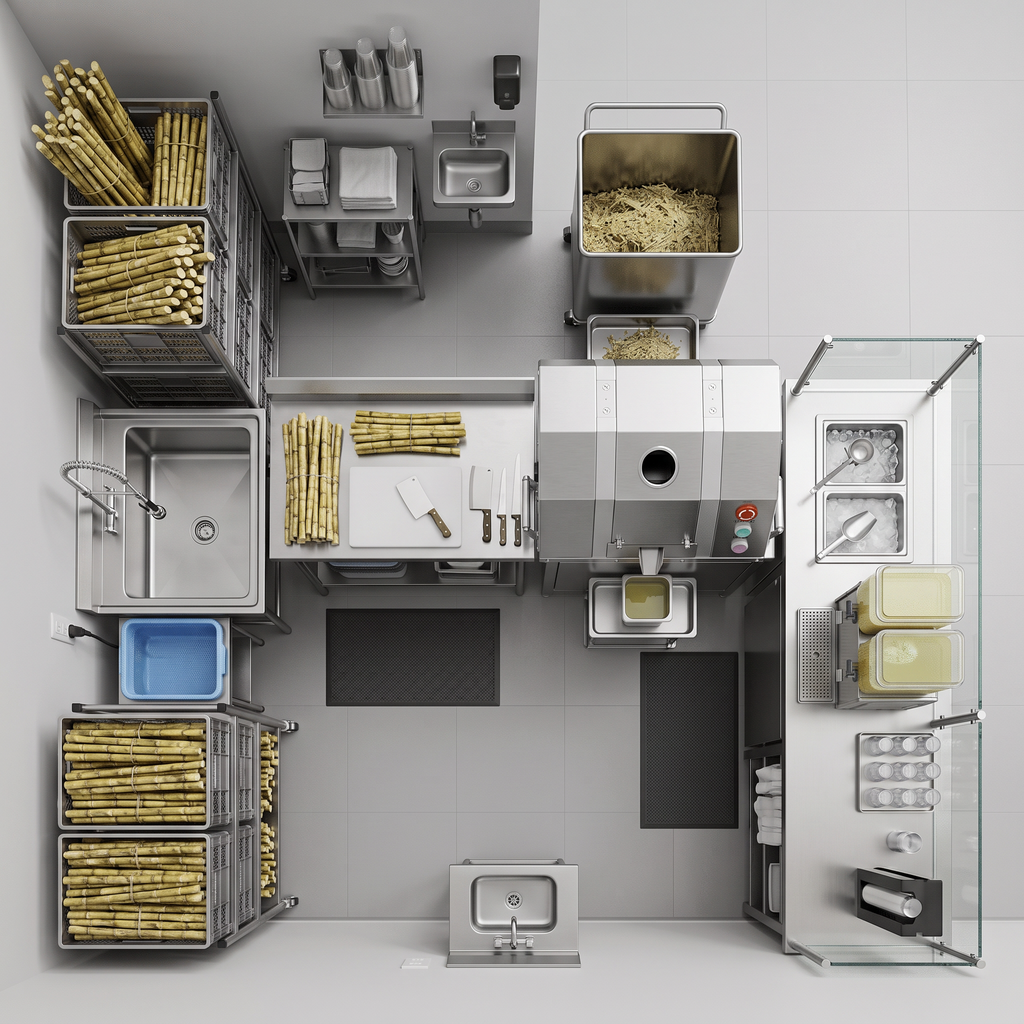
A counter layout is more than a place to set a juicer. It is the operating route that connects raw sugarcane, water, equipment, packaging, customers and waste handling. In a small shop, poor positioning can cause queues, wet work surfaces, repeated lifting and difficult cleaning. A practical layout reduces unnecessary movement without placing food-contact work beside waste or customer traffic.
Start by mapping the sequence your operator will follow:
- Receive and inspect sugarcane.
- Store cane in a clean, protected area.
- Wash and trim cane where required.
- Move prepared cane to the juicer.
- Collect juice in the intended container or receiving area.
- Add permitted ingredients, strain if the operation uses a strainer, and serve.
- Move bagasse and used cleaning materials to their designated collection points.
This sequence should move forward as much as possible. Crossing raw cane, finished drinks and cleaning activity over the same small section of counter creates avoidable congestion. The equipment should also be selected for the real service pattern. A guide to choosing a commercial sugarcane juicer can help match the machine to service volume, available space and cleaning needs before the counter is built.
Measure the Space Before Choosing Equipment
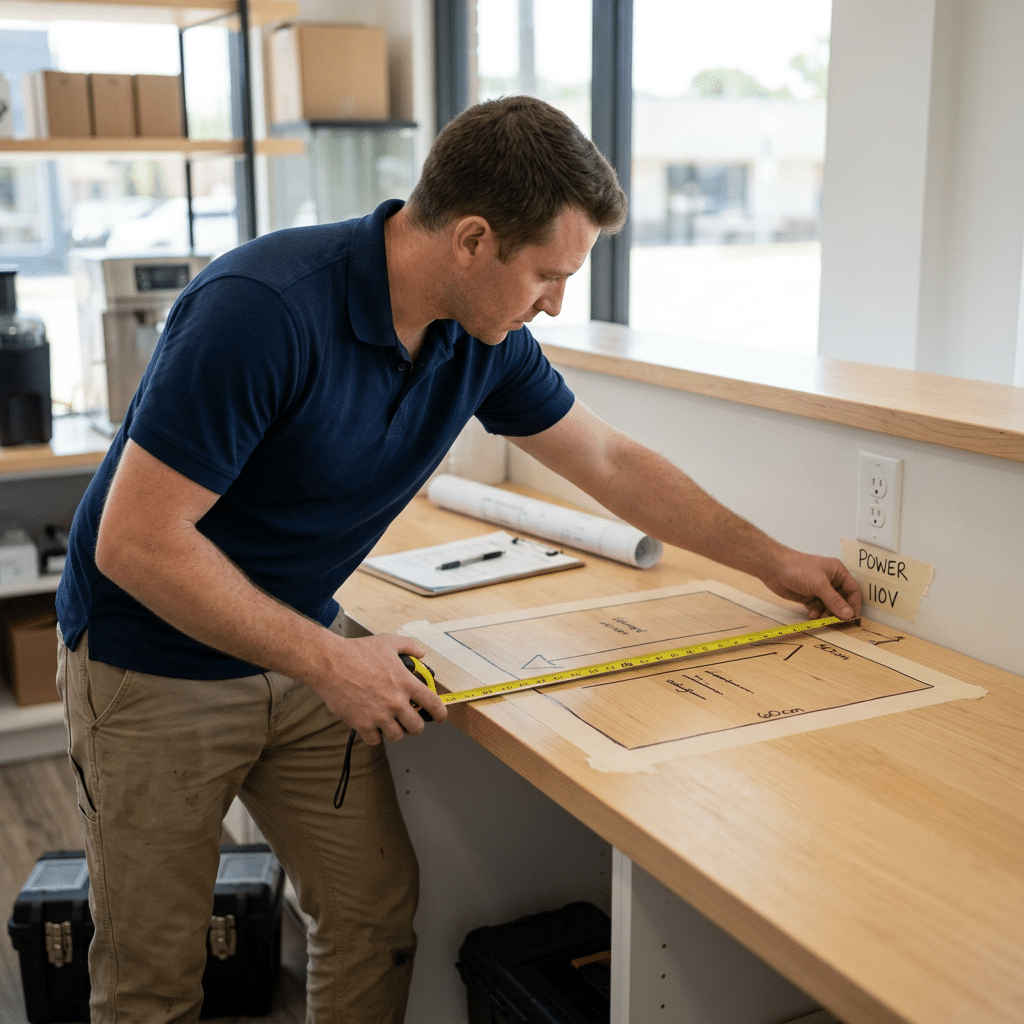
Measure the complete working area, not only the visible countertop. Record the counter length and depth, wall and overhead clearances, door swings, aisles, sink position, electrical outlet location and route from cane storage to the machine. Where the shop has a rear preparation room, measure the path between that room and the service counter as well.
Use the manufacturer-supplied dimensions and installation instructions for the exact juicer under consideration. Allow enough space for the operator to feed cane without striking walls, shelving or display items. Also allow room to access parts that must be removed or reached during cleaning and routine checks. A machine pressed tightly against a wall may appear compact on opening day but can make daily sanitation and servicing much harder.
Counter strength matters. The surface must be stable, level and suitable for the intended commercial equipment. Select a material that can be cleaned readily and that tolerates normal beverage-shop moisture. Avoid making assumptions about a machine’s weight, electrical load or clearance requirements; verify the current product documentation before finalising joinery or utilities.
Create Clear Work Zones

Even a narrow counter works better when each task has a defined home. The number of zones can be simple, but the separation should be clear to every operator.
1. Cane receiving and storage
Keep incoming sugarcane away from the final drink handover point. Store it so operators can inspect it and move it into preparation without blocking the customer area. Do not rely on the front counter as long-term cane storage; long stalks can obstruct circulation and create an untidy service area.
2. Washing and preparation
Place washing and trimming where water can be managed and where preparation does not spray or drip over cups, lids or finished drinks. The exact treatment of cane should follow local food-hygiene requirements and the operator’s documented procedure.
3. Juicing zone
The juicer needs a dedicated, uncluttered working surface. Reserve nearby space for prepared cane, the juice receiving container or cup, and the tools used during service. Keep non-essential displays, cash handling items and loose packaging away from the feeding and output areas.
4. Serving and payment
Place cups, lids, straws where permitted, napkins and payment equipment on the customer-facing side or at the end of the production flow. This prevents customers or payment handling from interrupting cane feeding and cleanup.
5. Bagasse and cleaning
Plan a controlled route for bagasse collection and a separate place for cleaning supplies. Waste should be removed regularly according to the shop’s procedure, not allowed to build up beside the operating area.
Position the Sugarcane Juicer Correctly
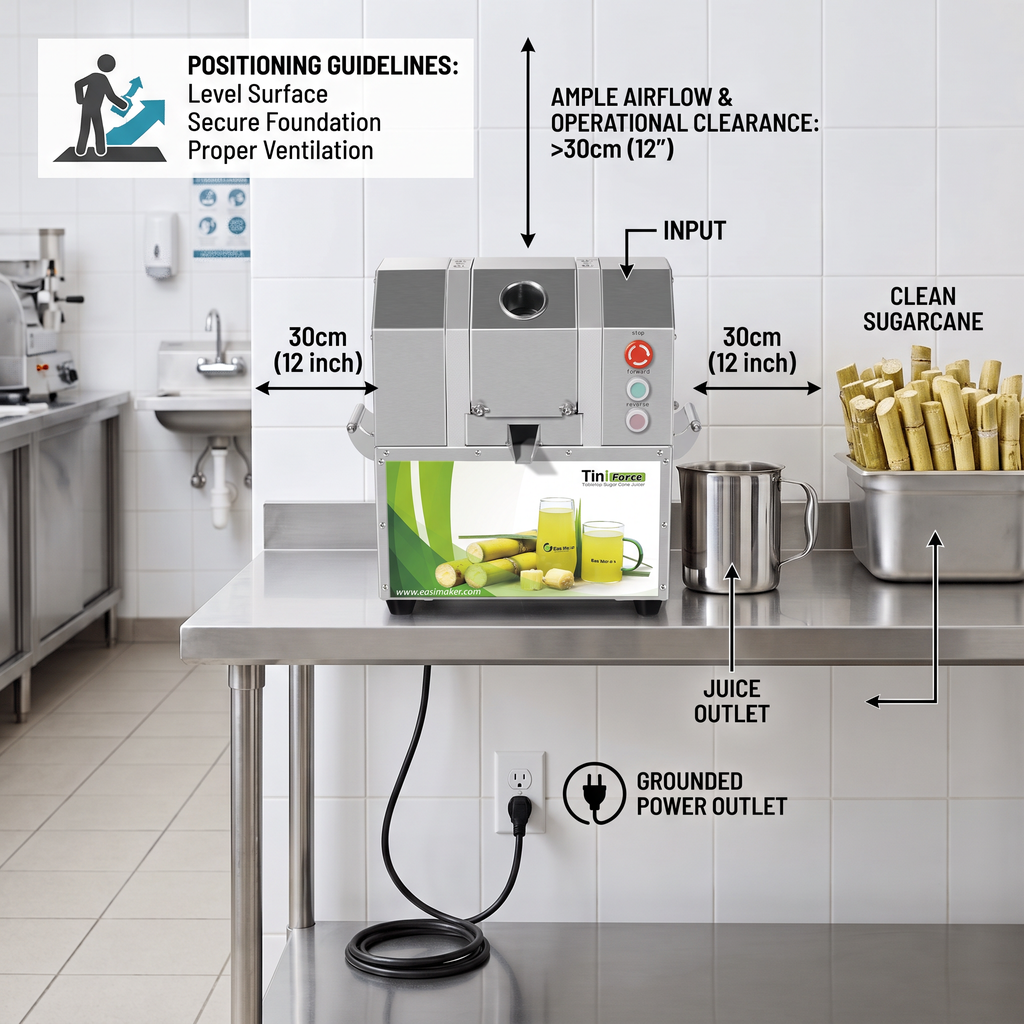
Set the commercial sugarcane juicer where the operator can face the feed area comfortably, place prepared cane within easy reach and remove the output or residue without turning repeatedly through a busy aisle. The preferred orientation depends on the machine design and the counter shape, so use the operating manual for the specific model.
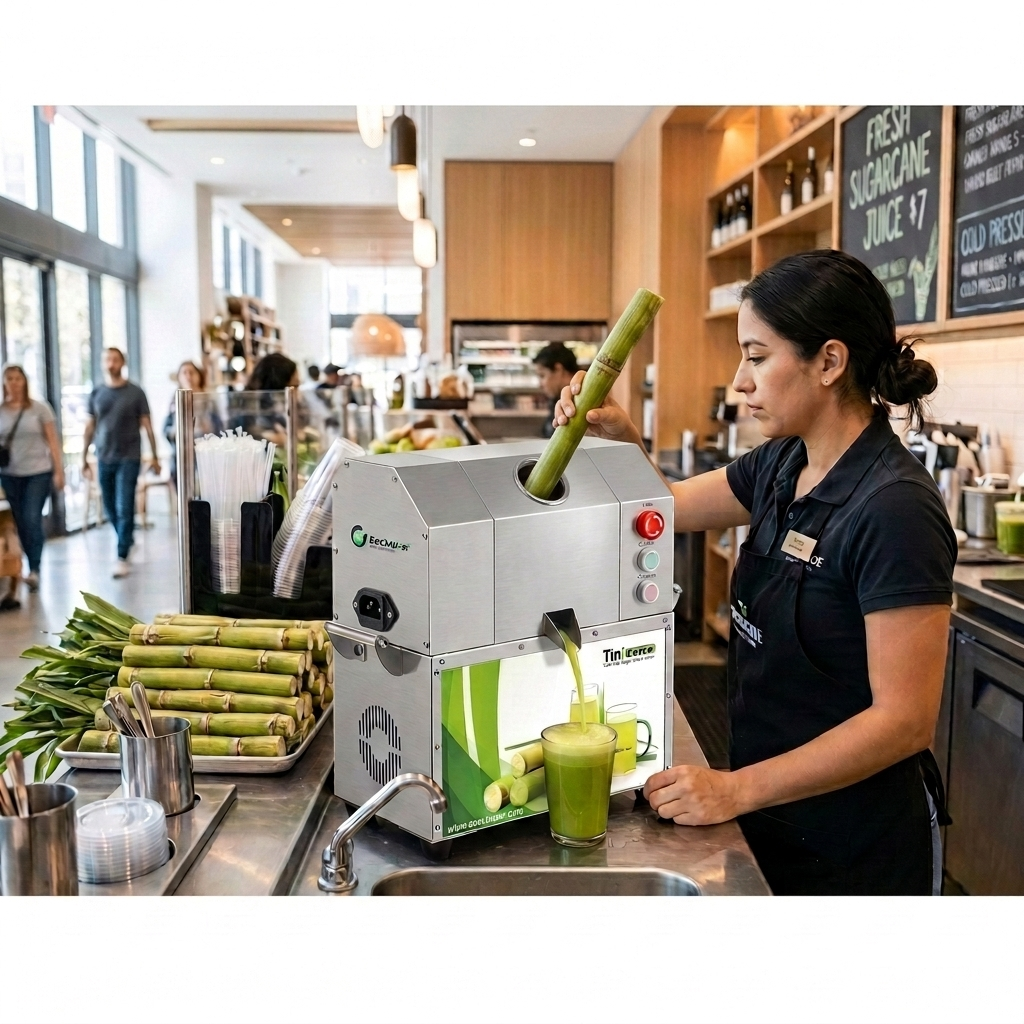
In a straight-counter layout, position the juicer between preparation and serving. In an L-shaped layout, placing the juicer near the inside corner can shorten movement, provided both sides remain accessible for operation and cleaning. Do not place it at a corner simply to save length if that blocks access to controls, collection points or removable parts.
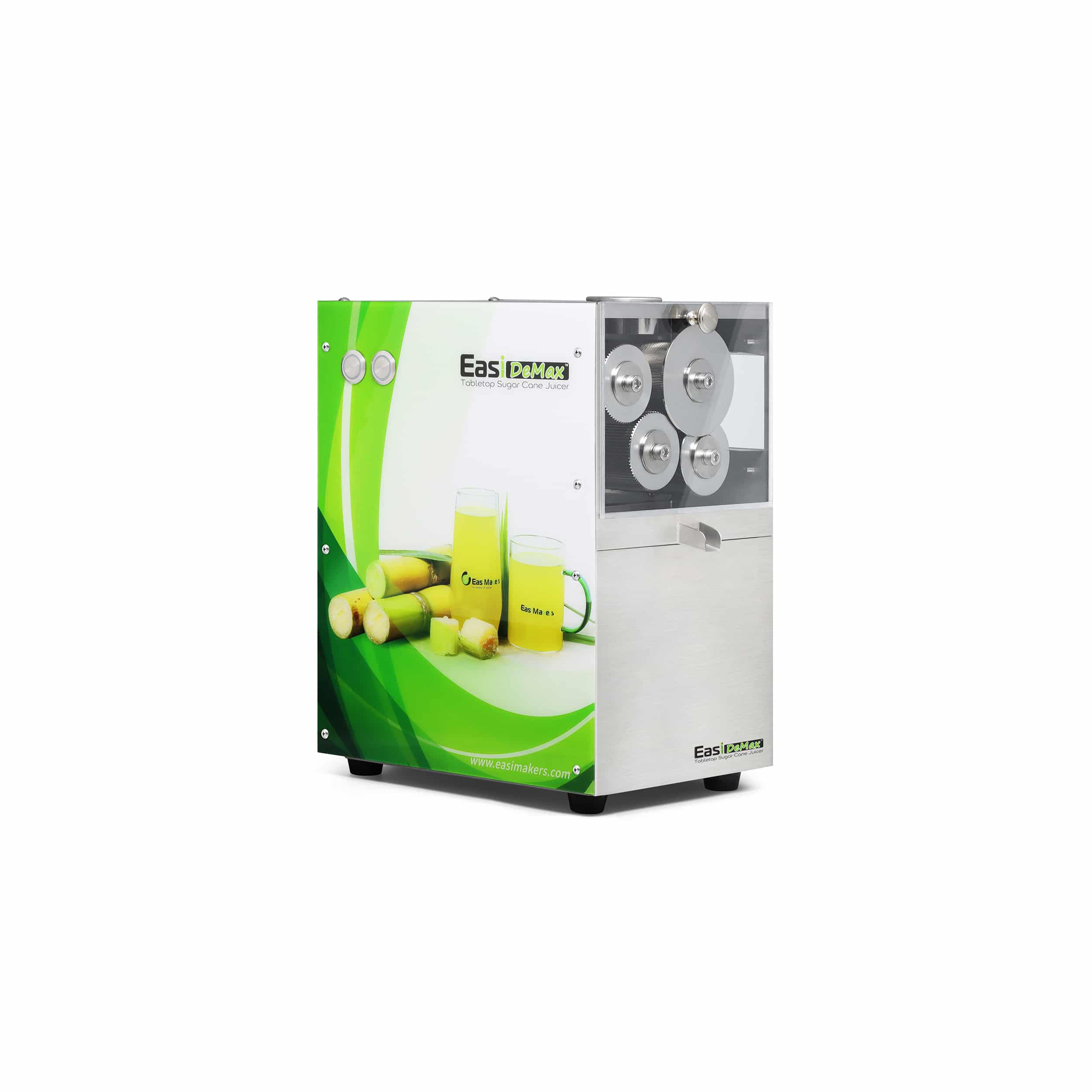
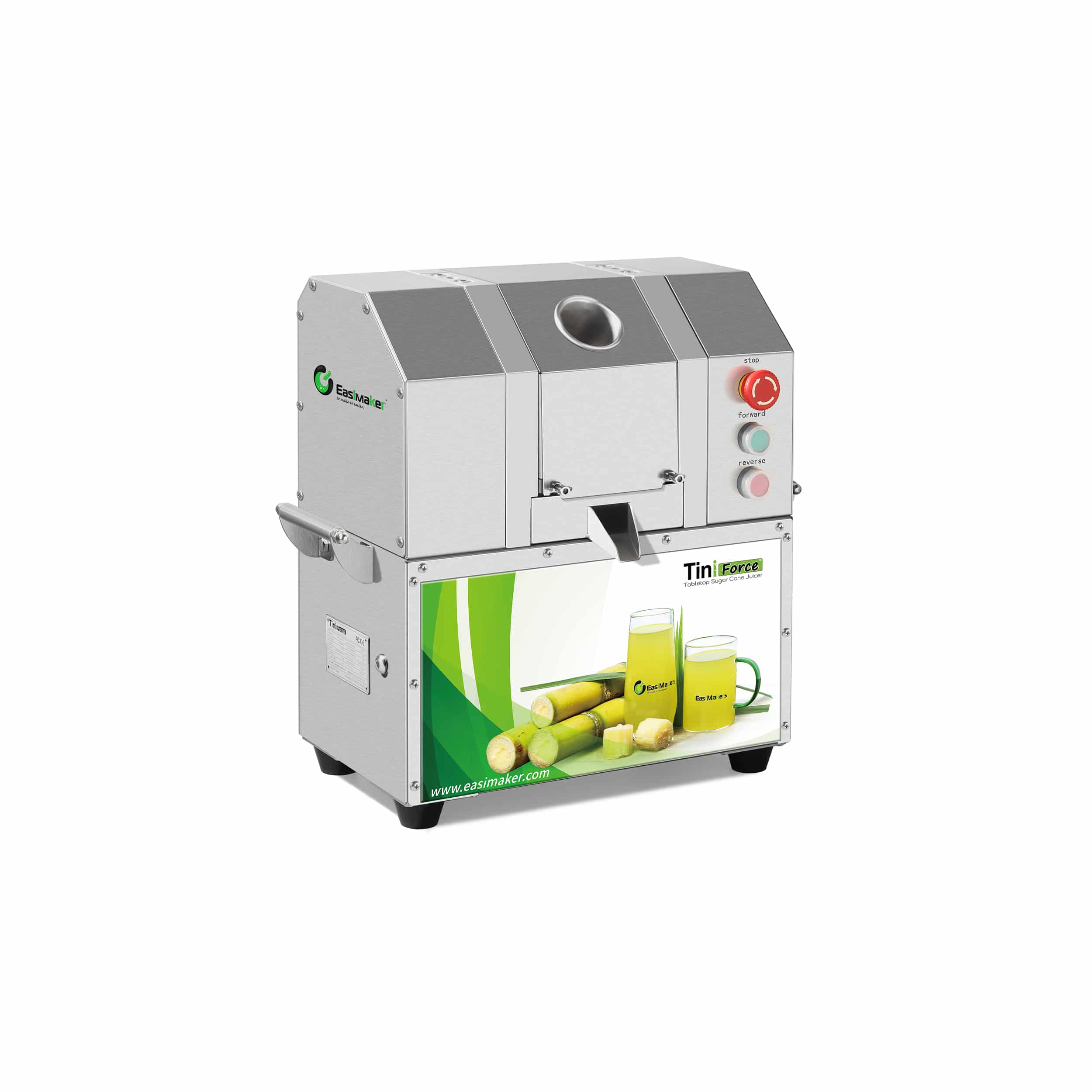
Counter space is only one selection factor. The choice between compact and larger commercial equipment should also reflect service volume, cane preparation, cleaning time and electrical supply. See the practical comparison of TiniForce S3 and EasiDeMax S4 sugarcane juicers when considering which operating format fits the planned workstation.
Use a dedicated work area for the juicer. Do not treat the space behind it as storage for boxes or the space above it as a catch-all shelf. Clear access supports routine inspection, cleaning and prompt response if an operator needs to stop the machine.
Plan Power, Drainage and Hygiene Access
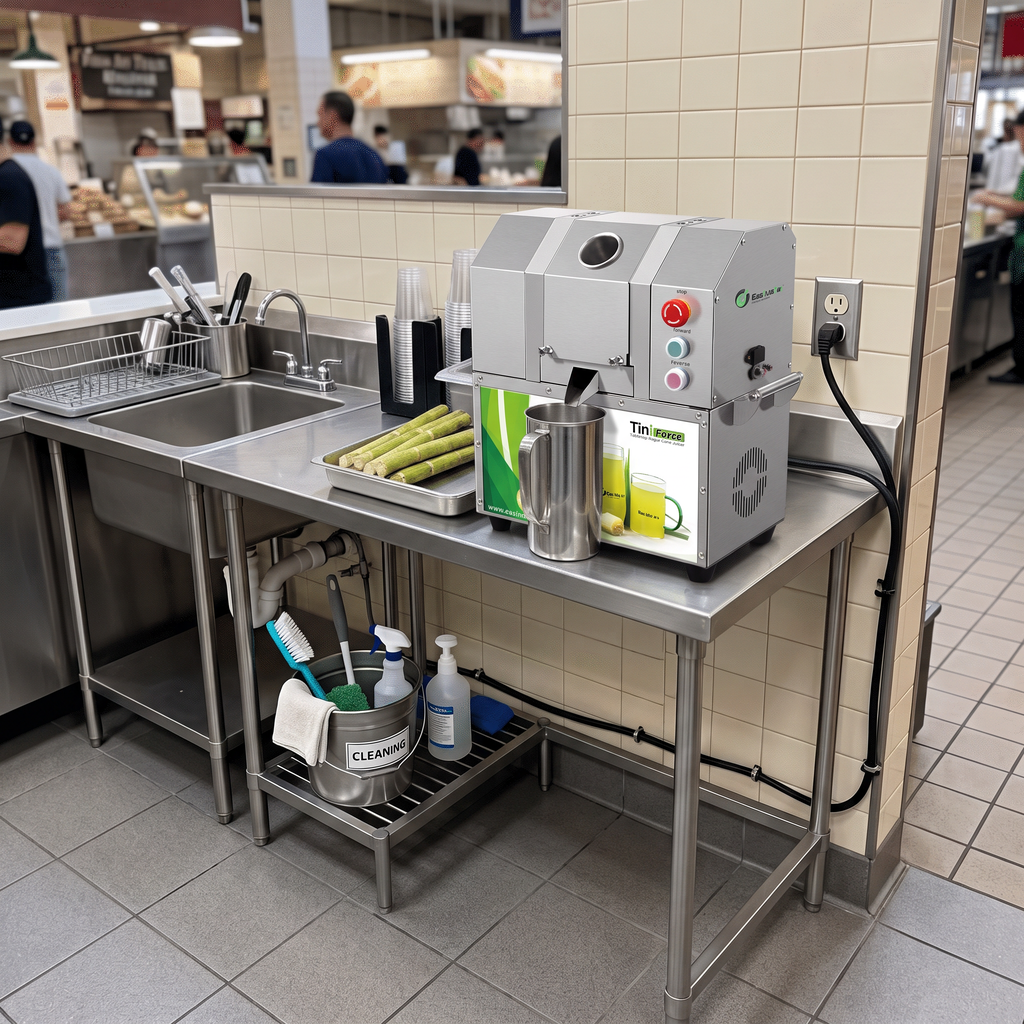
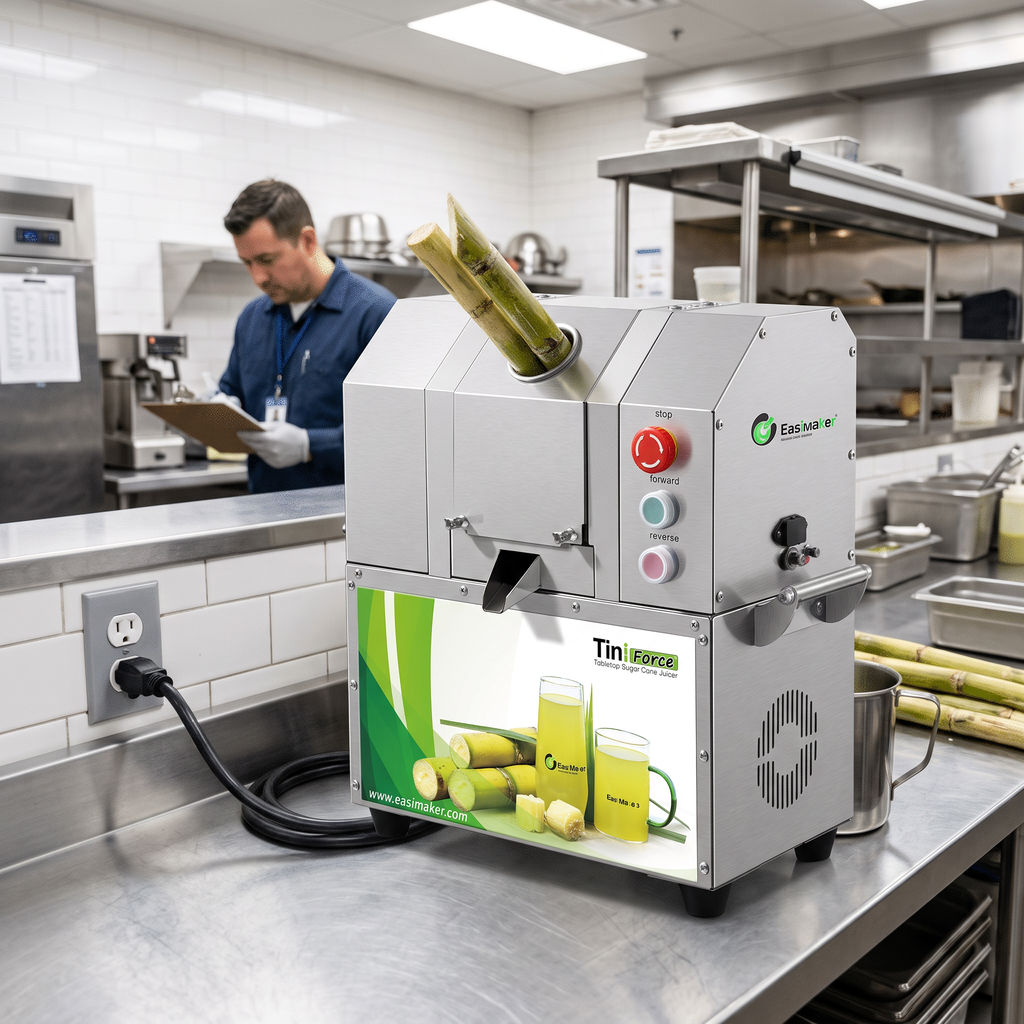
Electrical installation should be planned before the counter is completed. Confirm that the local supply matches the exact rating plate requirements for voltage, frequency and phase. The outlet, protection and installation method should comply with local electrical rules and should be assessed by a qualified person where required. Do not use an unsuitable extension lead or modify the electrical connection to make a machine fit the site.
Read commercial sugarcane juicer power requirements before confirming the outlet location. Position the outlet so it is accessible without routing cables through wet zones, walkways or customer areas.
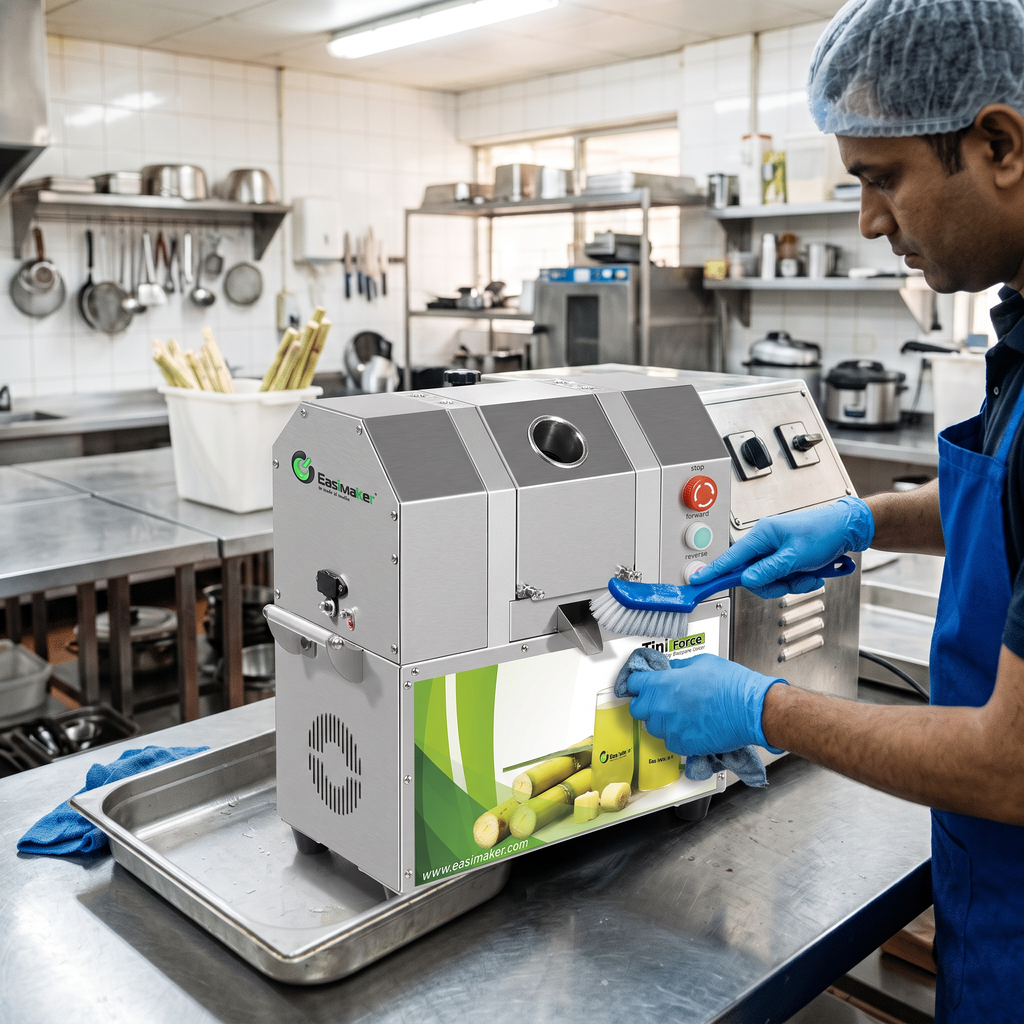
Water and drainage planning are equally important. A nearby sink or approved washing arrangement can shorten cleaning work, but local food-service requirements determine what is acceptable. Design the counter so spilled liquid can be cleaned promptly, tools can be kept off the floor, and cleaning access is not blocked by permanently fixed cabinets. Keep cleaning chemicals separate from food, packaging and food-contact surfaces.
During daily operation, follow the machine manual and your site’s hygiene procedure. Switch off and isolate equipment before any cleaning or adjustment required by the manual. Never compromise guards, safety components or normal cleaning steps to gain a few seconds during a queue.
Practical Layout Options for Small Shops
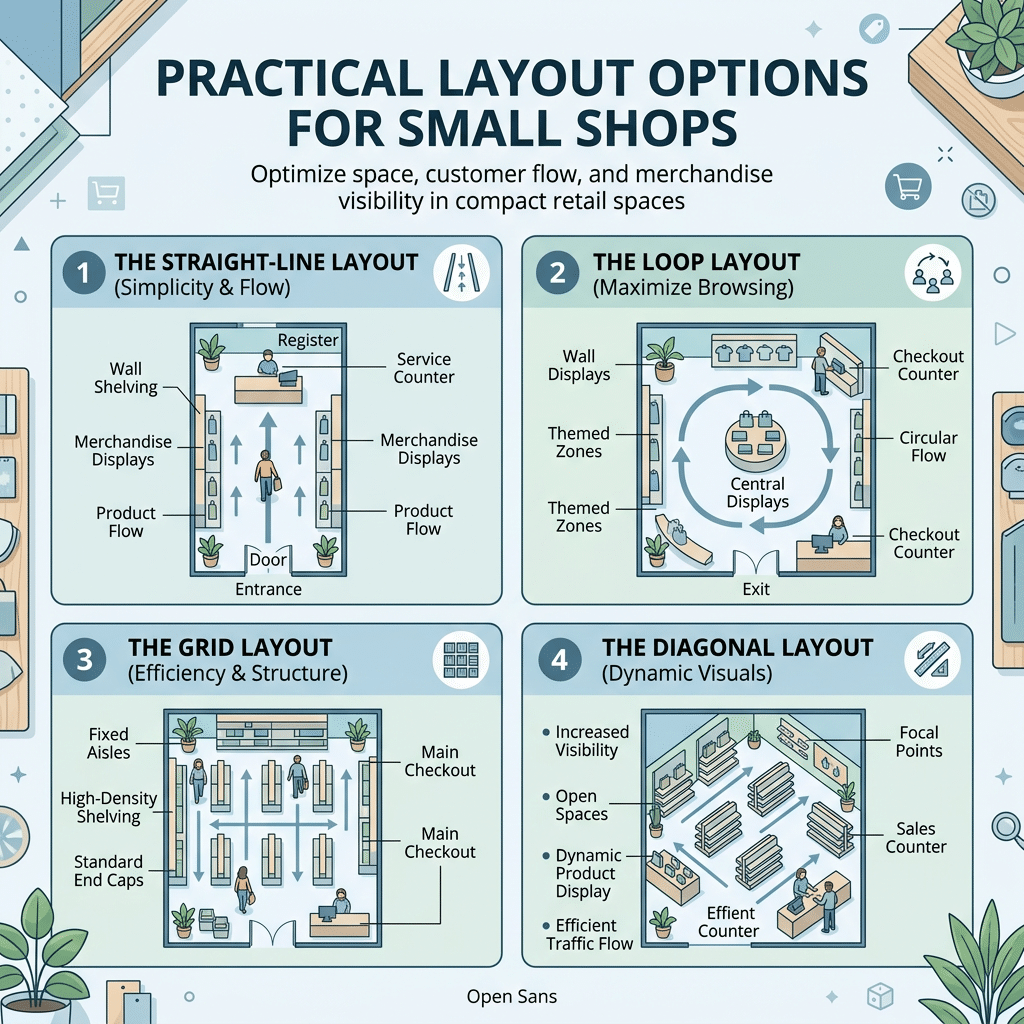
Straight-wall counter
A straight-wall layout is often the simplest choice for a kiosk, market stall or narrow shop. Arrange the work from cane preparation to juicing to serving along one line. It is easy to understand and can keep customers on the opposite side of the counter. Its limitation is that a single operator may need to walk farther during busy periods if storage and washing are at opposite ends.
L-shaped counter
An L-shaped counter can place preparation on one run and juicing plus serving on the other. This can create a compact operator position and preserve a clearer customer frontage. It requires careful corner planning so that doors, drawers and cleaning access do not conflict.
Back-bar preparation with front service counter
Where the premises permit it, keep cane storage, washing and most preparation at a back counter, then move prepared cane to the juicer at the service counter. This may produce a cleaner customer-facing presentation. It only works when the transfer path is short, controlled and does not force the operator through public traffic.
Choose the layout that fits the site rather than copying another shop’s floor plan. The right arrangement is the one that supports your staff level, menu process, sanitation routine and customer queue pattern.
Improve Operator Flow During Busy Service
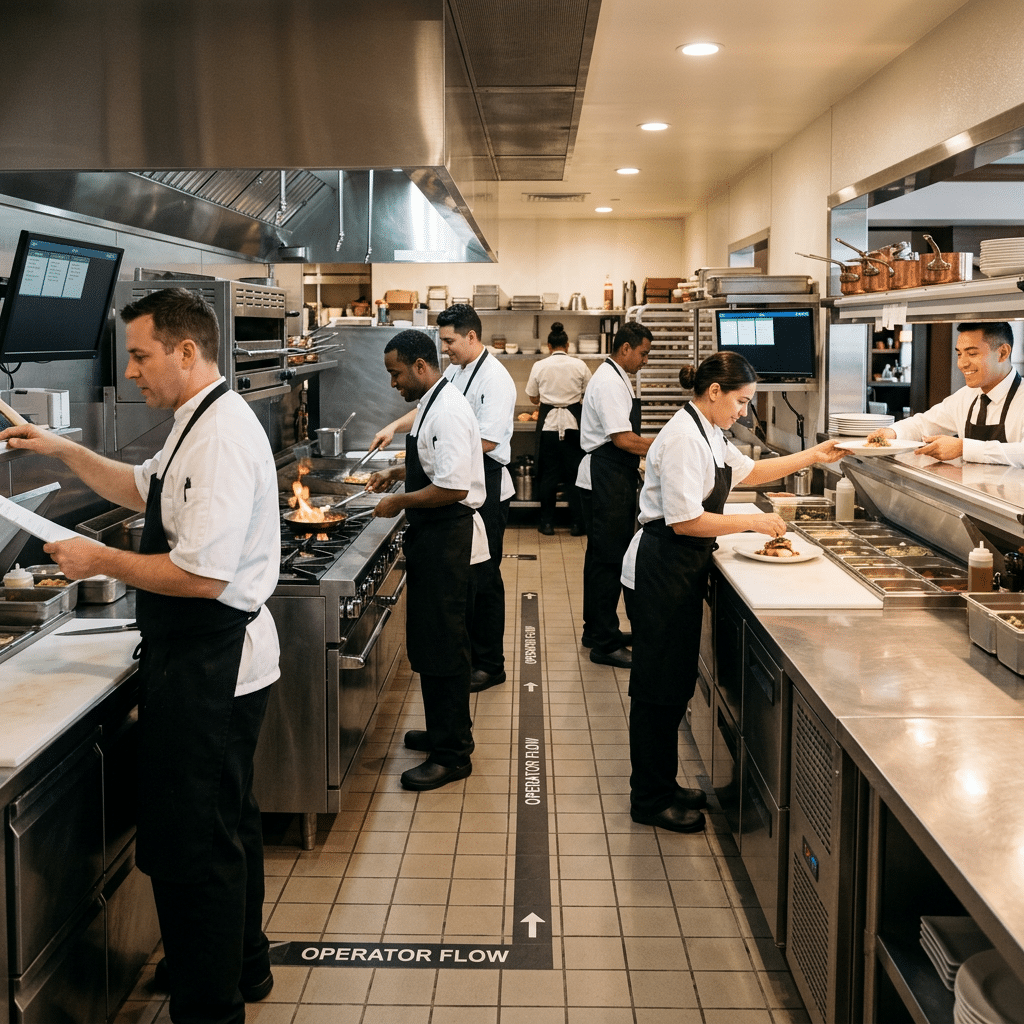
Test the layout with the actual actions of service before committing to cabinetry. Mark the proposed machine, sink, cup storage, bagasse container and payment terminal locations with tape or temporary tables. Then ask an operator to simulate receiving cane, preparing an order, serving it, clearing residue and cleaning the station. This reveals issues that a drawing may miss.
Look for repeated crossing movements, reaching over wet areas, turning with cane in hand, and points where one person blocks another. Keep frequently used items within the normal work zone, while reserve stock can sit farther away. If two people will work during peak hours, define whether one person prepares cane while the other juices and serves; the counter must provide enough separation for both tasks.
Do not overbuild the service counter. Small shops often benefit more from a clear operating surface and organised under-counter storage than from additional display fixtures. For budgeting, include counter work, utility installation, washing facilities, packaging storage, cleaning supplies and ongoing maintenance alongside equipment cost. The guide to budgeting for a sugarcane juice business outlines the wider costs buyers should consider.
Counter Layout Checklist Before Opening
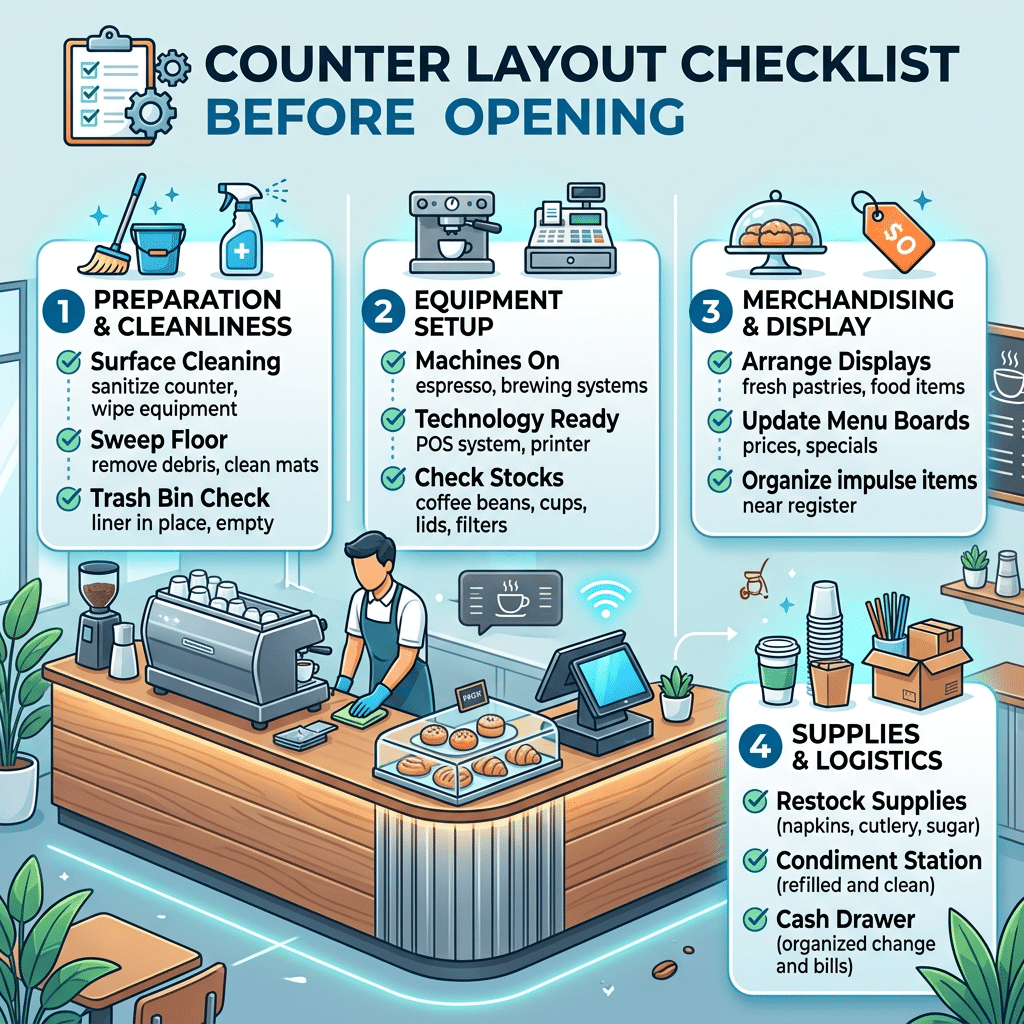
- Confirm the exact juicer dimensions, access requirements and operating orientation from current documentation.
- Check that counter construction is level, stable and appropriate for the equipment.
- Verify the local electrical supply against the machine rating plate before connection.
- Keep power connections and cables clear of water, wet cleaning zones and walkways.
- Provide a defined route from cane storage to washing, preparation, juicing and serving.
- Provide practical access for routine cleaning, residue removal and inspection.
- Separate food-contact tools, packaging, cleaning materials and waste collection.
- Test the workflow with the expected number of operators and a realistic customer queue.
- Review local food hygiene, building, electrical and waste-disposal requirements before opening.
A documented opening and closing routine helps keep the layout effective after launch. Assign responsibility for cleaning, waste removal, restocking and basic inspection so that the counter returns to a ready condition for the next service period.
Build the Layout Around Daily Work

A compact sugarcane juice counter can operate well when the layout is built around the real sequence of work. Keep cane handling, juicing, serving and cleaning organised in distinct but connected zones. Measure carefully, use the actual machine documentation, protect cleaning access and verify utilities before construction.
For businesses planning a branded equipment range or adapting equipment for a particular electrical market and operating model, Easimaker also provides information on OEM sugarcane juicer programmes for distributors and brands.