Buying a Sugarcane Machine in the USA: Importer Checklist

Table of Contents

Buying a sugarcane machine in the USA involves more than choosing a model. Importers should confirm the intended workflow, electrical compatibility, delivery terms, import documents, local inspection requirements, cleaning access, spare-parts support, and total landed cost before placing an order.

What USA Buyers Should Confirm Before Ordering

Equipment specification and import planning documents for a commercial sugarcane machine

When buying a sugarcane machine in the USA from an overseas manufacturer, confirm the machine’s electrical configuration, intended workflow, shipping terms, import paperwork, local foodservice requirements, cleaning process, parts availability, and total landed cost before paying a deposit. The lowest factory price does not necessarily represent the lowest operating cost or the quickest route to opening.

A commercial sugarcane juicer is usually selected around the cane preparation process, expected serving pattern, available counter or floor space, and operator routine. For a USA import, add the practical questions of voltage and plug compatibility, delivery responsibility, customs clearance, destination charges, and local authority or insurer expectations. These points should be resolved in writing, against the exact model and configuration being purchased.

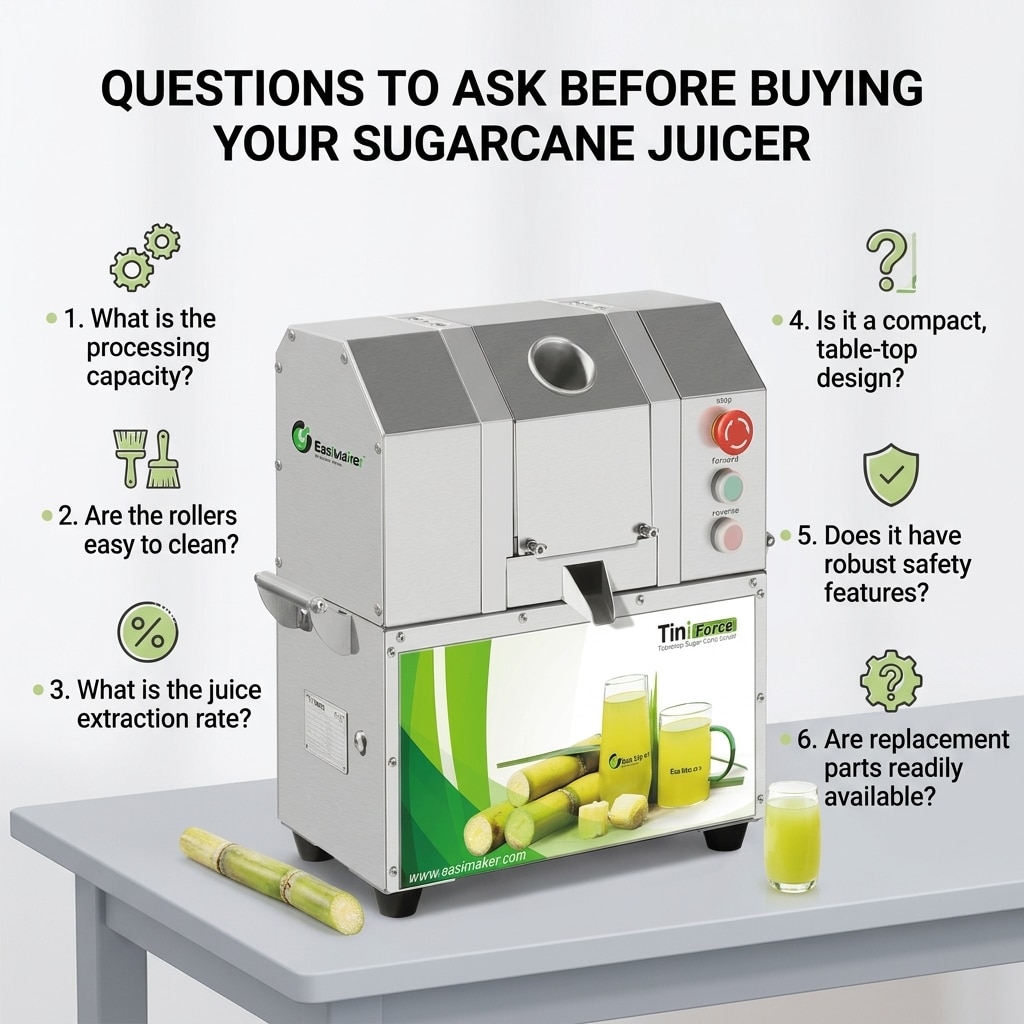
Start with a clear specification sheet rather than a generic product photo. It should identify the model, electrical input, dimensions, net and shipping weight, included accessories, material information where relevant, warranty scope, packing method, and available replacement parts. A capable supplier should be able to answer operational questions directly; this manufacturer question checklist for commercial sugarcane juicers is useful for organizing those discussions.

Define the Machine and Your Intended Operation

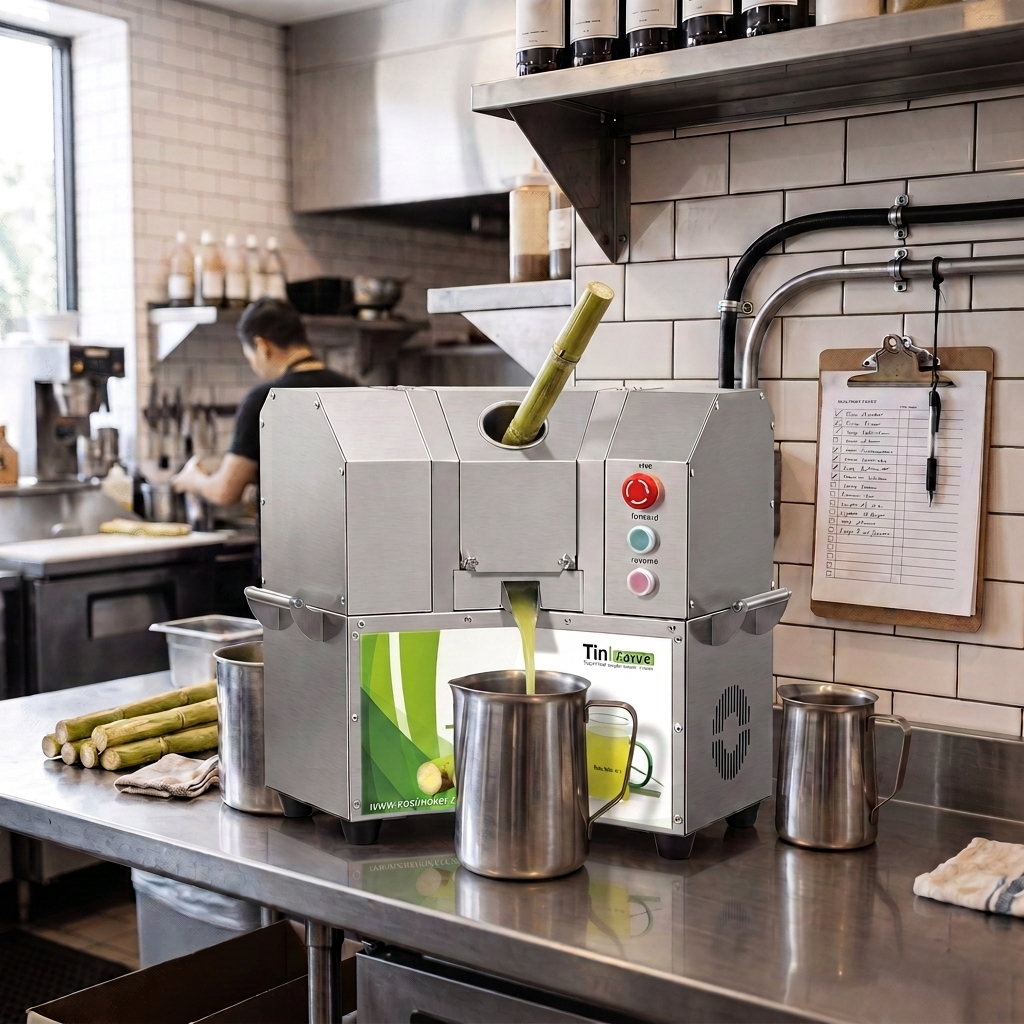
Commercial sugarcane machine in an organized cane preparation workflow

A commercial sugarcane machine crushes prepared cane through rollers to extract juice. It is not simply a countertop beverage appliance: it forms one part of a process that may include receiving cane, washing, trimming, splitting or cutting, crushing, straining, serving, cleaning, and waste handling.

Define the operation before comparing machines. A small counter-service location with intermittent orders may prioritize footprint and simple daily cleaning. A busy juice bar, market stall, restaurant, or distributor demonstration operation may need a different workflow, more preparation capacity, or a more deliberate spare-parts plan. Do not assume that a larger machine is automatically right for a given business. The best fit is the model that supports the real order pattern and can be cleaned consistently by the available staff.

Write down the following details for the supplier:

  • cane type, typical stalk diameter, and condition on arrival;
  • how cane will be washed, trimmed, and cut before crushing;
  • estimated operating periods and peak service windows;
  • available installation dimensions, including clearance for feeding, cleaning, and collecting bagasse;
  • the intended electrical supply at the actual installation point; and
  • who will operate, clean, inspect, and maintain the equipment.

If you are deciding between a compact and a larger commercial format, compare the workflow rather than relying on a model name alone. The TiniForce S3 and EasiDeMax S4 operating comparison can help frame questions about service volume, counter space, cane preparation, and local electrical requirements.

USA Importer Checklist

Inspection of a crated commercial sugarcane machine at delivery

Use this checklist as a pre-order record. It is designed to help buyers gather the information needed for a practical purchasing decision. It does not replace advice from a customs broker, freight forwarder, licensed electrician, local health authority, or legal adviser.

1. Confirm the exact commercial offer

  • Request a pro forma invoice that states the exact model, quantity, unit price, currency, payment terms, and trade term.
  • Confirm what is included: machine, cutting or preparation accessories if applicable, tools, manuals, replacement wear parts, and export packaging.
  • Ask for the electrical specification, plug type, motor information where applicable, machine dimensions, shipping dimensions, and gross weight.
  • Request photos or video of the ordered configuration, particularly if optional parts or a custom electrical arrangement are involved.

2. Clarify responsibility at each shipping stage

  • Identify the agreed Incoterm and named place. Terms such as EXW, FOB, CIF, or DDP allocate responsibilities differently, so do not use them casually.
  • Establish who arranges main freight, cargo insurance, customs entry, port handling, delivery appointment, unloading, and final delivery.
  • Ask whether the quoted freight includes destination charges. Obtain estimates in writing, while recognizing that freight and port costs can change.

3. Prepare for customs and local requirements

  • Work with a qualified USA customs broker or freight forwarder early enough to review the product description, country of origin, tariff classification, and required entry information.
  • Confirm the importer of record and who will hold responsibility for the customs entry and applicable charges.
  • Check whether the equipment needs country-of-origin marking and whether its packaging or documentation needs particular treatment for your shipment.
  • Before ordering, ask the local health department, building authority, electrical inspector, landlord, or insurer what they require for equipment used in your specific premises. Requirements can vary by state, city, use case, and inspector.

4. Protect the delivery and installation process

  • Verify whether the delivery point has a dock, forklift, liftgate access, or another unloading plan.
  • Measure doors, corridors, elevator openings, counters, and the installation location before dispatch.
  • Assign a person to inspect the crate and machine at delivery, photograph visible damage, and follow the carrier’s damage-reporting procedure promptly.

Buyers should also reserve budget for items outside the supplier invoice. Review this guide to budget the full cost of a commercial sugarcane juicer before comparing offers only on machine price.

Electrical and Site-Readiness Checks

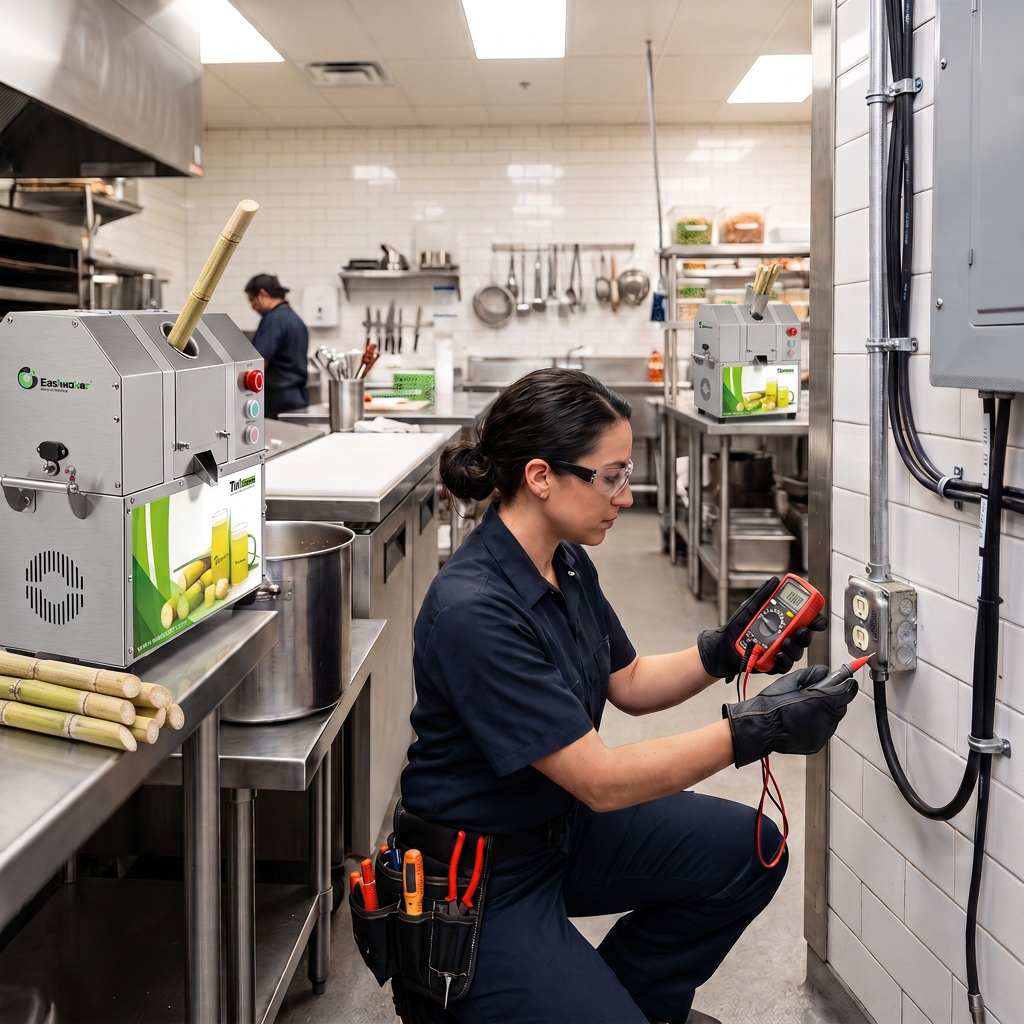
Electrical mismatch is one of the most avoidable problems when importing foodservice equipment. USA premises may have 120 V or 208/240 V service, and commercial sites may differ in phase arrangement, circuit availability, plug format, and local installation rules. A machine should be specified for the supply available at its final location, not selected based on an assumption about common voltage.

Give the supplier the following information: supply voltage, frequency, phase, receptacle type if already known, and whether the machine will be hardwired or plug-connected. Then ask for written confirmation of the machine’s required input and its plug or connection arrangement. Have a qualified local electrician review the final machine specification before installation planning.

Do not assume that a plug adapter, voltage converter, or a new receptacle will resolve every issue. The motor, controls, protective devices, wire sizing, grounding, and local code expectations may all matter. Similarly, do not assume that a manufacturer statement alone will satisfy every local inspector, landlord, insurer, or customer procurement policy. Ask the relevant local parties what documentation or marks they require for the actual installation.

Site readiness also includes a stable, cleanable support surface; practical clearance around the feed area and bagasse outlet; nearby handwashing and cleaning arrangements as required by the operation; drainage and waste handling; and safe storage for cane. Plan the operator path from cane preparation to serving so the machine does not create congestion during peak periods.

Shipping, Customs, and Landed-Cost Planning

Landed cost is the amount required to place the machine at your usable destination, not just the factory quotation. It may include the product price, inland transport in the origin country, export packing, international freight, cargo insurance, customs brokerage, duty or other government charges where applicable, port or terminal charges, domestic delivery, unloading, installation work, and local tax obligations. The precise charges depend on the shipment, trade term, route, product classification, and destination.

Request a shipment estimate that separates known costs from estimates. This makes it easier to identify what remains outside the supplier’s responsibility. When comparing two offers, compare equivalent terms. A lower EXW price and a higher delivered price are not directly comparable until freight, export handling, destination charges, and service scope are included.

Ask for a packing list and commercial invoice format in advance. Your broker or forwarder can tell you whether the descriptions and information are sufficient for the planned entry. Avoid vague product descriptions. The commercial documents should identify the equipment accurately and consistently with the actual shipment.

For a first import, allow time for planning and avoid scheduling an opening date solely around an estimated sailing or arrival date. Customs review, port congestion, appointments, inland transport, and damage resolution can affect the actual delivery date. Keep a record of quotations, correspondence, shipping documents, and serial numbers for future support and repeat purchases.

Some businesses also compare outright purchase with financing once their budget is clear. This overview of commercial sugarcane juicer buying and leasing options can help structure that financial discussion.

Service, Cleaning, and Spare-Parts Planning

Imported equipment should be supportable after delivery. Before ordering, ask which components are normally regarded as wear parts, what spare parts are recommended for an operator to keep, how parts are identified, and how replacement parts are shipped to the USA. Request an exploded diagram, parts list, operating manual, cleaning instructions, and troubleshooting guidance in a usable format.

Clarify warranty terms in writing. The practical questions are what is covered, for how long, which party pays freight for a warranty part, what evidence is needed for a claim, and how remote troubleshooting is handled. Avoid treating a broad warranty statement as a substitute for a clear service process.

Cleaning is both an operational and purchasing issue. Operators need enough access to clean product-contact and surrounding areas according to the machine instructions and their food-safety procedures. Review the steps, tools, removable parts, and expected downtime before purchase. A machine that is technically suitable but difficult for the team to clean consistently can create avoidable daily friction.

Build maintenance into the operating routine. Check fasteners, guards, rollers, drive components, electrical connections, and cleaning condition only in line with the manufacturer’s instructions and applicable safety practices. Disconnect or isolate power before cleaning, inspection, adjustment, or service as instructed. This commercial sugarcane machine maintenance guide provides a useful starting point for establishing a routine.

Final Review Before Payment

Before releasing final payment or approving dispatch, match the order confirmation against the agreed specification. Check the model, quantity, electrical configuration, accessories, packaging, shipping marks, documents, consignee details, and trade term. Make sure the final installation location is ready for delivery and that the responsible team understands the receiving and inspection process.

Buying a sugarcane machine in the USA is most reliable when the commercial, technical, and operational questions are treated as one decision. The machine must fit the cane and service workflow, arrive under clearly assigned shipping responsibilities, connect safely at the site, and remain practical to clean and support over time.

For a quote or a technical discussion, contact Easimaker with your expected workflow, cane preparation method, available electrical supply, delivery location, and any local requirements already identified. This allows the machine configuration and commercial proposal to be discussed against the needs of your market.
Sugarcane Machine Electrical Requirements: Buyer Checklist

Table of Contents

Before ordering a commercial sugarcane juice machine, confirm the site power supply against the machine rating plate and supplier documentation. Voltage, frequency, phase, plug type, circuit protection, grounding, and local installation rules must all match.

Quick Answer: What Electrical Details Must Match?

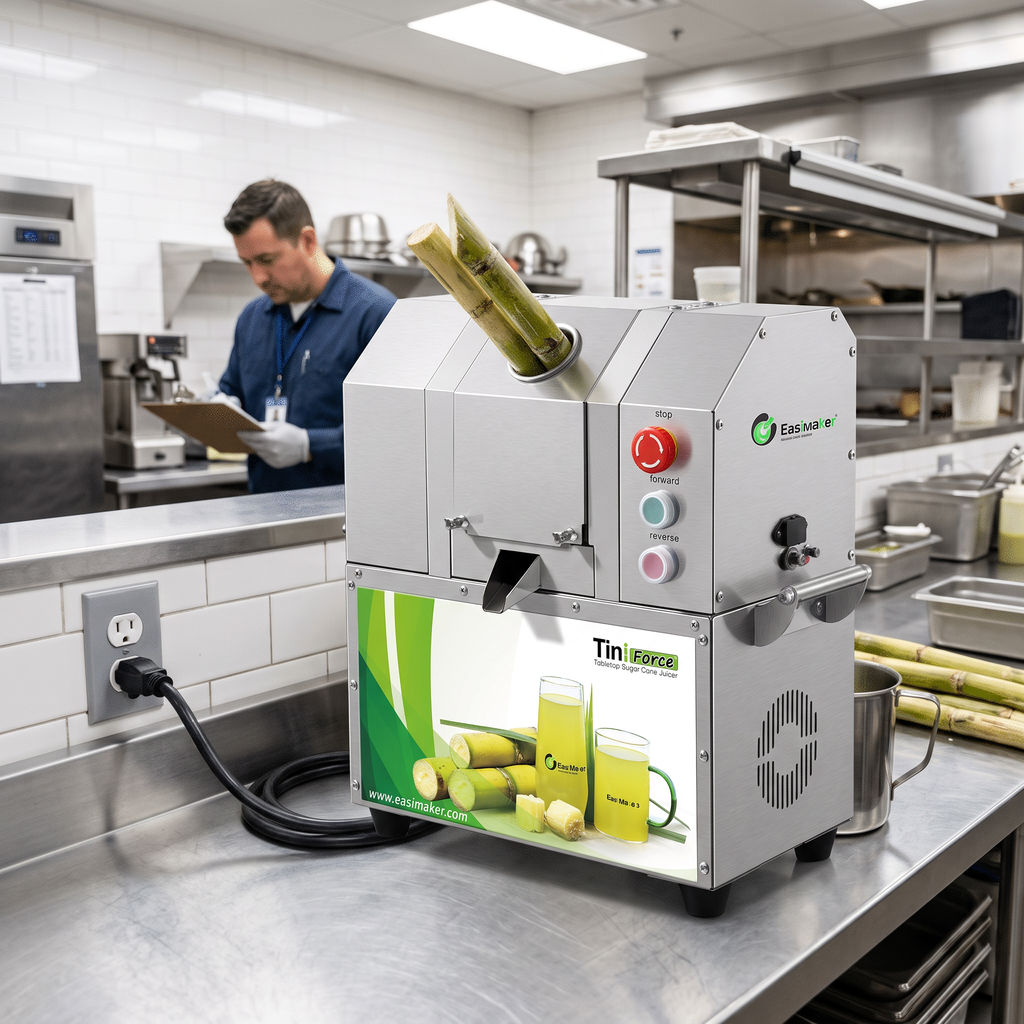
Commercial sugarcane juice machine installed near a suitable electrical connection

The electrical supply at your site must match the commercial sugarcane juice machine specification supplied for your order. Before purchase, verify the machine’s rated voltage, frequency, phase, power input, plug arrangement, grounding requirement, and recommended circuit protection. Do not assume that a similar-looking outlet or a voltage converter will make an unsuitable machine safe to use.

For buyers, the practical rule is simple: compare the site supply with the machine rating plate and written technical documentation before shipment. If any item differs, ask the supplier and a qualified local electrician to confirm the correct solution before installation. This is especially important for imported equipment, multi-site operations, distributors, and projects where the final installation country differs from the purchasing country.

Electrical compatibility is only one part of a sound buying decision. It should be reviewed alongside cane type, expected service volume, cleaning workflow, available counter space, and local maintenance support. Our guide on choosing a commercial sugarcane juicer covers these wider operating considerations.

Start With the Machine Rating Plate

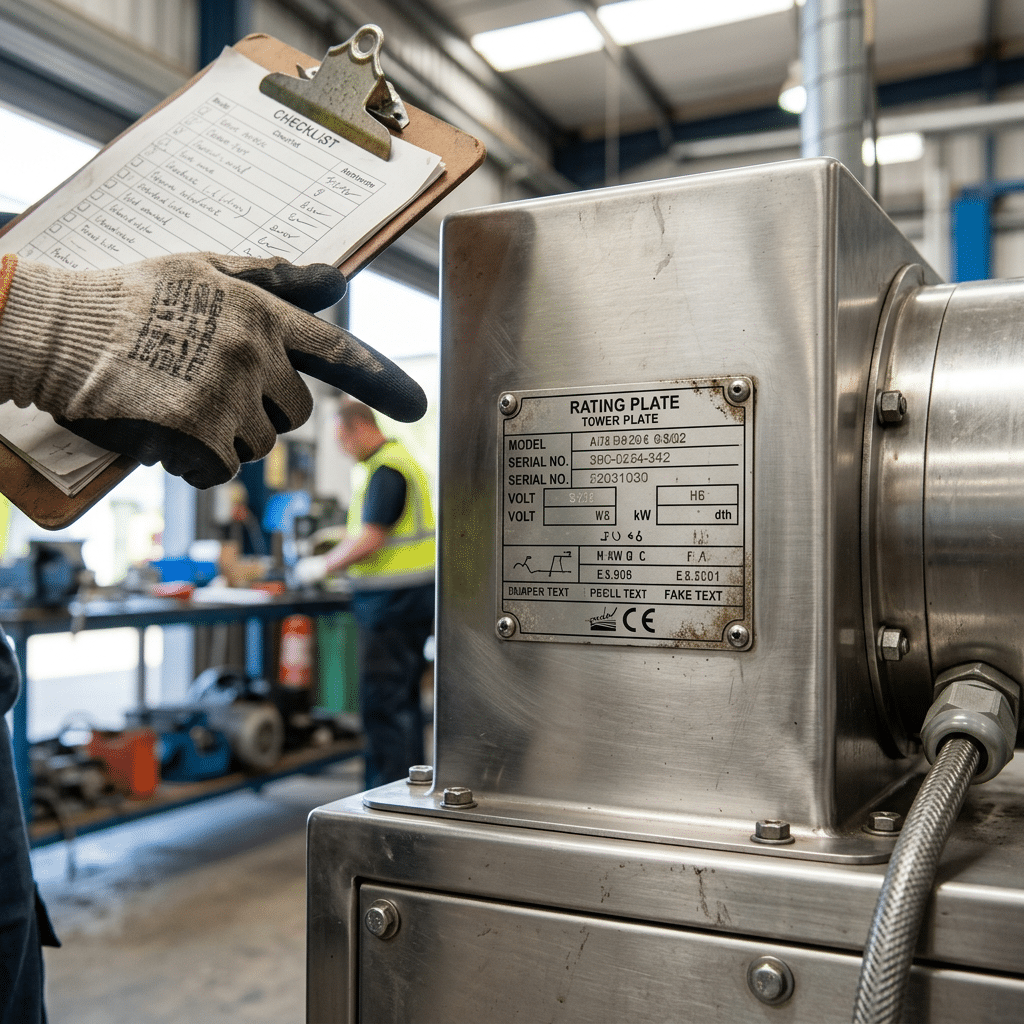
Rating plate area on a commercial sugarcane juice machine

The rating plate is the primary identification point for a machine’s electrical requirements. It is normally fixed to the equipment body and should be readable during receiving, installation, and service. Request a clear rating-plate photo or the applicable technical specification before confirming an order, particularly when a machine will be exported.

Depending on the model and market version, the plate or supporting documentation may state:

  • Rated voltage, expressed in volts (V).
  • Rated frequency, expressed in hertz (Hz).
  • Supply phase, such as single-phase or three-phase.
  • Power input, typically expressed in watts (W) or kilowatts (kW).
  • Rated current, where provided, expressed in amperes (A).
  • Electrical protection information and equipment identification details.

Use the rating plate to verify the delivered machine, not merely the product family name. A supplier may offer different electrical configurations for different markets, so one version of a commercial sugarcane juicer may not have the same requirements as another. The final approval should be based on the agreed order specification and the unit documentation.

Power input is useful for electrical planning, but it does not by itself specify the required outlet, circuit rating, cable size, or protective device. Those decisions must account for local electrical rules, the installation method, and the machine manufacturer’s instructions.

Electrical Buyer Checklist

Electrical checklist inspection for a commercial sugarcane juice machine

Use this checklist before placing an order or approving production. Record the answers in the purchase specification so the equipment supplier, installer, and operating team are working from the same information.

  1. Confirm the site supply. Record nominal voltage, frequency, phase, and the available outlet or hard-wired connection at the exact installation location.
  2. Confirm the machine configuration. Ask which electrical version is quoted and request written confirmation of the rated supply requirements.
  3. Check the connection method. Establish whether the unit is supplied with a plug, requires a local plug to be fitted, or needs fixed wiring by a qualified electrician.
  4. Review the circuit. Confirm whether the proposed circuit is dedicated, suitably protected, correctly grounded, and not already carrying other high-load equipment.
  5. Check local requirements. Electrical work, outlets, disconnects, residual-current protection, and cable selection may be governed by local regulations.
  6. Plan the physical location. The machine should have a stable, dry, cleanable position with the cable protected from damage and no strained connection.
  7. Keep documents available. Retain the order specification, manual, rating-plate record, wiring information if supplied, and service contact details.

For a broader supplier discussion, use this list of questions to ask a sugarcane juicer manufacturer before buying. It helps purchasing teams cover electrical compatibility alongside parts, cleaning, workflow, and after-sales expectations.

Voltage, Frequency, and Phase

Voltage must match the supplied machine

Voltage is the electrical potential available at the installation point. A machine built for one nominal voltage may not operate correctly, may be damaged, or may create a safety risk when connected to another voltage. Buyers should provide the supplier with the actual local supply information instead of describing it only as “standard power.”

Where a site has more than one voltage available, identify the intended connection before ordering. Do not rely on a temporary adapter, travel adapter, or unverified transformer arrangement. Any transformer or conversion equipment must be selected and installed by a qualified professional for the complete load and local conditions.

Frequency is not interchangeable by default

Frequency is measured in hertz and commonly varies by country or region. It can affect motor speed, motor heating, and overall machine operation. A voltage match does not automatically mean that the frequency is suitable. Confirm both values against the machine specification.

Phase affects the site connection

Commercial equipment may be configured for single-phase or three-phase supply. These are different supply arrangements and are not interchangeable through an ordinary plug adapter. Confirm the phase available at the actual point of installation, then order the corresponding machine configuration. If a site upgrade is being considered, have the electrical contractor evaluate the whole installation before the equipment is shipped.

When the destination market is not final at the time of purchase, document the expected markets and their electrical supply conditions early. This reduces the risk of holding inventory that is unsuitable for a distributor’s customer base.

Dedicated Circuit, Protection, and Grounding

Grounded electrical outlet inspected for a commercial juice station

A commercial sugarcane juice machine should be connected to an electrical installation that is appropriate for the machine and local rules. In practice, this means more than finding an available socket. The circuit must be capable of supplying the equipment under normal operating conditions and must include the protective measures required for that installation.

Do not overload a shared circuit

Countertop food-service areas often contain refrigeration, blenders, ice equipment, heating appliances, and point-of-sale devices. Connecting several appliances to one circuit can cause nuisance tripping, voltage drop, interrupted service, or unsafe use of extension leads. A dedicated circuit may be appropriate, but the decision should follow the machine documentation and a qualified electrician’s assessment.

Maintain protective grounding

Where the machine is designed for a grounded connection, the grounding path must remain continuous from the equipment to the building electrical system. Never remove an earth pin, defeat a grounded plug, or use an adapter that eliminates grounding. Grounding is a protective measure, not an optional feature for convenience.

Use local protective devices correctly

Circuit breakers, fuses, residual-current devices, ground-fault protection, local isolators, and cable selection are determined by the equipment requirements and local installation rules. Their terminology and required arrangement vary by market. For this reason, it is not responsible to select a breaker size or wiring method from general online advice alone. Give the electrician the rating-plate details, installation manual, and intended circuit information.

Plug, Socket, and Installation Conditions

Plug and socket formats vary by country, even where nominal voltage is similar. Confirm the supplied plug type in writing. If the equipment is supplied without a local plug, arrange for a qualified electrician to fit a compatible connection in accordance with the manufacturer instructions and local requirements. The plug is only one part of the electrical decision; it must still be compatible with the rated voltage, frequency, phase, current, circuit, and grounding arrangement.

Plan the machine position before delivery. The connection should be accessible for routine isolation and inspection, while remaining protected from washdown, standing water, crushing, heat, and accidental cable damage. Avoid routing a cord across a walkway or beneath equipment where it can be pinched. Do not use a damaged lead, loose socket, overloaded multi-way extension, or improvised connection.

Commercial juice preparation also requires disciplined cleaning. Before cleaning, stop the machine and isolate it from the electrical supply according to the operating instructions. Keep electrical controls and connections protected from unnecessary water exposure, and do not reconnect the machine until the work area is clean, dry, and ready for operation.

Before opening each day, operators should visually check the cord, plug, socket condition, machine casing, and control area. Any unusual noise, damaged insulation, repeated tripping, burning smell, or erratic operation should be treated as a reason to stop using the machine and arrange competent inspection.

Ordering for Export, Distribution, or OEM

Electrical requirements deserve extra attention when equipment will be sold across borders. A distributor may serve customers with different supply conditions, while an OEM programme may need market-specific documentation, plug arrangements, labels, or machine configurations. These points should be agreed before production rather than handled after the equipment arrives.

Provide the destination country or countries, target customer type, expected sales channels, and available site power details. Ask the supplier which electrical configurations are available for the relevant machine, what information will appear on the rating plate, whether the plug is included, and what installation documentation is supplied. Do not imply that an electrical version is suitable for a market without verifying the applicable requirements.

For brand owners and distributors, the OEM sugarcane juicer guide for distributors and brands explains why market power standards should be part of the product brief from the beginning. Clear specifications reduce avoidable rework, shipment delays, and customer installation questions.

Purchasing teams should also decide who owns the final site-readiness check. In many projects, the supplier can confirm the machine specification, while the local installer or buyer remains responsible for verifying the building supply and completing compliant electrical work. Defining that boundary clearly helps commissioning proceed smoothly.

Commissioning and Daily Operating Checks

Installation should end with a controlled handover, not simply with the machine being plugged in. Confirm that the unit received matches the ordered electrical configuration, the connection has been inspected as required locally, and the operating team has access to the applicable manual. Run the initial checks in accordance with the manufacturer’s instructions before normal production begins.

A useful handover record can include the machine model and serial details, rating-plate photograph, installation location, supply information, installer details, date of commissioning, and any notes about the protective device or local isolation point. This record supports future maintenance, relocation, troubleshooting, and warranty communication.

Operators should not modify wiring, bypass safety devices, replace a plug without authorization, or investigate internal electrical faults. Their role is to use the machine as instructed, keep the area clean and dry, report abnormal behaviour promptly, and isolate the unit before cleaning or service. A practical maintenance plan also includes regular checks for cable wear, connection damage, loose external fittings, and changes in operating sound.

When evaluating a supplier, ask how technical questions, manuals, spare parts, and service requests are handled after delivery. Electrical suitability is established before installation, but responsive documentation and support remain important throughout the machine’s working life.

Commercial Bowl Cutter Buying Guide for Food Processors

Table of Contents

The right commercial bowl cutter should match your product recipe, batch size, texture requirements, workflow, cleaning routine, and available utilities. This guide explains the main buying factors for meat processors, food manufacturers, butcher shops, commissary kitchens, and other professional operations.

What Is a Commercial Bowl Cutter?

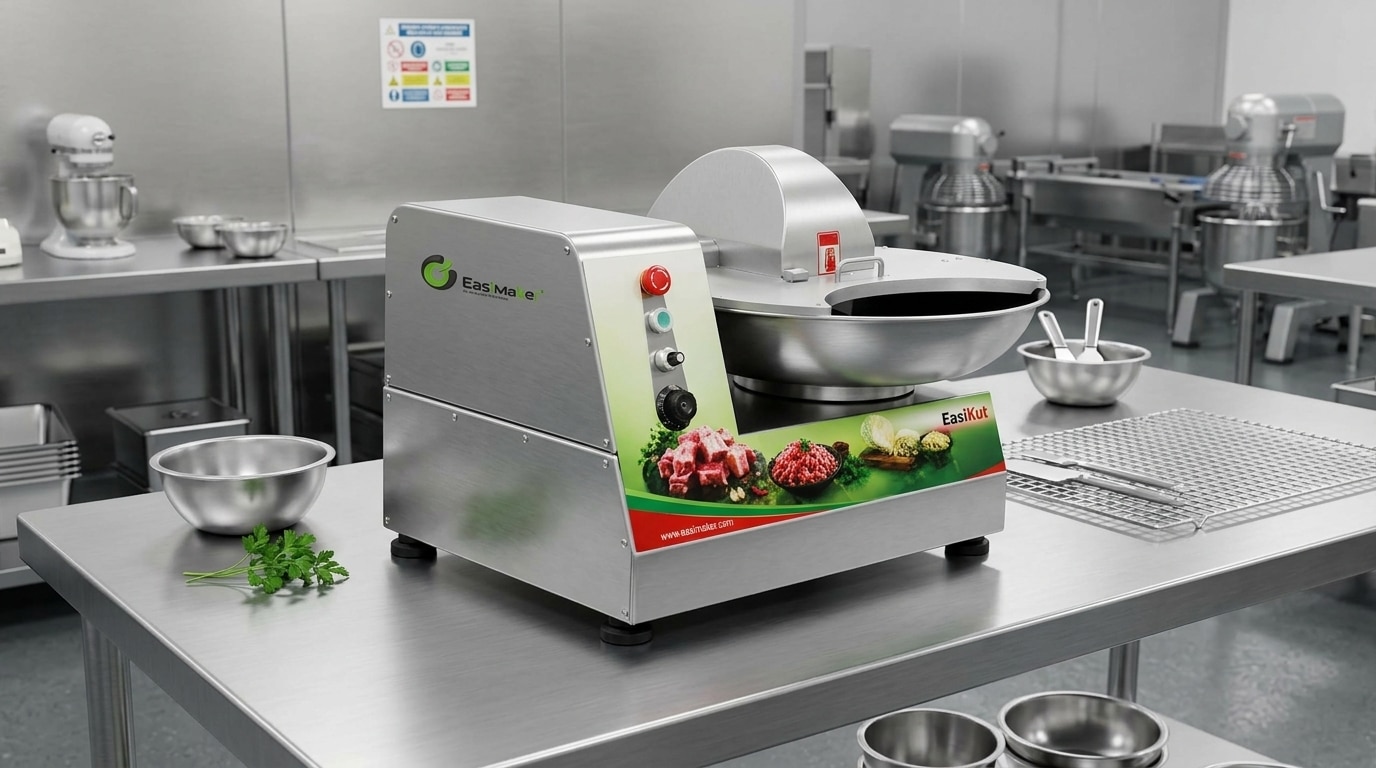
EasiKut BC25 commercial bowl cutter in a professional food processing workspace

A commercial bowl cutter is a food processing machine that combines a rotating bowl with high-speed cutting knives. As the bowl moves ingredients through the blade set, the machine can chop, mix, and develop a controlled texture. Depending on the recipe and operating settings, it may be used for sausage meat, emulsified products, meat fillings, pâté-style mixtures, vegetable preparations, and other processed foods.

Unlike a basic food processor, a commercial bowl cutter is designed for repeatable production, heavier workloads, and integration into a professional preparation area. The correct choice depends on more than bowl volume. Buyers should assess the product being processed, target texture, batch weight, available electrical supply, cleaning requirements, operator safety, and access to spare parts.

This commercial bowl cutter buying guide focuses on the practical questions food processors should answer before requesting a quotation or approving a machine for production.

Why Food Processors Use Bowl Cutters

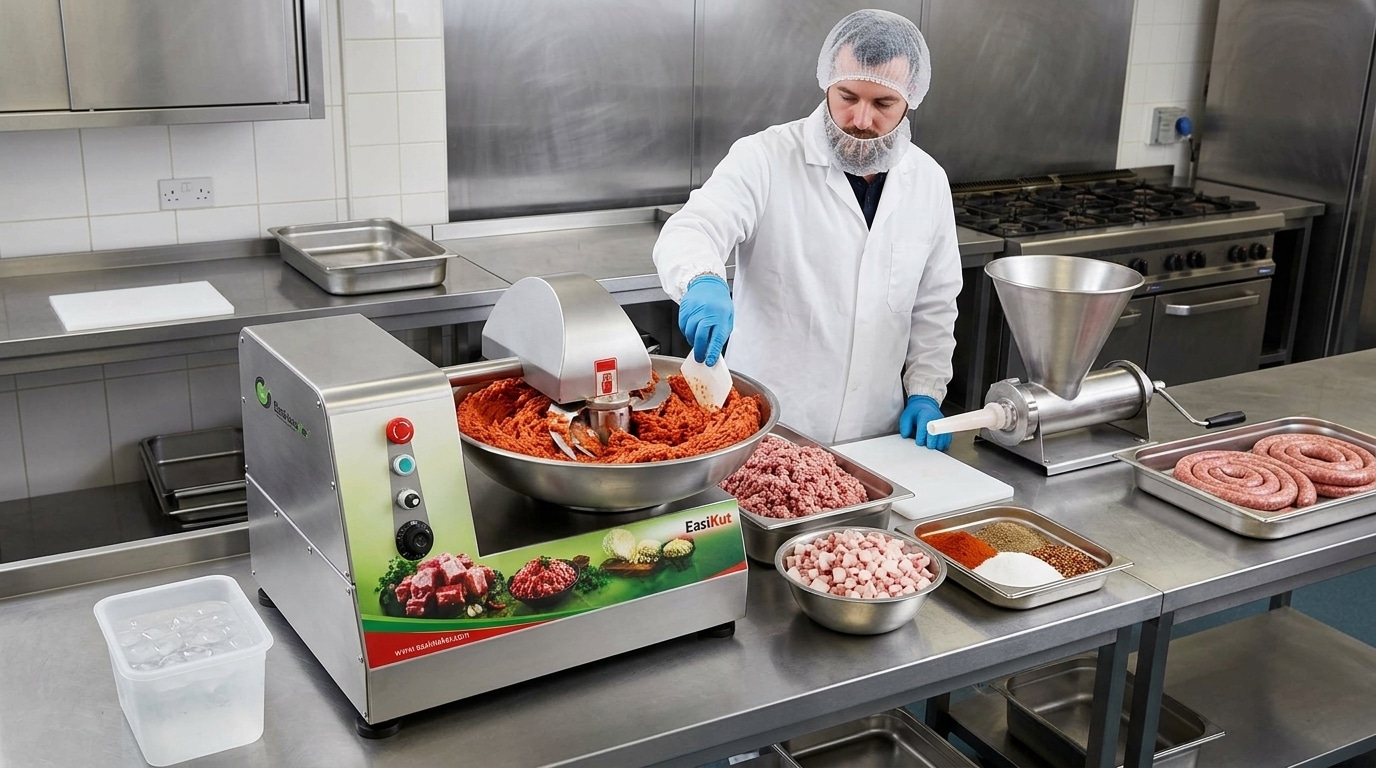
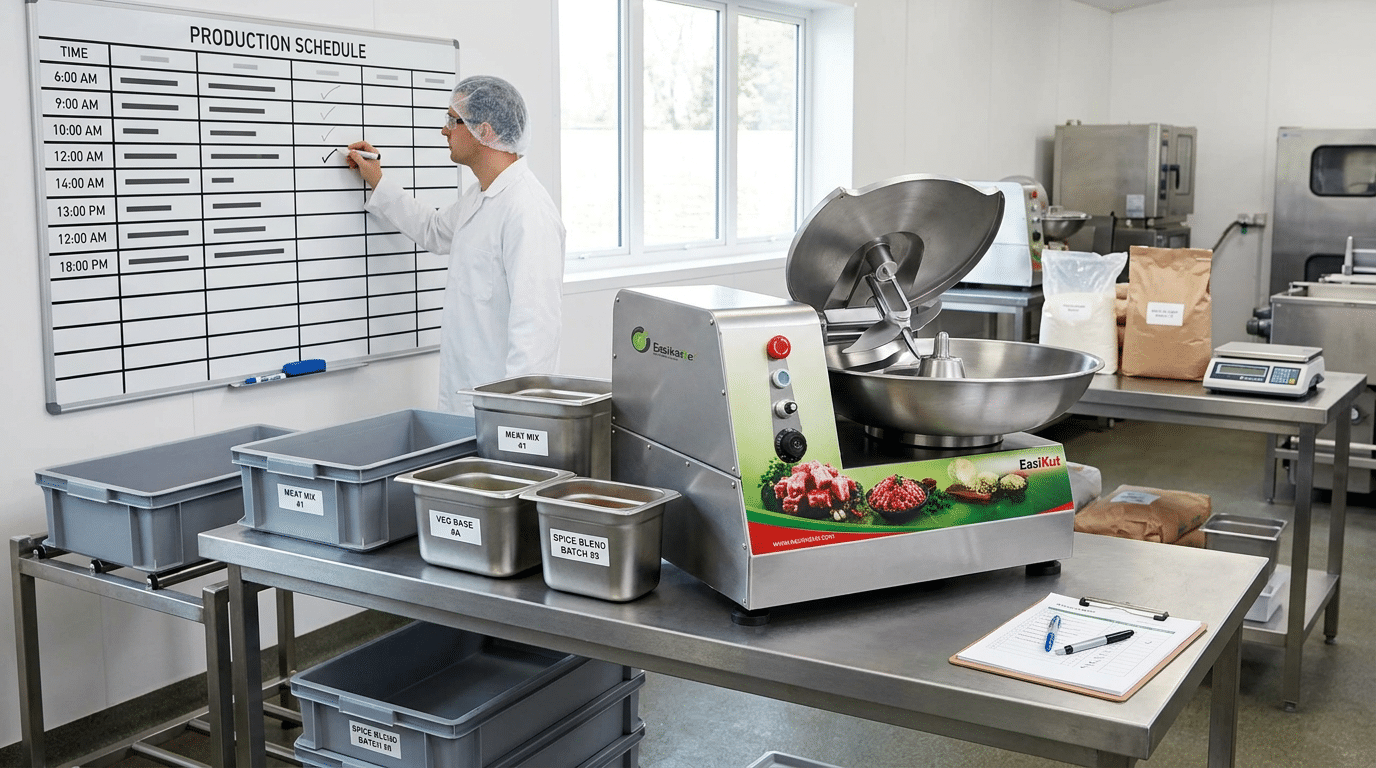
Commercial bowl cutter integrated into a professional food preparation workflow

Bowl cutters are selected when a processor needs more controlled cutting and mixing than manual preparation or a general-purpose processor can provide. Common applications include preparing sausage farce, burger and meatball mixtures, fillings, seasoned minced products, and selected vegetable or plant-based formulations.

  • Texture control: A suitable blade arrangement and operating process can help produce a defined coarse, fine, or emulsified texture.
  • Repeatability: Standardized batch weights, processing times, and ingredient order make it easier to reproduce a recipe.
  • Workflow efficiency: Cutting and mixing in one machine can reduce transfers between preparation steps.
  • Commercial durability: A machine built for professional use is better suited to regular production than light-duty domestic equipment.

However, a bowl cutter is not automatically the best machine for every application. If your operation mainly needs occasional chopping, dry ingredient processing, or very small portions, another type of food processor may be more practical. The decision should follow the product and workflow rather than the machine category alone.

Key Buying Criteria

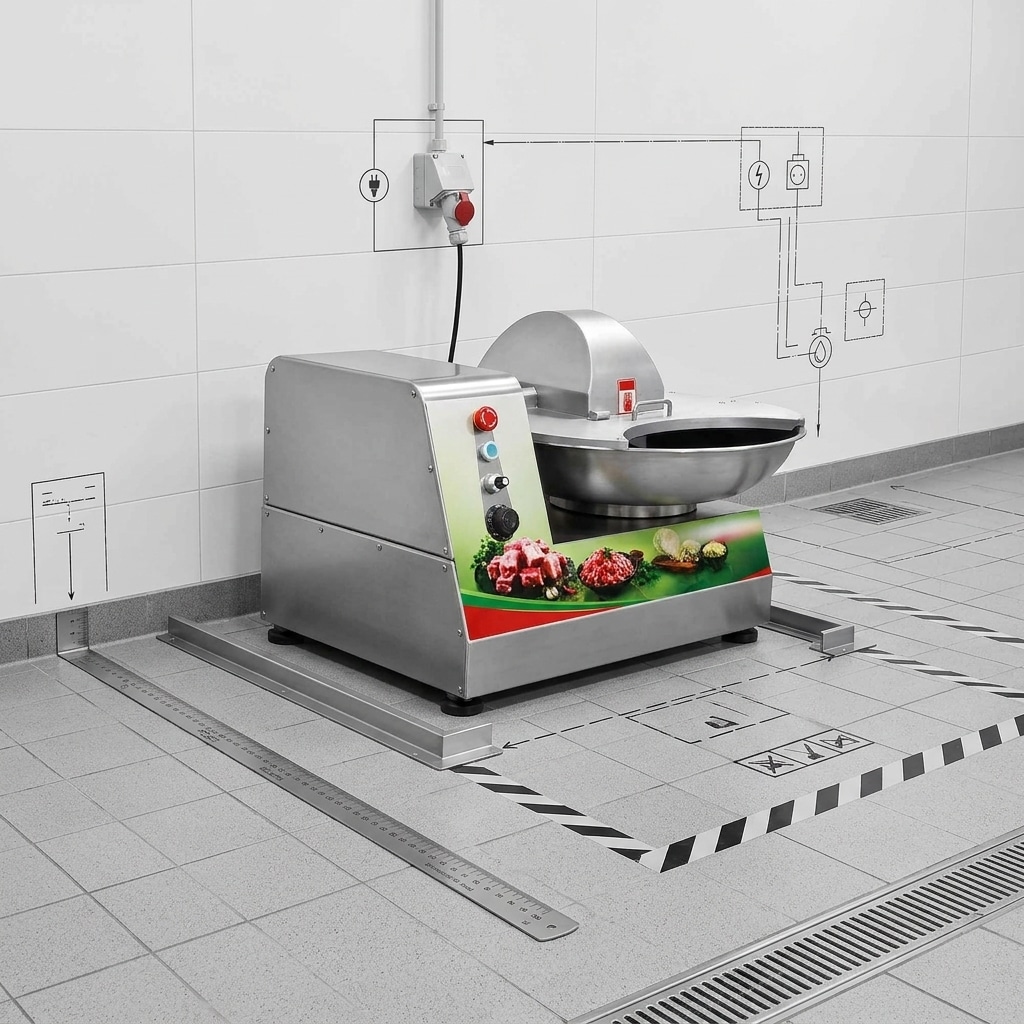
Commercial bowl cutter installation and workspace planning

Before comparing brands or requesting prices, create a short equipment specification for your operation. Include the ingredients, expected batch weight, target texture, production schedule, operator arrangement, and cleaning method. This prevents a low purchase price from hiding an unsuitable capacity or difficult daily workflow.

Product and recipe fit

Explain exactly what will be processed. Meat temperature, fat content, moisture, connective tissue, frozen or chilled condition, and ingredient size can affect the machine requirement. Also state whether the machine will chop only, mix after cutting, or perform both functions in the same batch.

Construction and food-contact materials

Look for a robust frame and clearly identified food-contact surfaces. Stainless steel is commonly preferred for surfaces exposed to food because it can support cleaning and corrosion control when correctly finished and maintained. Ask which parts are removable, how seals are protected, and whether the bowl and knives can be inspected without excessive disassembly.

Electrical and installation requirements

Confirm voltage, phase, frequency, rated power, plug or connection arrangement, machine footprint, working clearance, and floor loading. A machine must fit both the physical room and the electrical system available at the site. Ask for an installation drawing if the equipment will be incorporated into a production line.

Capacity and Production Planning

Food processor planning batch size and production workflow for a bowl cutter

Choose capacity according to the actual working batch, not simply the nominal bowl volume. The usable load can vary with ingredient density, recipe moisture, product temperature, blade configuration, and the amount of free space needed for effective circulation. A bowl that appears large on paper may not suit a dense or sticky mixture at the desired batch weight.

Calculate your requirement from the production schedule:

  1. Estimate the number of batches needed per shift.
  2. Record the target weight for each recipe.
  3. Allow time for loading, cutting, mixing, unloading, and cleaning.
  4. Check whether different products require separate batches or changeover cleaning.
  5. Compare the resulting workload with the supplier’s confirmed working capacity.

Do not treat an advertised capacity as a guaranteed output for every recipe. Ask the manufacturer to confirm the recommended working load for your ingredients and process. If possible, provide representative samples or detailed recipe information for a practical assessment.

Oversizing can also create problems. A machine that is too large for small batches may not circulate ingredients effectively, while an undersized machine may require too many batches and increase handling. The best choice balances batch size, production frequency, floor space, and future demand without relying on unsupported throughput claims.

Blades, Speed, and Texture Control

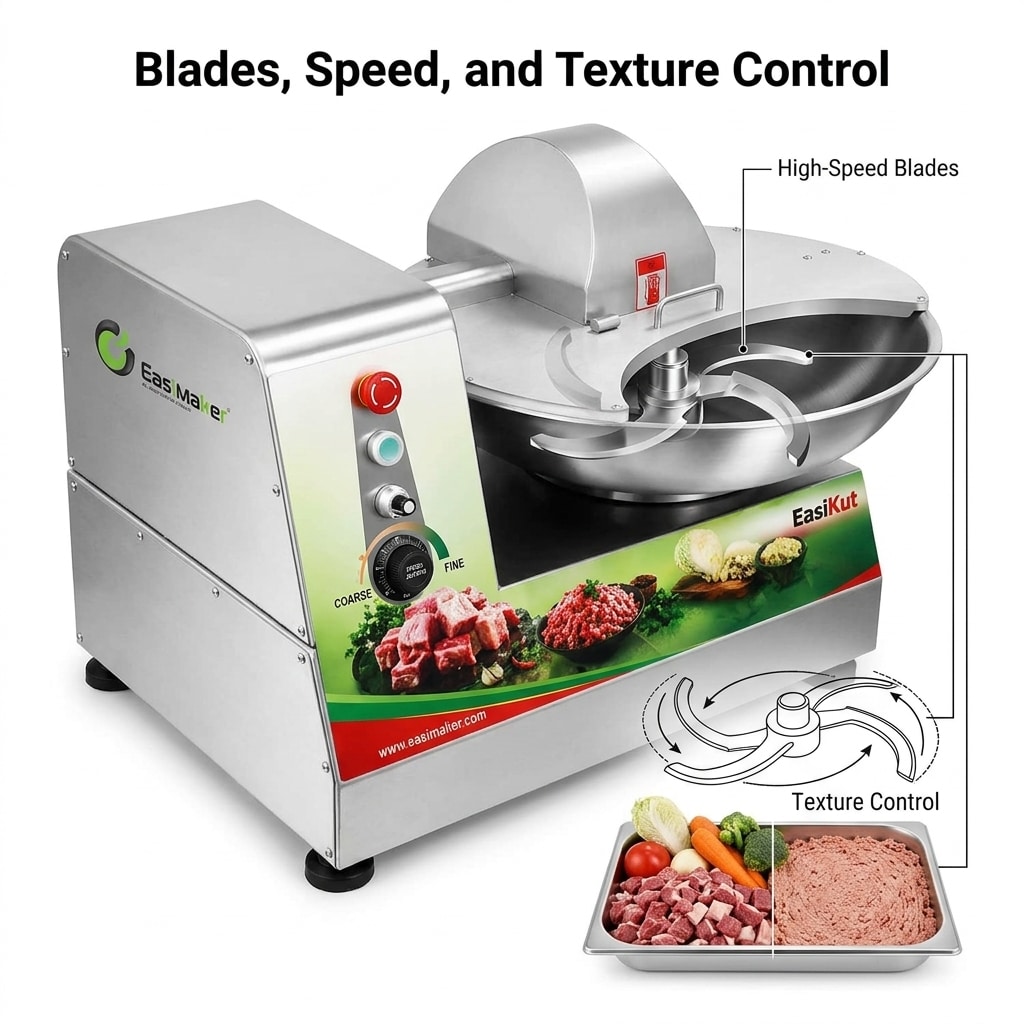
Blades, Speed, and Texture Control

The blade assembly is central to bowl cutter performance. Ask how many knives are fitted, what materials are used, how the knives are sharpened or replaced, and which product types the blade design is intended to handle. A supplier should be able to explain the relationship between blade geometry, bowl movement, cutting time, and the texture required by your recipe.

Speed control may be fixed, stepped, or variable depending on the machine design. Higher speed is not automatically better. The correct setting depends on whether the process requires coarse cutting, fine chopping, mixing, or controlled emulsion development. Excessive processing can change product temperature and texture, so operators need a repeatable recipe procedure rather than simply running the machine at maximum speed.

Ask whether the machine supports separate cutting and mixing stages, how the operator changes settings, and whether the controls are easy to use while wearing suitable protective equipment. Confirm the availability and expected service life of replacement knives, knife holders, seals, and other wear parts.

Hygiene, Safety, and Maintenance

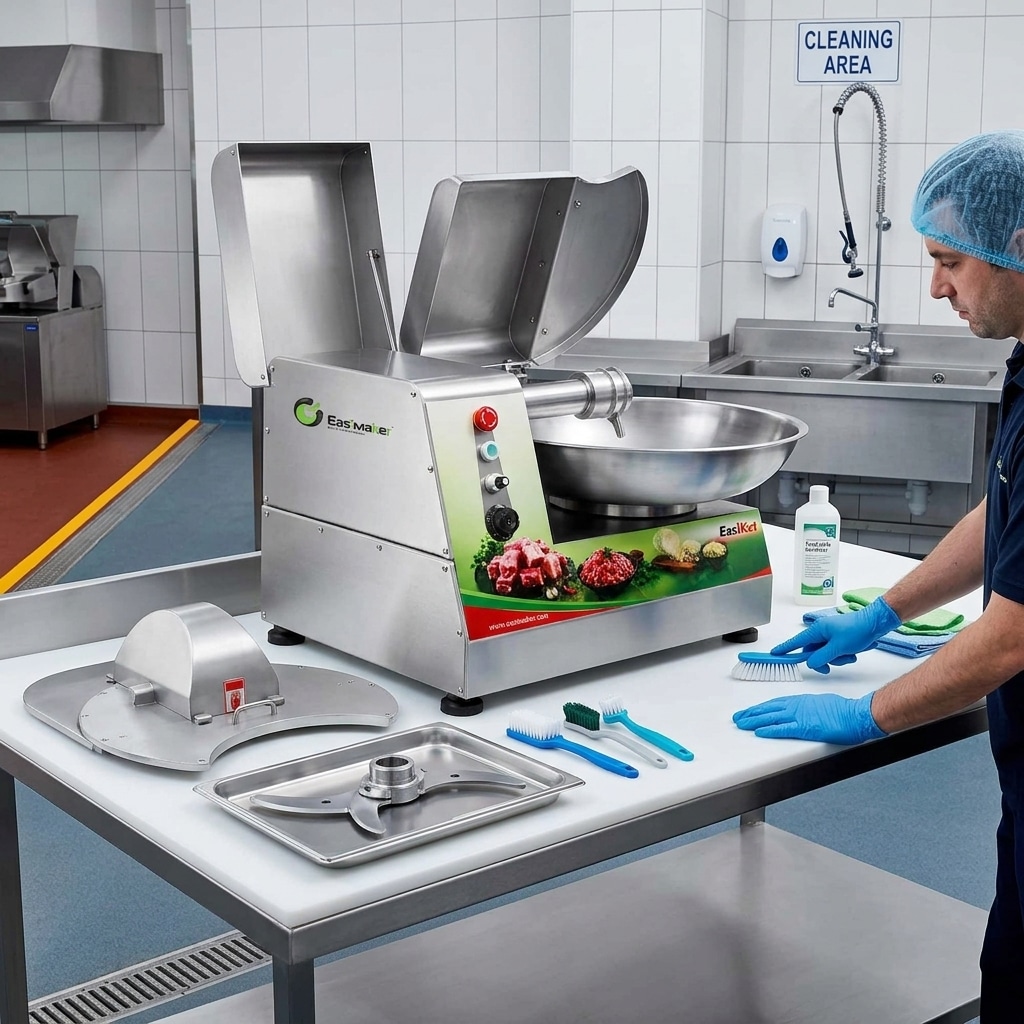
Cleaning and maintenance of a commercial bowl cutter

Daily sanitation and operator safety should be considered during the buying process, not after installation. A machine with difficult-to-reach surfaces or complicated disassembly can increase cleaning time and create avoidable hygiene risks.

Hygiene points to check

  • Can food-contact components be accessed and cleaned thoroughly?
  • Are there unnecessary crevices, exposed threads, or product traps?
  • Can the bowl, knives, guards, and covers be inspected after cleaning?
  • Are cleaning chemicals and water exposure limits clearly explained?
  • Is there a documented cleaning and sanitation procedure?

Safety points to check

Confirm that guards, covers, interlocks, emergency stopping arrangements, and control switches are suitable for the machine design. Operators should never reach into the bowl while blades or moving parts can operate. The supplier should provide operating instructions, cleaning guidance, maintenance information, and warnings for knife handling.

Maintenance points to check

Ask about lubrication, belt or drive inspection, knife condition, seal replacement, electrical checks, and recommended service intervals. Request a spare-parts list and clarify which components are normal wear parts. Maintenance access should be practical for your technicians or local service provider.

Questions to Ask Before Buying

Questions to Ask Before Buying

A clear supplier discussion can reveal more than a product brochure. Use the following questions when comparing commercial bowl cutter machines:

  • What is the recommended working batch for my specific ingredients?
  • Which products and textures is this model designed to process?
  • What are the available voltage, phase, and power configurations?
  • How are cutting and mixing speeds controlled?
  • Which parts contact food, and what materials are used?
  • How are the bowl and knife assembly removed, cleaned, and inspected?
  • What safety devices are included?
  • Which components are considered wear parts?
  • Are operating manuals, electrical drawings, and cleaning instructions supplied?
  • What warranty, spare-parts, and after-sales support options are available in my market?
  • Can the machine be tested with a representative recipe before purchase?

Request written answers where possible. This creates a useful record for procurement, installation, operator training, and future service.

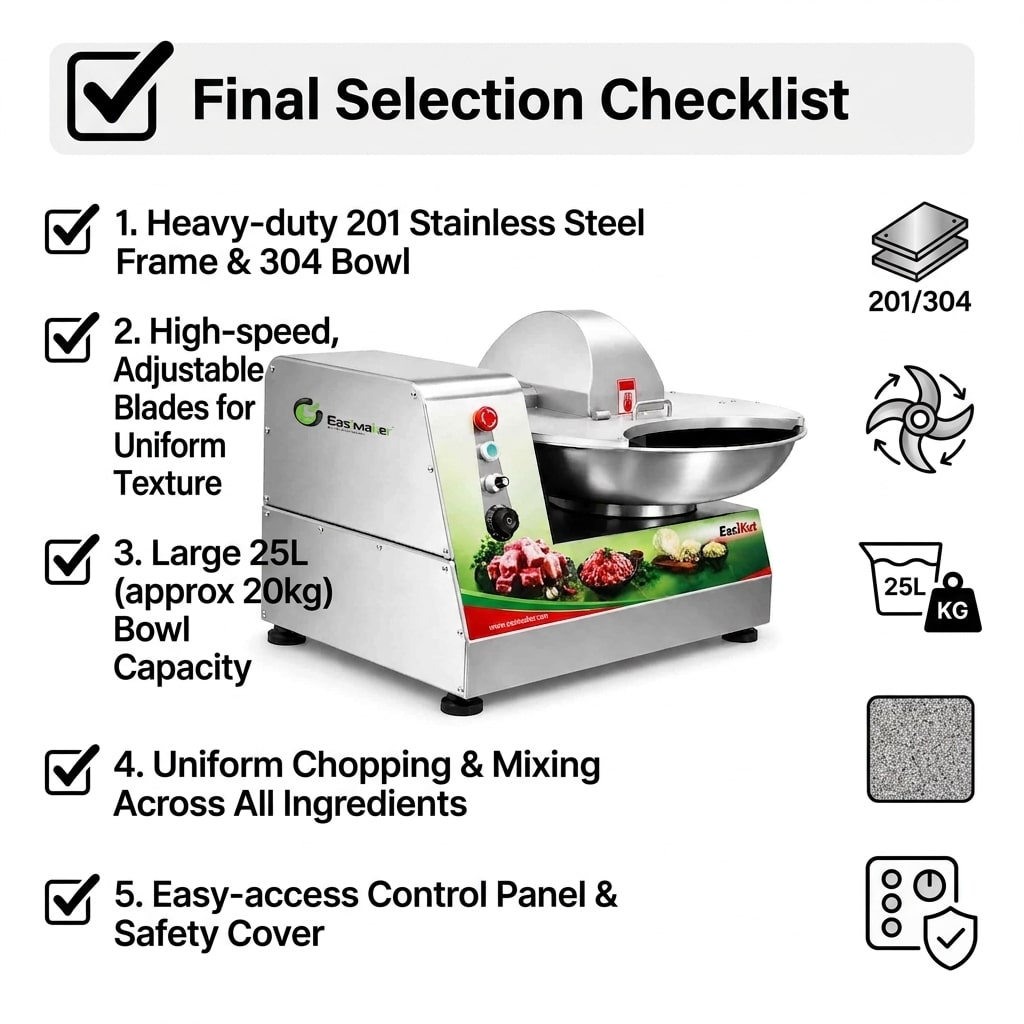
Final Selection Checklist

Final Selection Checklist

Before approving a commercial bowl cutter, confirm that the machine meets these practical requirements:

  • Application: The machine is suitable for the ingredients, recipes, and textures you produce.
  • Working capacity: The recommended batch weight matches your production plan.
  • Construction: The frame, bowl, guards, and food-contact components suit daily commercial use.
  • Controls: Operators can manage cutting and mixing stages consistently.
  • Installation: The footprint, clearance, floor, ventilation, and electrical supply are suitable.
  • Hygiene: Product-contact areas are accessible for cleaning, inspection, and sanitation.
  • Safety: Guards, interlocks, stopping systems, and training materials are clearly documented.
  • Service: Spare parts, manuals, warranty terms, and technical support are available for your market.
  • Validation: The supplier can explain the machine’s fit without relying on unverified capacity or performance claims.

The right bowl cutter is the one that fits your complete production system. Compare the working batch, recipe requirements, cleaning routine, operator skills, installation conditions, and long-term support together. A technically suitable machine should improve process consistency without adding unnecessary complexity to the production floor.