Table of Contents
- Quick Answer: What Spare Parts Should You Plan For?
- What Counts as a Sugarcane Juicer Spare Part?
- Critical Spare Parts Checklist
- Information to Confirm Before Ordering Parts
- How to Prepare an Effective Support Request
- Inspection, Cleaning, and Parts Storage
- Build a Downtime-Reduction Plan
- When to Stop the Machine and Call Support
A commercial sugarcane juicer needs more than routine cleaning to stay ready for service. This checklist helps operators identify critical spare parts, record the right machine information, plan support requests, and reduce avoidable downtime.
Quick Answer: What Spare Parts Should You Plan For?
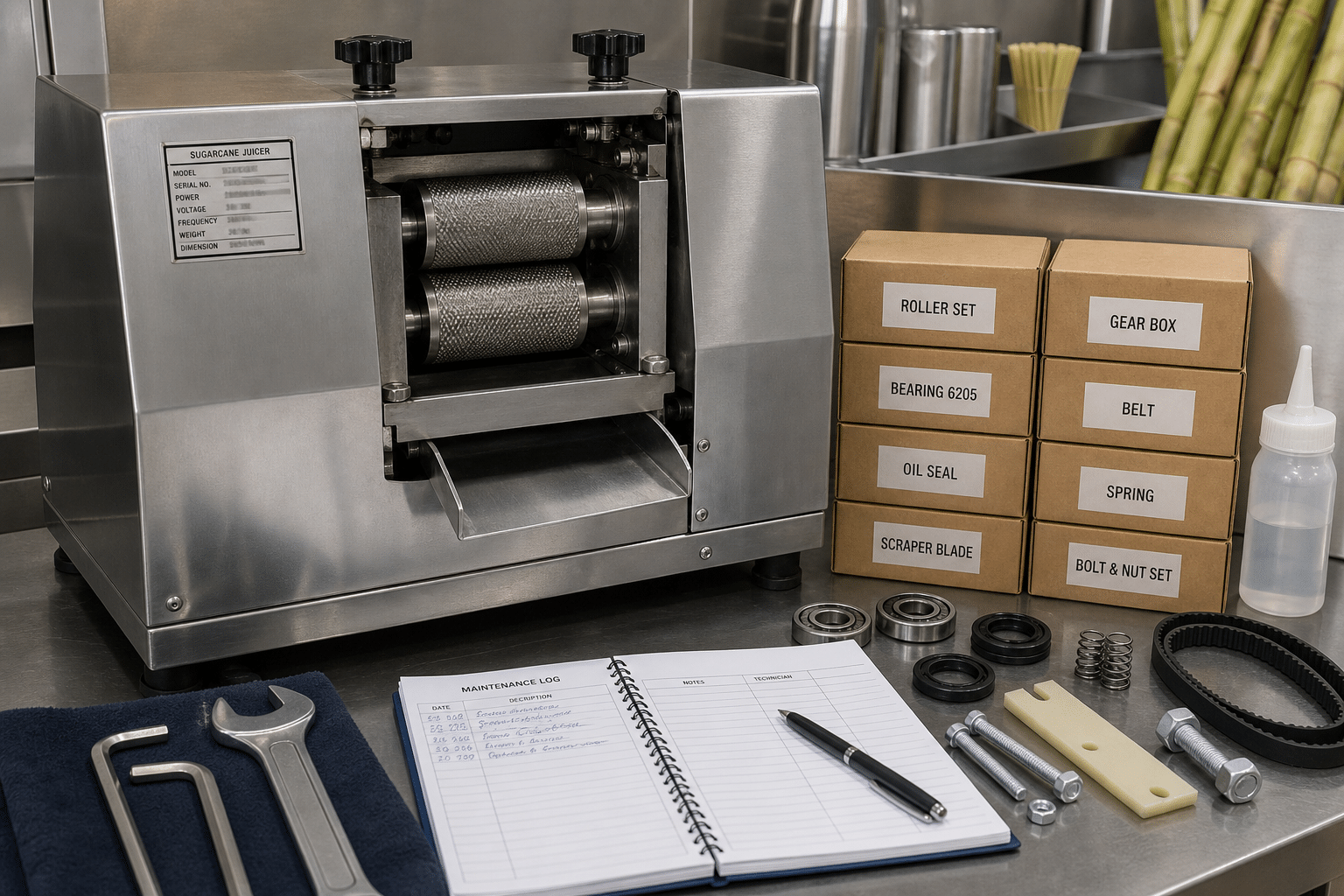
For a commercial operation, the most useful sugarcane juicer spare parts are the parts that wear through normal use, can delay service when unavailable, or are needed to restore safe operation after a fault. A practical spares plan normally covers food-contact wear components, seals and scrapers where applicable, drive-system components, electrical protection items, and the correct fasteners or tools for approved servicing.
Do not order parts by appearance alone. Confirm the machine model, serial number, electrical specification, part description or reference, and clear photographs before placing an order. Keep a simple maintenance record and inspect the machine at defined intervals. This approach helps an operator spot wear early, request the right replacement part, and avoid keeping unsuitable inventory.
The exact parts list differs by machine design and local electrical configuration. Use the machine manual and the supplier’s technical guidance as the controlling reference. If you are comparing machine formats or planning spares for a new site, review the operational differences in this TiniForce S3 and EasiDeMax S4 comparison before standardising your purchasing list.
What Counts as a Sugarcane Juicer Spare Part?
A spare part is a replaceable component used to repair, maintain, or return a machine to its intended operating condition. For a sugarcane juicer, it is helpful to separate parts into four groups rather than treating all items as the same type of stock.
- Routine wear parts: components subject to friction, repeated cleaning, pressure, or normal contact during processing. Their condition should be checked regularly.
- Food-contact components: removable items, guards, collection components, seals, or other parts that come into contact with cane or juice, depending on the machine design. These require careful hygiene handling and model-specific identification.
- Drive and mechanical components: items related to the transmission of power, alignment, movement, or crushing assembly. Replacement should follow the supplier’s service instructions.
- Electrical and control components: switches, protection devices, wiring-related parts, and control components. These must match the machine’s electrical configuration and should be handled by a qualified technician where required.
Consumables such as approved cleaning materials may support daily operation, but they are not automatically spare parts. Keep them in a separate hygiene stock list. Likewise, do not substitute generic parts simply because they seem to fit. Material compatibility, dimensions, load, sealing performance, and electrical ratings can all matter.
Critical Spare Parts Checklist
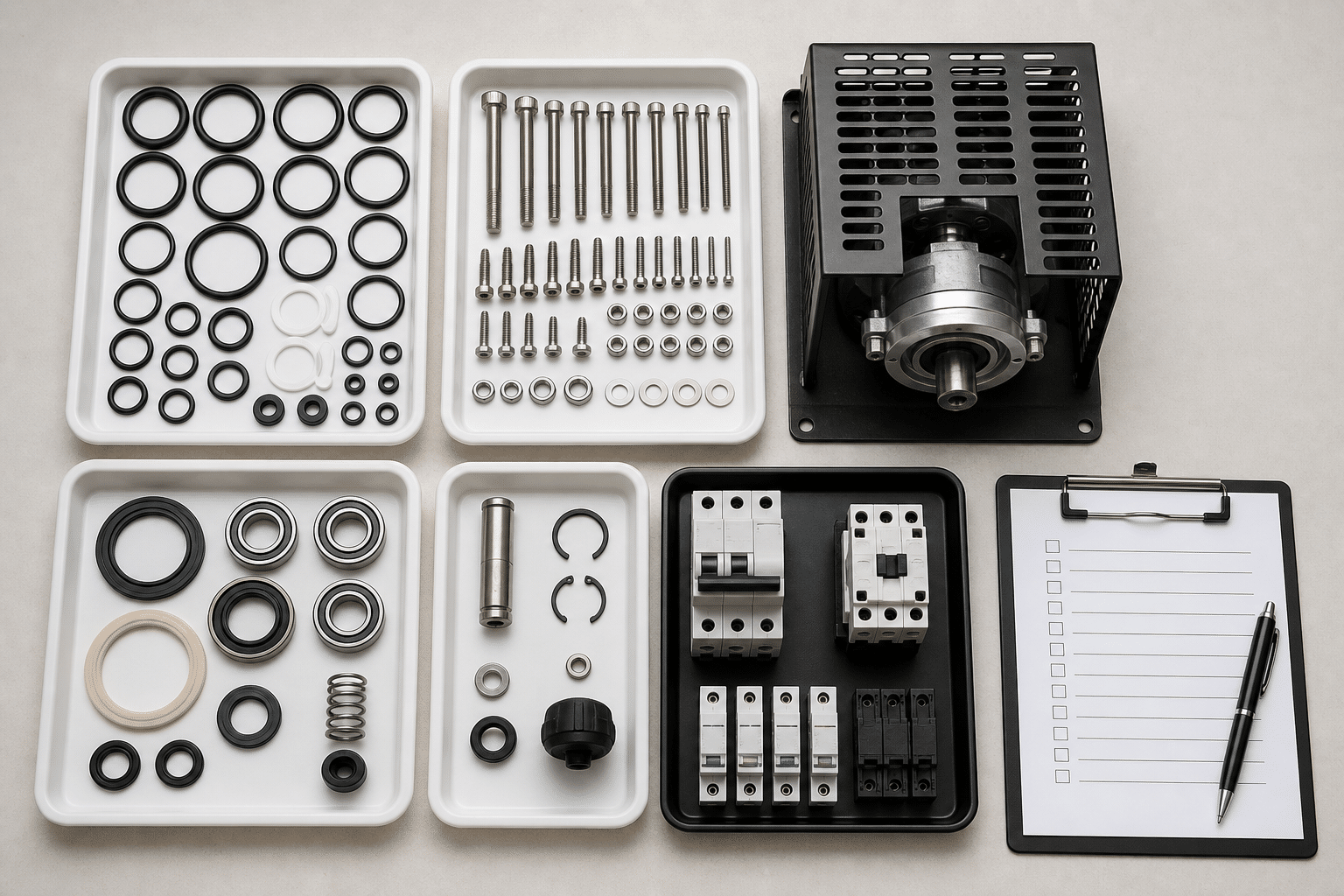
Build your stock list around the machine’s manual, actual service pattern, and supplier advice. The following checklist is a planning framework, not a claim that every machine uses every item.
1. Food-contact and cleaning-related items
- Specified seals, gaskets, O-rings, or similar sealing components where fitted.
- Approved juice collection or drainage components if these are removable or damage-prone.
- Scrapers, wipers, or cleaning-related replaceable components where the model uses them.
- Replacement fasteners for removable guards or food-zone assemblies, only when supplied or approved for the machine.
2. Mechanical and drive-related items
- Machine-specific rollers, bearings, bushings, belts, chains, gears, couplings, or springs only where applicable to the design.
- Specified roller or drive-assembly fasteners and retaining hardware.
- Approved guards or covers if damage prevents safe use.
3. Electrical and control-related items
- Correctly rated fuses or circuit-protection items where the manual identifies them as user-serviceable.
- Model- and voltage-specific switches, buttons, connectors, or control parts when recommended by technical support.
- An approved power cord or plug assembly only if it matches the local electrical requirements and machine specification.
For most operators, it is more sensible to hold a small quantity of high-turnover, approved wear items than to hold expensive assemblies without a clear maintenance plan. A failed major drive or electrical component may require diagnostic work before a replacement is selected. When planning a broader operating budget, include maintenance supplies, service access, and contingency stock alongside the machine purchase; this is covered in the commercial sugarcane juicer budgeting guide.
Information to Confirm Before Ordering Parts
Ordering the wrong component costs time and can create a safety or hygiene problem. Give the supplier enough information to identify the part accurately on the first request.
- Machine identification: record the brand, model, serial number, purchase date if known, and the country or region of installation.
- Electrical information: photograph the rating label and state the voltage, frequency, phase, and plug arrangement shown on the machine. Do not rely on a general description such as “standard power.”
- Part identification: provide the part number from the manual or parts diagram when available. If no number is visible, give the component name, location, dimensions where useful, and several clear photographs.
- Fault description: explain what happened before the issue, when it occurs, whether it is constant or intermittent, and what checks have already been completed.
- Machine condition: state whether there is unusual noise, vibration, resistance during operation, leakage, damage, overheating, or a tripped protective device. Do not continue using the machine if safe operation is uncertain.
Keep these details in a shared service log rather than in an individual employee’s phone. A consistent record is especially important for multi-site operators, distributors, and franchise systems. It also makes it easier to identify repeated failures that may be linked to cleaning practices, cane preparation, setup, or operating conditions.
How to Prepare an Effective Support Request
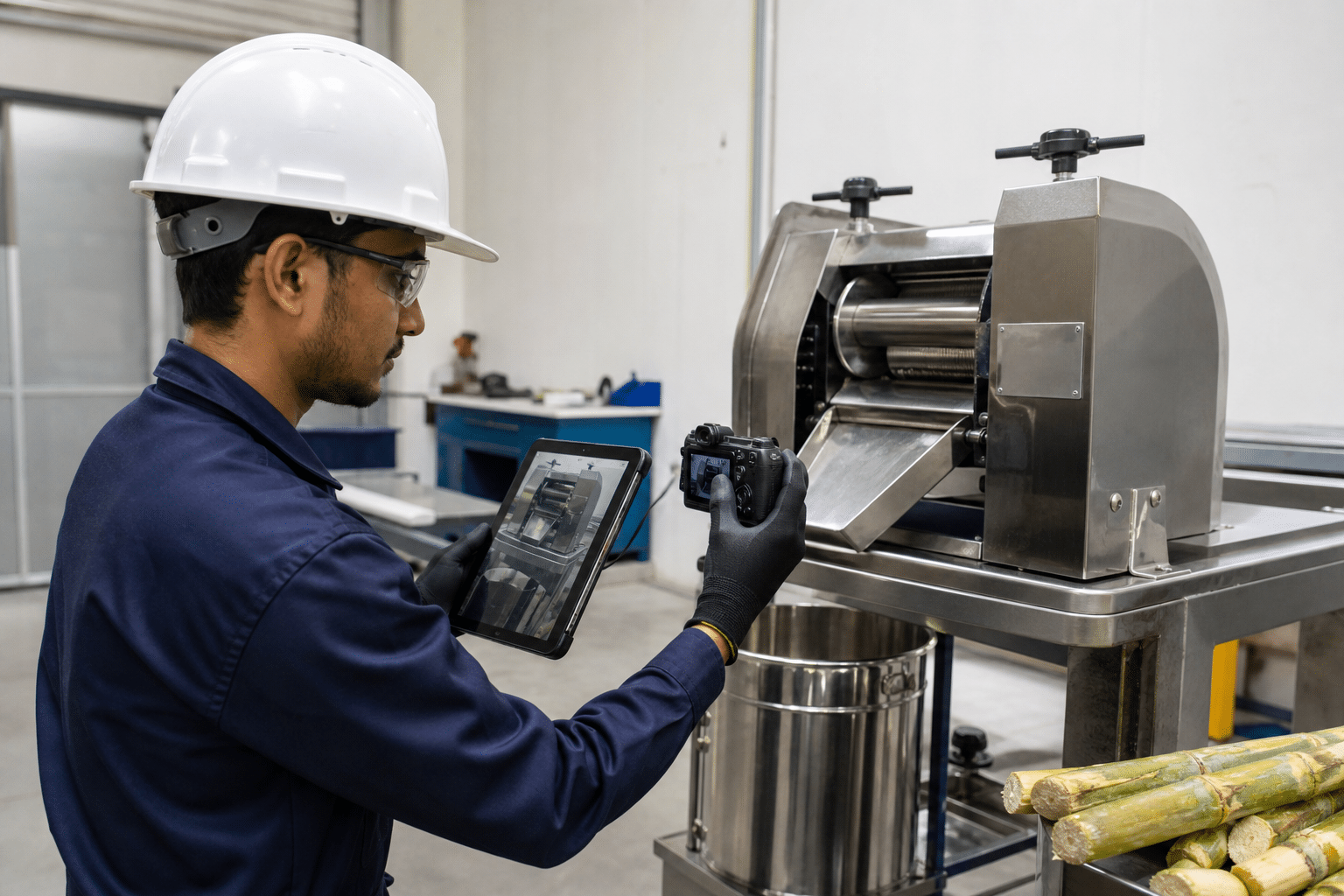
A clear support request allows technical teams to decide whether an issue is likely related to cleaning, adjustment, wear, installation, operation, or a replacement component. Before contacting support, safely stop the machine if needed and prepare the following:
- A photo of the machine rating label and a full photo of the machine.
- Close-up photos of the affected area and any visible damage or wear.
- A short video showing the issue, if it can be recorded without bypassing guards or creating risk.
- The date of installation, approximate usage pattern, and the last cleaning or maintenance action.
- The cane preparation process, including whether cane is washed, trimmed, or cut before feeding.
- A description of any recent changes, such as relocation, electrical work, staff change, cleaning chemical change, or impact damage.
Describe observations rather than diagnosing the cause yourself. For example, “the machine stops after several seconds and the protective device trips” is more useful than “the motor has failed.” This gives the support team a better starting point and reduces the risk of an unnecessary part order.
For structured routine work, use a documented preventive maintenance schedule for a commercial sugarcane juicer alongside your support log. The schedule should be adapted to the model, operating hours, local conditions, and instructions supplied with the equipment.
Inspection, Cleaning, and Parts Storage
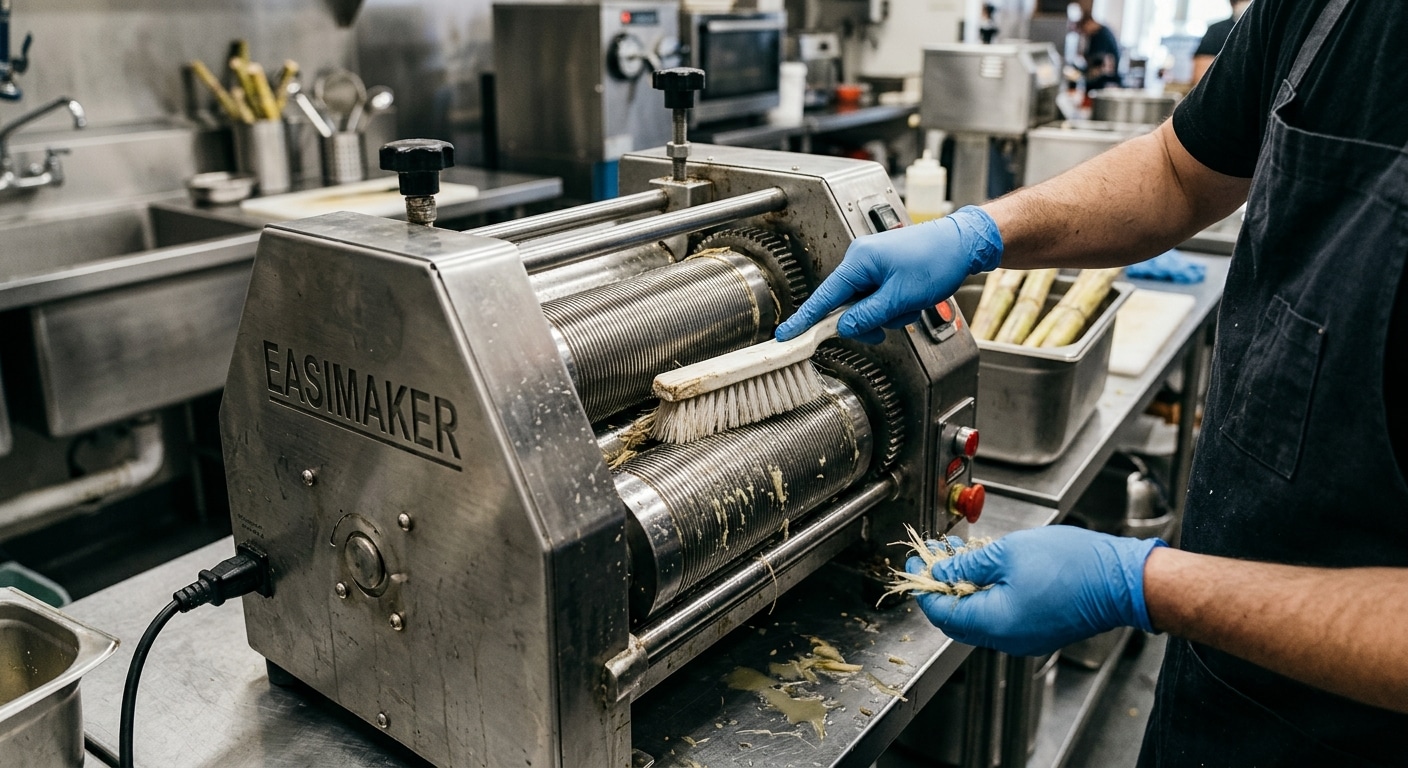
Many spare-parts problems begin with an incomplete cleaning routine, poor storage, or a missed inspection. Follow the cleaning and disassembly instructions for your specific machine. Turn off and isolate the equipment from power before cleaning, inspection, or any service activity, and do not defeat safety guards or interlocks.
At the end of service, inspect accessible areas for cane fibres, residue buildup, loose hardware, damaged guards, leakage, abnormal wear, and signs of corrosion. Clean parts with the products and methods approved for the machine materials. Abrasive tools or unsuitable chemicals can damage surfaces, seals, and clear components, so they should not be used unless the manufacturer specifically permits them.
Store spare parts clean, dry, labelled, and protected from dust, moisture, pests, direct sunlight, and chemicals. Keep food-contact components separate from lubricants, electrical items, and workshop materials. Retain parts in sealed bags or original packaging where possible, and mark each container with the machine model and part number. Rotate stock so older approved items are inspected before use.
Also consider cane preparation as part of maintenance control. Feeding cane that is poorly cleaned, excessively irregular, or not prepared according to the machine instructions can increase contamination risk and place unnecessary stress on processing components. The choice between different crushing approaches can affect workflow and maintenance planning; see this guide to single-pass and multi-pass sugarcane crushing for operational context.
Build a Downtime-Reduction Plan
A good parts plan is only one part of reliable daily operation. Create a simple downtime-reduction process that your shift teams can follow:
- Assign one person to own the machine asset record and approved parts list.
- Set inspection frequencies based on the manufacturer guidance and your real operating pattern.
- Record every replacement part, the reason for replacement, date, technician, and any observation from the repair.
- Set a reorder point for frequently used approved parts, allowing for supplier lead time and your peak-season needs.
- Train staff to recognise stop-use conditions and to report changes early.
- Review the log monthly to identify recurring issues and whether a process change is needed.
For operators with several locations, standardise models where practical and keep a central register of serial numbers, electrical configurations, approved suppliers, manuals, and service contacts. This makes it easier to transfer stock appropriately and prevents a part intended for one machine version from being installed on another.
Do not measure preparedness only by the number of parts on the shelf. The better measure is whether the team can identify the correct item, operate safely while awaiting service, and access the correct technical support when a fault is outside routine maintenance.
When to Stop the Machine and Call Support
Stop operating the machine, isolate it from power, and seek qualified support if you observe damaged guards, exposed wiring, burning smell, smoke, repeated electrical tripping, unexpected movement, persistent abnormal noise or vibration, significant leakage, or a part that no longer fits securely. The same applies if the machine has been dropped, flooded, modified, or connected to an unsuitable power supply.
Do not bypass a safety device, force a jammed assembly, or continue production to finish a rush period. Repeated resets, improvised repairs, and unapproved replacement parts can make diagnosis harder and may create further damage or risk. Use the manufacturer’s manual and approved technical channels for the next step.
A reliable support process starts with complete machine information, accurate photos, and a clear account of the issue. This allows the supplier or distributor to advise on the correct replacement part or whether on-site technical assessment is needed.