
Table of Contents
- Quick Answer: Tabletop or Floor Bone Saw?
- Understanding Tabletop and Floor Bone Saws
- Choose by Workflow, Not Footprint Alone
- Key Selection Criteria for Commercial Buyers
- Installation and Workspace Planning
- Cleaning, Safety, and Maintenance Requirements
- Common Buying Mistakes to Avoid
- Making the Final Decision
A tabletop bone saw is usually the practical choice for compact, moderate-volume cutting stations, while a floor bone saw better suits operations that need a dedicated cutting area, larger work surface, or more continuous processing. The right decision depends on workflow, product size, sanitation access, electrical supply, and operator safety—not machine size alone.
Quick Answer: Tabletop or Floor Bone Saw?
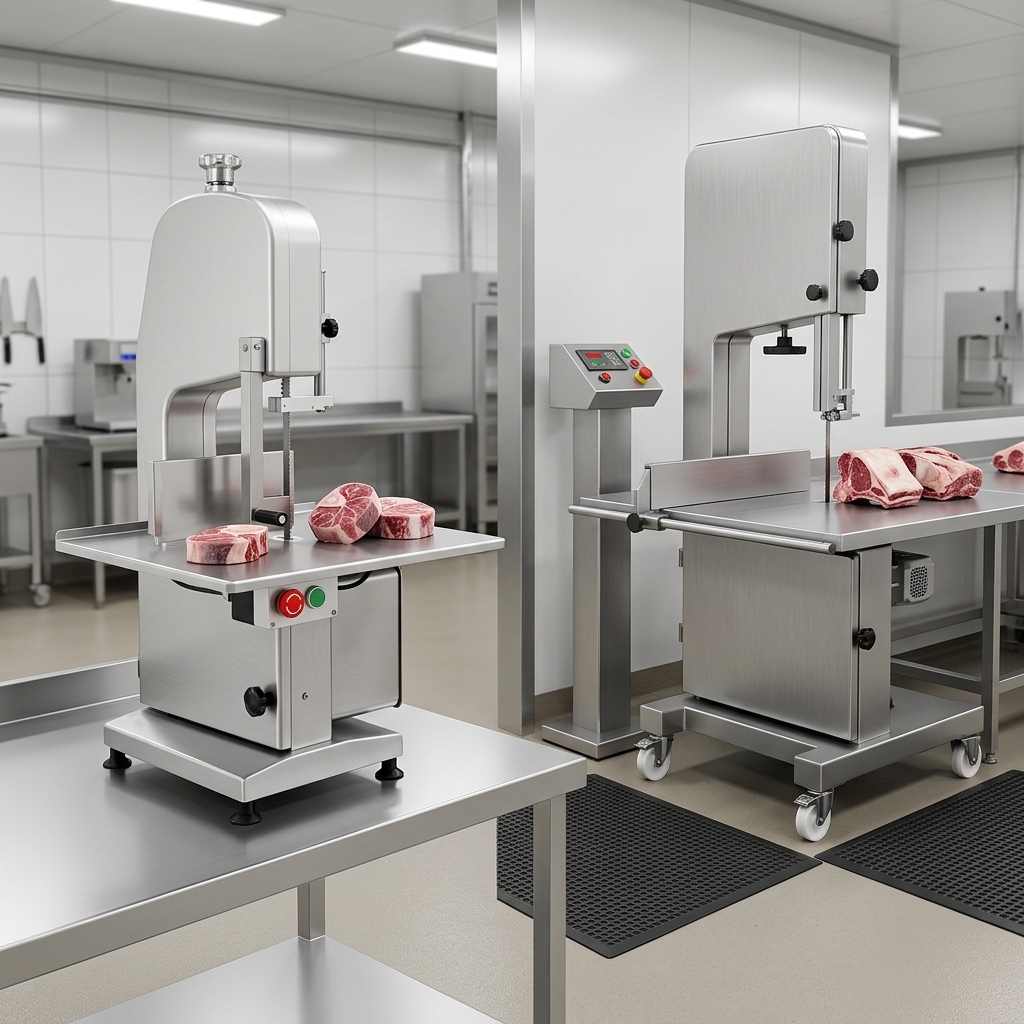
For most buyers comparing a tabletop vs floor bone saw, the correct choice comes down to the cutting station you are building.
A tabletop bone saw is generally suitable when you have a sound, hygienic bench, limited floor area, moderate cutting demand, and a workflow based on short processing periods. It can be a sensible format for butcher counters, small meat shops, restaurant preparation areas, and specialist retail operations where the machine must fit into an existing work line.
A floor bone saw is generally more suitable when the saw is a dedicated production station. It may be the better fit for larger cuts, repeated portioning work, higher daily handling volume, or facilities that can allocate permanent floor space around the machine for loading, cutting, collection, and cleaning.
Do not assume that a larger machine is automatically the better commercial choice. A floor-standing unit can create an inefficient workflow if it is oversized for the available room or difficult to clean around. Equally, a tabletop unit can become a poor fit if operators lack enough bench strength, clear working space, or room to handle incoming and cut product safely.
Understanding Tabletop and Floor Bone Saws
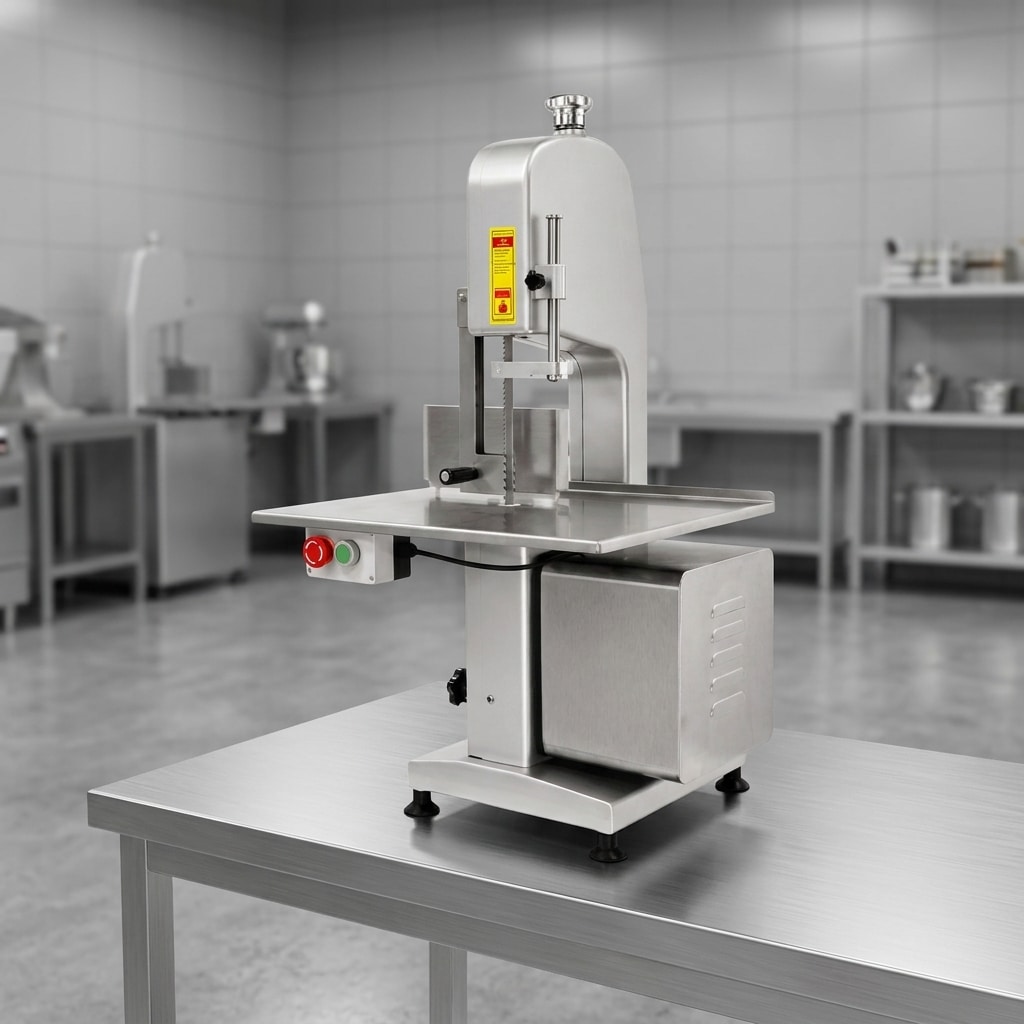
Commercial bone saws are commonly used to portion meat, poultry, fish, and bone-in products. Depending on the machine design and the product being processed, they may also be described as meat band saws. They use a continuous saw blade running through a guarded cutting area, with a work table that supports the product during the cut.
Tabletop models are designed to sit on a suitable workbench or purpose-built stand. Their compact format helps businesses use vertical space rather than allocate a full floor position. However, the supporting surface is part of the installation: it must be stable, level, hygienic, correctly sized, and capable of supporting the machine and normal handling activity.
Floor models are freestanding machines that occupy a defined work zone. Their format can make sense where a business wants a dedicated cutting area and more room for product handling. In practice, the useful difference is not simply height. It is how the machine integrates with receiving, chilled storage, preparation tables, packaging, waste handling, and cleaning routines.
Specifications differ substantially by model. Before comparing formats, review the manufacturer’s published dimensions, cutting clearance, table arrangement, blade specification, electrical requirements, guarding, and cleaning instructions for the exact machine under consideration.
Choose by Workflow, Not Footprint Alone
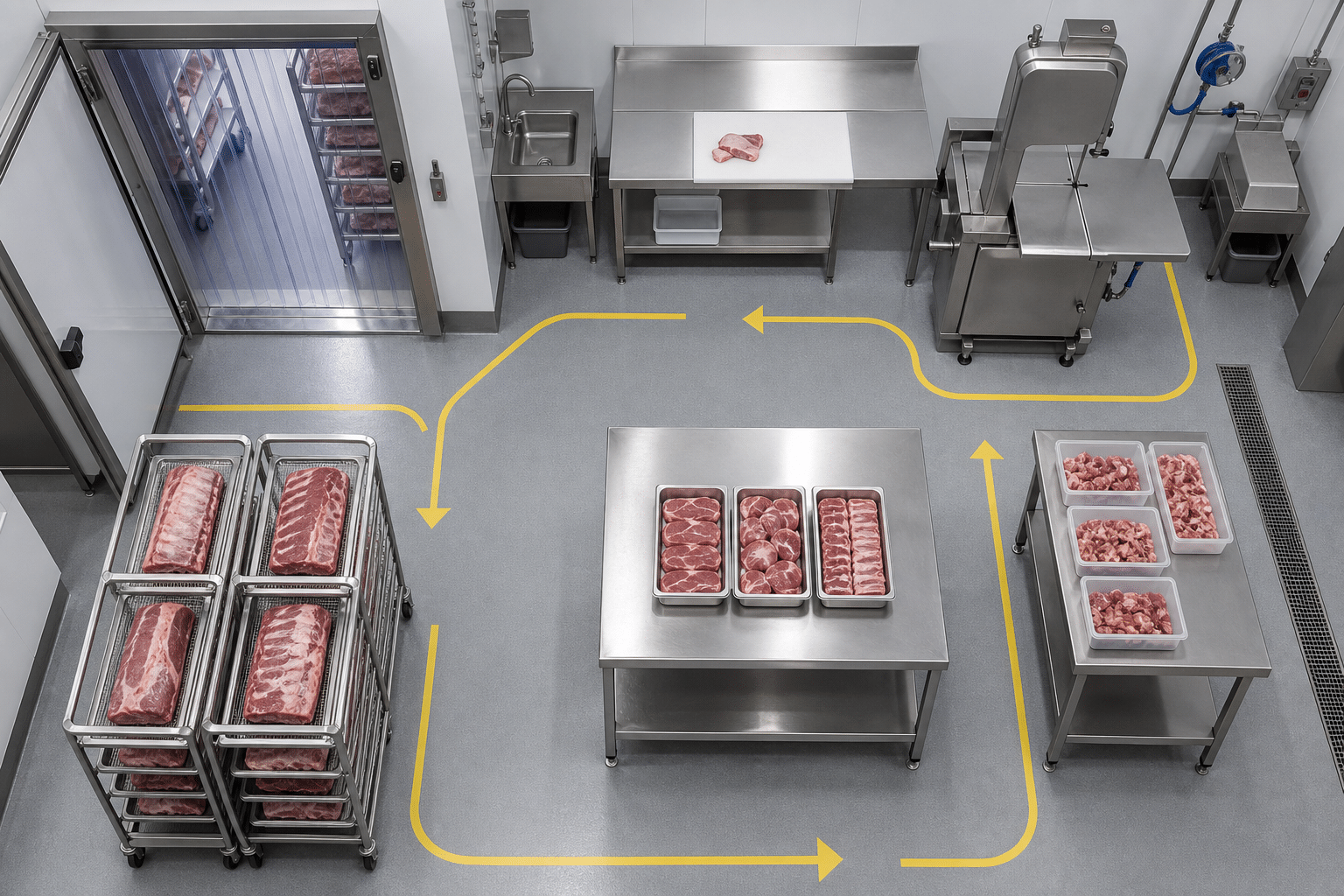
Start the selection process by mapping one normal working day. Identify where product arrives, where it is kept chilled, where it is unwrapped, where it is cut, and where portions go next. This simple exercise often makes the right format clearer than a catalogue comparison.
When a tabletop bone saw may fit best
- You have a compact preparation room or retail backroom.
- Cutting is one step within a broader preparation task rather than a continuous production activity.
- A properly designed stainless-steel workbench or equipment stand is already available.
- Operators need the saw close to other counter-height preparation equipment.
- Product can be staged safely before and after cutting without blocking walkways.
When a floor bone saw may fit best
- The saw will be used frequently throughout the day.
- You need a permanent, dedicated cutting station with clear access on all working sides.
- The product mix includes larger or awkward bone-in pieces that need more handling room.
- Your facility can support an orderly flow from chilled storage to cutting, packing, and sanitation.
- You want to avoid placing a heavy machine on an existing bench that was not designed for the task.
Also consider downstream preparation. Where portioned material moves into grinding, mixing, or further processing, the saw should be positioned to reduce unnecessary carrying and cross-traffic. In larger food-preparation workflows, a commercial bowl cutter workflow guide can help teams consider how separate processing stations should be arranged and sequenced.
Key Selection Criteria for Commercial Buyers
Use the following criteria to compare a tabletop and floor machine on an operational basis.
1. Product range and cutting envelope
List the products you expect to cut, including typical dimensions, temperature condition, bone density, and the largest occasional item. The available cutting clearance and work-table layout must suit real products, not only the average item. If products arrive frozen or partially frozen, confirm that the intended use is permitted by the machine supplier and applicable local food-safety rules.
2. Daily workload pattern
Consider whether cutting occurs in short batches, at retail service intervals, or as a sustained production task. A compact tabletop machine can be efficient for intermittent work. A floor unit may support a more organised dedicated station when demand is frequent or product handling is more involved. Avoid selecting solely by a claimed output figure; actual results depend on product condition, cut type, operator technique, blade condition, and safe working procedures.
3. Available work area
Measure more than the machine footprint. Allow space for the operator, product trays, safe loading, discharge of cut pieces, cleaning access, and unobstructed passage. A tabletop saw also requires a stable support surface with enough surrounding clearance. A floor saw requires an appropriate floor location that does not conflict with doors, drains, cold-room access, or emergency routes.
4. Electrical compatibility
Confirm voltage, frequency, phase, plug type, earthing, and local installation requirements from the rating plate and product documentation before purchase. Electrical requirements are model-specific and can vary by market. Equipment should be installed by a qualified person where local rules require it.
5. Cleaning access and hygiene controls
Look carefully at how the blade area, table, guides, guards, doors, and residue collection areas can be accessed for daily cleaning. A machine that is difficult to clean consistently can create avoidable downtime and food-safety risk. Your cleaning chemicals and method should always follow the machine manual and your site’s hygiene programme.
6. Service and spare-parts planning
Blade replacement, tensioning checks, guide adjustment, and inspection of safety components should be practical within your maintenance plan. Ask about documentation, recommended routine checks, replacement parts, and the support process before committing to a machine.
Installation and Workspace Planning
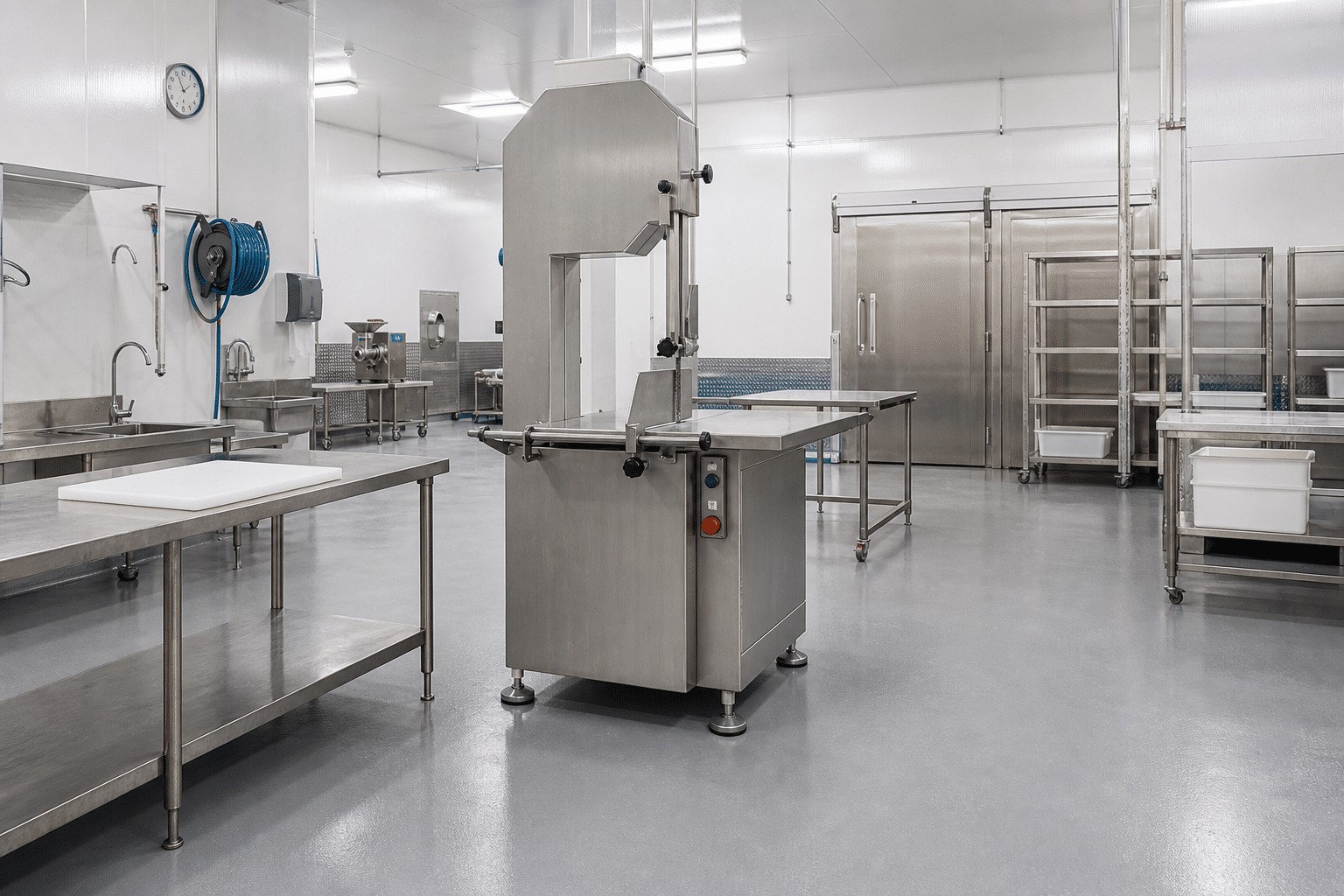
A well-planned installation protects both productivity and safe handling. For a tabletop saw, confirm that the bench or stand is level, rigid, corrosion-resistant, easy to clean, and designed for the installed equipment load. Do not place a machine on a movable, damaged, or unsuitable counter simply because the footprint appears to fit.
For a floor saw, plan the location as a complete workstation. The operator needs room to position product, use the supplied pusher or handling tools, collect cut portions, and access controls without reaching across the blade path. The area should also allow safe cleaning and inspection with the machine isolated from power.
In either format, consider these practical points:
- Keep the machine away from congested routes and door swings.
- Provide suitable lighting so operators can see the work surface and product clearly.
- Keep packaging materials, loose tools, and unnecessary containers out of the cutting zone.
- Plan separate clean and raw-product handling areas in line with your food-safety procedures.
- Check drainage, wall clearance, and washdown arrangements against the machine documentation.
- Make sure power isolation is accessible and that the electrical supply matches the machine requirement.
Before commissioning, document the intended use, train operators on the specific machine, and retain the operating manual at the site. A correct layout cannot replace operator training, but it makes safe practices easier to maintain during busy periods.
Cleaning, Safety, and Maintenance Requirements
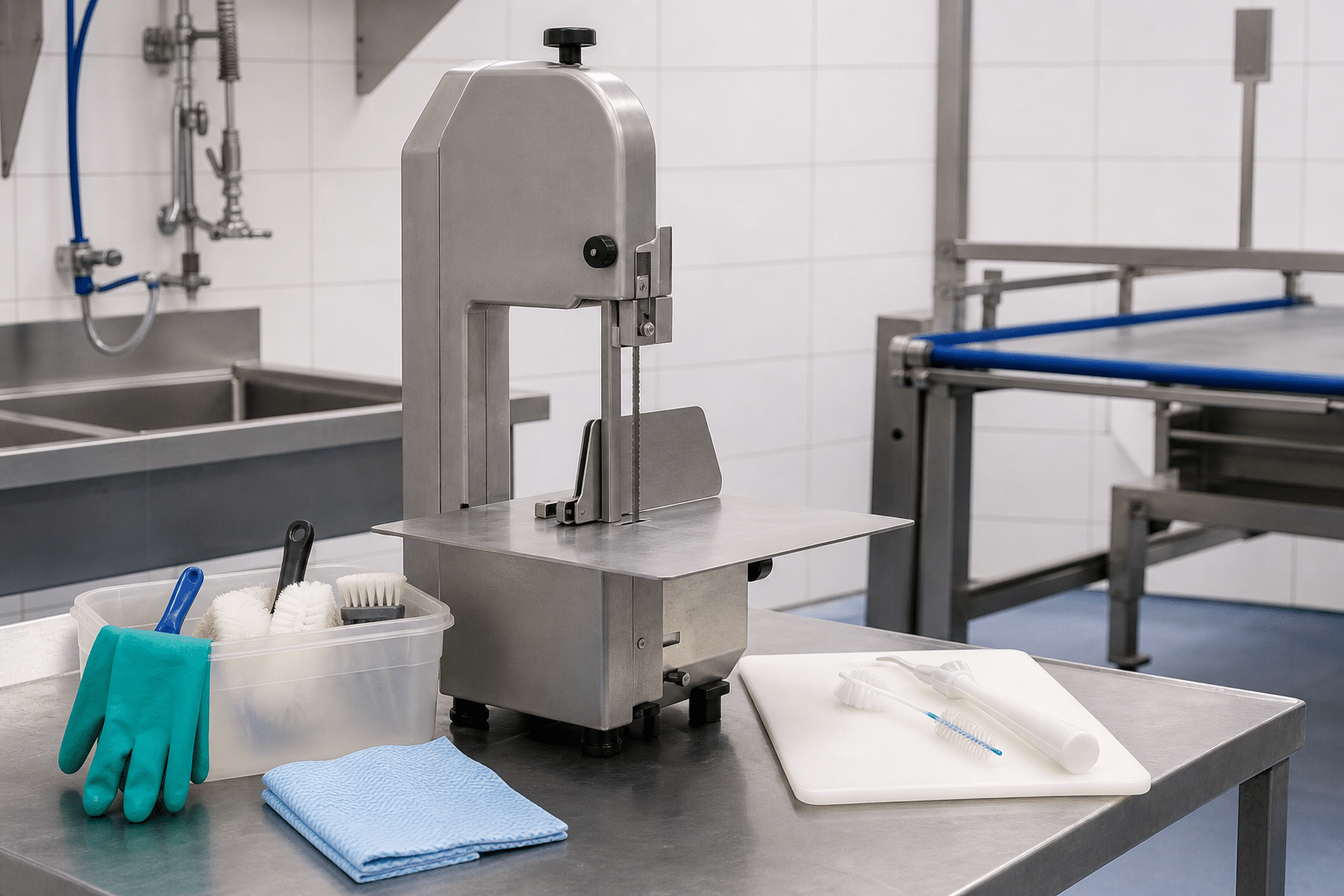
Whether you select a tabletop or floor unit, operating discipline matters more than the format. Bone saws involve a moving blade and sharp cut surfaces. The machine must be used only by trained personnel who understand the manufacturer instructions, site procedures, and relevant local workplace and food-safety requirements.
Basic operating controls should include keeping hands clear of the blade path, using the supplied pusher or product-holding method where applicable, ensuring guards are correctly fitted, avoiding unstable product positioning, and stopping the machine before clearing jams or carrying out adjustments. Never bypass safety devices or improvise a guard, blade, or electrical repair.
Daily hygiene should begin after the machine is safely shut down and isolated according to its instructions. Remove product residue from accessible areas, clean and sanitise components as permitted by the manufacturer, dry parts where required, and reassemble correctly before the next use. Do not direct water or cleaning chemicals at electrical components unless the equipment documentation specifically permits the method.
A preventive maintenance routine should include inspection of blade condition, blade tracking and tension where applicable, guards, table surfaces, guides, fasteners, switches, and electrical cable condition. Replace worn or damaged parts promptly with compatible parts. For a practical overview, review these bone saw safety and maintenance protocols alongside the instructions for your exact machine.
Common Buying Mistakes to Avoid
The following errors can lead to avoidable installation changes, difficult cleaning routines, or an inefficient cutting line.
- Choosing only by machine dimensions: A compact unit may still need significant operator and tray clearance, while a large machine may not improve workflow if it is poorly positioned.
- Ignoring the support surface: Tabletop equipment is only as stable and hygienic as the bench or stand beneath it.
- Buying for the average product only: Check the largest, heaviest, and most awkward products expected during normal operation.
- Overlooking power supply details: Do not assume that voltage or plug arrangements match your site. Verify all electrical requirements before shipment and installation.
- Separating purchasing from sanitation planning: Cleaning access, local washdown practices, chemical compatibility, and drainage should be reviewed before the machine arrives.
- Underestimating operator training: The safest machine design still depends on correct setup, product handling, cleaning, and inspection by trained staff.
A more reliable buying process is to prepare a short site brief covering product types, daily workflow, room dimensions, utility details, hygiene procedures, and operator requirements. This gives suppliers enough information to advise on a suitable equipment format without relying on assumptions.
Making the Final Decision
Choose a tabletop bone saw when a compact, stable, easy-to-integrate counter-height station matches your product mix and workload. Choose a floor bone saw when you need a permanent cutting zone with more surrounding handling space and a workflow built around regular processing activity.
The best decision is based on the complete operating picture: product dimensions, cutting frequency, available room, bench or floor suitability, cleaning access, local electrical supply, operator training, and support requirements. Ask suppliers to assess these factors against the documented specifications of the exact model, rather than relying on a broad tabletop-versus-floor label.
Easimaker Technology Limited supports commercial buyers with practical equipment discussions for daily food-processing operations. If your business also requires adjacent preparation equipment, it is useful to evaluate each station as part of one coordinated production flow rather than purchasing machines in isolation.