In the commercial beverage industry, efficiency is the difference between a thriving operation and one that barely breaks even. For businesses relying on fresh sugarcane juice—whether in large-scale processing facilities or high-volume juice bars—the extraction rate (juice yield) is a critical performance metric. When a sugarcane machine begins to produce dry, fibrous waste (bagasse) that is still damp, or when the output volume drops significantly despite constant input, it indicates a mechanical or operational failure that directly impacts profit margins.
Low juice yield is rarely caused by a single catastrophic failure. Instead, it is often the result of gradual wear, improper calibration, or inconsistencies in the raw material. Diagnosing the root cause requires a systematic approach, examining everything from the biological properties of the cane to the torque transmission of the gearbox.
This comprehensive guide covers the technical and operational factors contributing to low juice yield in commercial sugarcane juicers. We will outline a diagnostic workflow to identify the problem, actionable steps to restore extraction efficiency, and maintenance protocols to prevent recurrence.
The Economics of Extraction: Why Yield Matters
Before diving into the mechanical adjustments, it is vital to understand the financial implication of extraction efficiency. Commercial sugarcane machines typically aim for an extraction rate of 70% to 80% by weight, depending on the cane variety and machine design. A drop of just 10% in yield can translate to significant losses over time.
Consider a facility processing 500 kg of cane daily. A 10% loss in extraction efficiency means 50 kg of potential juice is discarded with the bagasse every day. Over a month, this accumulates to 1,500 kg of lost product—revenue that is thrown into the waste bin. Ensuring your machine operates at peak extraction capability is not just a maintenance task; it is a revenue protection strategy.
Diagnostic Workflow: Reading the Bagasse
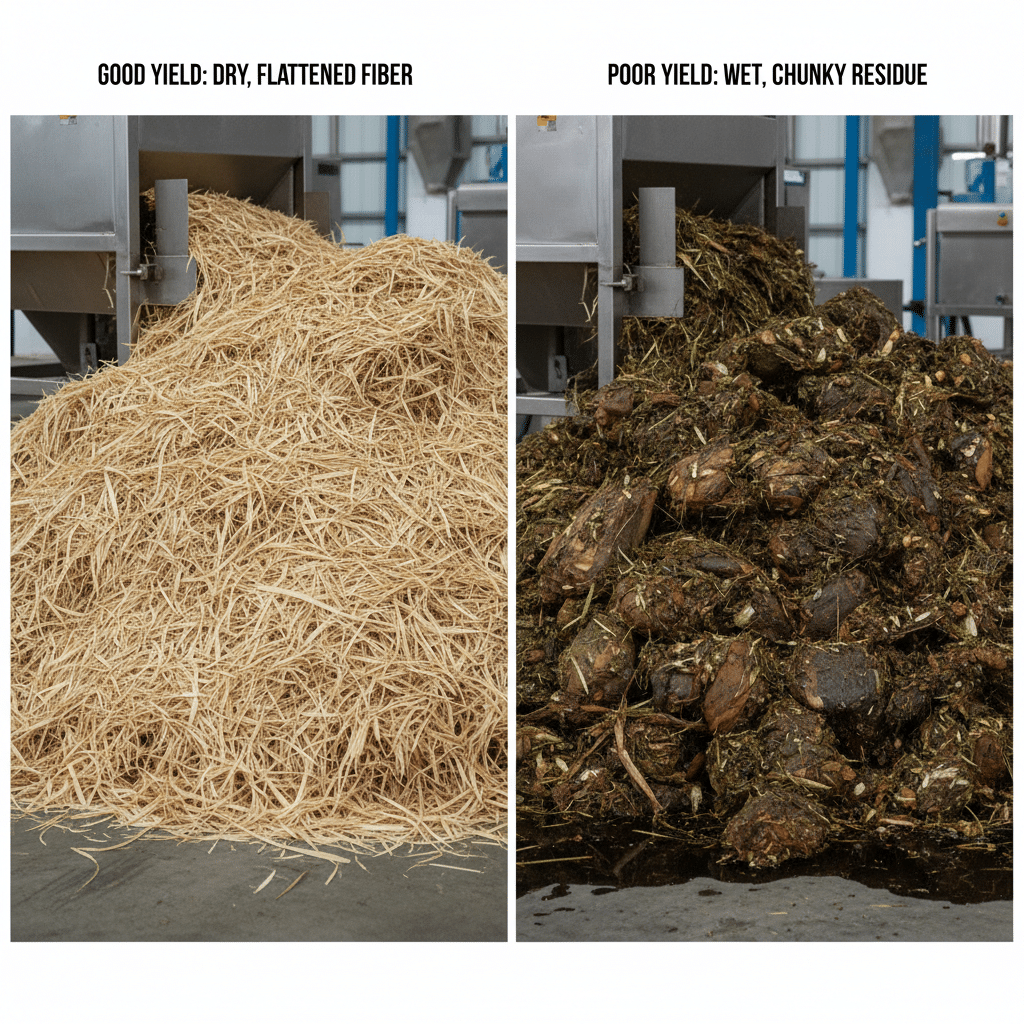
The most immediate indicator of your machine’s health is the condition of the bagasse (the crushed cane residue). Experienced operators can diagnose issues simply by inspecting the waste product.
- Ideal Bagasse: Should be dry to the touch, flattened completely, and crumble easily. This indicates that the rollers have exerted maximum compression and extracted the vast majority of the liquid.
- Wet/Heavy Bagasse: If the residue feels damp, heavy, or drips when squeezed, the machine is not applying sufficient pressure. This suggests gap issues or worn rollers.
- Chunky/Uncrushed Bagasse: If the cane passes through largely intact or only partially flattened, it indicates a feeding issue, severe roller misalignment, or a drive system failure where the rollers stall under load.
Use the bagasse as your primary diagnostic tool as you move through the following troubleshooting steps.
Factor 1: Sugarcane Quality and Preparation
Operators often blame the machine first, but the raw material is frequently the culprit. Sugarcane is a biological product subject to variation in fiber content, moisture, and hardness. No machine can extract juice that isn’t there.
Moisture Content and Cane Age
Sugarcane begins to lose moisture immediately after harvesting. Cane that has been stored for more than 3–5 days in ambient conditions will dry out significantly. The machine may crush the fiber effectively, but if the cellular moisture has evaporated, the yield will be low.
Diagnosis: Cut a cross-section of the fresh cane before feeding it. It should be glistening and wet. If the core looks dry, pithy, or discolored (reddish/brown), the low yield is due to the cane quality, not the machine.
Cane Diameter and Hardness
Commercial juicers are designed with specific inlet tolerances. Feeding cane that is too thin may result in it slipping through the roller gap without full compression. Conversely, extremely hard or thick cane can cause the safety mechanisms (like overload protection) to engage, or cause the belt to slip, resulting in partial crushing.
Best Practice: Ensure your procurement standards match the machine’s specifications. If dealing with variable sizes, operators may need to feed multiple thin stalks together (if the manual permits) or split very thick stalks to ensure proper engagement with the rollers.
Pre-treatment: Peeling and Cleaning
While the hard outer skin of the sugarcane contains some juice, it is also tough and fibrous. In some markets, peeling the cane is standard practice for hygiene and taste. However, peeling reduces the overall diameter of the stalk. If you recently switched from unpeeled to peeled cane without adjusting the machine, the reduced diameter might mean the rollers are no longer applying sufficient pressure.
Factor 2: Mechanical Calibration (Roller Gap Settings)
The core mechanism of extraction is the compression applied between the rollers. In heavy-duty commercial machines, the gap between these rollers is adjustable to accommodate different cane sizes and extraction requirements. Over time, vibrations can cause these settings to drift, or the gap may have been set incorrectly during a previous maintenance session.
Understanding the Compression Triangle
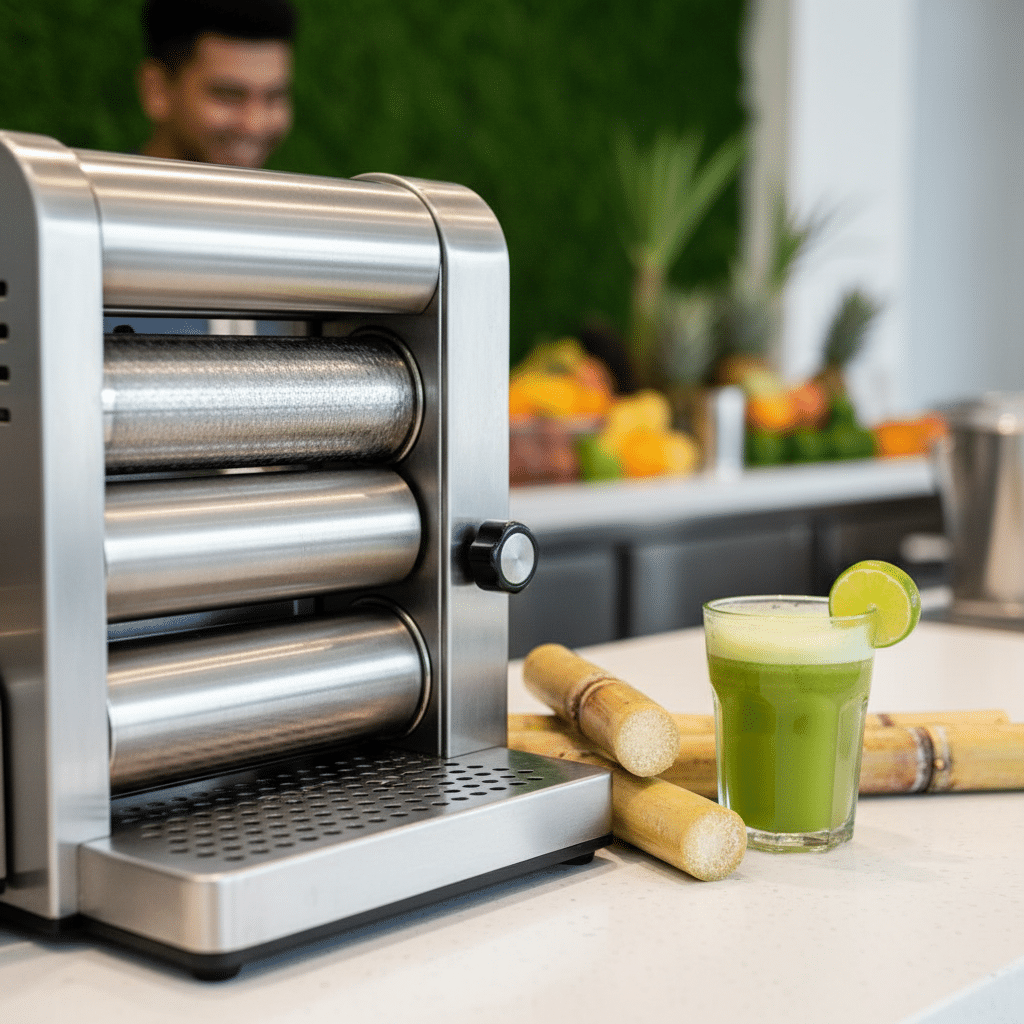
Most commercial juicers utilize a three-roller system (or similar multi-roller configuration):
- Feed Roller: Grabs the cane and pulls it in.
- Crushing Roller: Breaks the hard outer rind.
- Extraction Roller: Applies the final high-pressure squeeze to extract the juice.
The gap typically narrows as the cane progresses through the machine. If the final extraction gap is too wide, the crushed cane passes through without releasing the remaining juice.
How to Check and Adjust Roller Gaps
Note: Always disconnect power before performing inspections. Refer to your specific model’s manual for exact tolerances.
To check the gap, you can use a feeler gauge or a visual inspection against the manufacturer’s reference marks. If the gap needs tightening:
- Locate the adjustment bolts, usually found on the side bearing blocks.
- Adjustments should be made in small increments (e.g., quarter turns).
- Ensure both sides of the roller are adjusted equally to maintain parallelism. An uneven gap will cause the cane to drift to one side and result in uneven extraction.
For precise specifications on roller settings for your specific model, refer to the Datasheets & Manuals section.
Factor 3: Roller Wear and Surface Texture
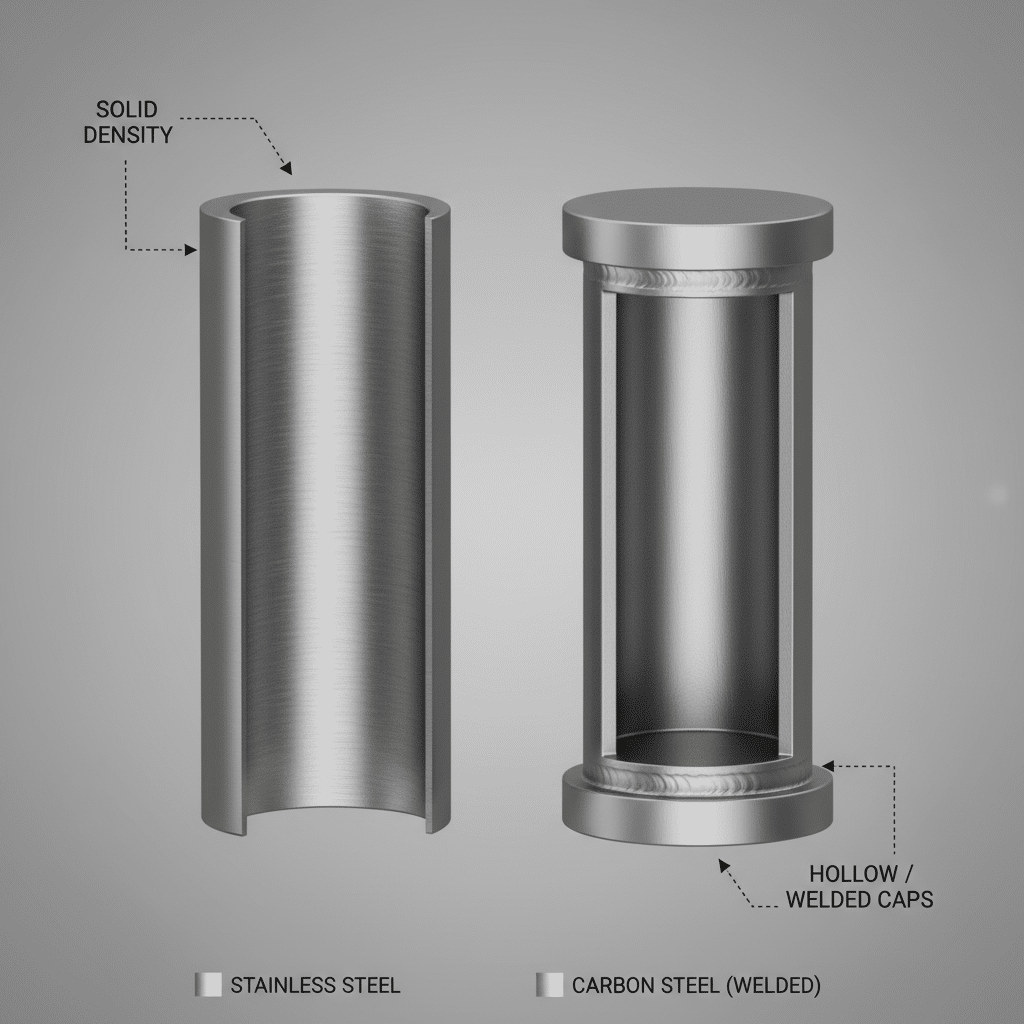
Even with perfect calibration, extraction relies on friction. The rollers are not smooth; they have a textured surface (knurling) designed to grip the fibrous cane and pull it through under immense pressure.
The Role of Knurling
The grooves or teeth on the rollers serve two purposes: gripping the cane and channeling the juice away from the fiber. As the machine processes tons of abrasive cane fiber, these grooves eventually wear down.
Identifying Worn Rollers
Inspect the surface of the rollers. If the teeth appear rounded, flattened, or smooth, the roller loses its ability to grab the cane effectively. Instead of pulling the cane through at a constant speed, the rollers may slip against the wet fiber. This slippage reduces the compression time and force, leaving juice behind in the bagasse.
Regrooving vs. Replacement
Some industrial rollers can be re-grooved by a machinist, but for most commercial countertop or floor-standing units, replacing the rollers is the standard solution. If you observe significant wear, contact Maintenance & Support to discuss replacement parts.
Factor 4: Drive System and Torque Issues
Extraction requires torque. If the motor or transmission system cannot deliver the necessary force, the rollers will slow down or stall when the cane is thickest, resulting in poor extraction.
Belt Tension and Slippage
Many sugarcane machines use a belt drive system to connect the motor to the gearbox. If the belt is loose, worn, or greasy, it will slip under load. You might hear a squealing noise when a large stalk is fed into the machine. Slippage means the rollers stop turning or turn erratically while the motor continues to spin, failing to crush the cane fully.
Fix: Check the belt tension. It should be tight enough to prevent slippage but not so tight that it strains the motor bearings. Replace belts that show signs of cracking or glazing.
Gearbox and Chain Maintenance
Chain-driven machines require regular lubrication. A dry, rusted, or stiff chain increases resistance, robbing the system of the power needed for crushing. Ensure chains are greased and tensioned correctly according to the maintenance schedule.
Motor Capacitor (Safe Checks)
If the machine hums but struggles to start or lacks power under load, the motor start/run capacitor may be failing. This is a common electrical issue that reduces torque. Warning: Electrical testing should only be performed by a qualified technician. If you suspect motor issues, consult the FAQs or contact a professional.
Factor 5: Operational Technique
Sometimes the machine is fine, but the operating technique is inefficient.
Feed Rate and Overloading
Operators rushing to meet high demand may force feed the machine. Jamming cane into the inlet faster than the rollers can accept it causes “choking.” This can force the rollers apart (if they have spring-loaded safety mechanisms) or cause the cane to twist, reducing the effective crush area.
Correct Technique: Allow the machine to pull the cane at its own pace. Do not push forcefully. Let the rollers do the work.
Splitting Large Stalks
Feeding a stalk that exceeds the maximum diameter rating of the machine places unnecessary stress on the bearings and reduces yield because the compression force is distributed over too large an area. Splitting large stalks in half lengthwise before feeding often results in better extraction because the rollers can grip the smaller pieces more effectively.
Factor 6: Hygiene and Buildup
Buildup of dried sugar and fiber is a silent killer of efficiency. If the machine is not cleaned thoroughly, hardened sugar deposits can fill the grooves of the rollers, effectively smoothing them out and causing slippage.
Furthermore, buildup in the juice channels or filters can block the flow of extracted juice. In this scenario, the juice is extracted from the cane but backs up inside the crushing chamber and is re-absorbed by the dry bagasse before it can exit the spout.
Maintenance Protocol:
- Daily: Flush with water and scrub rollers with a stiff brush.
- Weekly: Inspect juice channels and exit spouts for sticky residue.
- Monthly: Deep clean behind covers where bagasse dust accumulates.
Troubleshooting Summary Table
| Symptom | Likely Cause | Action |
|---|---|---|
| Wet Bagasse | Incorrect roller gap or worn rollers | Adjust gap settings; inspect roller knurling. |
| Squealing Noise | Belt slippage | Tighten or replace drive belt. |
| Cane Slips/Won’t Feed | Smooth rollers or dried cane | Check cane freshness; clean roller grooves. |
| Low Juice Volume | Dry cane or clogged filter | Test cane moisture; clean juice exit path. |
| Machine Stalls | Low voltage or capacitor issue | Check power source; contact support. |
When to Contact Support or Upgrade
If you have verified the cane quality, adjusted the roller gaps, tightened the belts, and cleaned the machine, but the yield remains low, you may be facing a deeper mechanical issue such as gearbox failure, bent shafts, or motor fatigue.
Additionally, if your machine is several years old and has processed high volumes, the cumulative wear might mean it is time to consider an upgrade. Newer models often feature advanced gearbox ratios and stronger roller materials that offer higher extraction rates by design.
For expert assistance with diagnostics or to inquire about parts, visit our Contact page.
Frequently Asked Questions (FAQs)
Q: How often should I replace the rollers on my sugarcane machine?
A: This depends on volume. High-volume commercial operators may need replacement every 1–2 years, while lower volume users may last 3–5 years. If the knurling is smooth, it’s time to replace.
Q: Can I re-run the bagasse to get more juice?
A: While possible, it is generally not recommended for high-quality juice. Re-crushing bagasse releases more wax and bitter compounds from the rind, affecting the taste. A properly calibrated machine should extract maximum juice in a single pass.
Q: Why is my machine vibrating excessively?
A: Excessive vibration usually indicates uneven roller gaps, worn bearings, or a misalignment in the drive chain/belt. Immediate inspection is required to prevent further damage.
Q: Does the type of sugarcane affect the machine?
A: Yes. Soft, high-water content cane (often green/yellow varieties) is easier to crush. Hard, fibrous cane (often darker purple/black varieties) requires more torque and robust rollers. Ensure your machine is rated for the type of cane you use.
Conclusion
Low juice yield is a profit leak that should be plugged immediately. By systematically checking your raw material, calibrating your mechanical settings, and adhering to a strict maintenance schedule, you can ensure your sugarcane machine operates at peak efficiency. Regular attention to the “triangle of force”—the rollers, the gap, and the drive system—will keep your extraction rates high and your waste low.
If you need replacement parts, manuals, or advice on upgrading to a high-yield industrial juicer, the team at Easimaker is ready to assist.