
Table of Contents
- What electrical supply does a commercial sugarcane juicer need?
- Check the machine nameplate before ordering
- Common U.S. voltage options and compatibility
- Circuit, plug, grounding, and installation planning
- Electrical considerations during daily operation
- Buyer checklist for U.S. shops
The correct electrical setup for a commercial sugarcane juicer depends on the machine nameplate, available supply, frequency, plug configuration, circuit capacity, and local installation requirements. U.S. buyers should confirm these details before ordering or connecting the machine.
What electrical supply does a commercial sugarcane juicer need?
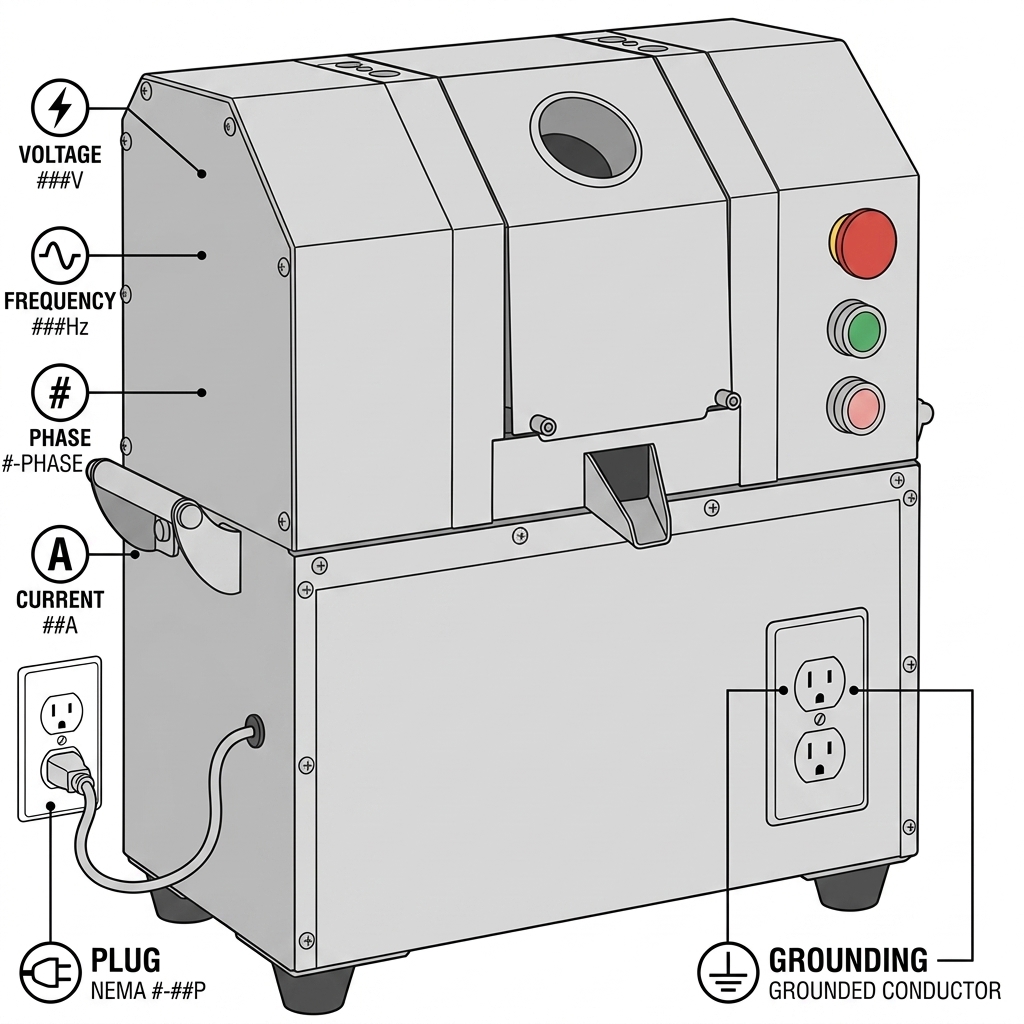
The correct electrical supply cannot be determined from the product name alone. A commercial sugarcane juicer must match the machine’s rated voltage, frequency, phase, current or power rating, plug type, and the electrical service available at the shop.
Many U.S. food businesses have 120 V single-phase outlets, while commercial premises may also provide 208 V or 240 V single-phase service. These supplies are not automatically interchangeable. A machine designed for one voltage should not be connected to another voltage unless the manufacturer confirms that the equipment supports it and provides the correct configuration.
Before purchase, request a complete electrical specification from the supplier. Confirm the nameplate information with a qualified electrician, especially if the machine will be installed in a food truck, kiosk, café, supermarket, or production kitchen.
Check the machine nameplate before ordering
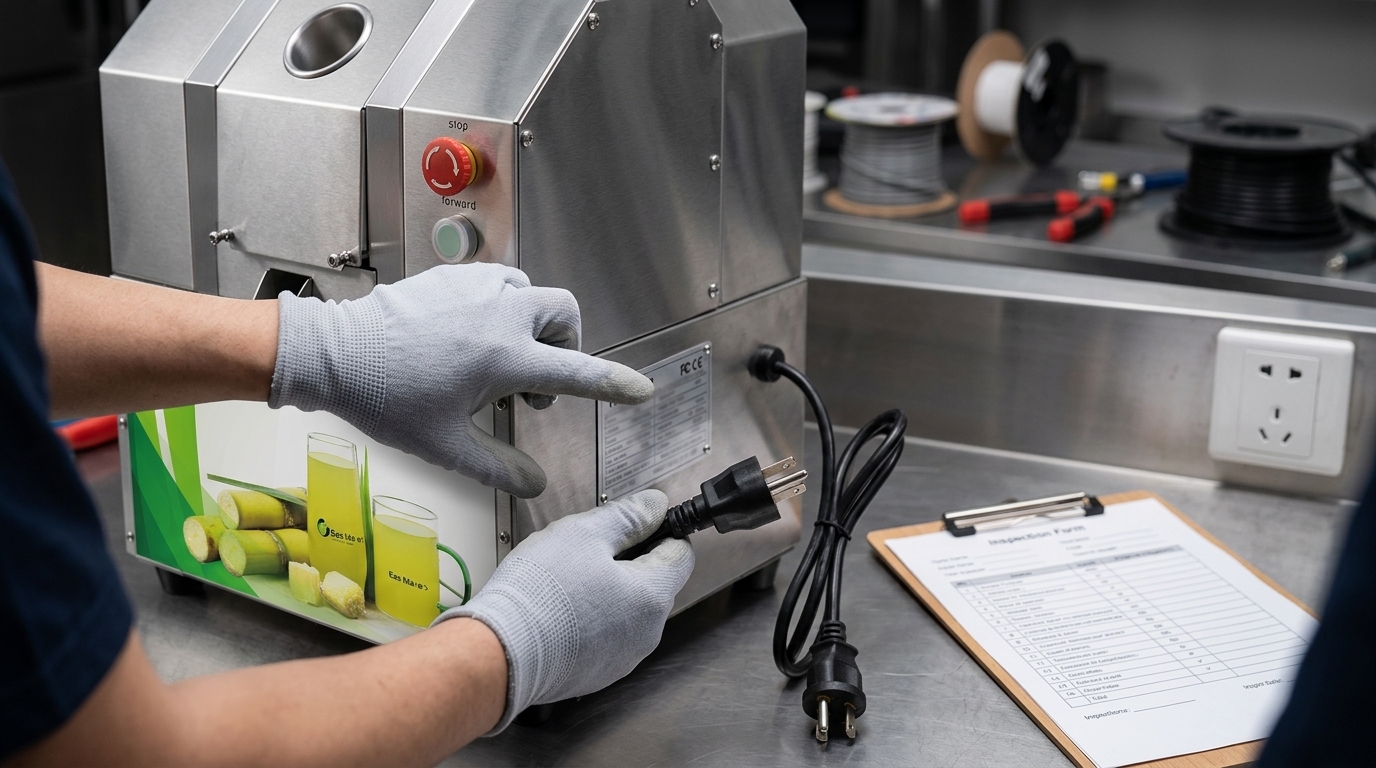
The machine nameplate and technical data sheet are the starting point for confirming commercial juicer power requirements. Ask the supplier for a clear photo or written specification if the information is not visible in the product listing.
Important details to verify
- Rated voltage: Confirm whether the machine is configured for 120 V, 208 V, 220–240 V, or another supply.
- Frequency: U.S. premises generally use 60 Hz service. Do not assume a 50 Hz machine is suitable for continuous commercial operation without written confirmation.
- Phase: Small countertop equipment is commonly single-phase, but the specification should state this clearly.
- Current or wattage: The running load helps the electrician size the circuit. Starting current may be higher than the normal operating current.
- Plug and cord: Confirm the plug configuration, cord length, and whether the machine is supplied with a U.S.-compatible cord.
- Protection requirements: Ask whether the manufacturer specifies a circuit breaker, disconnect, overload protection, or other installation condition.
Do not select a circuit only by comparing the machine’s wattage with the breaker label. The electrician must consider the equipment rating, circuit conductors, outlet, installation method, and other loads connected to the same circuit.
Common U.S. voltage options and compatibility
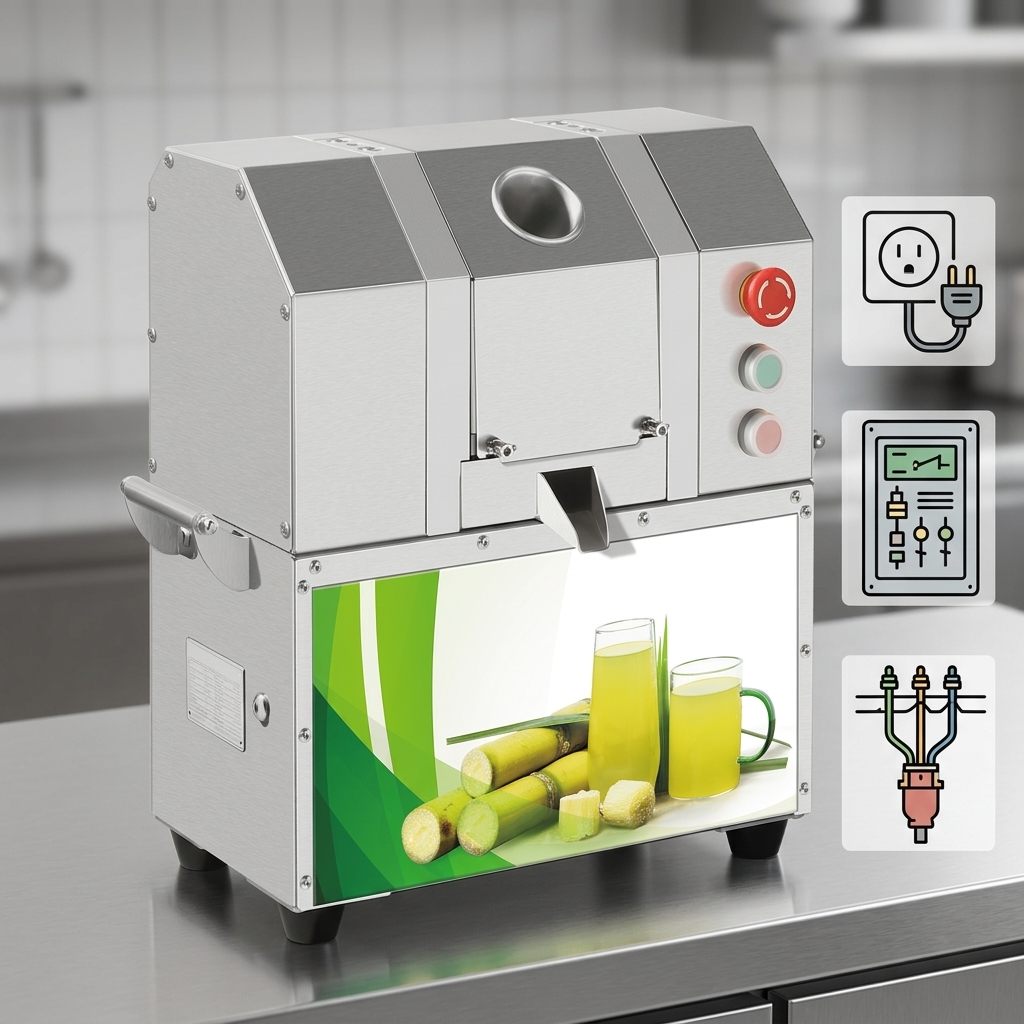
When buyers search for sugarcane juicer voltage, they are usually trying to determine whether a machine can connect directly to the power available at the premises. The answer depends on the exact factory configuration.
120 V: This is common in small shops and many standard receptacles. A 120 V machine may be convenient for a countertop juice station, but the outlet still needs to support the machine’s current draw and operating environment.
208 V: This supply is found in some commercial buildings and foodservice facilities. A 208 V service should only be used with a machine specifically rated for it or confirmed by the manufacturer as compatible.
220–240 V: This range is used by some commercial equipment and premises. A 220–240 V specification is not the same as a 120 V specification. The plug, receptacle, circuit, and machine configuration must all match.
Frequency and phase: Voltage alone is not enough. A machine can have a suitable voltage but still require a different frequency or phase. Confirm all three before shipment, and do not rely on an adapter to solve a voltage mismatch.
For imported equipment, ask the supplier to identify the intended U.S. configuration on the quotation and commercial documents. This reduces confusion between the machine supplied, the plug fitted, and the electrical service prepared at the shop.
Circuit, plug, grounding, and installation planning
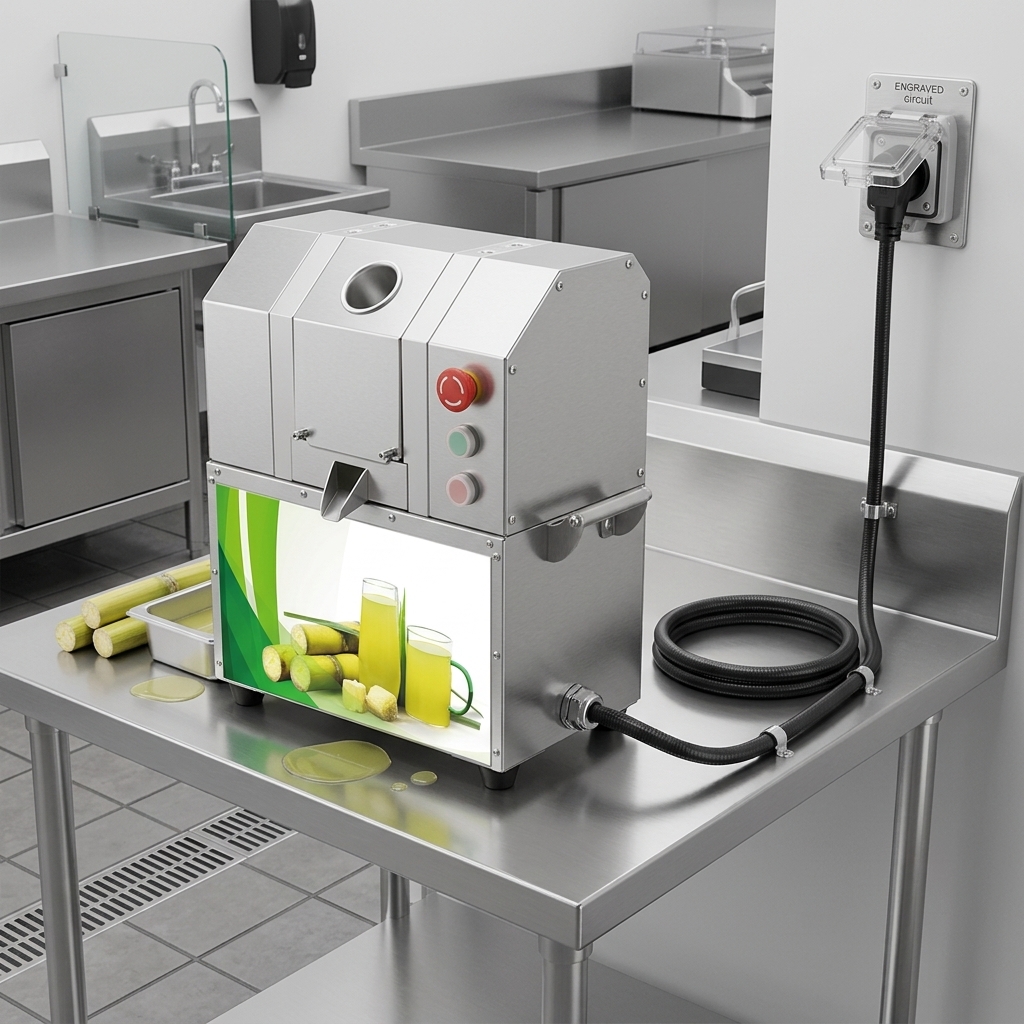
A compatible machine still requires a suitable installation. Plan the electrical connection together with the workstation, water-resistant cleaning process, drainage, ventilation, and operator access.
Use a suitable circuit
Where practical, place the juicer on a dedicated circuit or a circuit assessed for the combined load of all connected equipment. Avoid sharing an outlet with high-load appliances unless an electrician confirms that the circuit is adequate. Repeated breaker trips, dimming lights, heat at the plug, or a burning smell indicate that operation should stop and the installation should be checked.
Match the plug and receptacle
The plug supplied with the machine must match the correctly rated receptacle. Do not cut off the plug, use an improvised adapter, or replace wiring without qualified technical advice. If the machine is shipped without a U.S.-compatible plug, arrange the conversion through an appropriately qualified professional.
Protect the connection
Foodservice areas can involve water, juice, cleaning chemicals, and wet floors. Keep the plug, socket, and cord away from splash zones, and follow local requirements for grounding and ground-fault protection. Never operate the machine with a damaged cord, loose connection, missing ground, or wet electrical components.
Allow service access
Do not push the machine tightly against a wall or place the cord where it can be crushed. Leave enough access to isolate power, inspect the cord, clean around the equipment, and carry out maintenance safely.
Electrical considerations during daily operation
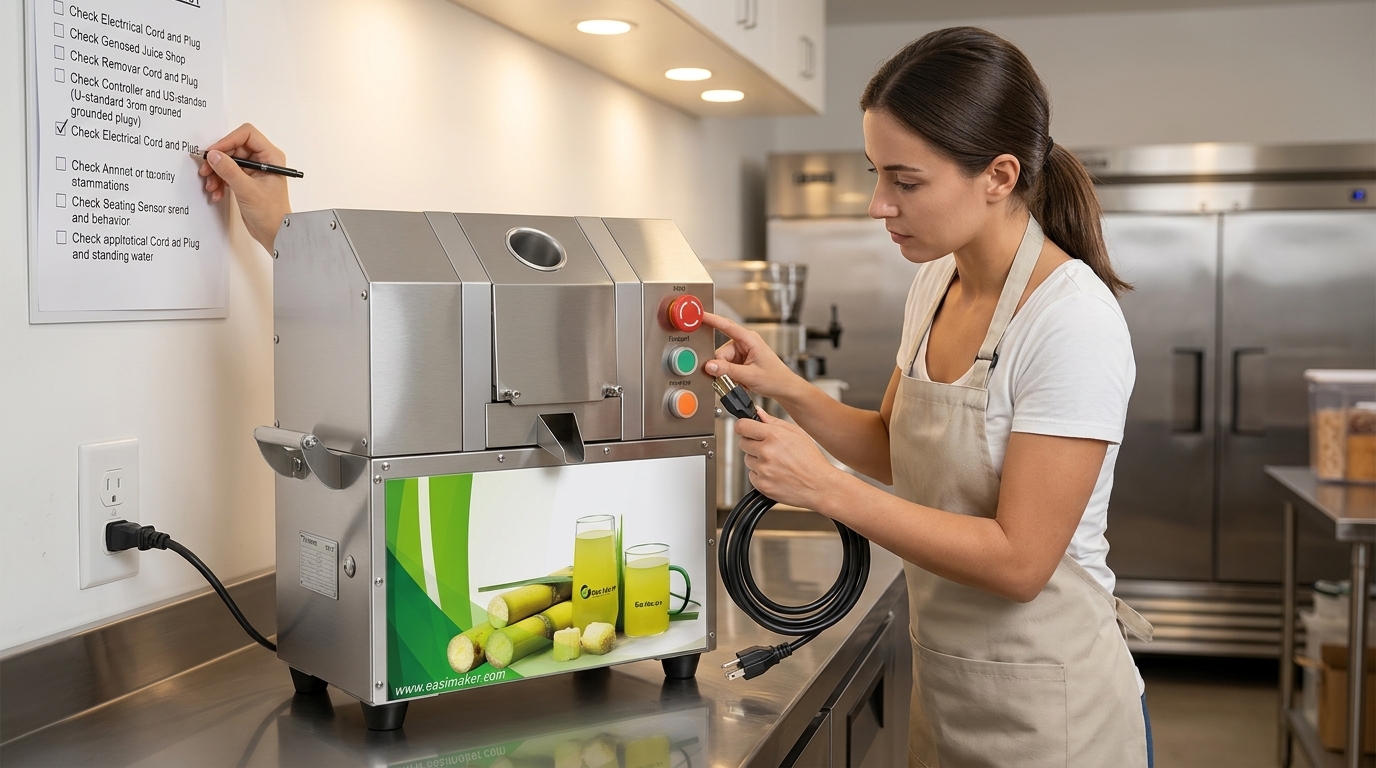
Correct installation is only the first step. Operators should include electrical checks in the opening, operating, and closing routines.
- Inspect the cord, plug, switch, and visible housing before starting.
- Keep hands dry when connecting, starting, or stopping the machine.
- Do not hose down the motor housing, controls, plug, or socket.
- Switch off and isolate power before clearing a jam, removing covers, or carrying out cleaning and maintenance.
- Do not repeatedly reset a tripped breaker. Find out why the circuit has tripped first.
- Watch for unusual heat, noise, vibration, electrical smell, or intermittent starting.
- Keep the machine’s electrical rating and operating instructions available for staff and service personnel.
For safe cleaning, separate removable food-contact parts from electrical components and follow the manufacturer’s manual. If a fault continues after basic safe checks, stop using the machine and arrange inspection by qualified personnel.
Buyer checklist for U.S. shops
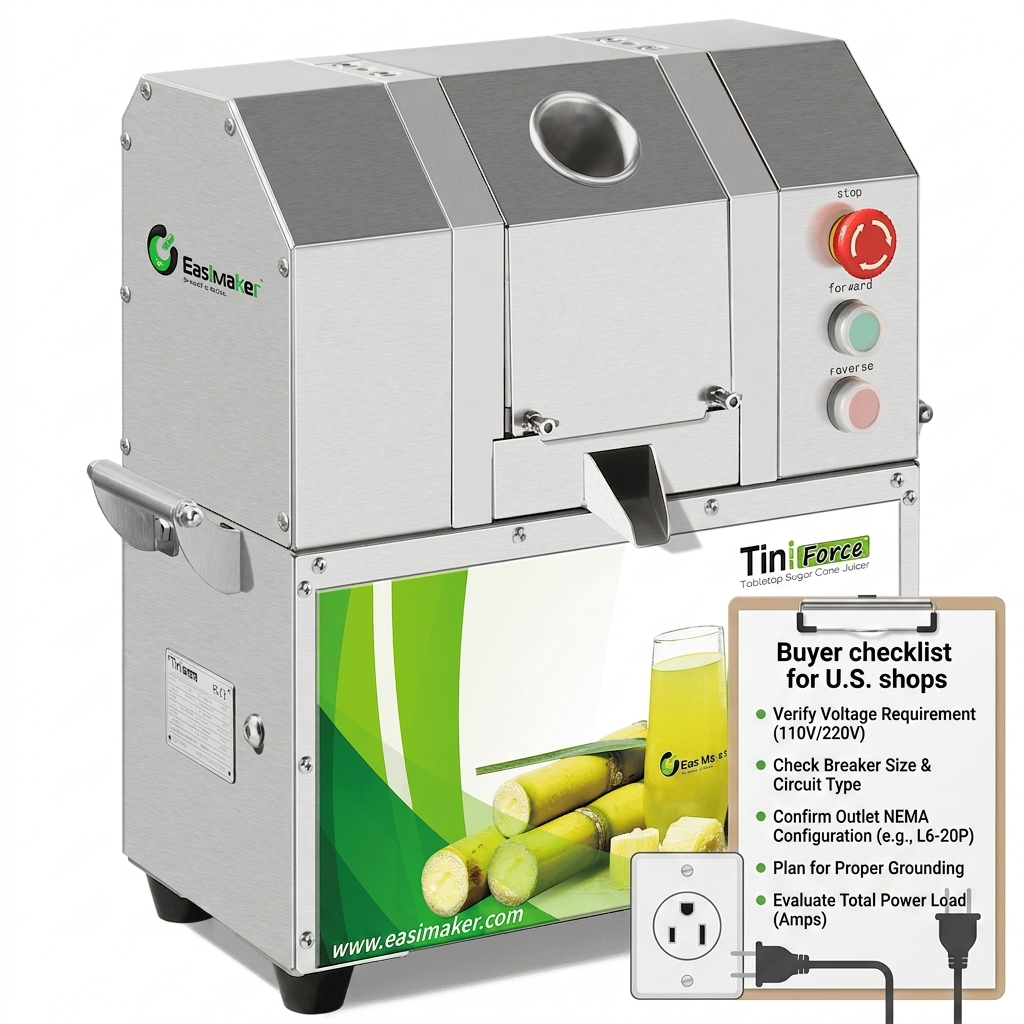
Before placing an order, send the supplier the electrical information for your proposed installation and request a written confirmation. The following checklist helps prevent avoidable compatibility problems:
- Record the voltage, frequency, phase, and available circuit information at the shop.
- Ask for the juicer’s exact rated voltage, current or wattage, frequency, and phase.
- Confirm whether the quotation is for a U.S. electrical configuration.
- Verify the plug type, cord specification, grounding arrangement, and installation instructions.
- Ask whether the machine can be configured for the available supply before production or shipment.
- Have a qualified electrician review the circuit, receptacle, breaker, and wet-area protection.
- Confirm where the machine will sit and how staff will isolate power for cleaning and service.
- Keep the nameplate, manual, wiring information, and supplier contact details with the equipment records.
The most reliable approach to sugarcane machine U.S. electrical compatibility is to verify the complete system before delivery—not just the voltage printed in a product advertisement. If the shop supply or machine specification is unclear, pause the installation until the details are confirmed.