
Table of Contents
- Quick Answer: What Packaging Works Best?
- What Sugarcane Juice Packaging Must Do
- Choosing Cups, Lids, and Seals
- Takeaway vs Delivery Packaging
- How to Fill and Seal Fresh Sugarcane Juice
- Labels, Order Accuracy, and Customer Information
- Juice Shop Packaging Checklist
- Common Packaging Mistakes to Avoid
- Select Packaging Around Your Actual Workflow
Fresh sugarcane juice needs packaging that controls leaks, protects product quality, supports clean service, and suits the actual travel time. This guide helps juice shops select cups, lids, seals, labels, and delivery packing procedures.
Quick Answer: What Packaging Works Best?
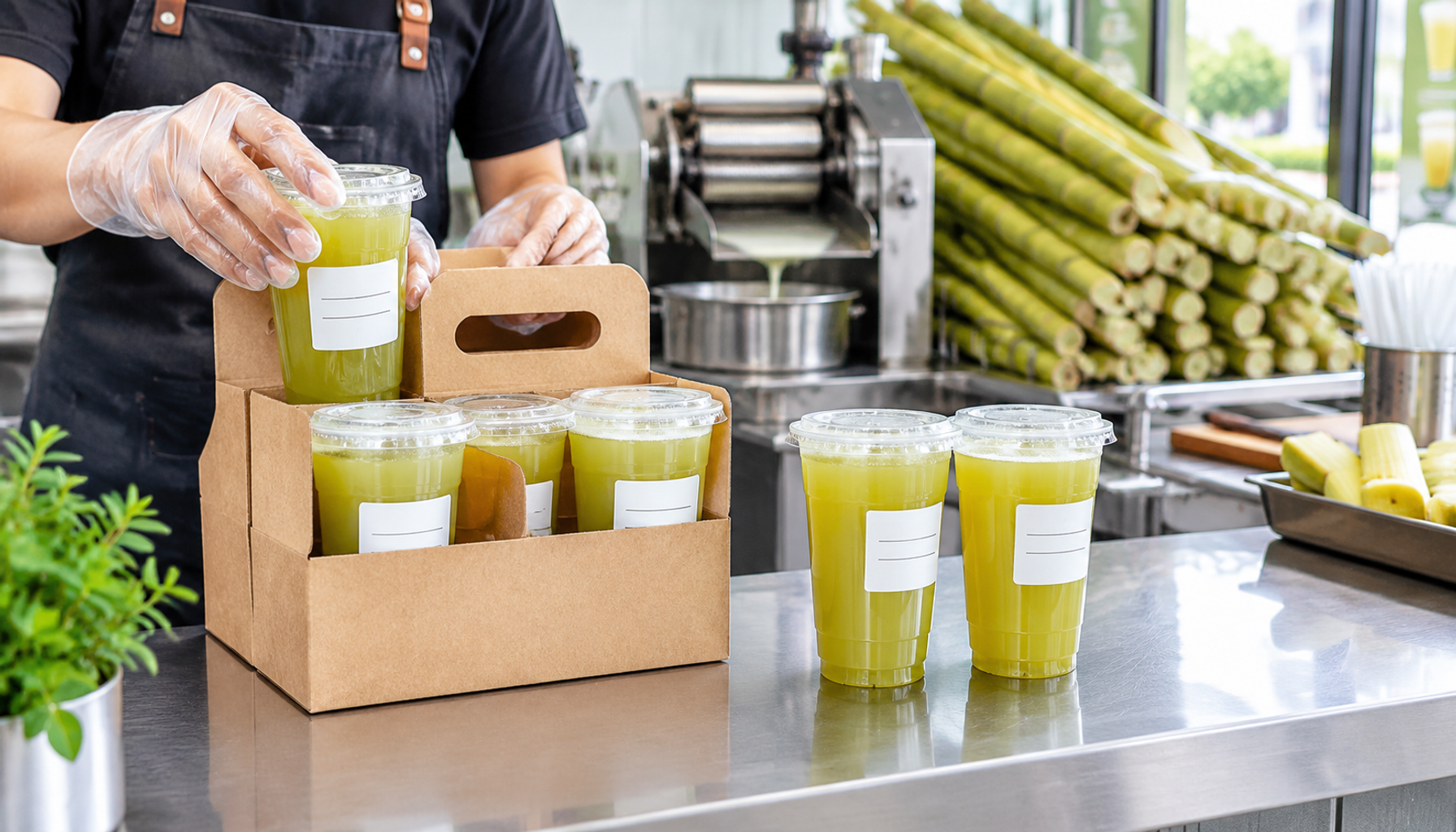
The best sugarcane juice packaging for most takeaway shops is a food-contact suitable cold-drink cup with a secure matching lid, clear order identification, and a separate outer carrier when multiple drinks are collected or delivered. For short walk-away orders, a well-fitted flat or dome lid may be sufficient. For courier delivery, use a more leak-resistant closure, avoid overfilling, place cups upright in a compartmented carrier, and use a sealed bag only as secondary protection.
Freshly extracted sugarcane juice is a perishable drink. Packaging does not make it shelf-stable or replace appropriate hygiene, temperature control, and local food-service requirements. The practical goal is to get a freshly prepared drink from the juicing counter to the customer with minimal leakage, contamination risk, order confusion, and loss of presentation.
Before ordering large quantities of cups, run a real service test: fill each proposed cup as staff normally would, add the intended ice and garnishes, fit the lid, place it in the delivery carrier, and assess it after the longest realistic trip time. Test one drink and multi-cup orders separately.
What Sugarcane Juice Packaging Must Do
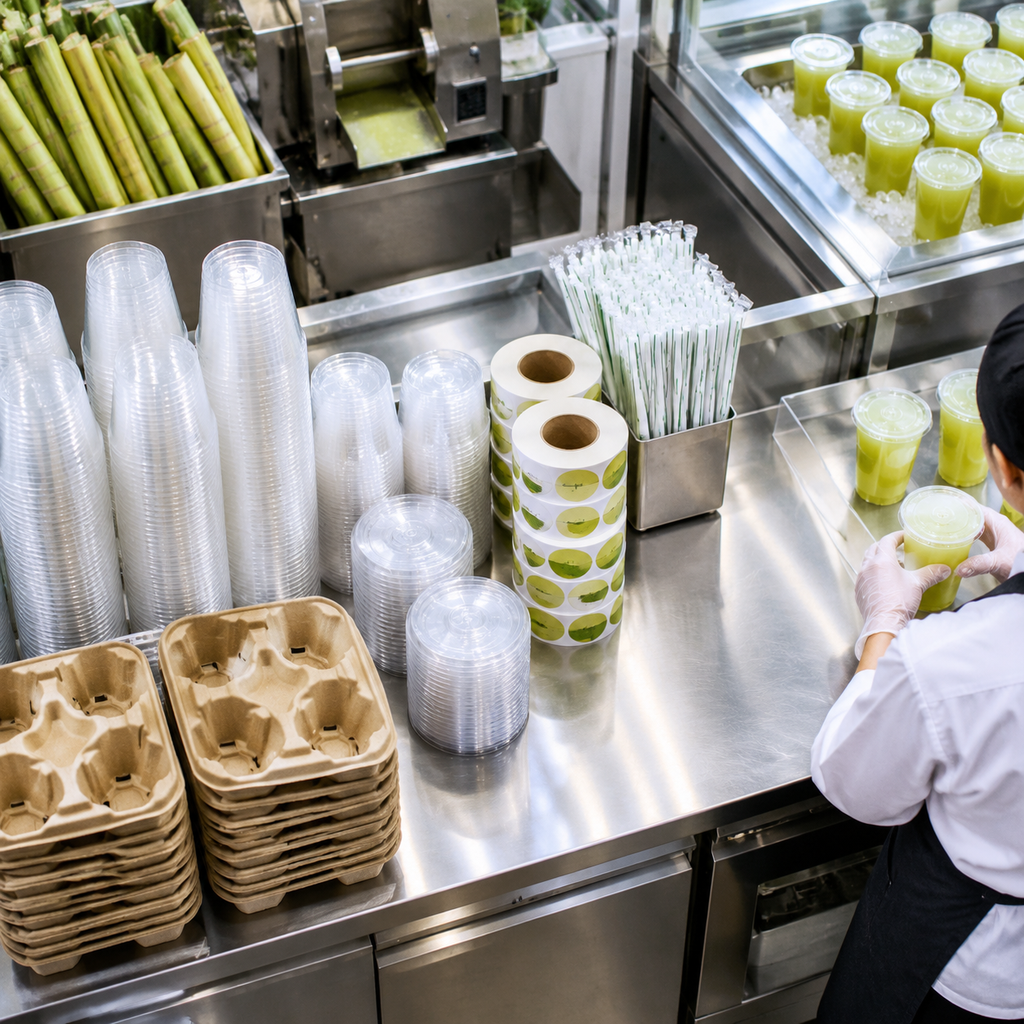
Sugarcane juice packaging is the complete service system around the drink, not only the cup. It includes the cup or bottle, closure, straw or sip opening, tamper solution where appropriate, label, carrier, bag, and the staff procedure used to assemble an order.
A suitable system should address the following operating needs:
- Containment: the cup and lid must fit securely and tolerate normal handling.
- Product protection: food-contact surfaces should be clean, stored hygienically, and handled to limit unnecessary contact with the finished drink.
- Cold-service suitability: the material should suit cold beverages and the expected amount of ice or condensation.
- Order identification: staff and riders need to distinguish drink size, customization, and quantity quickly.
- Transport stability: multi-drink orders need an upright carrier that limits movement.
- Brand and local compliance needs: packaging choices should be checked against applicable local rules for food-contact materials, labeling, single-use items, waste, and delivery.
Packaging should be planned alongside the counter workflow. A clean line from cane preparation to extraction, filling, sealing, and handoff reduces unnecessary crossing of raw materials, used tools, and ready-to-serve drinks. See this guide to planning a clean sugarcane juice shop workstation when reviewing your service area.
Choosing Cups, Lids, and Seals
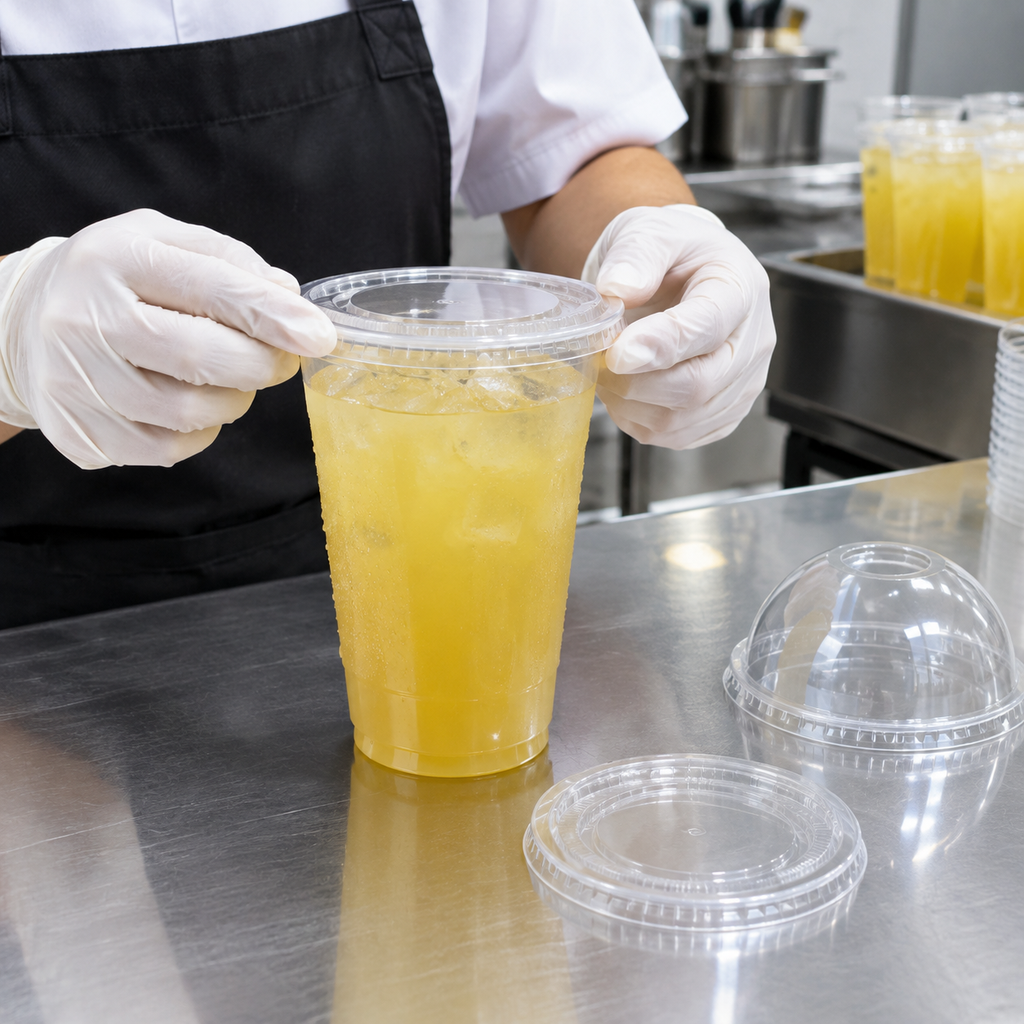
Do not choose sugarcane juice takeaway cups by appearance alone. Cup geometry, lid fit, rim design, stiffness, and availability from a dependable local or regional packaging supplier matter in daily operation. A lid from one supplier may not seal correctly on a visually similar cup from another supplier, so treat cups and lids as matched components.
| Packaging format | Best fit | Strengths | Points to check before use |
|---|---|---|---|
| Cold-drink cup with flat lid | Simple takeaway juice without large toppings | Compact profile; straightforward filling and stacking | Rim-to-lid fit, sip-hole controls, straw position, leakage when tilted |
| Cold-drink cup with dome lid | Juice served with a visible garnish or more headspace | Extra space above the drink; familiar customer format | Carry stability, lid fit, and whether the dome adds unnecessary bulk |
| Sealed cup with film top | High-volume counter service or delivery where compatible sealing equipment is available | Can create a consistent closure and clear tamper indication | Compatibility between cup, film, machine, fill level, and drink temperature |
| Rigid bottle with cap | Pre-arranged short-hold service only where the operating process and local requirements support it | Cap closure can be convenient for travel | Cleaning or single-use controls, filling process, labeling, and product-holding procedure |
For most made-to-order shops, a matched cup-and-lid system is the least complicated starting point. Choose a size range that matches the menu rather than stocking many near-duplicate cup sizes. Fewer formats simplify inventory, reduce staff selection errors, and help carriers fit cups consistently.
Straws should also match the intended menu. If the drink contains cane pieces, fruit additions, or other solids, test whether the selected straw diameter allows normal drinking without damaging the lid opening. If you offer a strawless sip lid, test it with condensation and motion, not only on a stationary counter.
Takeaway vs Delivery Packaging: Use Different Controls
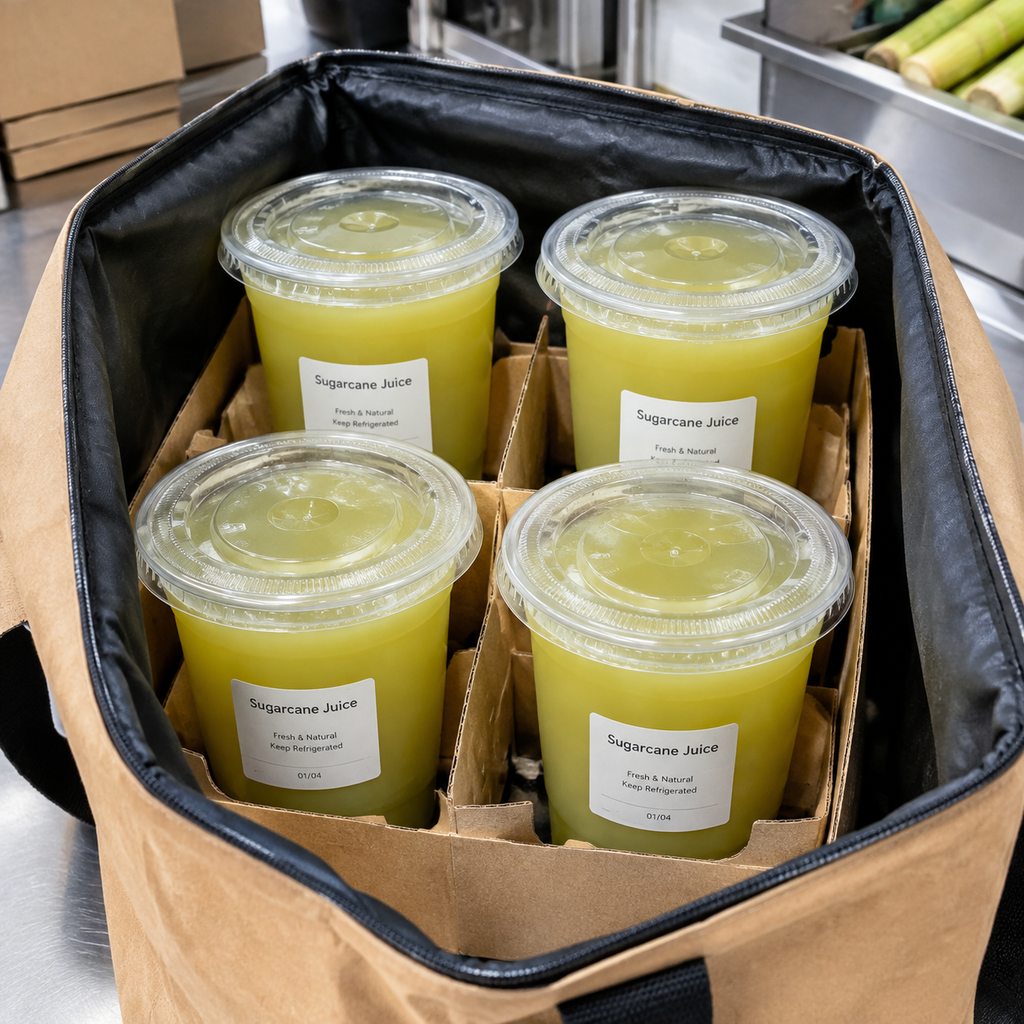
A customer collecting one drink may keep it upright and consume it soon after purchase. A delivery order can be moved between a counter, shelf, rider bag, vehicle, and customer handover point. That difference changes the packaging requirement.
| Control point | Counter takeaway | Third-party or in-house delivery |
|---|---|---|
| Closure | Secure lid fitted and checked | Secure lid plus a tamper-evident approach where appropriate to the business model |
| Fill level | Leave sensible headspace for lid fitting and movement | Maintain headspace; avoid overfilling even during rush periods |
| Carrier | Single-cup handoff or basic tray may be sufficient | Use an upright, compartmented carrier sized for the cup base |
| Outer bag | Useful for customer convenience | Use as secondary containment, not as the main method of preventing spills |
| Ice and garnish | Set by customer preference and service style | Review against realistic travel time and the potential for dilution or movement |
| Final check | Confirm drink, size, lid, and straw | Confirm order count, labels, seals, carrier stability, and any platform handover instructions |
For delivery, build the order from the inside outward: close the cup, label it, place it in a fitted carrier, keep the carrier level, then place the complete order in its outer bag. A bag cannot correct a loose lid or a cup that is moving freely inside the order.
Notify delivery customers that fresh juice is intended for prompt consumption and provide storage or handling notes only when they reflect your validated process and local requirements. Avoid broad claims about how long the drink remains suitable unless you have an appropriate, documented basis for making them.
How to Fill and Seal Fresh Sugarcane Juice
A repeatable filling procedure supports cleaner service and fewer delivery complaints. The exact sequence depends on your menu and local operating requirements, but the following is a practical baseline:
- Prepare a clean cup at the finished-drink station. Keep unused cups, lids, straws, and seals protected from splashes and unnecessary handling.
- Confirm the order details before filling, especially size, ice choice, additions, and delivery or collection status.
- Extract juice using your normal controlled workflow. Keep the dispensing area clear and use clean, service-dedicated tools for finished drinks.
- Add approved ingredients in the defined order. Do not rely on packaging to compensate for poor handling controls.
- Fill to a consistent line below the rim. Headspace helps the lid engage fully and provides room for normal movement.
- Fit the lid or apply the sealing method according to the packaging supplier’s instructions. Check the entire rim rather than pressing only one point.
- Wipe any exterior drips, apply the label, add the intended straw or accessory, and place delivery orders in a stable carrier.
Cleaning and sanitation routines remain essential because packaging is applied after juicing, when the drink is ready for the customer. Review a documented daily sugarcane juice machine cleaning SOP and align the packaging station with the same disciplined routine.
Operators should be trained to stop and replace a cup if the rim is cracked, the lid does not engage evenly, or the outside of the cup is heavily soiled. The cost of replacing one cup is generally lower than the operational disruption of a spilled customer order.
Labels, Order Accuracy, and Customer Information
A small label or written order marker can prevent a large number of handoff mistakes. It is especially useful when several similar green-yellow drinks are waiting at the counter. The label does not need to be complicated; it needs to be legible and consistently placed.
Include information that supports your process, such as:
- order name or order number;
- drink size;
- ice level or no-ice instruction;
- approved additions or exclusions;
- time prepared, if this is part of your internal procedure;
- staff initials or station code, where helpful for traceability and training.
Keep labels away from the drinking opening and apply them to a dry external cup surface so they remain attached. For sealed cups, ensure labels do not interfere with the seal inspection area. For multiple drinks, label each individual cup as well as the outer bag; a correct bag label alone may not prevent a mix-up after handover.
The best order-control system is one staff can follow during a rush. Standardize the position of labels, straws, carriers, and completed-order staging. A logical counter sequence is also covered in this guide to a small-shop sugarcane machine counter layout.
Juice Shop Packaging Checklist
Use this juice shop packaging checklist at setup, during staff training, and when changing a cup, lid, carrier, or delivery provider.
- Matched food-contact suitable cups and lids are approved for the intended cold beverage use.
- Staff use only the cup-and-lid combinations that have been tested together.
- Packaging is stored clean, dry, and protected from dust, splashes, pests, and floor contact.
- Standard fill lines are defined for each cup size and ice option.
- Every available lid has been checked for secure engagement around the full rim.
- Straws, sip lids, or other drinking accessories fit the menu format.
- Labels identify individual drinks clearly and do not cover drinking openings.
- Multi-drink delivery orders use carriers that keep cup bases separated and upright.
- Staff perform a final count, closure, label, and stability check before release.
- Damaged cups, warped lids, and packaging with uncertain fit are removed from service.
- Spill feedback and delivery complaints are logged by packaging type and order format.
- The packaging plan is reviewed whenever menu items, delivery radius, cup suppliers, or order volumes change.
Packaging controls work best with a broader hygiene routine covering cane receiving, staff practices, equipment cleaning, finished-drink handling, and documented checks. Use a commercial sugarcane juice hygiene checklist to review the operation as a complete system.
Common Packaging Mistakes to Avoid
Using lids and cups from different systems without testing. Similar diameters do not guarantee a dependable seal. Test each supplier combination before it reaches service.
Filling too close to the rim. A cup can look generous yet spill immediately when the lid is pressed on or when it is carried over uneven ground. Set a practical fill line.
Sending delivery cups loose in a bag. Cups can tip, knock together, or lift from the base of the bag. Use a carrier that matches the cup shape and order quantity.
Adding a seal without an inspection step. A tamper label or outer bag seal is only useful when staff are trained to confirm the primary closure first.
Holding too much made juice for later orders. Packaging fresh sugarcane juice should support a controlled service process, not encourage unvalidated holding practices. Produce to order where practical and follow the requirements that apply to your location.
Ignoring feedback from drivers and customers. Note the route, cup size, lid type, carrier, drink temperature, and reported failure. This turns a vague complaint into a packaging test you can repeat and improve.
Select Packaging Around Your Actual Workflow
The right sugarcane juice delivery packaging is the option that your team can assemble accurately, your carrier can transport upright, and your customers can open and drink conveniently. Start with a limited, tested set of cup sizes and compatible closures. Then validate it under real conditions: peak-hour filling, two- and four-drink orders, condensation, vehicle movement, and the longest delivery distance you accept.
As your shop grows, review packaging together with juicer location, finishing space, refrigeration arrangements, delivery handoff, and cleaning access. Equipment and packaging should support one continuous workflow rather than create extra handling between extraction and service.
FAQ
What type of cup is best for fresh sugarcane juice?
For many made-to-order shops, a food-contact suitable cold-drink cup with a properly matched lid is a practical choice. Select the format after testing the actual drink, ice level, fill line, and transport method. The best option for counter takeaway may not be the best option for courier delivery.
How can a juice shop prevent sugarcane juice from leaking during delivery?
Use tested cup-and-lid combinations, leave adequate headspace, inspect the full lid rim, label each cup, and place drinks upright in a carrier with compartments sized for the cup base. Do not rely on an outer bag as the primary spill-control measure.
Should sugarcane juice delivery orders use tamper seals?
Tamper-evident seals can be useful for delivery operations, but they should be treated as an additional control. The cup’s primary closure must still be fitted and checked correctly. Choose a sealing method that does not obstruct the drinking area or hide an improperly fitted lid.
Can fresh sugarcane juice be bottled for later sale?
Bottling fresh juice involves product-holding, hygiene, temperature-control, labeling, and local compliance considerations that go beyond selecting a bottle and cap. Do not assume that a capped bottle makes freshly extracted juice shelf-stable. Establish the process according to the requirements and guidance that apply in your market.
What should be on a sugarcane juice cup label?
For order control, include a clear order name or number, drink size, ice instruction, and approved additions or exclusions. Your business may also need other information depending on its process and local requirements. Keep the label on the dry exterior of the cup and away from the drinking opening.
Plan a More Reliable Sugarcane Juice Service Workflow
Need to align your juicer, counter flow, and takeaway service with your expected order volume? Contact Easimaker to discuss the right commercial sugarcane juice machine and workflow for your market.