
A Strategic Approach to Importing Commercial Juicers
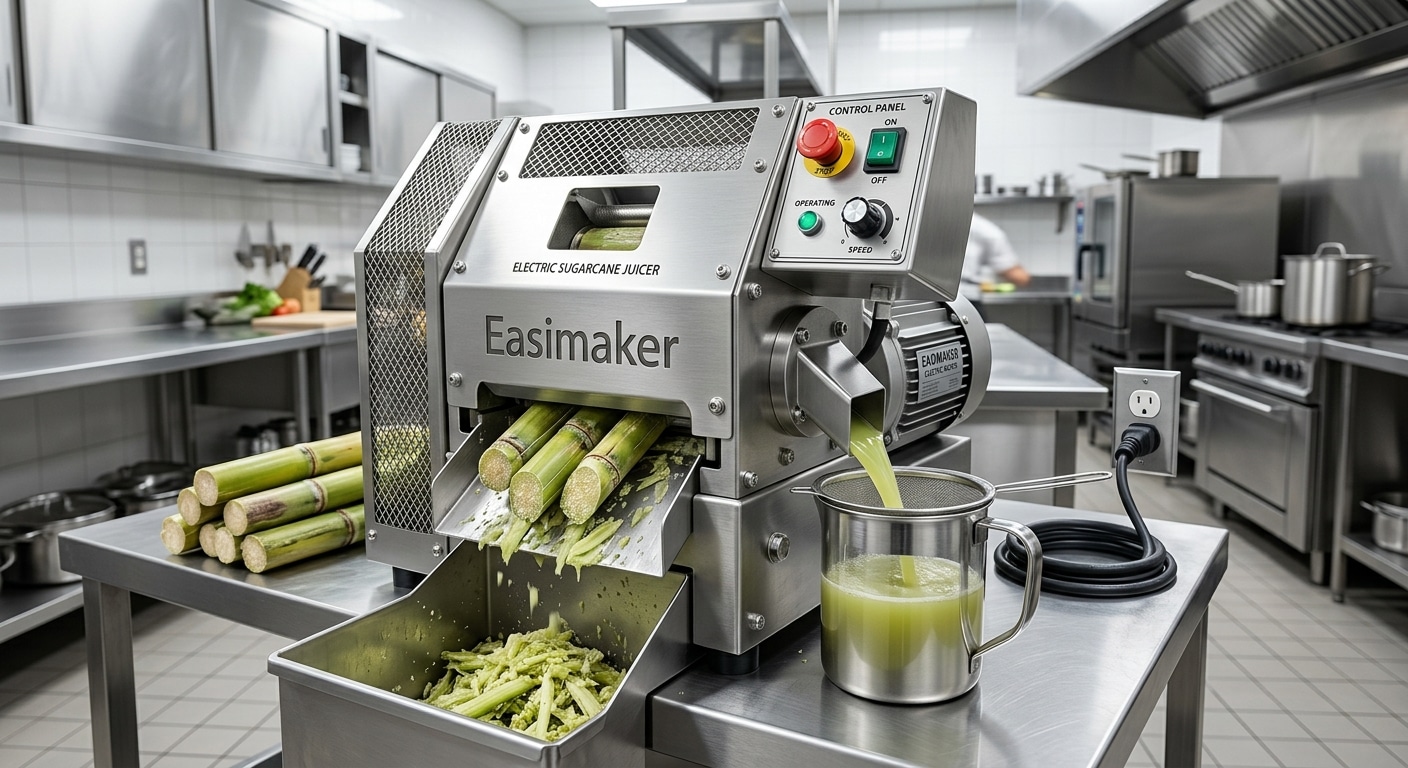
Procuring commercial juicing equipment overseas offers significant cost advantages, scalability, and access to specialized manufacturing. However, importing heavy machinery—such as industrial citrus extractors or high-capacity electric sugarcane juicers—introduces logistical and regulatory hurdles. Delays at customs, unexpected tariffs, or compliance failures can quickly erode profit margins and disrupt operational timelines.
This guide provides procurement managers, engineers, and distributors with a clear roadmap for navigating international shipping, customs documentation, and compliance standards when buying commercial juicers overseas.
Key Customs Concepts and Documentation
Successfully clearing customs requires accurate paperwork. Missing or incorrect documents are the leading cause of port delays and storage fees.
1. Harmonized System (HS) Codes
Every commercial product imported requires an HS code, a standardized numerical method of classifying traded products. Customs authorities use this code to determine the import duties and taxes applied to your machinery.
- Typical Classification: Commercial juicing machinery generally falls under Chapter 84 of the HS code system (Nuclear reactors, boilers, machinery, and mechanical appliances).
- Specific Subheadings: Depending on the exact function, equipment often falls under headings like 8438.80 (Machinery for the industrial preparation or manufacture of food or drink).
- Actionable Tip: Always verify the exact HS code with your manufacturer and your local customs broker. A slight misclassification can lead to higher tariff rates or customs audits.
2. Essential Import Documents
Ensure your overseas supplier provides the following documentation well before the shipment reaches your destination port:
- Commercial Invoice (CI): Must detail the buyer, seller, exact equipment descriptions, HS codes, unit prices, and total value.
- Packing List: Outlines the exact dimensions, weight (net and gross), and number of crates. Crucial for heavy machinery logistics.
- Bill of Lading (BOL) or Airway Bill (AWB): The official shipping contract and receipt of cargo issued by the carrier.
- Certificate of Origin (COO): Proves where the equipment was manufactured. This is vital if your country has a Free Trade Agreement (FTA) with the exporting nation, which could reduce or eliminate import duties.
Compliance, Safety, and Material Standards
Commercial juicers process consumables, meaning they must adhere to strict food safety and electrical standards. Customs agencies often hold shipments lacking proper certification marks.
Electrical Certifications
Because commercial juicers utilize high-torque motors, electrical safety is paramount. Ensure the machinery matches your local grid specifications (e.g., 110V/60Hz for North America, 220V/50Hz for Europe and Asia).
- North America: Look for UL (Underwriters Laboratories) or ETL certifications.
- Europe: CE marking is mandatory for electrical machinery entering the European Economic Area.
- Global: RoHS compliance ensures the electrical components are free from specific hazardous materials.
Food Contact Materials
Customs and health departments (such as the FDA in the US) may require proof that the machine’s components are safe for food contact.
- Stainless Steel Grades: High-quality commercial juicers should utilize Food Grade Stainless Steel (SS304 or SS316) for all components touching the juice (rollers, filters, spouts).
- Certifications: NSF certification or equivalent local health agency approvals are often required for equipment used in commercial kitchens and restaurants.
Shipping Options and Incoterms
Understanding how your equipment will be shipped and who bears the risk is critical for accurate landed-cost calculations.
Choosing the Right Freight Method
Commercial juicers are heavy. A single electric sugarcane juicer can weigh upwards of 50 to 100 kg.
- Sea Freight (LCL vs. FCL): The most cost-effective method. Less than Container Load (LCL) is ideal for 1-5 units. Full Container Load (FCL) is used for bulk distributor orders. Expect transit times of 20-45 days.
- Air Freight: Highly expensive due to the weight but necessary for urgent operational needs or sampling. Transit takes 3-7 days.
Incoterms Comparison
Incoterms define the responsibilities of buyers and sellers in international trade. Here are the most common terms used when buying commercial machinery:
| Incoterm | Seller Responsibility | Buyer Responsibility | Best For |
|---|---|---|---|
| EXW (Ex Works) | Manufactures and packages the goods. | Handles all transport, export clearance, and import duties. | Buyers with strong logistics networks in the origin country. |
| FOB (Free on Board) | Delivers goods to the origin port and clears them for export. | Pays for ocean freight, insurance, and import customs. | Most standard B2B machinery purchases. |
| CIF (Cost, Insurance, Freight) | Covers transport to the destination port and maritime insurance. | Handles import clearance, duties, and final delivery. | Buyers who want the supplier to manage the main transit. |
| DDP (Delivered Duty Paid) | Handles all shipping, export/import duties, and final delivery. | Receives the goods at their facility. | Buyers wanting a hands-off, all-inclusive price. |
Packaging and Logistics Considerations
Heavy machinery requires robust packaging to survive international transit. Ensure your supplier uses heavy-duty, moisture-resistant packaging.
- ISPM-15 Compliance: If the equipment is shipped in solid wood crates, the wood must be heat-treated or fumigated and stamped with the ISPM-15 mark. Customs will reject and potentially destroy shipments with non-compliant wood packaging.
- Moisture Protection: Sea freight exposes cargo to high humidity. Machines should be wrapped in anti-rust VCI (Volatile Corrosion Inhibitor) film and include desiccant packs inside the crate.
Pre-Import Checklist for B2B Buyers
Before transferring funds or signing a purchase agreement, follow this checklist:
- Confirm Specifications: Verify voltage, plug types, and material grades (e.g., SS304).
- Hire a Customs Broker: Engage a licensed broker in your country to handle the import entry and advise on exact duty rates.
- Verify Certifications: Request copies of CE, UL, or NSF certificates and verify their validity.
- Calculate Landed Cost: Factor in the unit price, freight, insurance, import duties, port handling fees, and final inland delivery.
Frequently Asked Questions (FAQs)
Do I need a special license to import commercial juicing equipment?
In most countries, a specific import license is not required for commercial food machinery. However, you must be a registered business entity with a valid tax identification number (such as an EIN in the US or an EORI number in Europe) to act as the Importer of Record.
How much are import duties on commercial juicers?
Duty rates vary widely depending on the destination country and the country of origin. Rates typically range from 0% to 10%. Check your local tariff schedule using the agreed HS code (e.g., 8438.80) for exact figures.
What happens if my equipment is damaged during shipping?
If you purchased under CIF terms, the supplier’s insurance should cover maritime damage. If you purchased FOB or EXW, you must file a claim with your own cargo insurance provider. Always inspect crates for visible damage before signing the delivery receipt.
Can I order a single unit as a sample before committing to a bulk order?
Yes. Reputable manufacturers encourage sample orders to verify quality, performance, and compliance. Keep in mind that shipping a single heavy unit via air freight will significantly increase the per-unit cost for the sample.
How long does the entire import process take?
Manufacturing lead times typically range from 15 to 30 days. Sea freight adds another 20 to 45 days depending on the route. Customs clearance usually takes 2 to 5 days if all paperwork is in order. Plan for a total lead time of 6 to 10 weeks.
Ready to Upgrade Your Equipment?
Navigating international procurement doesn’t have to be a barrier to growing your business. By understanding the regulations and partnering with an experienced manufacturer, you can secure high-quality machinery efficiently and cost-effectively.
If you are looking for reliable, commercial-grade electric juicing solutions built to international standards, we are here to help. Request a quote / Get a sample today to discuss your specific voltage, capacity, and shipping requirements.