
Table of Contents
- The Short Answer
- How to Read a Sugarcane Juicer Electrical Rating
- Voltage, Frequency and Phase Must All Match
- Power, Current and Circuit Sizing
- Commercial Installation Requirements
- Power Supply Checklist Before You Order
- Common Power Supply Problems
- Choosing a Machine Configuration for Your Market
- Plan Electrical Supply as Part of the Full Workflow
A commercial sugarcane juicer must be connected to a power supply that exactly matches its rating plate for voltage, frequency and phase. Before buying or installing a machine, confirm the local electrical standard, dedicated circuit requirements, plug type, grounding arrangement and protection devices with a qualified electrician.
The Short Answer
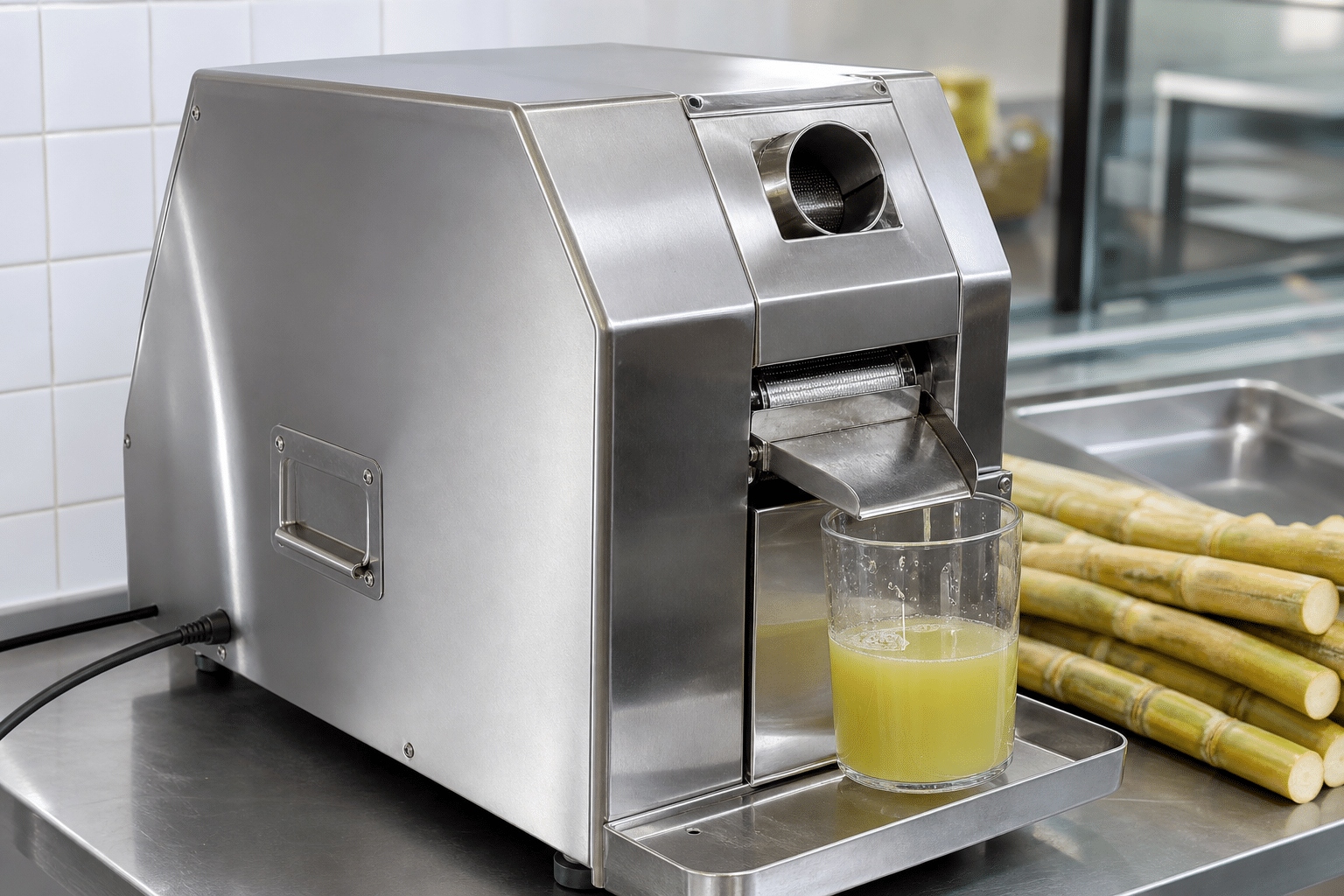
A commercial sugarcane juicer needs a stable, grounded power supply that matches the machine’s electrical rating plate exactly. Check four items before connection: voltage, frequency, phase, and rated input power or current. The machine must also be installed on a suitable circuit with the correct plug, cable, earthing arrangement, and protection required by local electrical rules.
There is no single universal power supply for every sugarcane juicer. Depending on the specific model and destination-market configuration, a machine may be supplied for a local single-phase or three-phase electrical system. A unit built for one voltage or frequency should not be connected directly to another supply. If the rating plate and site supply do not match, ask the manufacturer or a qualified electrician for the correct solution before installation.
For operators, the practical rule is simple: do not select a juicer based on a wall outlet alone. Confirm the machine specification first, then prepare the outlet and circuit around that confirmed specification.
How to Read a Sugarcane Juicer Electrical Rating
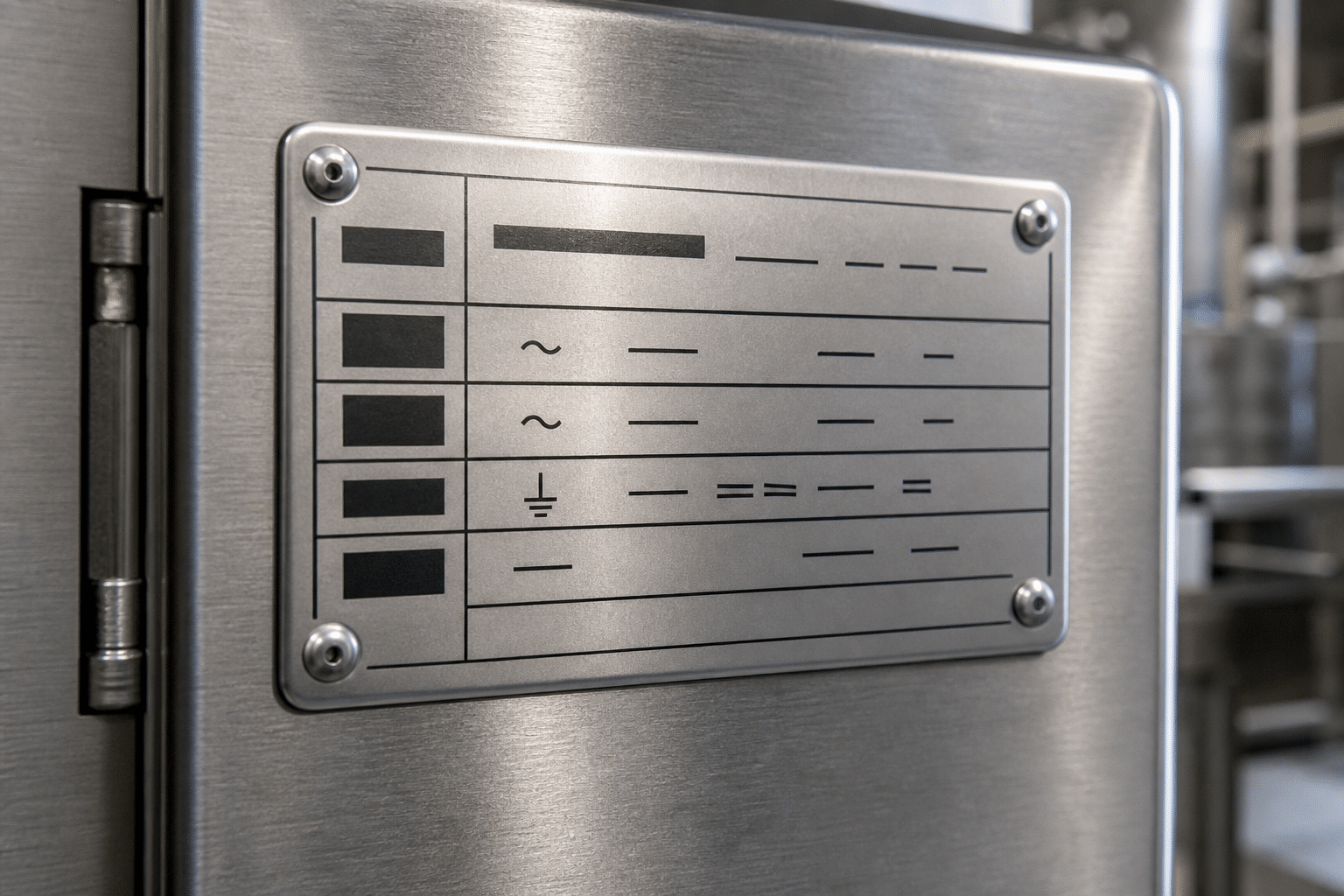
The rating plate, specification label, or official product documentation is the primary source for sugarcane juicer power requirements. It is normally located on the machine body or within the supplied technical documents. Do not estimate electrical requirements from the machine’s physical size, motor appearance, or another machine in the same outlet area.
Look for the following information:
- Voltage (V): the supply voltage the machine is designed to receive.
- Frequency (Hz): the alternating-current frequency, usually expressed in hertz.
- Phase: typically single phase or three phase.
- Input power (W or kW): the stated electrical power rating.
- Current (A): the operating or rated current, where stated.
- Plug or connection information: whether the unit uses a factory-fitted plug or requires a fixed electrical connection.
- Serial number and model: useful when confirming the original factory configuration with the supplier.
These values describe different parts of the electrical requirement. For example, two machines could have a similar stated input power but require different connections because their voltage, phase, plug, or frequency differs. For this reason, a wattage figure alone is not enough for installation planning.
If the label is missing, damaged, or unclear, stop and obtain the official machine specification before connecting power. Replacing a cable, plug, switch, or control component with an unsuitable part can create a safety risk and may affect machine operation.
Voltage, Frequency and Phase Must All Match
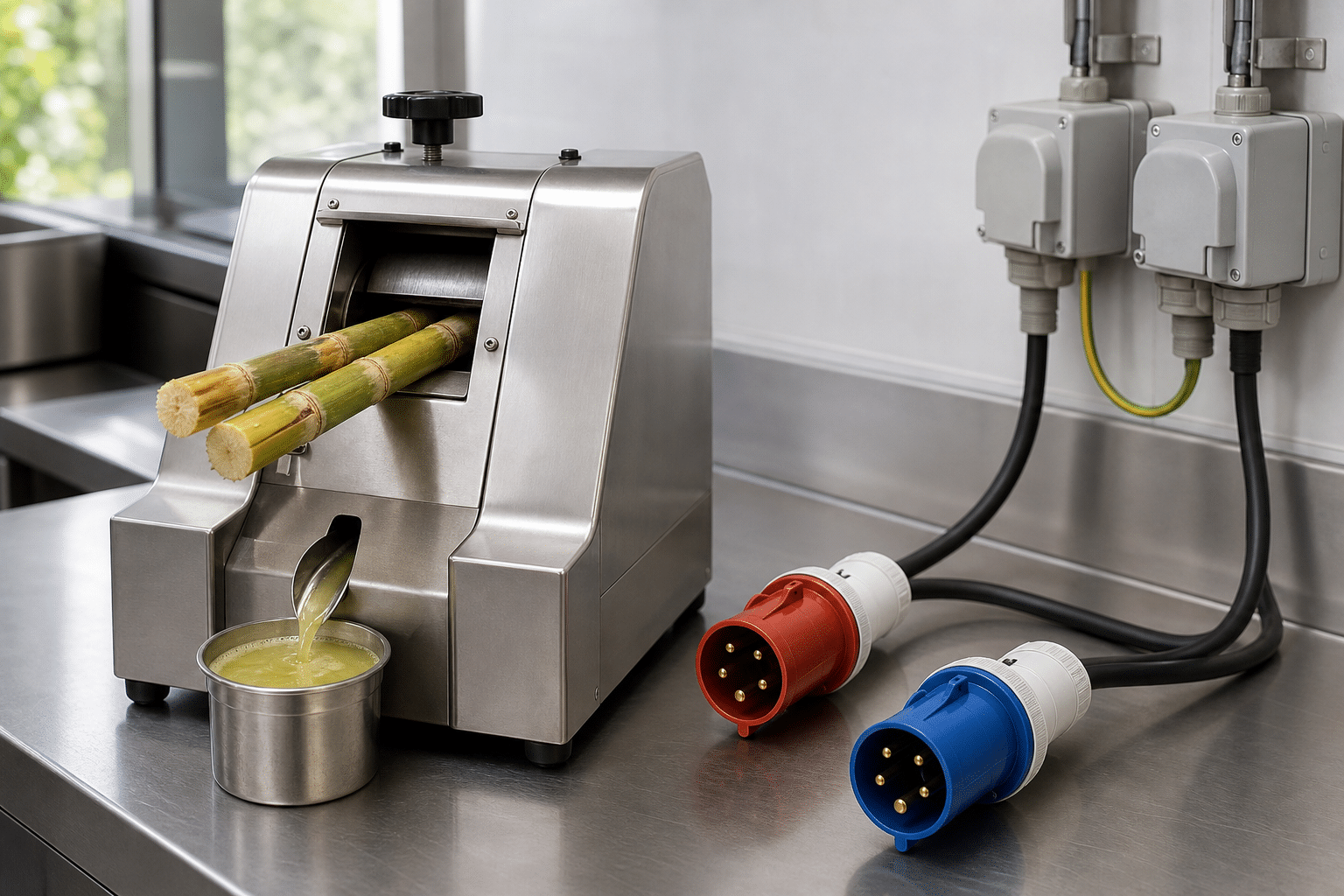
Voltage
Voltage is the electrical pressure supplied to the machine. Commercial sites in different countries and regions may use different nominal voltages. A machine designed for one voltage should not be plugged into a higher- or lower-voltage supply unless the manufacturer specifically confirms compatibility and an appropriate engineered solution is used.
Low voltage can contribute to poor starting performance, overheating, or unreliable operation. Excess voltage can damage electrical and motor components. A plug adaptor changes the physical plug format only; it does not normally convert voltage.
Frequency
Frequency is measured in hertz and is part of the machine design. Motors and related electrical components may operate differently when supplied at a frequency other than their specified rating. This is especially important when equipment is moved between markets using different utility frequencies. Do not assume that a voltage transformer addresses a frequency mismatch.
Single phase and three phase
Single-phase power is common in smaller food-service locations and is often available from standard commercial circuits, subject to local installation rules. Three-phase power is more common in some larger commercial and industrial premises. Neither arrangement is automatically better for every operator; the correct choice is the one specified for the selected machine and available safely at the site.
Before finalising a purchase for export or a new opening, share the intended country, available site power, and plug standard with the equipment supplier. This helps ensure the juicer configuration is appropriate for the installation market from the start.
Power, Current and Circuit Sizing
Electrical installation should be planned from the machine’s stated ratings, not from assumptions about other countertop appliances. Input power is usually shown in watts or kilowatts. Current is shown in amperes. These values help a qualified electrician assess the branch circuit, disconnecting method, cable size, outlet, and protective device required under the local electrical code.
As a basic planning concept, electrical power is related to voltage and current. However, real equipment selection is not just a simple arithmetic exercise. Motor starting conditions, conductor length, local ambient conditions, protective-device characteristics, and national or local regulations can all affect the final installation design. The electrician should use the manufacturer’s data and applicable code requirements rather than relying on a generic online calculation.
A dedicated circuit is often a sensible operational choice for a commercial sugarcane juicer. It reduces the risk that another appliance, such as refrigeration equipment, a blender, an ice machine, or a cooking appliance, will overload the same circuit or cause a voltage drop when it starts. Whether a dedicated circuit is mandatory depends on the machine specification and local regulations, so the site electrician should confirm this.
Do not use a lightweight domestic extension lead as a permanent solution. If a temporary connection is unavoidable during testing, it must be suitable for the equipment load, properly grounded, protected from moisture and foot traffic, and permitted by site safety rules. For normal commercial operation, a correctly located fixed outlet or approved connection point is the better approach.
Commercial Installation Requirements
A safe installation is more than matching the plug to the outlet. The following controls should be reviewed before commissioning a commercial sugarcane juicer:
- Grounding or earthing: Connect the machine through a properly grounded supply as specified for the equipment and local installation system. Never remove or defeat an earth pin to make a plug fit.
- Correct outlet and plug: Use an outlet and plug arrangement rated and approved for the local installation. Do not modify a factory plug without confirmation from a qualified electrician and the equipment supplier.
- Overcurrent protection: The circuit breaker or fuse must be selected according to the machine data and local code. Oversizing protection simply to stop nuisance tripping can leave wiring and equipment insufficiently protected.
- Residual-current protection: Depending on local requirements and the installation area, an RCD, GFCI, or equivalent protective device may be required. This is particularly relevant in food-service spaces where washdown, sinks, and wet cleaning are present.
- Accessible isolation: Operators should be able to disconnect power safely for cleaning, service, or an emergency, in line with the machine instructions and site procedures.
- Dry, protected outlet location: Keep sockets, cable routes, and connection points away from splash zones. Arrange the machine so staff can clean surrounding surfaces without directing water toward electrical parts.
Installation should be carried out or approved by a competent electrician familiar with the local code. The machine operator should then be trained on normal start-up, shutdown, cleaning, and fault-reporting procedures.
Power Supply Checklist Before You Order
Collecting the right site information before placing an order prevents costly changes later. Give the supplier and electrician a clear picture of the installation location.
- Confirm the country and city of installation. This identifies the likely voltage, frequency, outlet, and electrical-code environment.
- Ask what supply is available at the exact machine location. Check the electrical panel and proposed counter or kiosk position, not just the building’s general utility service.
- Record voltage, frequency, and phase. Have the electrician verify these details if there is any uncertainty.
- Check outlet type and circuit condition. Confirm whether an appropriate outlet exists, whether it is grounded, and whether other equipment shares the circuit.
- Provide the machine rating information. Send the official model and electrical specification to the installer before equipment arrival.
- Plan the location of the outlet and isolation point. It should remain accessible without interfering with cleaning, cane loading, waste handling, or staff movement.
- Allow for future equipment. If the location may later add refrigeration, cutting equipment, packaging equipment, or another juicer, consider the capacity of the electrical panel and work area early.
In a kiosk or compact counter, the physical layout and electrical plan must work together. Outlet position, cable access, cleaning clearance, and safe cane preparation space all affect how smoothly the station operates. Our article on measuring a countertop for a commercial sugarcane juicer can help operators coordinate equipment placement with the available work surface.
Common Power Supply Problems
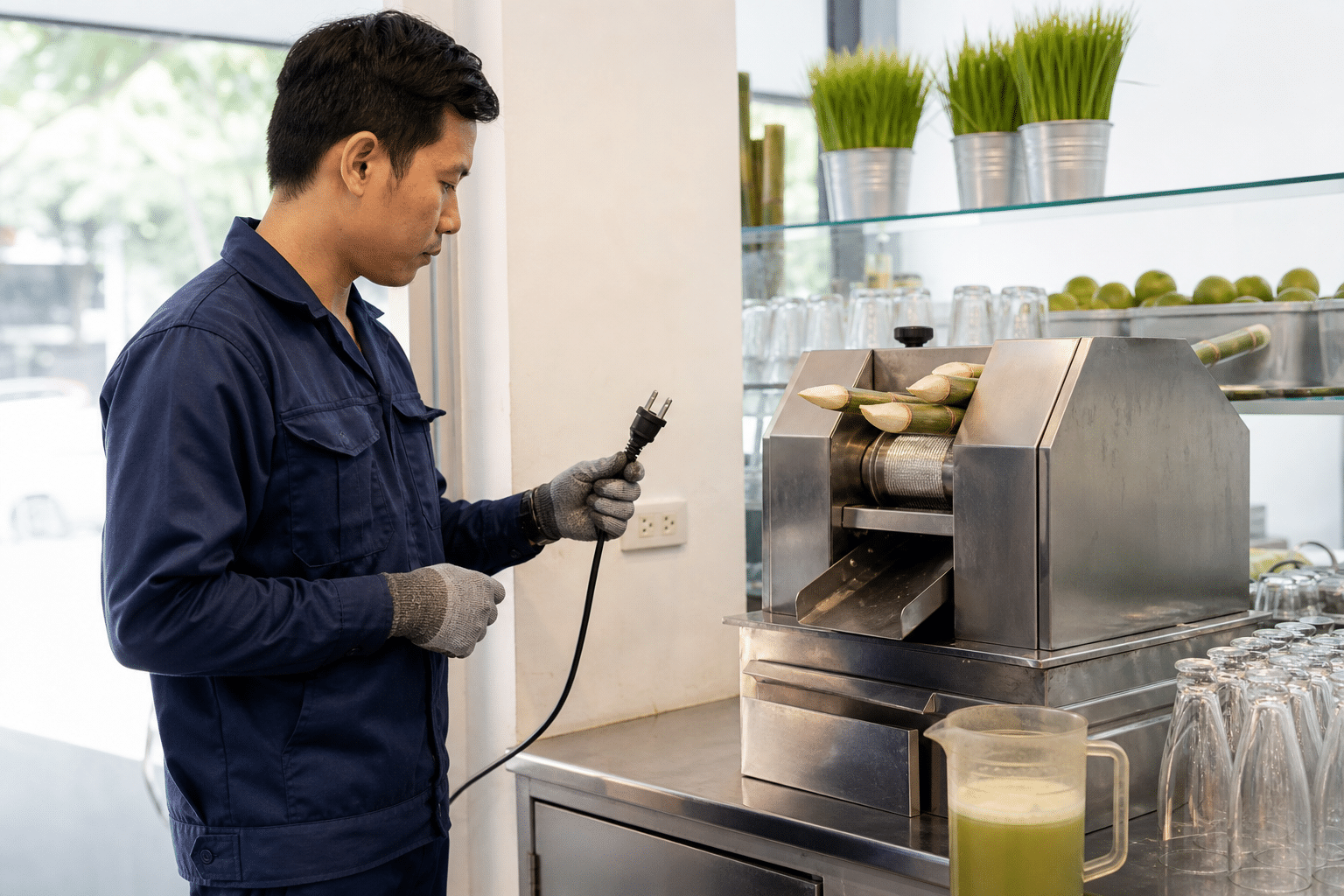
Many apparent machine faults begin with the supply or connection rather than the crushing system. Operators should not open electrical enclosures or bypass protective devices, but they can observe symptoms and report them accurately.
Machine will not start
First check whether the outlet has power, the plug is fully seated, the emergency stop or safety device is in the correct operating position, and the circuit breaker has not tripped. If the supply is available but the machine still does not start, stop troubleshooting beyond the approved operator checks and contact service support.
Breaker trips during use
A breaker can trip because the circuit is overloaded, another appliance is sharing the circuit, the protective device is unsuitable, there is a wiring issue, or the machine requires inspection. Repeatedly resetting a breaker without identifying the cause is not a safe solution.
Motor sound changes or performance is inconsistent
Unstable supply voltage, poor connections, and an undersized or overloaded shared circuit can affect motor-driven equipment. Mechanical loading, cleaning condition, and roller condition can also influence operation, so power should be checked as one part of a complete diagnosis.
Plug, cable, or outlet becomes warm
Disconnect the machine and arrange an inspection. Heat at a plug or outlet can indicate a loose connection, unsuitable component rating, damaged cable, or another electrical issue. Do not continue operating until the cause has been assessed.
Choosing a Machine Configuration for Your Market
For distributors, project buyers, and multi-site beverage operators, power supply should be part of the purchase specification. The best time to confirm it is before production, shipping, and site fit-out. Specify the destination market, local utility details, available phase, preferred connection arrangement, and any site constraints when discussing the order.
This is particularly important for exports. A machine suitable for a factory, food court, hotel, mall kiosk, or roadside juice stand may be installed in a region with a different electrical standard from the buyer’s home market. Confirming the final destination avoids confusion caused by purchasing through an intermediary country.
Ask the supplier for the model-specific electrical data rather than assuming that every unit in a product range uses the same configuration. If an operation is comparing crushing methods or planning a high-demand service format, evaluate power supply alongside output workflow, cane preparation, cleaning access, staff skill level, and the available counter space. Equipment selection is most reliable when the machine and the site are assessed as one system.
Plan Electrical Supply as Part of the Full Workflow
A reliable power connection supports daily operation, but it is only one part of a productive sugarcane juice station. The juicer should be positioned where staff can load prepared cane safely, collect juice, remove bagasse, clean the work area, and access the electrical isolation point without crossing unsafe cable routes.
Preparation equipment can affect the electrical plan as well. If cane needs cutting before crushing, identify where that work will happen and whether other powered equipment will operate at the same time. Review the intended cane preparation method and the load on the site electrical system as separate but connected decisions. For operational context, compare the workflow differences in single-pass versus multi-pass sugarcane crushing.
After commissioning, make electrical checks part of routine opening and closing procedures. Staff can visually inspect the cable, plug, outlet area, and machine exterior for damage, moisture, unusual heat, or loose fittings. Any abnormal condition should be reported promptly, with the machine isolated where appropriate. Keep cleaning methods aligned with the machine manual so water and cleaning chemicals do not enter electrical areas.
For buyers planning a new installation or an equipment rollout, Easimaker can discuss the machine configuration, intended operating environment, and information your electrician will need to review the connection. Request a quote or technical discussion based on your market, expected workflow, and available site power.
Discuss Your Site Power Requirements
Share your installation market, available voltage, frequency, phase, and intended workflow with Easimaker. We can help you review the machine configuration and the technical details your qualified electrician should confirm before installation.