
Table of Contents
- The Best Layout Starts With a One-Way Workflow
- Create Clear Work Zones
- Place the Sugarcane Juicer for Daily Service
- Plan Counters, Sinks, and Storage
- Design for Fast, Controlled Service
- Build Cleaning and Waste Handling Into the Layout
- Check Utilities, Ventilation, and Site Conditions
- Test the Layout Before Opening
A practical sugarcane juice shop layout separates raw cane, food preparation, juicing, service, cleaning, and waste handling. Plan the workflow before buying counters or equipment so staff can work cleanly, safely, and efficiently during busy periods.
The Best Layout Starts With a One-Way Workflow
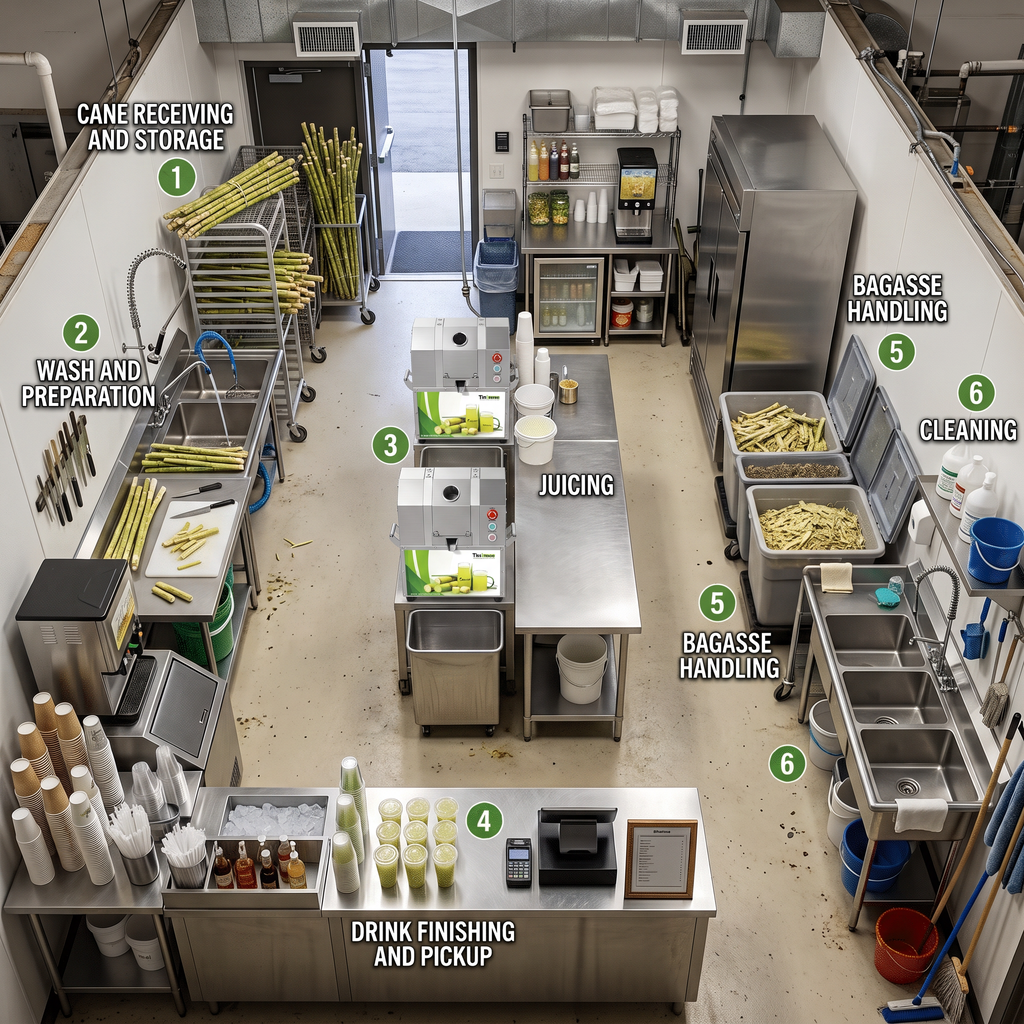
A practical sugarcane juice shop layout moves materials in one direction: receive and store whole cane, wash and prepare it, feed it into the juicer, collect and finish the drink, serve the customer, then remove waste and clean the work area. This prevents staff from carrying raw cane, used cleaning tools, or bagasse back through the serving line.
For most small commercial operations, the workstation should be organized around five linked areas: raw-cane storage, preparation, juicing, finishing and handoff, and cleaning or waste handling. The exact footprint varies by local food rules, service volume, equipment dimensions, and whether the shop prepares other drinks or food. The workflow principle does not change: keep clean work and customer-facing service separate from raw-material and waste activity.
Start with the journey of one cane stalk and one drink order. Mark each movement on a simple floor plan. If staff need to cross paths repeatedly, reach over the juicer, or walk through the customer queue to wash tools, adjust the plan before counters are installed.
Create Clear Work Zones
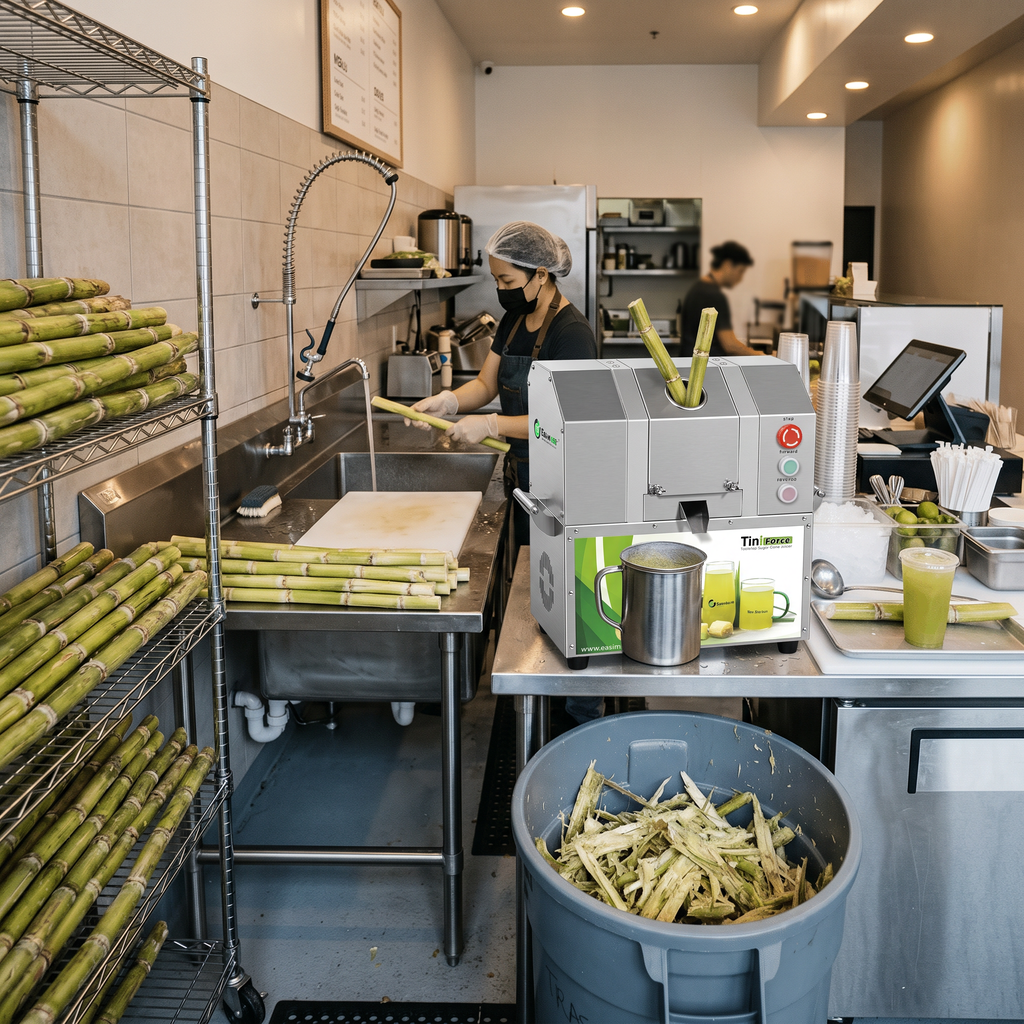
A shop does not need a large floor area to have a disciplined workflow. It does need clearly assigned zones. Use counter edges, undercounter storage, splash barriers, labels, and staff habits to make the zones obvious.
1. Receiving and raw-cane storage
Put delivery receiving and cane storage away from the customer handoff point. Store cane off the floor on suitable racks or shelves, with enough access for stock rotation and cleaning around the storage area. Avoid placing bulk cane directly beside a handwashing sink, finished-drink counter, or open ingredient containers.
2. Washing and preparation
Provide a dedicated preparation surface near washing facilities. Staff need room to inspect cane, wash it according to the operation’s approved procedure, trim it where necessary, and stage a manageable quantity for juicing. Keep cutting tools, containers, and any trimming waste contained in this zone. The preparation surface should not become a general storage shelf during service.
3. Juicing and drink finishing
The juicer belongs between preparation and serving. Place cups, lids, ice, permitted flavor additions, strainers, and point-of-sale supplies within the finishing zone so the operator does not step away from the machine for every order. A short, clean route from juicer outlet to cup improves speed and reduces drips on adjacent counters.
4. Cleaning and waste
Bagasse collection, used utensils, cleaning chemicals, and mop equipment require their own controlled location. Do not let a bagasse bin block access to the juicer or become an improvised step in the production flow. For operations in a compact footprint, review practical approaches in this guide to integrating compact sugarcane machines into limited spaces.
Place the Sugarcane Juicer for Daily Service
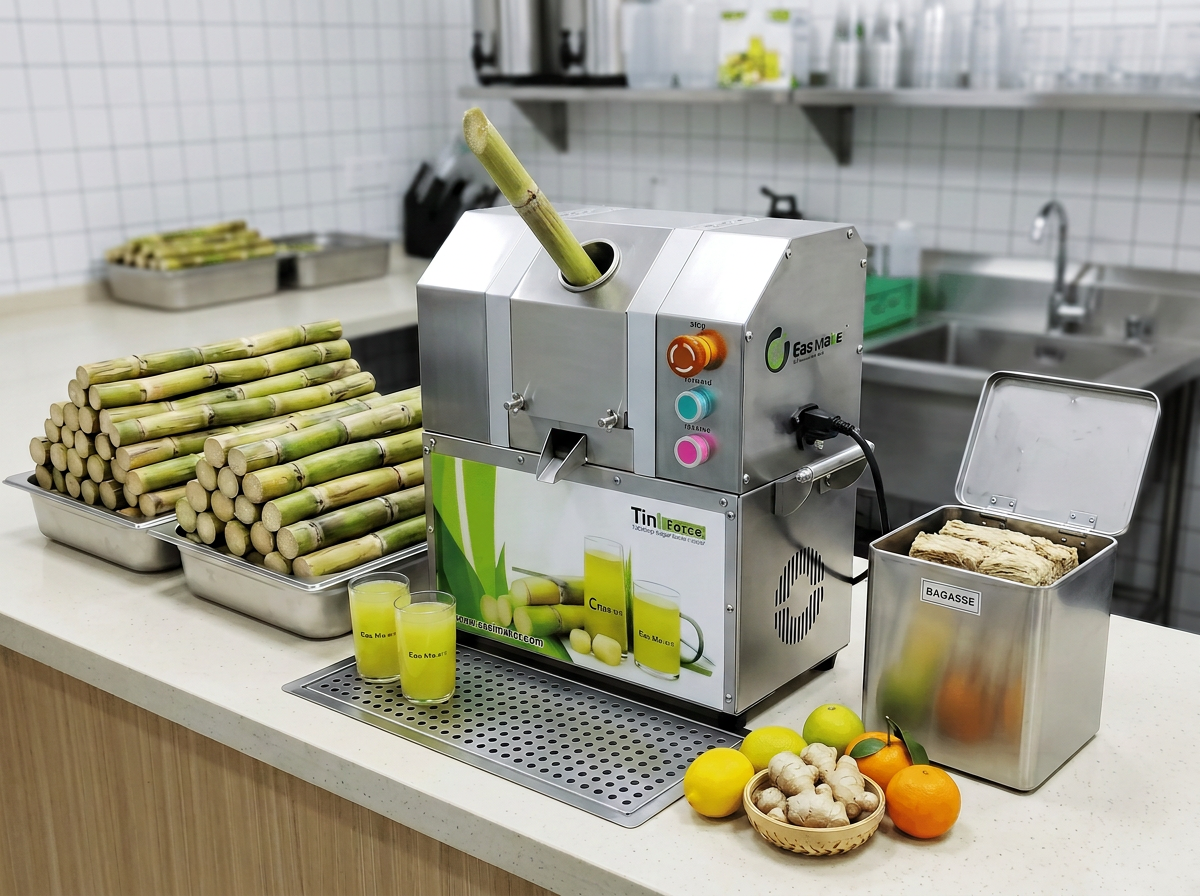
The commercial sugarcane juicer is the center of the workstation, but it should not be treated as an isolated display item. Its location determines operator movement, cleaning access, customer visibility, noise exposure, and where cane residue and bagasse are managed.
Choose a stable, level, cleanable counter or stand that is suitable for the machine’s installed weight and operating conditions. Confirm the machine’s actual dimensions, clearance needs, electrical requirements, access panels, and manufacturer instructions before finalizing millwork. Leave sufficient space for staff to feed cane in a controlled manner, remove juice containers as intended, access collection areas, and clean around the equipment at the end of service.
Do not wedge the juicer tightly between fixed cabinets merely to save a few centimetres. Restricted access can make routine cleaning, inspection, and servicing harder. It can also force awkward staff posture during repeated feeding and reduce visibility around the work area.
Where customers can see the juicing process, a front-facing machine position can support an open service experience. The operator still needs a protected back-of-counter route to prepared cane, cups, and cleaning facilities. Consider sound, heat, vibration, and staff comfort alongside visual presentation; this resource on creating a comfortable workspace around sugarcane machines is useful during site planning.
A compact machine such as the TiniForce S3 may suit a counter-based workflow where its confirmed installation requirements and service clearances are met. Select the machine and final location from verified product documentation rather than assuming that all commercial juicers share the same footprint or connection needs.
Plan Counters, Sinks, and Storage Around the Work
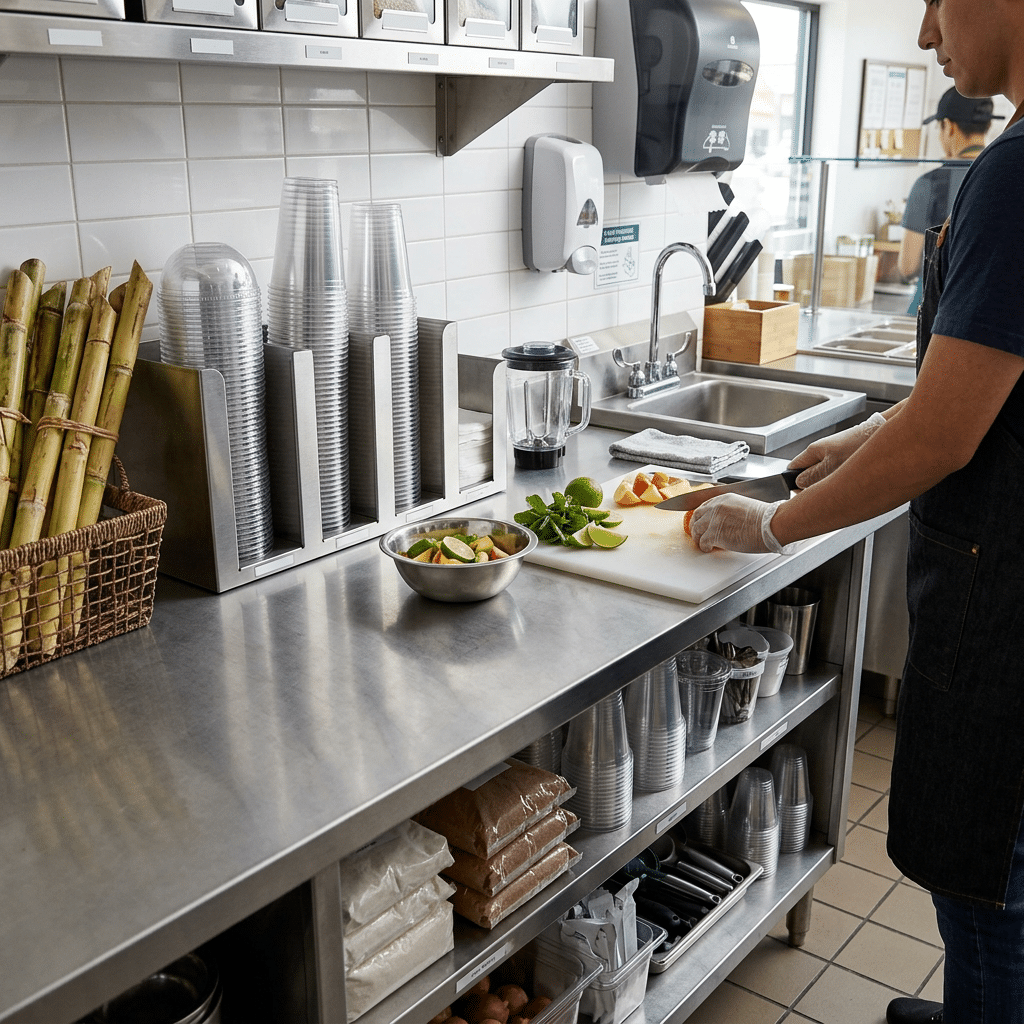
Counter planning should follow the actual order of work. A visually neat counter that forces staff to turn, carry wet cane across the service area, or search for supplies during every order is not efficient.
- Preparation counter: Locate it close to the cane washing point and the juicer feed side. Keep only the tools and containers needed for active preparation on top.
- Juicing counter: Reserve enough uninterrupted surface for the machine, its intended collection containers, and safe operator movement. Select smooth, durable, easy-to-clean finishes suitable for the local foodservice environment.
- Finishing counter: Position cups, lids, ice, and permitted additions so the operator can complete an order without crossing into the raw-cane area.
- Handwashing: Staff should be able to wash hands promptly without passing through a customer queue or leaving the production area for an extended distance.
- Washing-up: Keep utensil washing and sanitation procedures separate from active drink assembly where local regulations and the operation’s procedures require it.
- Dry and cold storage: Use undercounter or nearby storage for packaging and approved ingredients. Keep reserve stock accessible but out of the immediate splash and spill zone.
Design storage for peak service, not only for a quiet morning. The operator should be able to replenish cups, lids, and prepared cane in batches without stacking cartons in walkways or placing supplies on the floor. Make sure doors, drawers, and waste containers can open without conflicting with another staff member’s standing position.
Design for Fast, Controlled Service
Service speed comes from fewer unnecessary motions, clear responsibilities, and reliable replenishment. It does not come from crowding more equipment onto a counter.
In a single-operator shop, arrange the workstation in a shallow arc or straight line: prepared cane on the feed side, machine in the middle, drink finishing immediately beside the outlet, then customer handoff at the front. The operator should be able to take payment or acknowledge the next order without turning their back on an active preparation area for long periods.
In a two-person setup, divide the work intentionally. One person can prepare cane and operate the juicer while the other finishes drinks, manages orders, replenishes packaging, and handles customer handoff. This division works only when each person has defined space. Avoid placing the card terminal, cup storage, or topping station directly in the juicer operator’s movement path.
Keep the customer queue away from staff routes, cleaning access, and emergency exits. A visible menu and pickup point reduce repeated questions at the production counter. Where presentation matters, use a clean sightline to the juicing activity without giving customers access to raw preparation tools, food-contact surfaces, or electrical equipment. More retail presentation ideas are covered in these visual merchandising tips for sugarcane juice bars.
Build Cleaning and Waste Handling Into the Layout
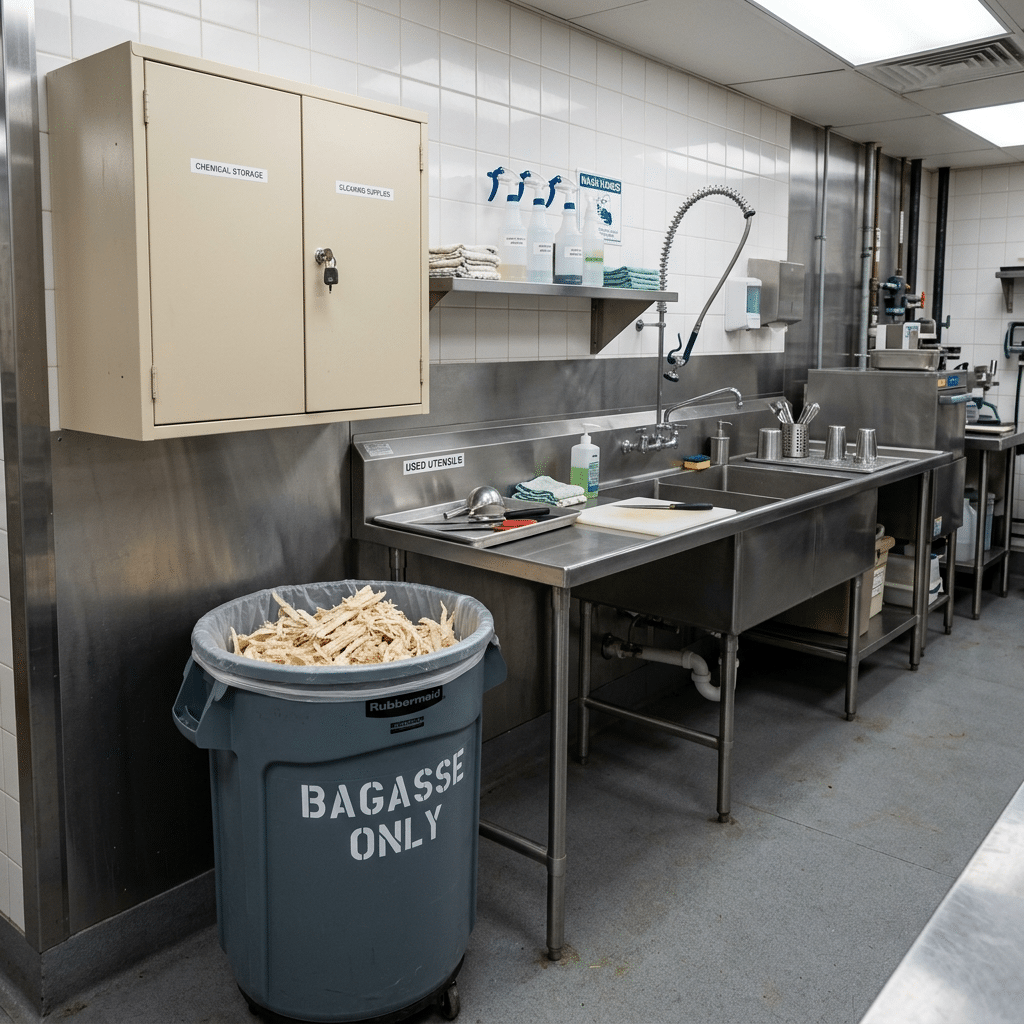
Cleaning is a layout requirement, not an afterthought. A workstation should allow the team to clean food-contact areas and nearby surfaces without moving equipment through customer areas or improvising with unsuitable storage.
Locate waste handling close enough to the juicer for prompt bagasse removal, while keeping it out of the clean drink-finishing zone. Use a waste container and handling method appropriate to the operation’s volume, local requirements, and cleaning schedule. Do not allow bagasse to accumulate in loose piles near electrical equipment, under counters, or in customer walkways.
Provide defined places for clean utensils, used utensils, cleaning tools, and cleaning chemicals. Chemicals should be stored separately from ingredients, cups, and food-contact equipment. The layout should also allow staff to wipe spills promptly without walking across the production flow carrying wet cloths or waste.
At closing, staff need unobstructed access to the machine exterior, collection areas, counter edges, floors, and sink facilities. Establish cleaning procedures based on the machine manual, local food safety requirements, and approved cleaning products. Review a daily sugarcane juice machine safety checklist alongside the layout so routine inspection and cleaning tasks are practical to complete.
Check Utilities, Ventilation, and Site Conditions
Confirm site conditions before committing to a machine location or custom counter. The required electrical supply, outlet position, water access, drainage, ventilation, floor finish, lighting, and local compliance obligations depend on the selected equipment and the premises.
Electrical planning should use the voltage, frequency, plug type, circuit requirements, and protection specified for the exact machine supplied to your market. Do not rely on a generic assumption based on another juicer model. Keep outlets and cables arranged to prevent trip hazards, water exposure, pinching, or obstruction of cleaning access.
Water and drainage needs should support the shop’s approved cane washing, handwashing, utensil cleaning, and floor-cleaning procedures. Evaluate the expected wet work carefully, especially in kiosks, malls, mobile units, or heritage buildings where drainage and pipe routing can be constrained.
Also assess ambient heat, airflow, lighting over the preparation counter, and the effect of operating vibration on lightweight furniture or display shelving. For larger installations, this guide to site selection and utility requirements for sugarcane juicers provides a useful pre-installation checklist.
Test the Layout Before Opening
Before opening day, run a realistic service rehearsal with the planned equipment, containers, packaging, cleaning tools, and waste bins in place. Ask staff to receive a mock delivery, prepare cane, make a series of drinks, restock cups, remove bagasse, wash hands, clean the station, and close down.
Watch for bottlenecks rather than judging the layout only by appearance. Common issues include a feed side blocked by stock, a sink too far from the operator, cup storage behind another worker, bagasse containers that cannot be removed cleanly, doors that collide, and a customer queue that cuts across staff movement.
Record the changes needed, then adjust shelf positions, bin locations, labels, and small counter equipment before altering fixed joinery. A well-planned sugarcane juice workstation supports consistent work habits, makes cleaning easier, and gives operators room to serve customers with control during busy periods.