
Table of Contents
- What Spare Parts Should Commercial Buyers Order?
- What Counts as a Sugarcane Juicer Spare Part?
- Priority Spare Parts by Function
- Commercial Spare-Parts Stocking Table
- How to Confirm Part Compatibility Before Ordering
- How Much Spare Stock Should You Keep?
- Maintenance Practices That Protect Spare Parts
- What to Ask a Sugarcane Juicer Parts Supplier
Commercial buyers should order sugarcane juice machine spare parts by wear risk, downtime impact, and model compatibility. Keep essential food-contact, drive, electrical, and sealing parts identified before they are needed.
What Spare Parts Should Commercial Buyers Order?
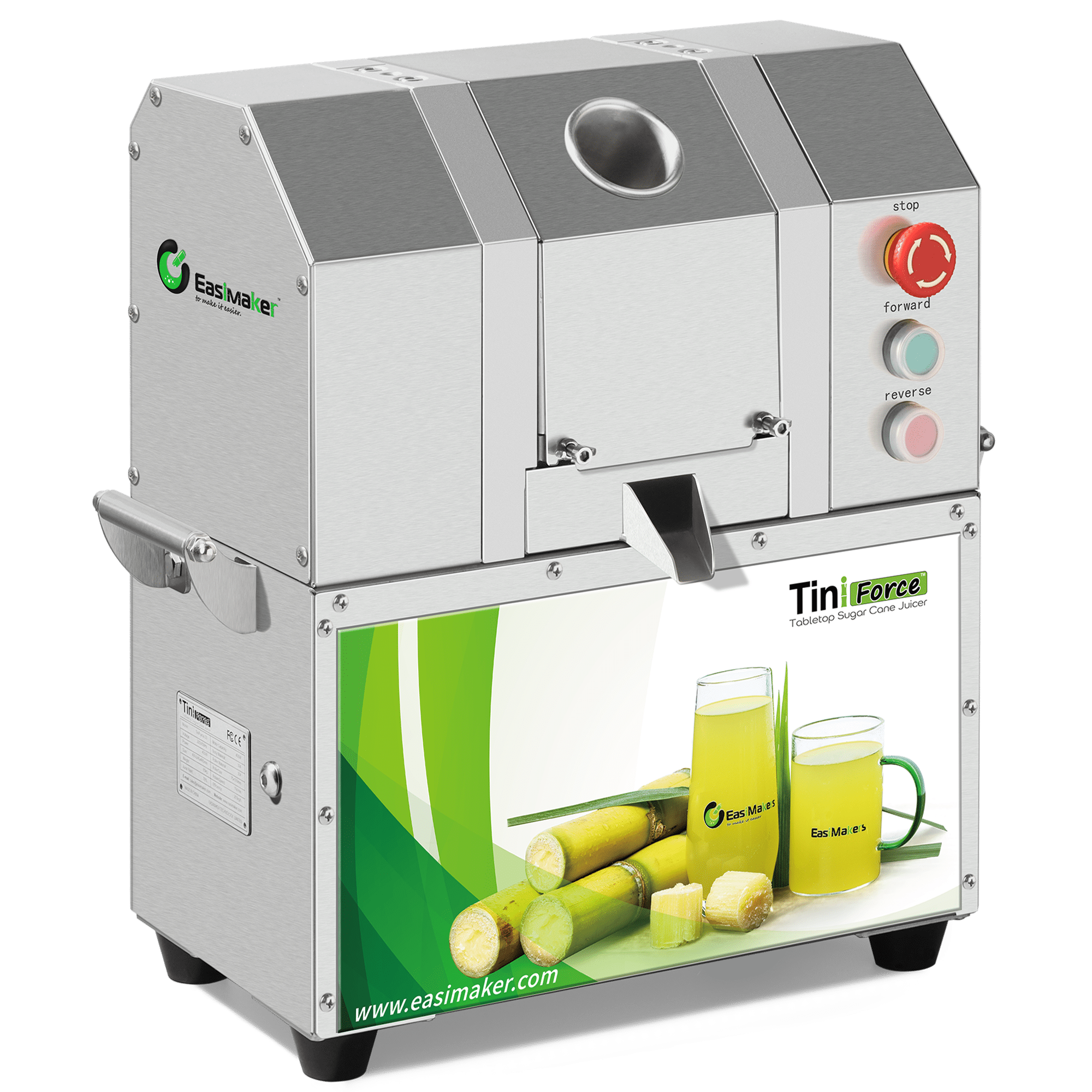
Commercial buyers should order sugarcane juice machine spare parts before a breakdown occurs. The most useful initial order usually covers high-wear items, parts that can stop production, and components that are difficult to source locally. Depending on the exact machine configuration, this may include rollers or roller-related wear components, bearings, seals, belts or drive components, switches, overload-protection components, and food-contact covers or juice-path fittings.
Do not order parts by name alone. A replacement must match the machine model, serial number, electrical version, dimensions, mounting points, and food-contact requirements where applicable. For a new commercial juicer, ask the supplier for a machine-specific spare-parts list and exploded drawing at the time of purchase.
The objective is practical: reduce unplanned downtime while avoiding unnecessary inventory. A small, well-identified kit is usually more valuable than a large box of unverified parts.
What Counts as a Sugarcane Juicer Spare Part?
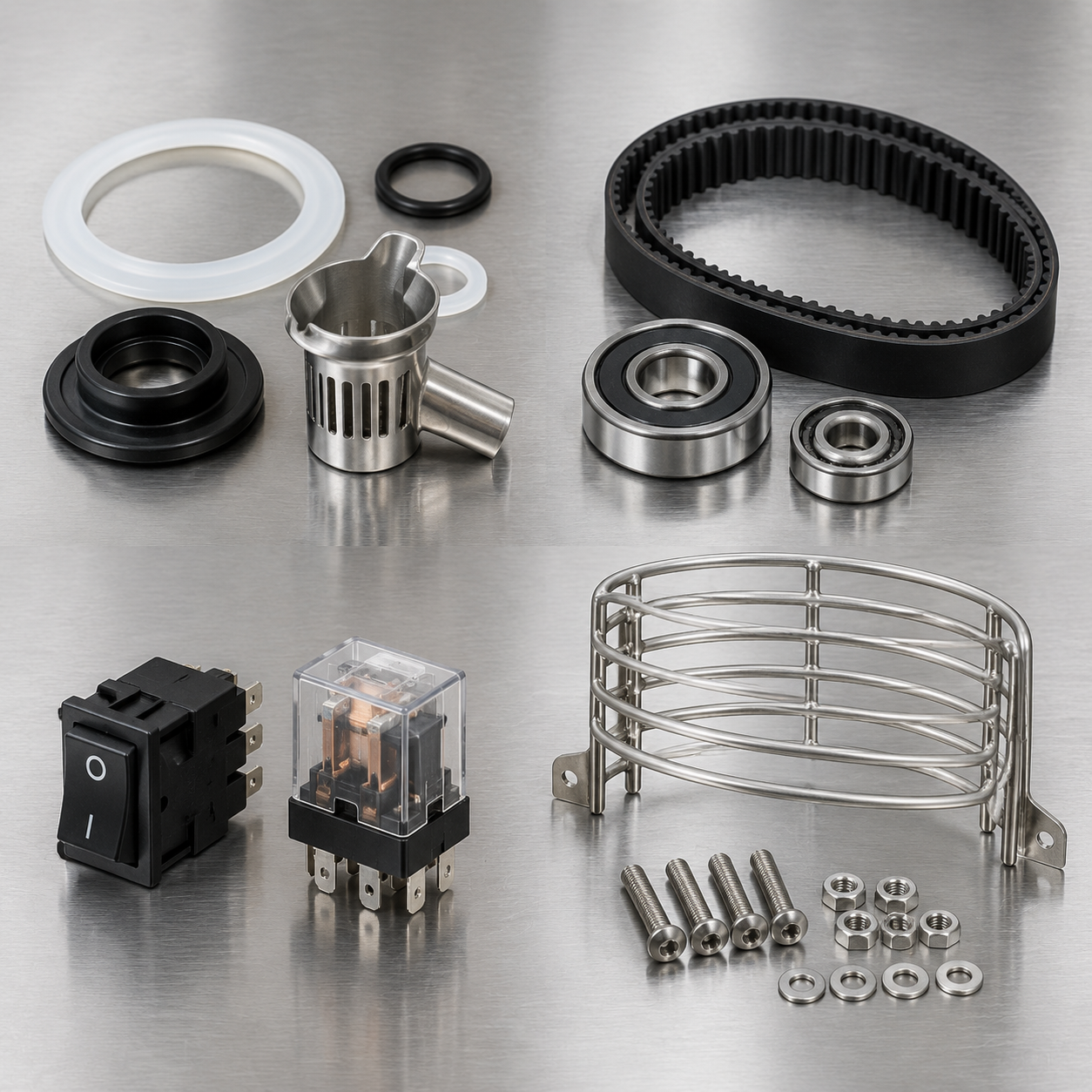
Sugarcane juicer parts are components intended to restore the original operating function of a machine. They differ from general cleaning supplies and from optional accessories. For purchasing purposes, divide them into four groups:
- Food-contact and extraction parts: rollers, scrapers, juice guides, covers, feed-area components, food-contact seals, and drainage parts where fitted.
- Drive and mechanical parts: bearings, shafts, gears, couplings, belts, chains, fasteners, and related retaining hardware, depending on the machine design.
- Electrical control parts: switches, contactors, relays, capacitors, circuit-protection devices, wiring assemblies, and motor-related components specified for the machine.
- Protective and service parts: guards, feet, latches, gaskets, covers, and model-specific hardware needed to keep the equipment safely assembled.
Not every commercial sugarcane juicer uses the same drive arrangement or removable assemblies. Refer to the operator documentation rather than assuming that parts are interchangeable between similar-looking machines. This distinction is especially important when comparing equipment categories; a cane sugar machine and a sugarcane juice machine support different processes and do not share a universal parts list.
Priority Spare Parts by Function
1. Extraction and food-contact components
These parts deserve close attention because they affect the cane path, juice path, cleaning access, and normal extraction process. Inspect rollers and roller surfaces according to the machine manual. If the machine uses removable scrapers, guides, seals, or juice outlets, keep the correct replacements identified. Food-contact replacement components should be suitable for their intended use and should not be substituted with unknown materials.
2. Bearings, seals, and drive components
Bearing wear, damaged seals, loose drive components, and worn belts can lead to noise, vibration, leakage, reduced extraction consistency, or a complete stoppage. The exact symptoms and repair method depend on the model, so operators should not dismantle guarded assemblies without suitable training and instructions. For high-use sites, keeping approved bearings, seals, and the specified drive item can reduce repair delays.
3. Electrical control components
Order electrical parts only against the correct electrical specification. Voltage, frequency, phase, plug arrangement, motor rating, and control-circuit details may vary by destination or configuration. A switch or capacitor that fits physically may still be unsuitable for the machine. Review the rating plate and supplier documentation alongside the sugarcane machine electrical requirements checklist before placing an order.
4. Safety and enclosure items
Guards, covers, door latches, feet, and fasteners may appear secondary, but a missing or damaged protective component can prevent safe operation. Replace them with the approved model-specific item. Do not operate a commercial juicer with removed guards or improvised fixes.
Commercial Spare-Parts Stocking Table
Use this table as a purchasing framework, not as a universal bill of materials. Confirm which of these commercial sugarcane juicer replacement parts apply to your specific model.
| Part group | Examples to identify with supplier | Why it matters | Suggested stocking priority |
|---|---|---|---|
| Food-contact wear parts | Roller-related components, scrapers, juice guides, seals, outlet fittings | Supports clean juice flow and normal cane processing | High |
| Bearings and seals | Model-specific bearings, oil seals, gaskets, O-rings | Can affect smooth running, leakage control, and downtime | High for high-use sites |
| Drive components | Belts, couplings, gears, chains, keys, fasteners | Drive faults can stop the machine | High where locally difficult to source |
| Electrical controls | Switches, relays, capacitors, contactors, overload devices | Must match the installed electrical version | Medium to high |
| Safety and exterior parts | Guards, covers, latches, adjustable feet | Maintains safe assembly and stable placement | Medium |
| General hardware | Specified screws, clips, washers, retaining rings | Useful during approved service work | Medium |
For a single-machine café or kiosk, focus first on downtime-critical items. For distributors, multi-site operators, and service teams, build stock around the installed fleet, local lead times, and the parts most frequently requested by qualified technicians.
How to Confirm Part Compatibility Before Ordering
A reliable sugarcane juicer parts supplier should be able to match parts using traceable machine information. Send the following details with every request:
- Machine model name and serial number, if available.
- A clear photograph of the rating plate.
- Photos of the installed part from more than one angle.
- Part number from the manual, parts list, or exploded drawing.
- Measurements, including shaft diameter, belt profile, fixing-hole spacing, or seal dimensions when relevant.
- The machine’s voltage, frequency, phase, and destination market for electrical parts.
- A description of the symptom, such as leakage, abnormal noise, failure to start, or a damaged guard.
For older equipment, a supplier may need photos and dimensions to determine whether the machine has a revised component version. State uncertainty clearly instead of guessing. This approach is also useful when evaluating long-term support from a commercial sugarcane juicer supplier.
How Much Spare Stock Should You Keep?
There is no single correct quantity for sugarcane machine maintenance parts. The appropriate inventory depends on daily operating hours, the number of installed machines, technician access, shipping time, and the cost of a stopped service counter.
Single-location operators can normally begin with a small critical-parts kit: approved seals or gaskets where applicable, the specified drive item, selected electrical controls, and essential fasteners or protective items. Keep full part identification even when you do not hold every item in stock.
Multi-site operators and distributors should consider a structured inventory: fast-moving parts at local service points, lower-demand components at a central location, and a reorder point based on lead time and actual consumption. Record each installation by machine serial number to prevent cross-model ordering errors.
When importing equipment, include an initial spares discussion in the purchase process. The broader importer checklist for commercial sugarcane machines can help buyers plan documentation, electrical fit, delivery, and service support together.
Maintenance Practices That Protect Spare Parts
Correct routine care helps parts last according to their operating conditions, but it does not eliminate the need for inspection and planned replacement. Build these practices into the daily operating routine:
- Isolate power before cleaning, inspection, or any service work.
- Remove cane fibres and juice residue from accessible areas after service.
- Clean and dry accessible food-contact surfaces using the machine instructions and the site’s hygiene procedure.
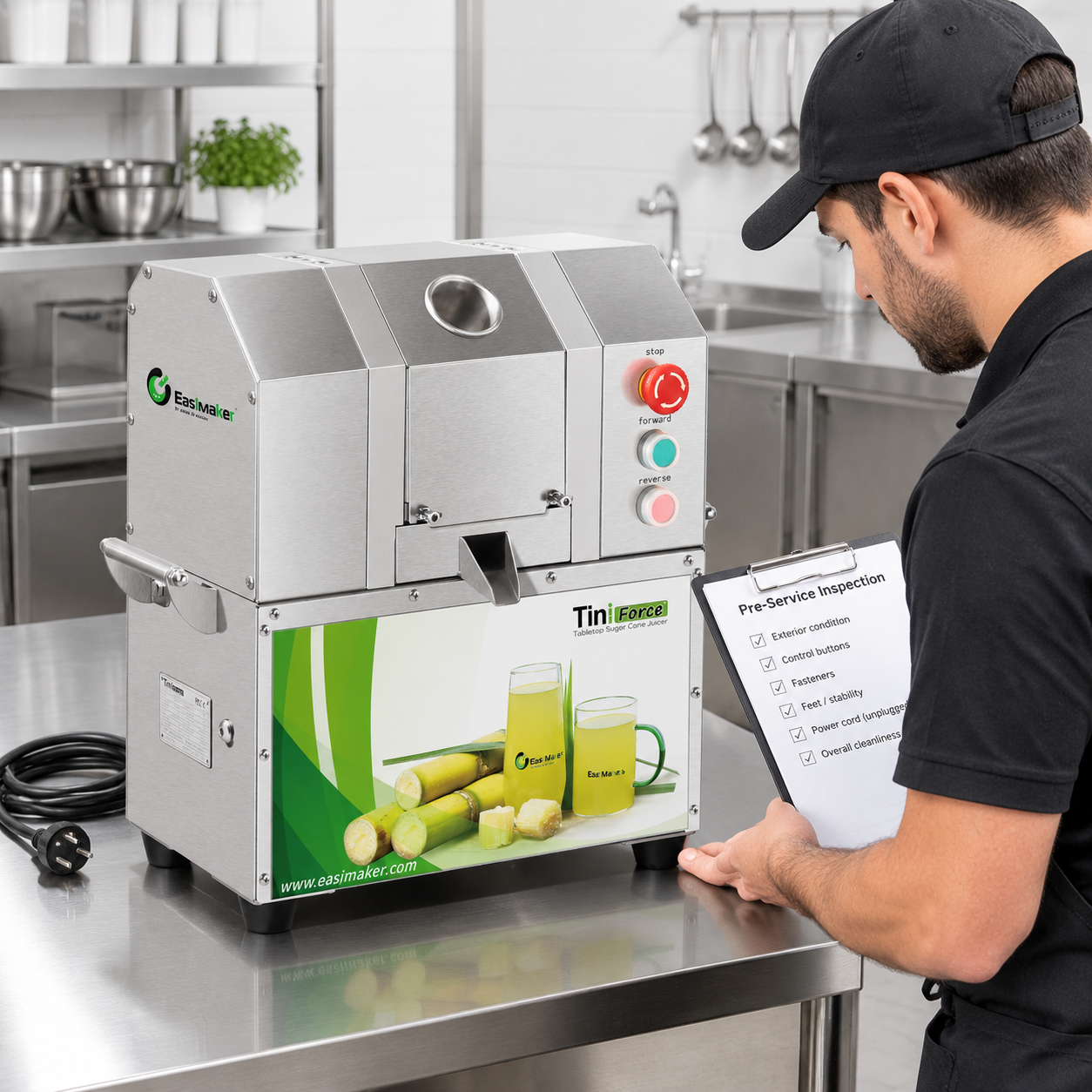
- Check guards, covers, switches, feet, and visible fasteners before operation.
- Listen for unusual sound and observe vibration, leakage, or irregular operation; stop and investigate rather than continuing through a fault.
- Use only the lubricant, cleaning approach, and adjustment procedure specified by the manufacturer.
- Log service dates, replaced part numbers, the reason for replacement, and the technician who completed the work.
Cleaning is particularly important because dried cane residue can obstruct accessible areas and make inspection more difficult. Follow a documented daily sugarcane juice machine cleaning SOP alongside the machine manual. Cleaning staff should not remove fixed guards or enter mechanical areas unless they are authorized to do so.
What to Ask a Sugarcane Juicer Parts Supplier
Before selecting a supplier for commercial sugarcane juicer replacement parts, ask practical questions that support future service:
- Can you provide a model-specific spare-parts list or exploded drawing?
- Which parts are recommended as an initial critical spares kit?
- How do you identify revisions for older machines?
- Can you confirm part numbers, dimensions, and photos before shipment?
- What electrical details are needed to match switches, motors, and control components?
- Which parts are food-contact components, and what cleaning or installation guidance applies?
- What technical documentation and after-sales communication are available for qualified service personnel?
A clear answer is more useful than a generic promise of “all parts available.” Commercial buyers need traceable identification, realistic lead-time information, and support that matches the installed machine configuration.
FAQ
Which sugarcane juice machine spare parts are most important to keep on hand?
Start with model-specific parts that are likely to cause downtime or are difficult to obtain locally: applicable seals and gaskets, approved drive components, selected bearings, electrical control parts, and essential guards or fasteners. The exact list must be confirmed against the machine documentation.
Are sugarcane juicer replacement parts interchangeable between brands?
Not necessarily. Similar machines can have different dimensions, roller assemblies, electrical specifications, mounting patterns, and component revisions. Confirm compatibility with the model, serial number, part number, photos, and measurements before ordering.
Should I keep electrical spare parts for a commercial sugarcane juicer?
It can be sensible for high-use operations or locations with long supply lead times. However, electrical parts must match the machine’s installed electrical version. Confirm the rating plate, voltage, frequency, phase, and supplier part number before purchase or installation.
How should replacement parts be stored?
Store parts clean, dry, labelled by model and part number, and protected from damage. Keep food-contact components separate from general service hardware. Maintain a simple record showing quantity, receipt date, machine compatibility, and location.
Can operators replace all sugarcane machine maintenance parts themselves?
No. Routine cleaning and basic inspection may be assigned to trained operators, but guarded mechanical work and electrical repairs should be completed only by personnel who are qualified and authorized for the task, following the manufacturer instructions and local requirements.
Plan a Spare-Parts Kit for Your Commercial Juicer
Need help identifying the right parts for your installed machine or planned equipment order? Share your model details, operating environment, electrical specification, and expected service volume with Easimaker. Our team can help you discuss a practical spare-parts package, technical documentation, and support options for your market.