Table of Contents
- The Food Safety Workflow in Brief
- Understand the Main Control Points
- Receive and Store Sugarcane Carefully
- Wash and Prepare Cane Before Juicing
- Control Juicing and Service
- Clean and Sanitize the Juicer
- Use Records and Staff Training
- Daily Sugarcane Juice Food Safety Checklist
- Choose Equipment and Support for Daily Control
A practical food safety workflow for U.S. shops serving fresh sugarcane juice, from cane receiving and washing to sanitation, service control, and daily records.
The Food Safety Workflow in Brief
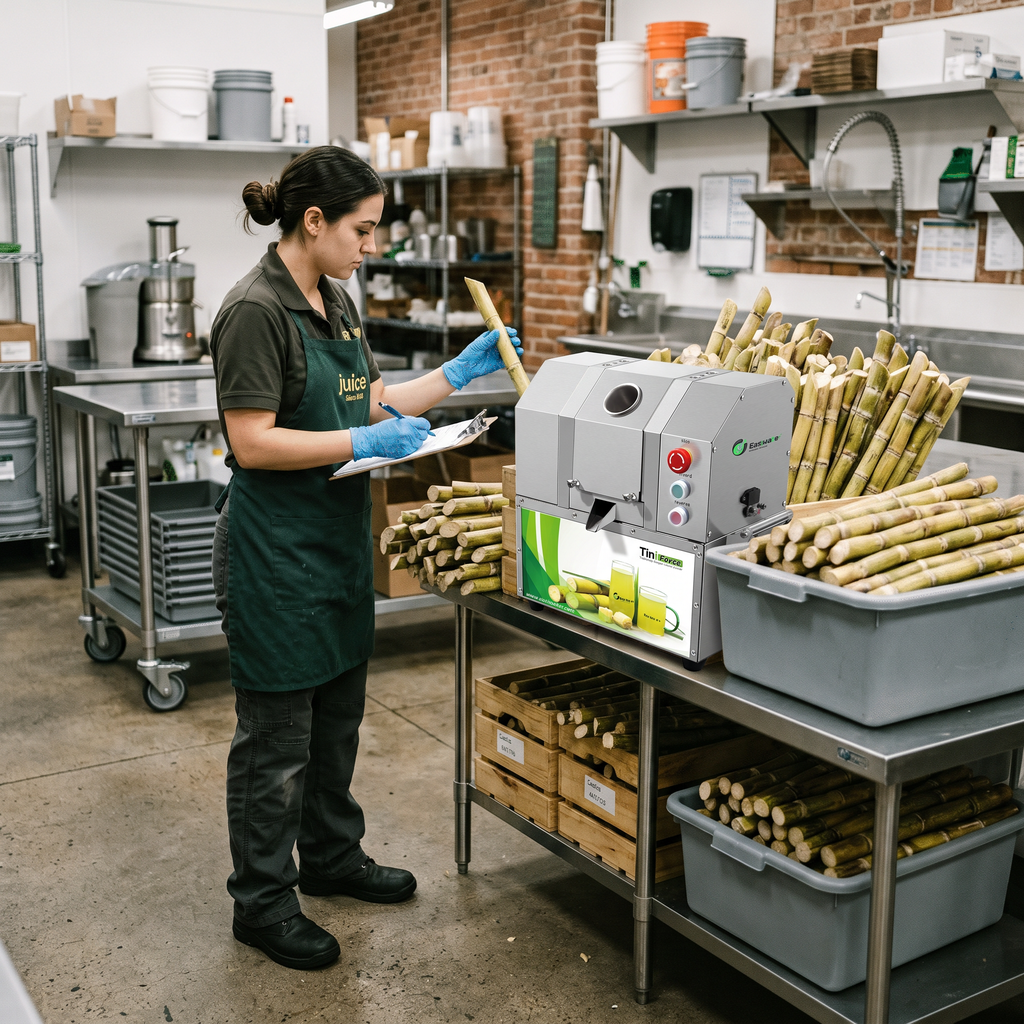
For a U.S. shop, sugarcane juice food safety depends on controlling the full workflow: buy sound cane from a traceable supplier, protect it during storage, wash and inspect it before cutting, juice it with clean food-contact surfaces, serve it promptly or manage holding under the requirements that apply locally, and clean and sanitize the machine between service periods.
Fresh sugarcane juice is made from raw agricultural material and is commonly served without a kill step after extraction. That means operators should treat cane condition, employee hygiene, equipment sanitation, time control, and documentation as connected parts of one operating system. The exact requirements can differ by state, county, city, facility type, and whether juice is made to order or packaged. Confirm the local health department’s requirements before opening or changing the process.
A written workflow helps staff make the same decisions during a busy shift. It also gives managers a practical basis for training, verification, corrective action, and discussions with inspectors or distributors.
Understand the Main Control Points
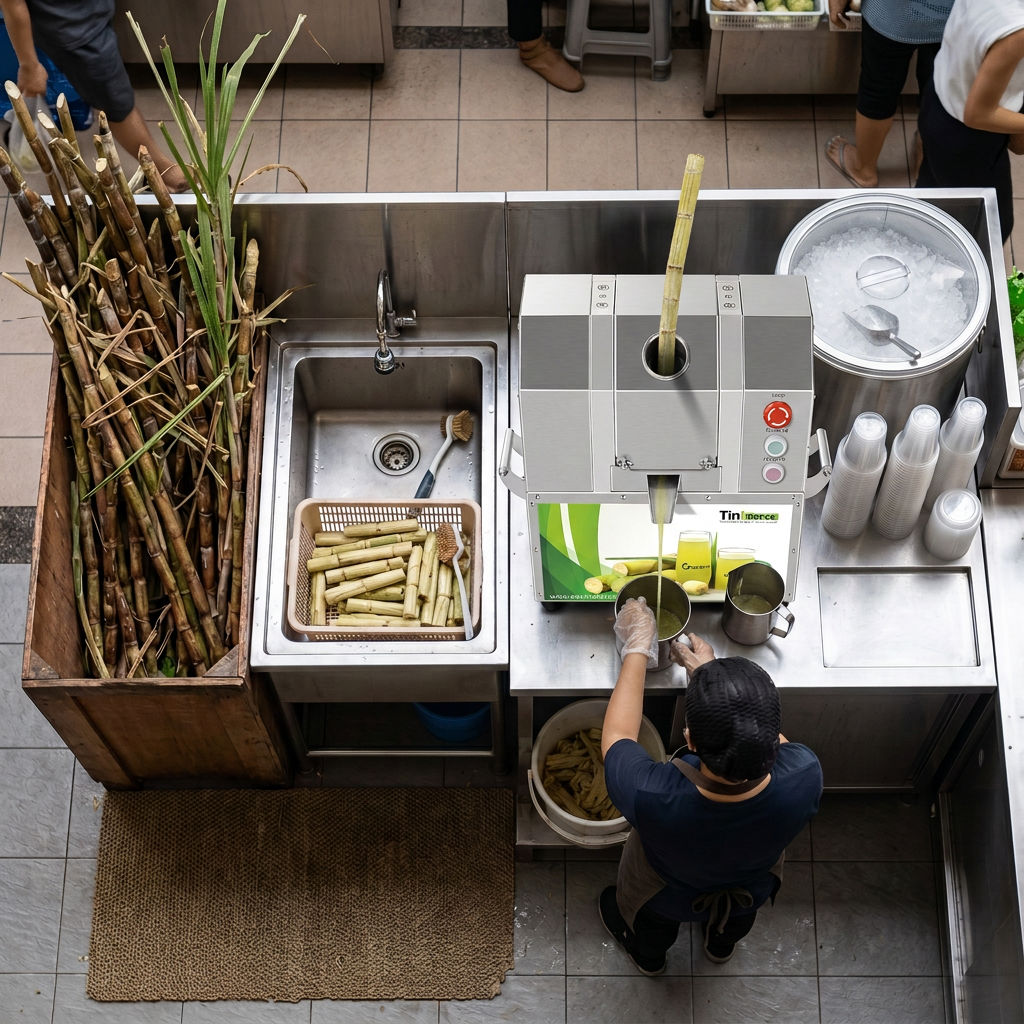
The purpose of a food safety workflow is to identify where contamination can enter the process and where it can be prevented, reduced, or detected. For fresh sugarcane juice, the main points are usually the cane itself, water and ice, employee handling, food-contact surfaces, and the time between juicing and customer service.
- Raw cane: Cane can carry soil, field debris, damaged outer material, and contamination introduced during harvesting, transport, or storage.
- Wash water: Water used for rinsing must be suitable for food use. Dirty wash water or a poorly maintained wash sink can spread contamination rather than remove it.
- Hands and utensils: Employees can transfer contamination from cash, phones, waste, raw cane, or cleaning tasks to ready-to-drink juice and clean equipment.
- The juicer: Rollers, feed openings, guards, collection areas, filters, cups, and any removable parts may retain juice fibers and residue if cleaning is incomplete.
- Holding and add-ins: Prepared juice, ice, fruit, herbs, flavorings, and garnishes create additional handling and storage decisions.
Map the actual workflow in your shop from delivery door to customer handoff. This often reveals preventable cross-traffic, such as carrying unwashed cane through a clean preparation area or using the same sink for produce washing and equipment cleaning without a controlled sequence.
Receive and Store Sugarcane Carefully
Food safety starts before the machine is switched on. Purchase cane from suppliers that can identify the product and delivery source. Keep receiving information that is useful for tracing a concern, such as supplier name, delivery date, product description, and any lot or shipment reference supplied with the order.
At receiving, inspect cane before it enters the preparation area. Reject or segregate cane that is visibly moldy, heavily decayed, unusually slimy, contaminated with chemicals or unknown material, or damaged beyond normal trimming. A shop does not need to diagnose every defect; the practical rule is to avoid processing cane that is not sound enough to clean and prepare safely.
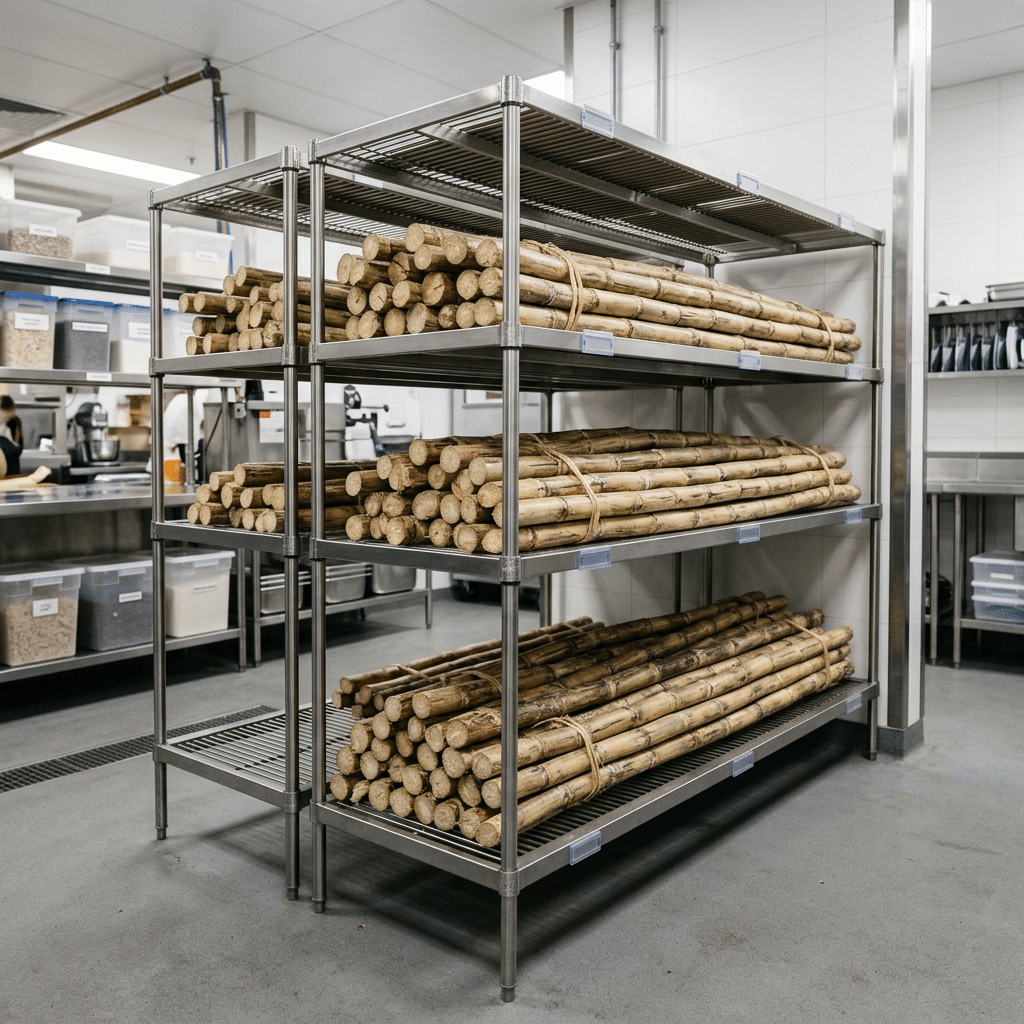
Store accepted cane off the floor, protected from splash, pests, refuse, and cleaning chemicals. Use clean racks, bins, or pallets that can be cleaned. Rotate stock so older acceptable cane is assessed and used before newer deliveries. Do not assume that later washing makes poor storage conditions acceptable.
Keep receiving and storage distinct from the clean assembly and serving area. Where space is limited, use a scheduled process: receive and move cane first, clean the area, then begin washing and juice preparation. Clear physical or time separation is often easier for staff to follow than an informal rule.
Wash and Prepare Cane Before Juicing
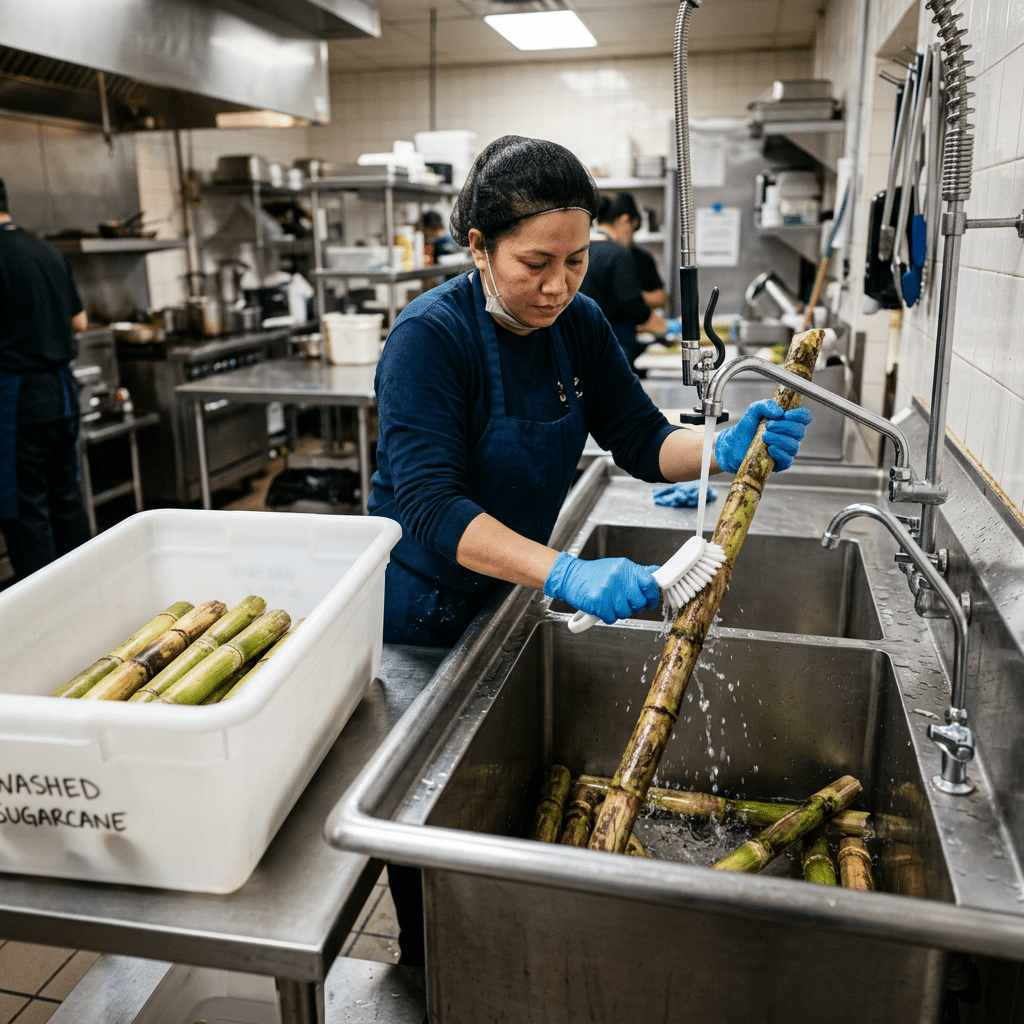
Move only the amount of cane needed for the current preparation period into the washing area. Before washing, remove obvious ties, packaging fragments, loose debris, and cane that should not be processed. Staff should wash hands and use clean, suitable tools before beginning this work.
Wash cane using potable water and a method appropriate for the condition of the product and the shop’s approved procedure. Mechanical brushing or manual scrubbing may be needed to remove adhering soil from the exterior. Rinsing alone may not be enough for visibly dirty cane. Avoid practices that can recontaminate cleaned cane, such as placing it back into a dirty receiving bin or onto an unclean counter.
After washing, inspect again and trim away damaged or visibly unsuitable portions with clean, maintained cutting equipment. Keep washed cane in clean, designated containers. Do not return trimmed waste to the preparation bench. Remove waste promptly so it does not attract pests or create a source of splash or contact contamination.
Any sanitizer, produce wash, or chemical treatment should be used only where it is permitted, suitable for the intended food-contact use, and applied according to its label and local requirements. More chemical is not better. A shop should document the product, dilution method, contact time where applicable, test method, and employee responsible when its sanitation program calls for those controls.
Control Juicing and Service
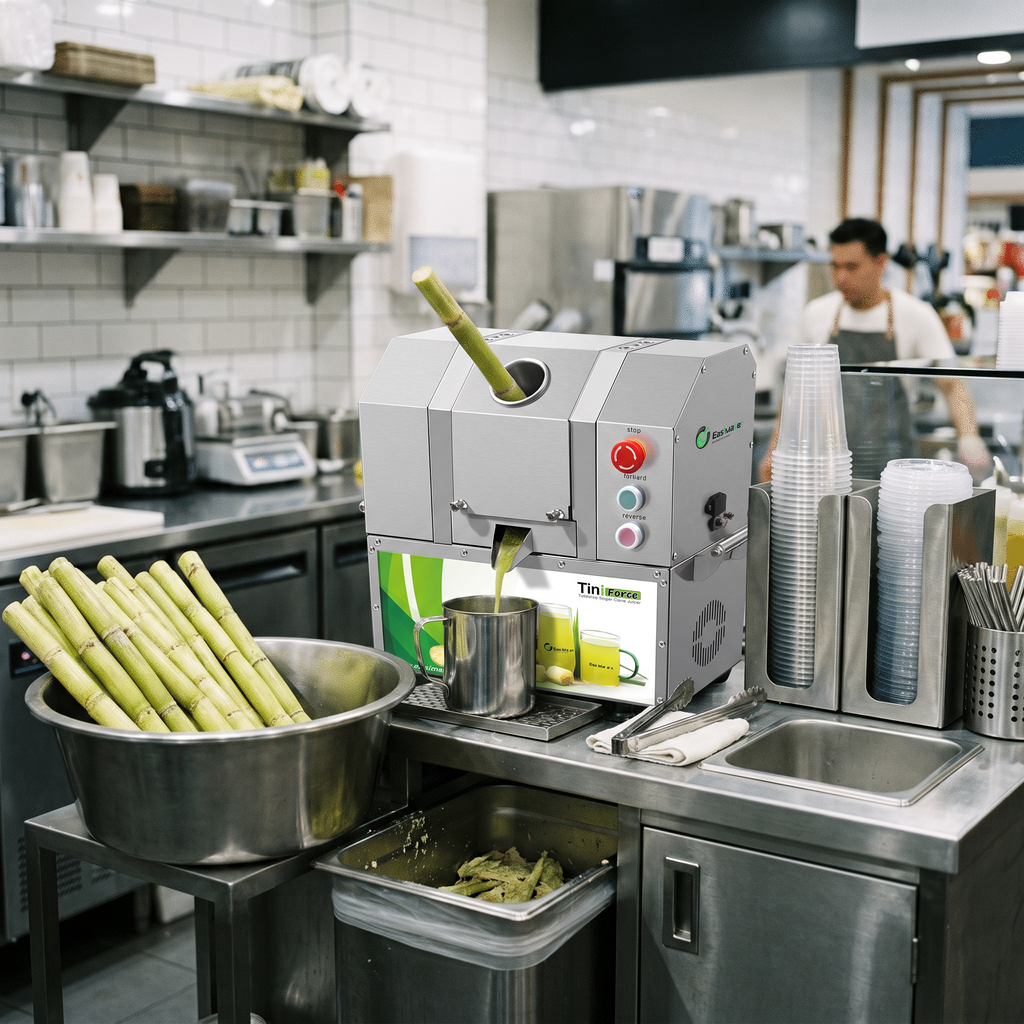
Set up the juicing station as a clean zone. Before service, verify that the juicer, collection container, strainers, tools, cup dispenser, and immediate work surfaces have completed the shop’s cleaning and sanitation process. Assemble removable parts correctly, and conduct the manufacturer’s pre-use checks before operating the machine.
Use washed, prepared cane only. Employees should avoid touching cup rims, ice-contact surfaces, straws, or the inside of lids. Assigning separate duties for payment handling and drink assembly can reduce hand-contact risk during peak periods. When one employee must do both tasks, establish a clear handwashing and glove-change routine that staff can realistically follow.
Make-to-order service simplifies control because it limits holding time. If the shop prepares juice ahead, batches, bottles, or combines juice with other ingredients, the process needs additional review. Holding temperature, date marking, packaging, cleaning of filling tools, allergen management for added ingredients, and any local licensing or process requirements may apply. Do not adopt a holding time or temperature from a general online article; establish it with the local authority and your documented operating procedure.
Use ice and water from approved sources, and keep scoop handles out of the ice. Do not use the customer cup as an ice scoop. Dispose of product that has been contaminated, mishandled, or held outside the shop’s approved procedure.
Clean and Sanitize the Juicer
Cleaning removes juice residue, fibers, and soil. Sanitizing is a separate step intended to reduce microorganisms on already-clean food-contact surfaces. Both are necessary. Sanitizer applied over residue is not a substitute for cleaning.
Build cleaning around the machine manufacturer’s instructions and the approved chemicals used in your facility. Before disassembly or cleaning, stop the equipment, disconnect or isolate power as required, and wait until moving parts have fully stopped. Never reach into a feed opening or roller area while the machine is energized.
- Remove cane fibers and product residue using suitable tools.
- Disassemble removable food-contact components only as instructed by the manufacturer.
- Wash parts and accessible surfaces with the correct detergent and water conditions for the soil and chemical program.
- Rinse where the detergent instructions require it.
- Sanitize with an approved food-contact sanitizer mixed and used according to its label.
- Allow surfaces to drain or air dry when required. Avoid wiping sanitized surfaces with a cloth that may reintroduce contamination.
- Reassemble only after parts are clean, sanitized, dry as required, and checked for correct fit.
Cleaning frequency should reflect the manufacturer’s directions, the amount of product processed, visible residue, service interruptions, and local requirements. At minimum, staff need a defined end-of-day procedure and a clear response when product residue accumulates during service. Verify sanitizer concentration with the test method specified for the chemical being used, rather than estimating by smell or appearance.
A support plan also matters. Keep the machine model, serial number, parts list, cleaning instructions, and service contact information accessible to the manager responsible for the station. The sugarcane juicer spare parts and support checklist can help shops organize machine information and identify the components that need routine attention.
Use Records and Staff Training
A workable food safety program is short enough to use during a busy day and specific enough to show what happened. Managers do not need paperwork for its own sake. They need records that confirm critical routine work was completed and show how a deviation was handled.
Useful records may include receiving checks, daily cleaning and sanitation sign-offs, sanitizer test results where used, employee training, equipment maintenance, pest observations, and corrective actions. Match the records to the procedures your shop is required to follow. Keep them legible, dated, and reviewed by a responsible person.
Training should be practical and repeated. New employees need to understand the difference between raw cane handling and ready-to-drink juice assembly, when to wash hands, which surfaces are food-contact surfaces, how to disassemble the machine safely, and when to stop and ask a manager for help. Demonstrate the task, observe the employee performing it, and correct issues before independent work.
Managers should also define escalation rules. Examples include cane arriving in poor condition, a sanitizer test outside the target range, a broken or difficult-to-clean machine component, a water interruption, an employee illness concern, or an extended power disruption. The response may be to stop production, discard affected product, clean and sanitize, contact service, or seek direction from the appropriate authority. The correct response depends on the situation and the shop’s local requirements.
Daily Sugarcane Juice Food Safety Checklist
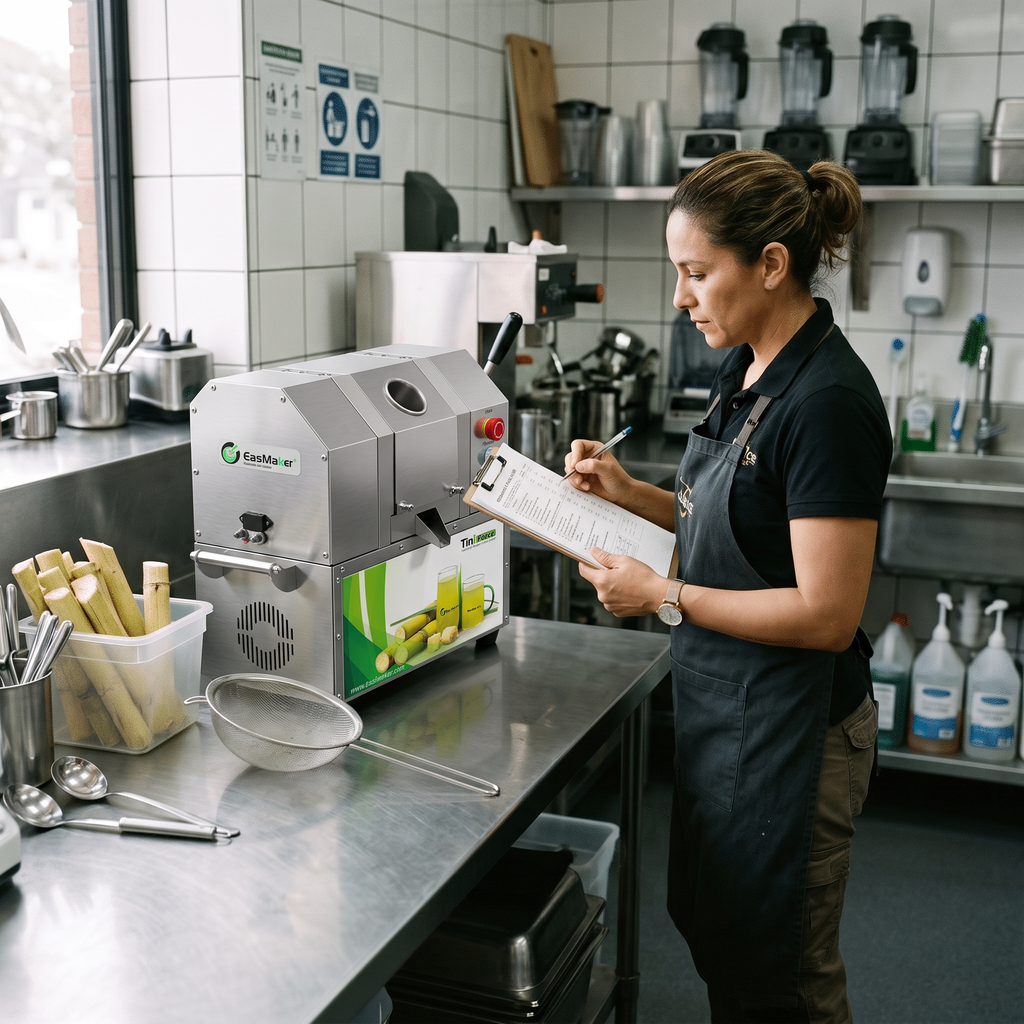
Adapt the following checklist to the facility, local requirements, equipment manual, and approved cleaning program.
Before opening
- Inspect the juicing and serving area for cleanliness, pests, splash exposure, and unnecessary items.
- Confirm the machine is assembled correctly and food-contact parts have completed the required cleaning and sanitation procedure.
- Check that handwashing supplies, approved water, cups, lids, straws, cleaning tools, and waste containers are available.
- Inspect cane selected for use and move only washed, prepared cane into the clean juicing area.
During service
- Keep raw cane, trimmed waste, cleaning chemicals, and ready-to-drink juice separated.
- Maintain employee handwashing and task changes between cash handling, cleaning, waste handling, and drink assembly.
- Remove juice fibers and residue according to the established between-service procedure.
- Protect ice, cups, lids, and drink-contact surfaces from unnecessary handling.
- Stop and correct any loss of sanitation, equipment damage, or questionable product condition.
After service
- Discard product that cannot remain under the shop’s approved procedure.
- Power down and clean the juicer safely following manufacturer instructions.
- Wash, rinse where required, sanitize, and air dry applicable parts and surfaces.
- Record completion, sanitizer verification where applicable, defects, and corrective actions.
- Store the machine and cleaned utensils to protect food-contact surfaces until the next use.
Choose Equipment and Support for Daily Control
Food safety procedures are easier to sustain when the equipment fits the actual shop workflow. Before purchase, review the machine’s food-contact components, access for cleaning, disassembly instructions, drainage and residue management, operator safeguards, available service support, and replacement-part process. Ask for the applicable manual and confirm what routine inspection and maintenance the operator is expected to perform.
A commercial machine should be selected for the operating pattern, available work area, electrical supply, staffing, cleaning routine, and support expectations. The guide to commercial and home sugarcane juicer differences outlines why repeated business use requires a different evaluation from occasional personal use.
For a new shop, document the intended menu and service process before finalizing the equipment layout. This helps identify whether the operation will be make-to-order only, whether add-ins create separate controls, where cane will be washed, and who will be accountable for end-of-day sanitation. For branded projects or equipment adaptation discussions, review Easimaker OEM/ODM options with the operational requirements in hand.