
Table of Contents
- What Does It Cost to Start a Sugarcane Juice Business?
- Main Sugarcane Juice Business Cost Categories
- Planning the Commercial Equipment Budget
- Budget Differences by Business Format
- Working Capital and Monthly Operating Costs
- A Practical Startup Budget Checklist
The cost to start a sugarcane juice business depends on the sales format, location, equipment class, local permits, and working capital required. This practical budget framework helps you estimate the main cost categories before requesting equipment quotations or signing a lease.
What Does It Cost to Start a Sugarcane Juice Business?
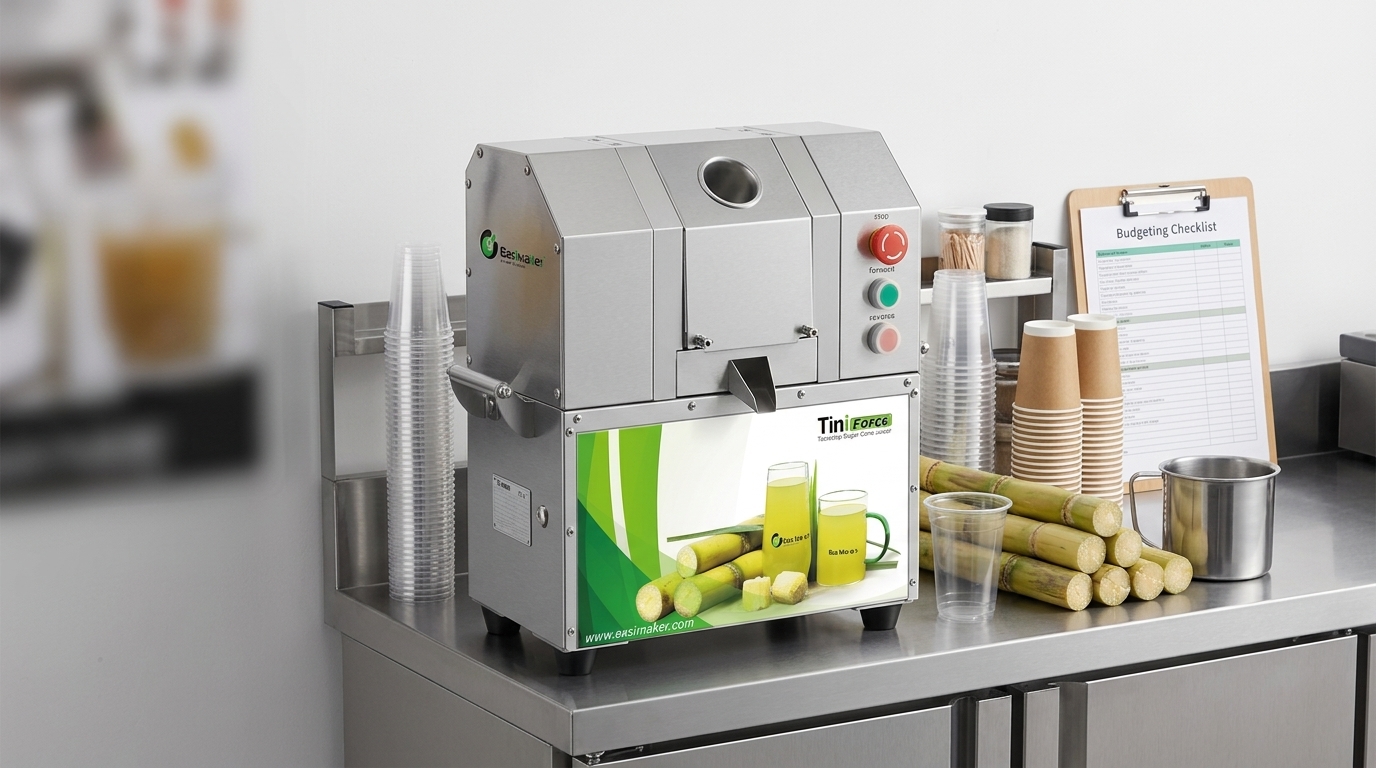
There is no single standard figure for sugarcane juice business startup cost. A small market stall, a mobile cart, a kiosk, and a permanent juice shop can require very different levels of investment. The most reliable approach is to build a budget from the operating format, expected daily sales, local site requirements, and the equipment needed for safe, repeatable service.
Your initial budget should normally include five areas: site and fit-out, commercial equipment, permits and business setup, opening inventory and packaging, and working capital. The machine purchase is important, but it is only one part of the total sugarcane juice shop investment.
Before comparing quotations, define where you will sell, how many service hours you expect each day, whether cane will be prepared on site, and how much storage and cleaning space is available. These decisions determine the equipment class and the amount of supporting infrastructure required.
Main Sugarcane Juice Business Cost Categories
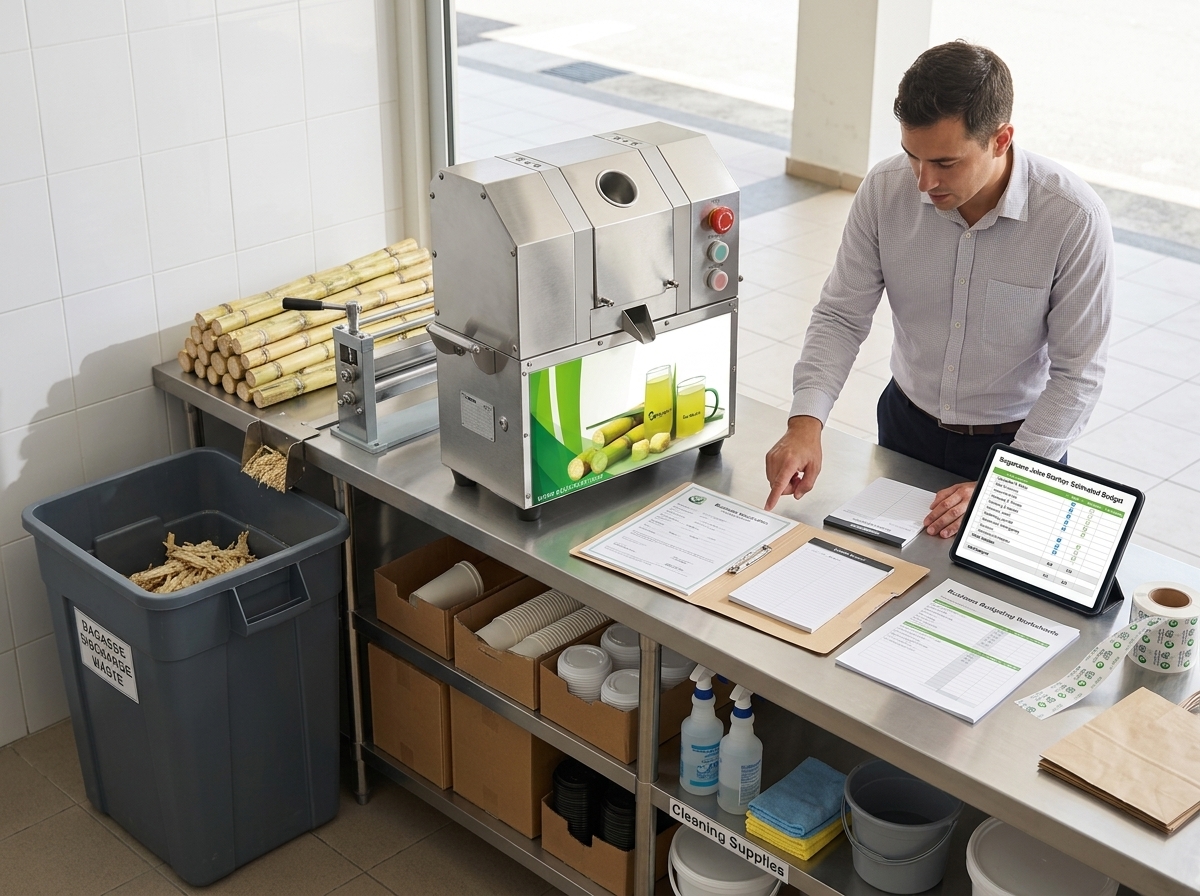
A useful sugarcane juice business budget separates one-time startup costs from recurring costs. This makes it easier to see how much cash is needed before opening and how much must be covered by daily sales.
Site, lease, and fit-out
- Deposit, advance rent, or market access fees
- Counter, canopy, cart, signage, lighting, and customer-facing finishes
- Electrical work, water access, drainage, ventilation, and waste handling
- Food-safe work surfaces and storage areas
Business setup and compliance
- Business registration and local operating permits
- Food-service approvals or inspections where required
- Insurance, payment setup, accounting, and professional fees
Requirements vary by country, city, property type, and sales format. Confirm them with the relevant local authority before committing to a site or importing equipment.
Opening inventory and service supplies
- Sugarcane and other menu ingredients
- Cups, lids, straws, bags, napkins, and cleaning materials
- Labels, menus, uniforms, gloves, and small tools
Launch and contingency funds
Allow for transport, installation, staff training, initial marketing, unexpected site work, replacement smallwares, and currency or shipping changes. A contingency line is especially important when equipment is imported or the site is still being fitted out.
Planning the Commercial Equipment Budget
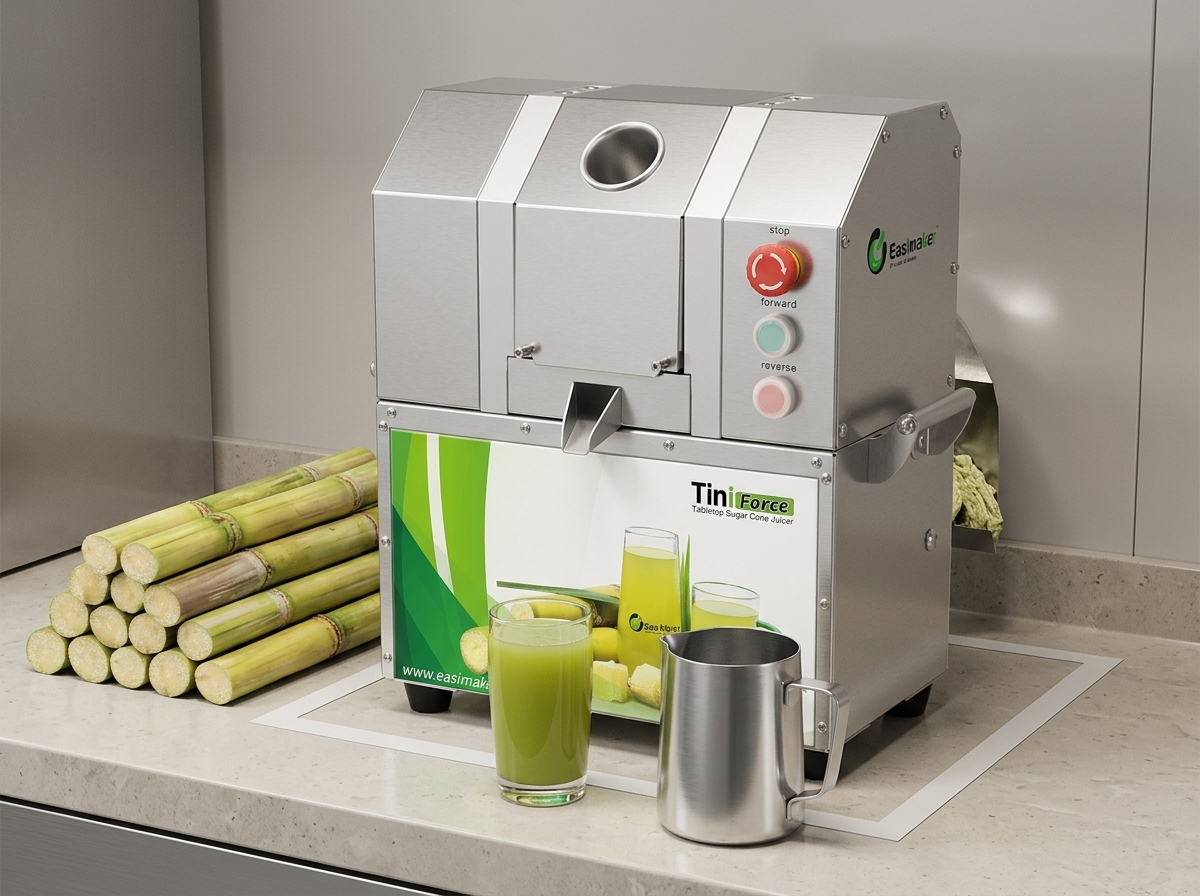
The right commercial juicer should match the expected duty cycle, cane preparation process, available power, counter space, cleaning routine, and local service arrangements. A low purchase price may not represent good value if the machine is unsuitable for repeated operation or difficult to maintain.
When comparing commercial sugarcane juicer cost, request a complete quotation that identifies the machine price, shipping, packaging, insurance, duties, taxes, installation requirements, included parts, warranty terms, and after-sales support. Ask which electrical configuration is available for your market rather than assuming that a quoted model will match your site.
Also measure the proposed counter before ordering. One compact commercial sugarcane juicer reference has dimensions of 497 × 240 × 485 mm, but dimensions, access clearances, and service space should always be confirmed for the specific model and configuration. Review this guide on commercial versus home sugarcane juicers when deciding which equipment class fits a business workflow.
Your equipment budget may also include a refrigerator or ice solution, preparation table, sink or wash station, water filtration if required locally, storage racks, scales, waste containers, and backup small equipment. Do not add equipment simply because it is available; include each item only when it supports the planned menu or operating process.
Budget Differences by Business Format
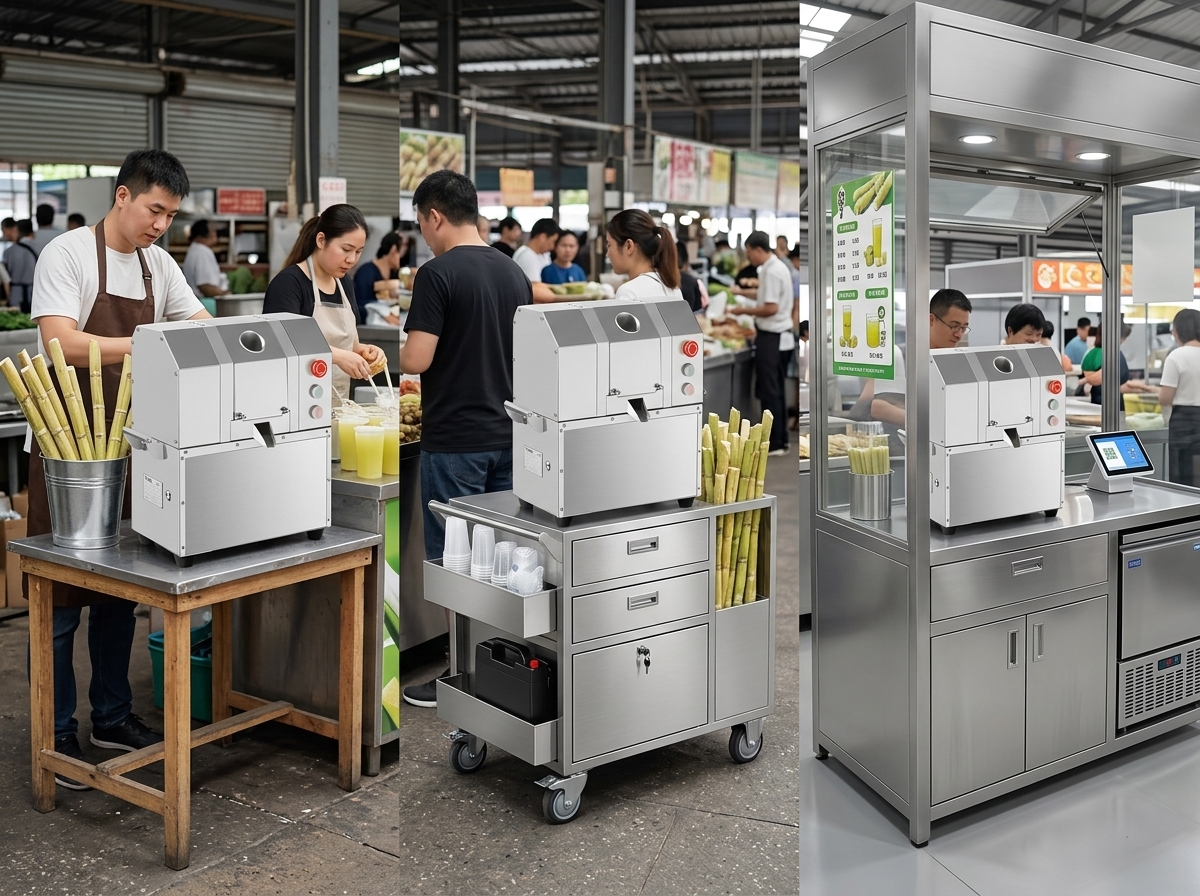
The sales format strongly affects the cost to start a sugarcane juice business. The following comparison is a planning framework, not a quotation. Local rent, labor, permits, construction, shipping, and equipment choices can change the result substantially.
| Format | Typical cost drivers | Questions to answer before budgeting |
|---|---|---|
| Market stall | Market fees, portable equipment, water and power access, transport, storage | Can the site support hygienic preparation, drainage, and daily cleaning? |
| Mobile cart | Cart fabrication, mobility, battery or power access, storage, branding | Where will cane, packaging, waste, and equipment be stored between service periods? |
| Fixed kiosk | Rent deposit, counter fit-out, utilities, signage, refrigeration, permits | Does the layout provide safe customer flow and enough service clearance? |
| Permanent juice shop | Lease, construction, seating, staff areas, larger inventory, utilities | Can forecast sales support the higher fixed monthly cost? |
A smaller format may reduce fixed costs but can limit storage, preparation space, menu range, and operating hours. A larger shop may support more products but needs stronger sales planning and more working capital.
Working Capital and Monthly Operating Costs
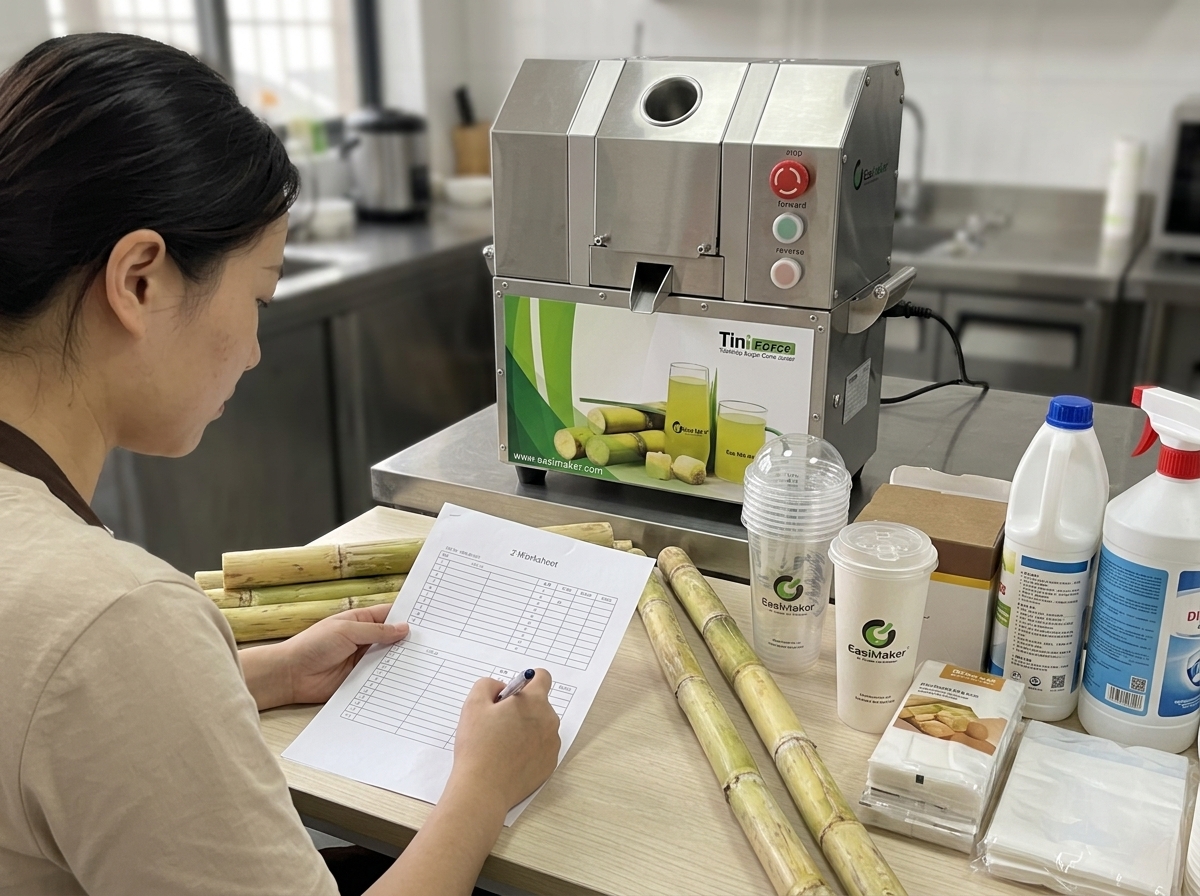
Working capital covers the period between opening and reaching stable cash flow. It also protects the business when sales are seasonal, deliveries are delayed, equipment needs service, or prices for cane and packaging change.
List recurring costs by month:
- Rent, utilities, internet, payment fees, and insurance
- Staff wages, payroll costs, and training
- Sugarcane, ice, flavoring ingredients, and packaging
- Cleaning chemicals, filters, replacement parts, and routine maintenance
- Transport, waste collection, marketing, and accounting
Then estimate the contribution from each serving. Start with selling price, subtract the direct cost of cane, packaging, ice, and other serving materials, and compare the result with daily fixed costs. Include realistic waste and unsold stock rather than assuming every kilogram purchased becomes a sale.
For a structured calculation, see this guide to sugarcane juice machine break-even. Break-even output is only a planning estimate; it should be tested against actual foot traffic, opening days, service speed, downtime, and local pricing.
A Practical Startup Budget Checklist
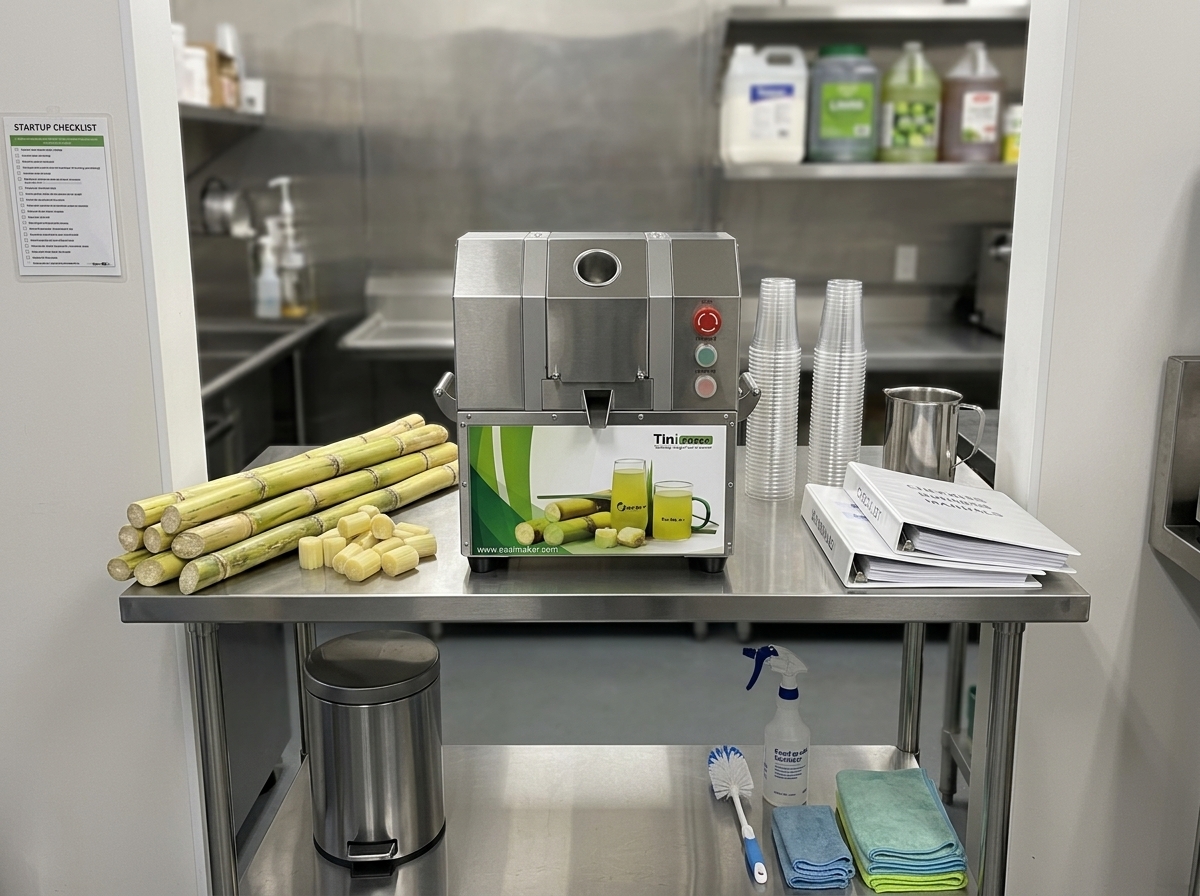
Before approving the sugarcane juice business budget, confirm each item below:
- Define the sales format, operating hours, menu, and target customer.
- Confirm local permits, food-service requirements, water access, drainage, and waste rules.
- Measure the site, counter, doorways, storage, and equipment service clearance.
- Request an itemized equipment quotation with shipping, taxes, electrical details, warranty, and support.
- Price cane, packaging, ice, utilities, labor, cleaning, maintenance, and delivery using local supplier quotes.
- Estimate conservative daily sales and test busy, normal, and slow periods.
- Set aside working capital and a contingency amount for unplanned costs.
- Write a daily cleaning, inspection, and stock-control procedure before opening.
Keep the first menu and workflow manageable. A clear operating process helps staff prepare the product consistently, control waste, and identify maintenance issues early. Revisit the budget after receiving supplier quotations because the final landed equipment cost may differ from an initial online price.
FAQ
What is the biggest cost in a sugarcane juice business startup budget?
It depends on the format. For a kiosk or shop, rent, fit-out, utilities, and equipment may be the largest initial commitments. For a market stall or cart, the equipment, cart fabrication, permits, transport, and working capital may account for more of the budget. Use local quotations rather than relying on a universal percentage.
How much does a commercial sugarcane juicer cost?
Commercial sugarcane juicer cost varies by machine design, configuration, supplier, shipping, taxes, electrical requirements, and support package. Request a landed-cost quotation that lists the machine, freight, duties, installation needs, included parts, warranty, and after-sales service.
Can I start a sugarcane juice business with a home juicer?
A home juicer may be suitable for occasional testing, but it may not match the duty cycle, workflow, sanitation needs, or service expectations of a commercial operation. Compare intended operating hours, repeated loading, cleanability, available space, and supplier support before selecting equipment.
Should working capital be included in the sugarcane juice shop investment?
Yes. Working capital helps cover recurring expenses while sales develop and provides a buffer for seasonal demand, delivery delays, maintenance, price changes, and unexpected site costs. Treat it as part of the initial investment plan, not as an optional extra.
How can I estimate whether the business budget is realistic?
Build a conservative sales forecast, calculate direct cost per serving, list monthly fixed costs, and test slow, normal, and busy trading periods. Then compare the required sales level with realistic foot traffic, opening days, preparation time, waste, and equipment downtime.
Build a Budget Around Your Real Operating Plan
Share your intended sales format, market, expected output, available space, and power supply with Easimaker. Our team can help you identify the relevant equipment requirements, prepare a practical quotation, and discuss suitable OEM/ODM or distributor support for your project.