
Maximizing Efficiency in Small Juice Bar Layouts
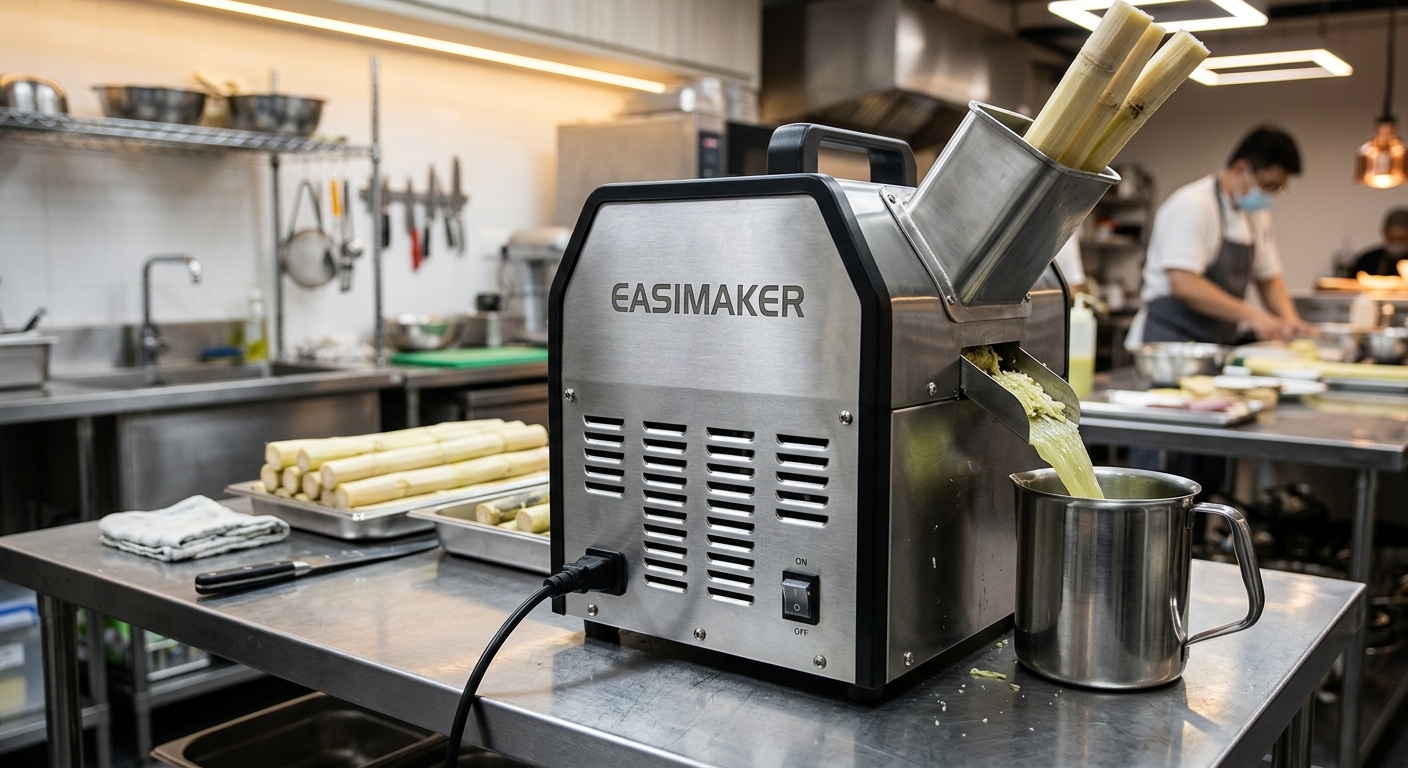
For modern cafes, juice bars, and quick-service restaurants, front-of-house real estate is a premium asset. Integrating high-yield beverage equipment into a limited space requires careful planning, especially when dealing with robust machinery like an electric commercial sugarcane juicer. A compact sugarcane juicer allows operators to offer fresh, high-margin beverages without sacrificing valuable workflow areas.
However, selecting space-saving equipment is only half the challenge. Proper installation requires precise measurement of your countertop to ensure operational efficiency, safety, and equipment longevity. This guide provides a comprehensive checklist for commercial buyers, cafe owners, and procurement specialists to calculate the exact footprint, clearance, and ventilation required for countertop juice machines.
Key Concepts: Footprint vs. Operational Space
When evaluating commercial juicer dimensions, buyers often look solely at the machine’s static footprint—the exact width and depth of the unit’s base. While important, the static footprint does not account for the total operational space required.
- Static Footprint: The physical dimensions of the machine resting on the counter.
- Operational Space: The total area needed to safely operate the machine, including feeding long sugarcane stalks, removing waste, accessing the juice collection jug, and allowing for operator movement.
- Clearance: The vertical and horizontal gaps required around the machine to prevent overheating and allow for routine cleaning.
Structured Checklist for Measuring Countertop Space
Before purchasing a compact sugarcane juicer, use this structured checklist to evaluate your site’s readiness. Accurate measurements prevent costly installation delays and ensure compliance with commercial kitchen safety standards.
1. Measuring Width and Depth (The Footprint)
Start by measuring the absolute maximum area available on your countertop. Ensure the surface is completely flat and level. A standard compact commercial sugarcane juicer typically requires a minimum depth of 400mm to 500mm. When measuring depth, account for the overhang of juice spouts and the placement of collection pitchers. For width, leave an additional 150mm to 200mm on the operator’s dominant side to facilitate smooth feeding of the sugarcane.
2. Calculating Height Clearance
Height is a critical, often overlooked dimension. Electric sugarcane juicers require top or angled front access to feed the stalks. If your machine is placed under overhanging cabinets or shelves, you must measure the vertical distance from the countertop to the lowest obstruction. Sugarcane stalks can be over a meter long before being cut down; ensure there is enough vertical and angular clearance to safely guide the stalks into the feeding chute without snapping them against overhead fixtures.
3. Planning for Ventilation Gaps
Electric commercial juicers house powerful, high-torque motors that generate heat during continuous operation. Adequate thermal dissipation is non-negotiable. Check the manufacturer’s specifications for required ventilation gaps. A general industry standard is maintaining at least 100mm to 150mm of free space around the motor housing vents (usually located at the rear or sides of the machine). Pushing a juicer flush against a wall can lead to motor burnout and void warranties.
4. Verifying Weight Capacity
Space-saving designs do not necessarily mean lightweight. High-quality commercial sugarcane juicers are constructed from heavy-duty 304 stainless steel and feature solid steel crushing rollers. A compact unit can weigh anywhere from 40kg to 70kg. Verify that your countertop material (e.g., commercial stainless steel prep tables, reinforced quartz, or solid wood) is structurally rated to support this concentrated static load, plus the dynamic vibration load during operation.
5. Power Proximity and Cable Routing
Measure the distance from the intended installation spot to the nearest appropriate electrical outlet. Commercial juicers often draw significant amperage upon startup. Ensure the power cord can reach the outlet without stretching, creating a tripping hazard, or passing near water sources. Avoid using extension cords, which can cause voltage drops and damage the electric motor.
Options & Comparisons: Compact vs. Floor-Standing Models
Understanding when to choose a countertop juice machine over a floor-standing unit is crucial for optimizing your small juice bar layout.
| Feature | Compact Countertop Juicer | Floor-Standing Juicer |
|---|---|---|
| Footprint | Minimal; utilizes existing counter space. | Large; requires dedicated floor space. |
| Ideal Environment | Cafes, mall kiosks, food trucks, small bars. | High-volume industrial processing, large facilities. |
| Mobility | Easier to relocate for cleaning or layout changes. | Heavy, usually requires casters to move. |
| Waste Management | Requires an under-counter bin or frequent emptying. | Often includes built-in, large-capacity waste bins. |
Technical Factors in Space-Saving Equipment
When sourcing a compact sugarcane juicer, B2B buyers must scrutinize the internal engineering. To achieve a smaller footprint, manufacturers must optimize the gearbox and motor layout. Look for machines that utilize direct-drive gear transmission rather than bulky belt-driven systems. Direct-drive not only saves space but also increases energy transfer efficiency, ensuring the electric motor provides maximum torque to the stainless steel rollers.
Additionally, consider the waste disposal mechanism. Some premium countertop models feature a bottom-discharge chute that aligns with a pre-cut hole in the countertop. This allows the crushed bagasse (sugarcane waste) to fall directly into a hidden bin below, drastically reducing the required surface area for waste collection and maintaining a clean, professional aesthetic for customer-facing operations.
Manufacturing, Quality, and Testing Considerations
Procurement teams should inquire about the thermal management testing conducted by the manufacturer. Because compact machines pack electrical components into a tighter housing, efficient heat dissipation is an engineering challenge. Reputable manufacturers perform continuous-load testing to ensure the machine can run during peak hours without the internal temperature exceeding safe limits.
Furthermore, inspect the quality of the materials. The casing, rollers, and juice collection trays should be fabricated from food-grade stainless steel (typically SUS304). This ensures structural integrity, resistance to the naturally acidic properties of sugarcane juice, and compliance with global food safety standards.
Buying Guide for Countertop Juice Machines
When engaging with suppliers to purchase a commercial sugarcane juicer, keep the following considerations in mind:
- Confirm Exact Dimensions: Always request the precise length, width, and height of the unit, including any protruding switches or handles.
- Inquire About Customization: Some manufacturers offer custom chute designs or specific power configurations (110V vs. 220V) to match your region’s infrastructure.
- Understand MOQ and Lead Times: If outfitting a franchise, ask about Minimum Order Quantities (MOQ) and how production lead times might impact your store rollout schedules.
- Request Shipping Dimensions: The packaged size will be larger than the machine itself. Ensure your receiving dock or delivery doorway can accommodate the crated equipment.
Frequently Asked Questions (FAQs)
How much clearance is needed behind a commercial sugarcane juicer?
You should maintain a minimum of 100mm to 150mm of clearance behind and on the sides of the machine to allow for proper motor ventilation and prevent overheating.
Can a compact sugarcane juicer handle the same volume as a larger machine?
While compact models have highly efficient electric motors and gearboxes, they are generally designed for medium to high volume in cafe settings. For continuous, industrial-scale bottling, a floor-standing unit may be required.
How do I manage the bagasse (waste) with a countertop model?
Many operators place a dedicated waste bin directly beside the machine. Alternatively, you can opt for a model with a bottom-discharge chute and modify your countertop to allow waste to drop into an under-counter receptacle.
Are countertop sugarcane juicers loud?
Modern electric commercial juicers with direct-drive gearboxes are significantly quieter than older belt-driven models, making them suitable for front-of-house operations where customer experience is paramount.
What countertop material is best for supporting a heavy juicer?
Commercial-grade stainless steel with reinforced under-bracing, solid stone (like quartz or granite), or thick solid wood are recommended to support the weight and operational vibrations.
Equip Your Business with the Right Space-Saving Solutions
Accurate measurement and thoughtful layout planning are the foundation of a highly profitable, efficient juice bar. By understanding the footprint, clearance, and technical requirements of your equipment, you can seamlessly integrate a powerful electric juicer into your operation. Ready to upgrade your beverage program with a high-performance, compact machine designed for commercial success?
Request a quote / Get a sample today to find the perfect fit for your space.