
Table of Contents
- What Is a Commercial Bowl Cutter?
- Why Food Processors Use Bowl Cutters
- Key Buying Criteria
- Capacity and Production Planning
- Blades, Speed, and Texture Control
- Hygiene, Safety, and Maintenance
- Questions to Ask Before Buying
- Final Selection Checklist
The right commercial bowl cutter should match your product recipe, batch size, texture requirements, workflow, cleaning routine, and available utilities. This guide explains the main buying factors for meat processors, food manufacturers, butcher shops, commissary kitchens, and other professional operations.
What Is a Commercial Bowl Cutter?
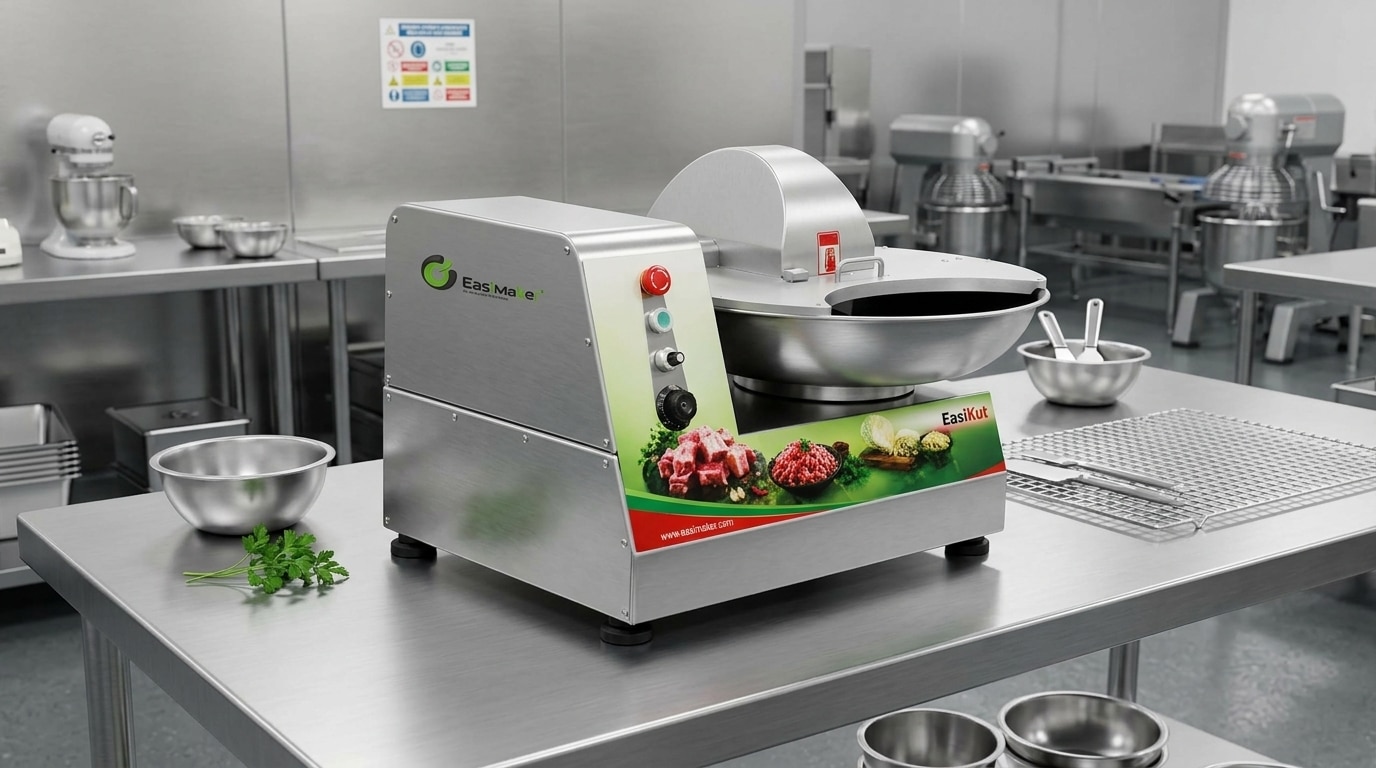
A commercial bowl cutter is a food processing machine that combines a rotating bowl with high-speed cutting knives. As the bowl moves ingredients through the blade set, the machine can chop, mix, and develop a controlled texture. Depending on the recipe and operating settings, it may be used for sausage meat, emulsified products, meat fillings, pâté-style mixtures, vegetable preparations, and other processed foods.
Unlike a basic food processor, a commercial bowl cutter is designed for repeatable production, heavier workloads, and integration into a professional preparation area. The correct choice depends on more than bowl volume. Buyers should assess the product being processed, target texture, batch weight, available electrical supply, cleaning requirements, operator safety, and access to spare parts.
This commercial bowl cutter buying guide focuses on the practical questions food processors should answer before requesting a quotation or approving a machine for production.
Why Food Processors Use Bowl Cutters
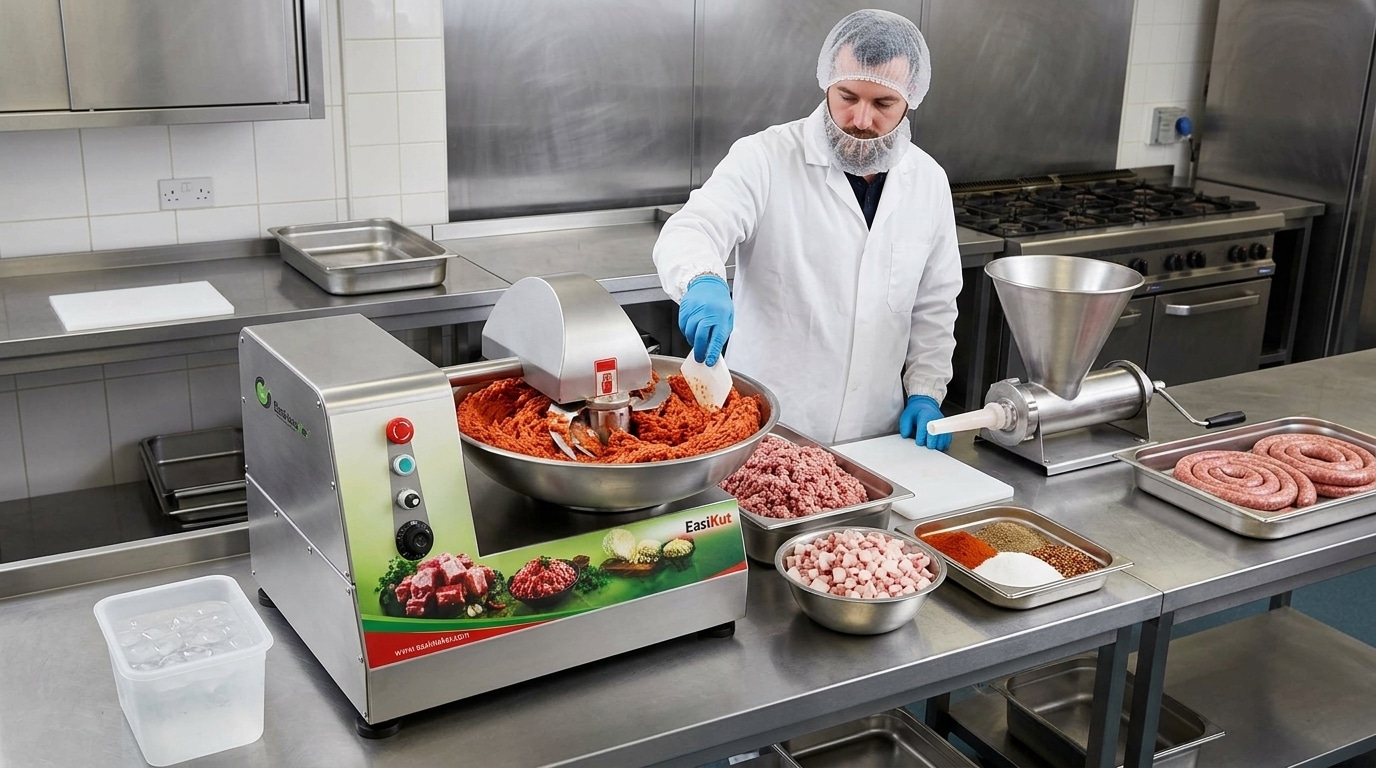
Bowl cutters are selected when a processor needs more controlled cutting and mixing than manual preparation or a general-purpose processor can provide. Common applications include preparing sausage farce, burger and meatball mixtures, fillings, seasoned minced products, and selected vegetable or plant-based formulations.
- Texture control: A suitable blade arrangement and operating process can help produce a defined coarse, fine, or emulsified texture.
- Repeatability: Standardized batch weights, processing times, and ingredient order make it easier to reproduce a recipe.
- Workflow efficiency: Cutting and mixing in one machine can reduce transfers between preparation steps.
- Commercial durability: A machine built for professional use is better suited to regular production than light-duty domestic equipment.
However, a bowl cutter is not automatically the best machine for every application. If your operation mainly needs occasional chopping, dry ingredient processing, or very small portions, another type of food processor may be more practical. The decision should follow the product and workflow rather than the machine category alone.
Key Buying Criteria
Before comparing brands or requesting prices, create a short equipment specification for your operation. Include the ingredients, expected batch weight, target texture, production schedule, operator arrangement, and cleaning method. This prevents a low purchase price from hiding an unsuitable capacity or difficult daily workflow.
Product and recipe fit
Explain exactly what will be processed. Meat temperature, fat content, moisture, connective tissue, frozen or chilled condition, and ingredient size can affect the machine requirement. Also state whether the machine will chop only, mix after cutting, or perform both functions in the same batch.
Construction and food-contact materials
Look for a robust frame and clearly identified food-contact surfaces. Stainless steel is commonly preferred for surfaces exposed to food because it can support cleaning and corrosion control when correctly finished and maintained. Ask which parts are removable, how seals are protected, and whether the bowl and knives can be inspected without excessive disassembly.
Electrical and installation requirements
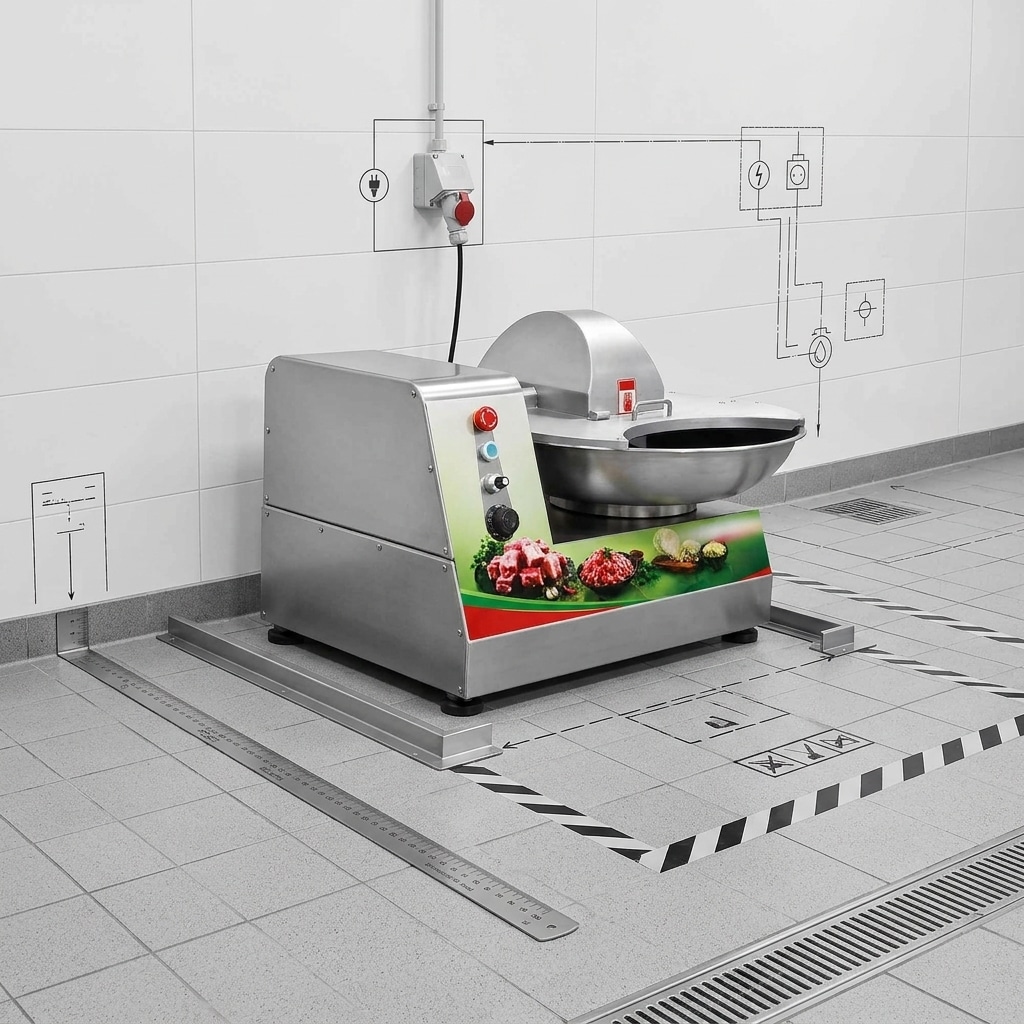
Confirm voltage, phase, frequency, rated power, plug or connection arrangement, machine footprint, working clearance, and floor loading. A machine must fit both the physical room and the electrical system available at the site. Ask for an installation drawing if the equipment will be incorporated into a production line.
Capacity and Production Planning
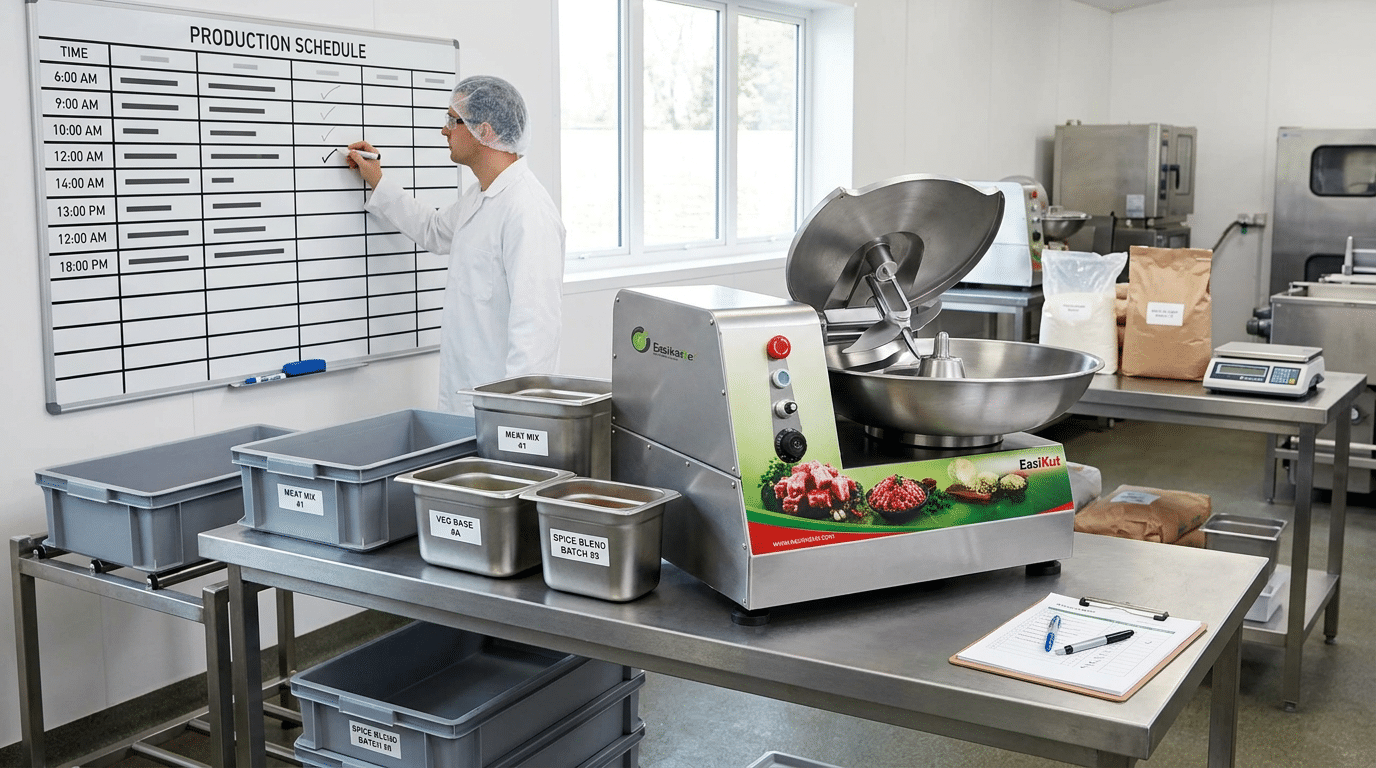
Choose capacity according to the actual working batch, not simply the nominal bowl volume. The usable load can vary with ingredient density, recipe moisture, product temperature, blade configuration, and the amount of free space needed for effective circulation. A bowl that appears large on paper may not suit a dense or sticky mixture at the desired batch weight.
Calculate your requirement from the production schedule:
- Estimate the number of batches needed per shift.
- Record the target weight for each recipe.
- Allow time for loading, cutting, mixing, unloading, and cleaning.
- Check whether different products require separate batches or changeover cleaning.
- Compare the resulting workload with the supplier’s confirmed working capacity.
Do not treat an advertised capacity as a guaranteed output for every recipe. Ask the manufacturer to confirm the recommended working load for your ingredients and process. If possible, provide representative samples or detailed recipe information for a practical assessment.
Oversizing can also create problems. A machine that is too large for small batches may not circulate ingredients effectively, while an undersized machine may require too many batches and increase handling. The best choice balances batch size, production frequency, floor space, and future demand without relying on unsupported throughput claims.
Blades, Speed, and Texture Control
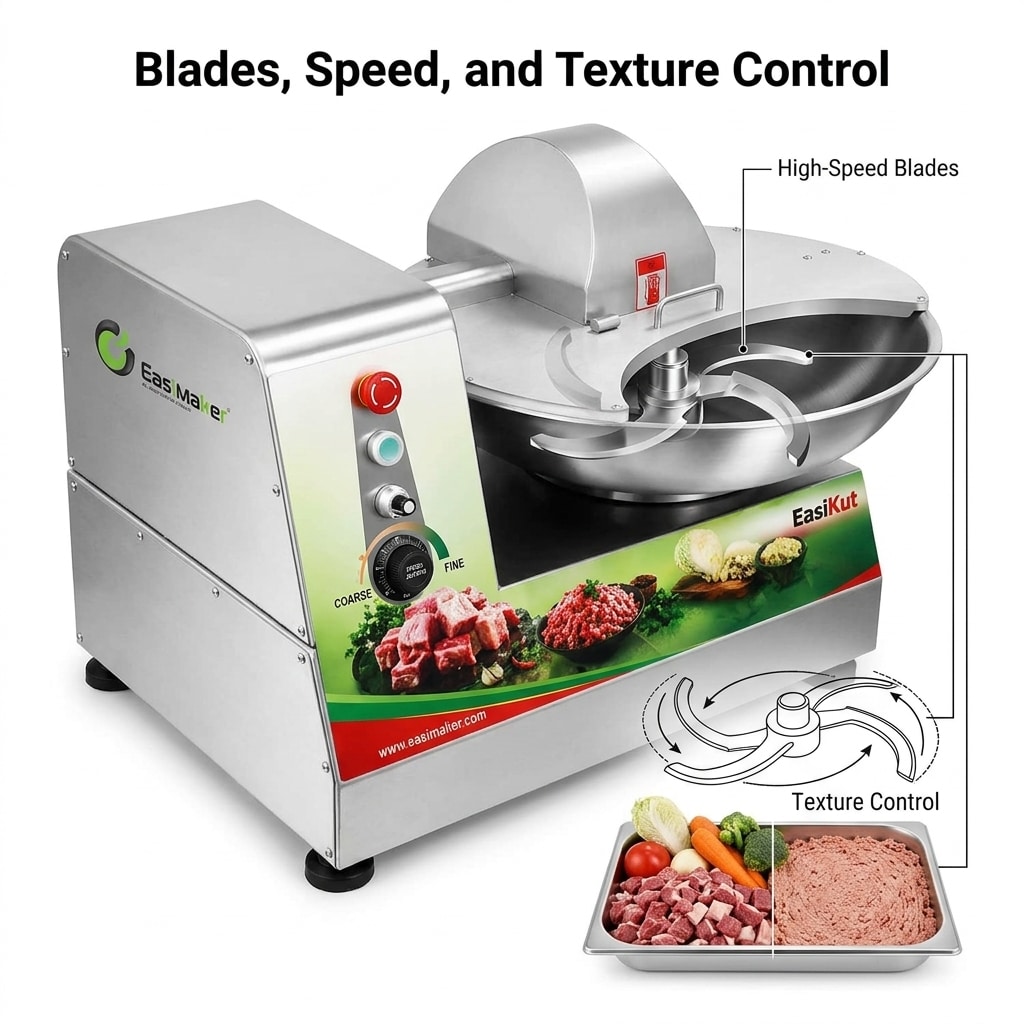
The blade assembly is central to bowl cutter performance. Ask how many knives are fitted, what materials are used, how the knives are sharpened or replaced, and which product types the blade design is intended to handle. A supplier should be able to explain the relationship between blade geometry, bowl movement, cutting time, and the texture required by your recipe.
Speed control may be fixed, stepped, or variable depending on the machine design. Higher speed is not automatically better. The correct setting depends on whether the process requires coarse cutting, fine chopping, mixing, or controlled emulsion development. Excessive processing can change product temperature and texture, so operators need a repeatable recipe procedure rather than simply running the machine at maximum speed.
Ask whether the machine supports separate cutting and mixing stages, how the operator changes settings, and whether the controls are easy to use while wearing suitable protective equipment. Confirm the availability and expected service life of replacement knives, knife holders, seals, and other wear parts.
Hygiene, Safety, and Maintenance
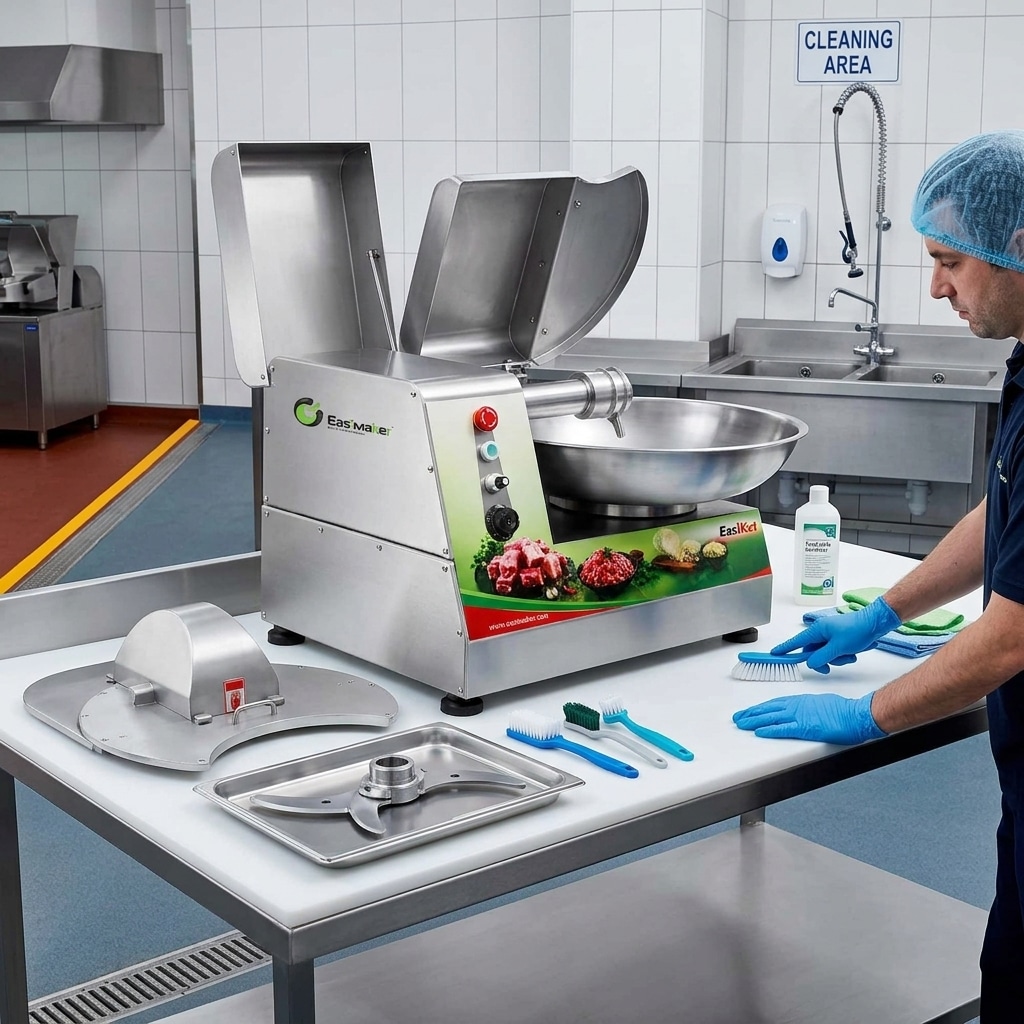
Daily sanitation and operator safety should be considered during the buying process, not after installation. A machine with difficult-to-reach surfaces or complicated disassembly can increase cleaning time and create avoidable hygiene risks.
Hygiene points to check
- Can food-contact components be accessed and cleaned thoroughly?
- Are there unnecessary crevices, exposed threads, or product traps?
- Can the bowl, knives, guards, and covers be inspected after cleaning?
- Are cleaning chemicals and water exposure limits clearly explained?
- Is there a documented cleaning and sanitation procedure?
Safety points to check
Confirm that guards, covers, interlocks, emergency stopping arrangements, and control switches are suitable for the machine design. Operators should never reach into the bowl while blades or moving parts can operate. The supplier should provide operating instructions, cleaning guidance, maintenance information, and warnings for knife handling.
Maintenance points to check
Ask about lubrication, belt or drive inspection, knife condition, seal replacement, electrical checks, and recommended service intervals. Request a spare-parts list and clarify which components are normal wear parts. Maintenance access should be practical for your technicians or local service provider.
Questions to Ask Before Buying
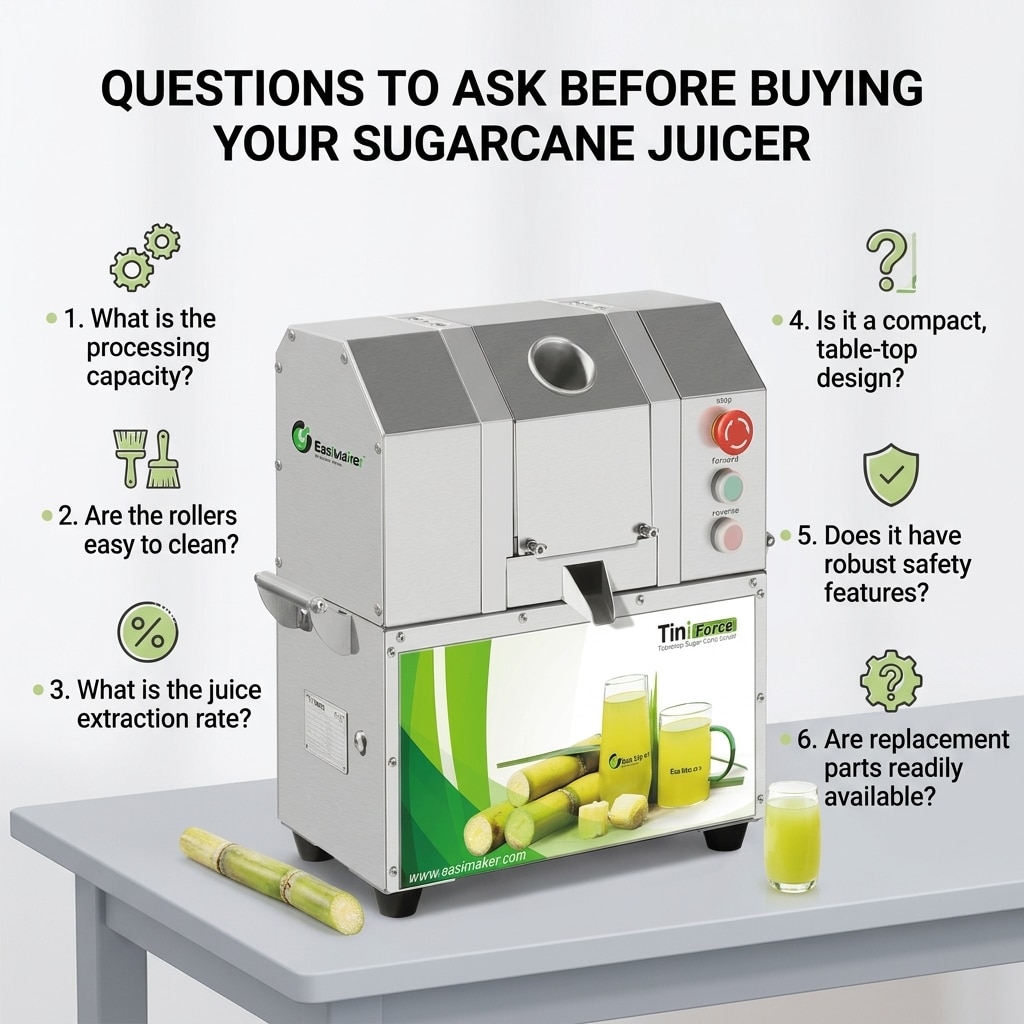
A clear supplier discussion can reveal more than a product brochure. Use the following questions when comparing commercial bowl cutter machines:
- What is the recommended working batch for my specific ingredients?
- Which products and textures is this model designed to process?
- What are the available voltage, phase, and power configurations?
- How are cutting and mixing speeds controlled?
- Which parts contact food, and what materials are used?
- How are the bowl and knife assembly removed, cleaned, and inspected?
- What safety devices are included?
- Which components are considered wear parts?
- Are operating manuals, electrical drawings, and cleaning instructions supplied?
- What warranty, spare-parts, and after-sales support options are available in my market?
- Can the machine be tested with a representative recipe before purchase?
Request written answers where possible. This creates a useful record for procurement, installation, operator training, and future service.
Final Selection Checklist
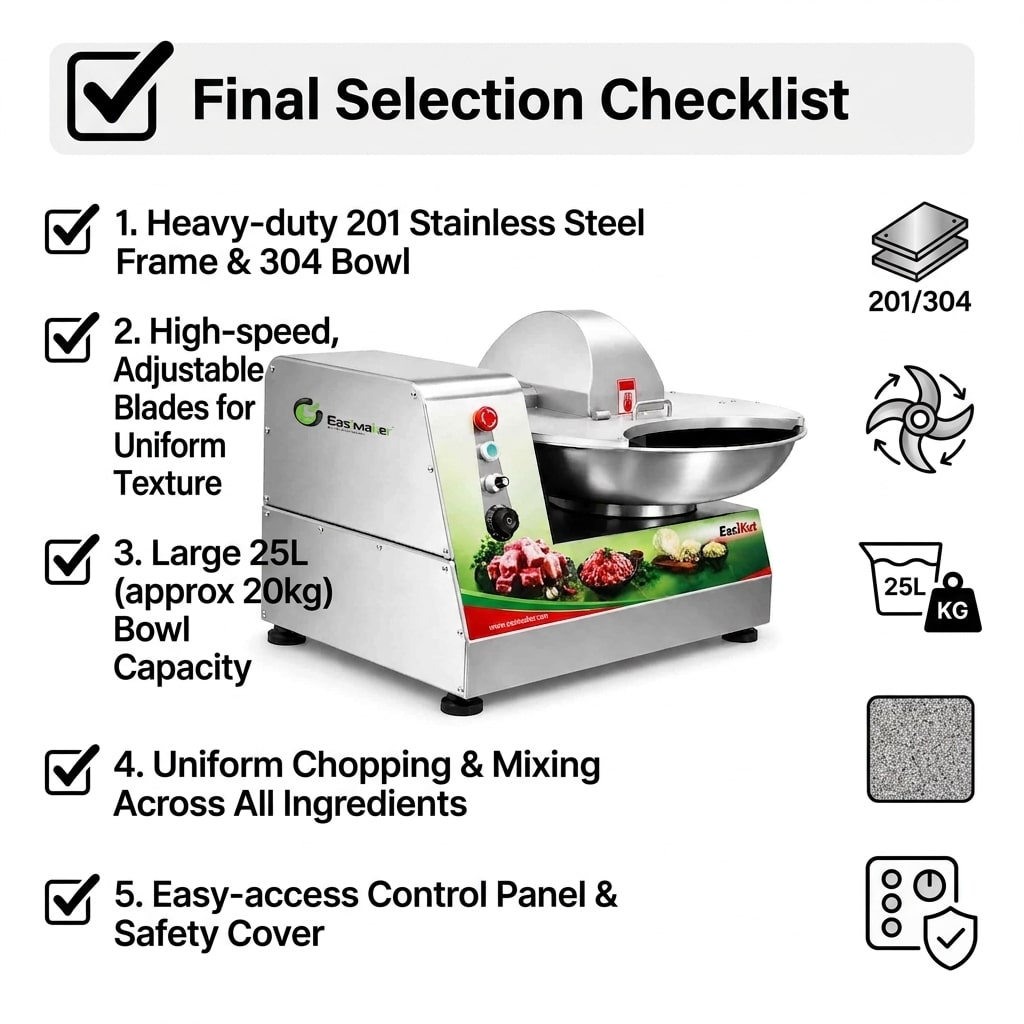
Before approving a commercial bowl cutter, confirm that the machine meets these practical requirements:
- Application: The machine is suitable for the ingredients, recipes, and textures you produce.
- Working capacity: The recommended batch weight matches your production plan.
- Construction: The frame, bowl, guards, and food-contact components suit daily commercial use.
- Controls: Operators can manage cutting and mixing stages consistently.
- Installation: The footprint, clearance, floor, ventilation, and electrical supply are suitable.
- Hygiene: Product-contact areas are accessible for cleaning, inspection, and sanitation.
- Safety: Guards, interlocks, stopping systems, and training materials are clearly documented.
- Service: Spare parts, manuals, warranty terms, and technical support are available for your market.
- Validation: The supplier can explain the machine’s fit without relying on unverified capacity or performance claims.
The right bowl cutter is the one that fits your complete production system. Compare the working batch, recipe requirements, cleaning routine, operator skills, installation conditions, and long-term support together. A technically suitable machine should improve process consistency without adding unnecessary complexity to the production floor.