
The Challenge of Sugarcane Inventory in Commercial Juice Operations
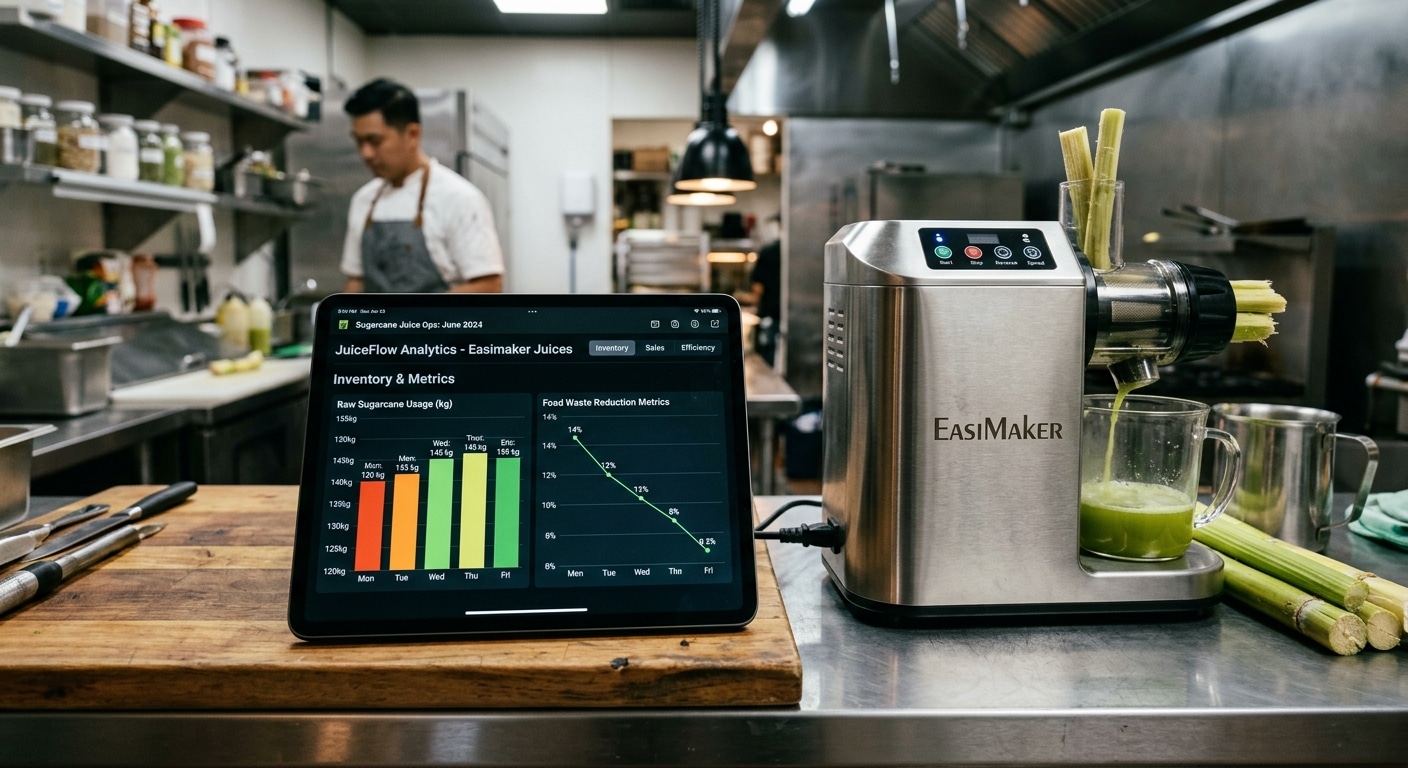
For multi-location juice bar operators, managing raw material inventory is a complex logistical challenge. Unlike pre-packaged syrups or standardized purees, raw sugarcane is a bulk agricultural product. It is purchased by weight or bundle, degrades over time, and yields variable amounts of juice depending on the extraction equipment used.
Without precise sugarcane inventory tracking, high-volume juice businesses face significant revenue leakage through food waste, stockouts, and inconsistent product quality. Modern Point of Sale (POS) systems and dedicated juice business software bridge the gap between front-of-house sales and back-of-house raw material depletion, allowing operators to predict reorder dates and maximize profit margins.
Key Metrics for Sugarcane Inventory Tracking
To effectively configure a juice bar POS system, operators must first establish baseline metrics. Tracking software relies on accurate data inputs to generate reliable reorder alerts and spoilage reports.
- Extraction Yield Percentage: The ratio of extracted juice volume to the weight of raw sugarcane. Consistent yield requires reliable electric extractors. For example, a high-efficiency commercial electric juicer typically yields 60% to 75% juice by weight.
- Stock Turnover Ratio: Measures how often raw cane inventory is sold and replaced over a given period. High turnover minimizes the risk of the cane drying out or fermenting.
- Spoilage Rate: The percentage of raw material discarded due to degradation before it can be processed. Advanced POS systems track delivery dates to enforce First-In, First-Out (FIFO) protocols.
- Par Levels: The minimum amount of raw cane that must be on hand at each location to meet daily demand without risking stockouts or excess spoilage.
Integrating Juice Bar POS Systems with Inventory Software
Effective commercial juice operations rely on seamless integration between sales data and inventory management. When a customer purchases a 16 oz sugarcane juice, the POS system should automatically deduct the corresponding weight of raw cane from the virtual inventory.
Recipe Management and Conversion Factors
Because raw cane is purchased by weight (e.g., kilograms or tons) and sold by volume (e.g., milliliters or ounces), the software requires a precise conversion factor. If your standard electric extractor yields 650ml of juice per kilogram of cane, the POS recipe for a 500ml beverage must be programmed to deduct approximately 0.77 kg of raw cane from the inventory ledger.
Automated Reordering and Predictive Analytics
Modern juice business software utilizes historical sales data, seasonal trends, and current inventory levels to forecast future demand. When stock drops below the established par level, the system can automatically generate purchase orders for regional distributors. This ensures multi-location operators maintain consistent stock across all branches without relying on manual daily counts.
Software Integration Tips for Multi-Location Operators
Scaling a juice business requires centralized oversight. Here are practical steps for implementing inventory software across multiple locations:
- Centralized Cloud Dashboards: Utilize cloud-based POS systems that allow regional managers to view real-time inventory levels, sales velocity, and spoilage rates across all stores from a single interface.
- Standardized Equipment: Software tracking is only as accurate as the extraction process. Deploying identical commercial electric sugarcane juicers at all locations ensures the yield conversion factor remains consistent network-wide.
- API Integrations with Suppliers: Connect your inventory management software directly to your raw material suppliers’ ordering systems via API. This reduces administrative overhead and accelerates the procurement cycle.
- Staff Training on Waste Logging: Train front-line staff to accurately log any discarded or spoiled cane in the POS system. Unrecorded waste skews inventory data and leads to premature stockouts.
Strategies for Food Waste Reduction in Juice Businesses
Food waste reduction directly impacts the bottom line. Beyond software tracking, operational protocols must be optimized to preserve raw cane quality.
| Waste Reduction Strategy | Operational Implementation | Software/POS Role |
|---|---|---|
| FIFO Methodology | Store newer cane deliveries behind older stock. Process older stalks first. | Track batch delivery dates and flag aging inventory approaching its shelf life. |
| Optimal Storage | Maintain cane in cool, shaded environments to prevent moisture loss and bacterial growth. | Log spoilage reasons to identify locations with poor storage compliance. |
| Consistent Extraction | Use high-torque commercial electric juicers to extract maximum liquid per stalk. | Monitor yield variances; sudden drops may indicate equipment maintenance is required. |
Equipment Synergy: Why Reliable Extractors Matter
The most sophisticated sugarcane inventory tracking software is useless if the physical extraction process is unpredictable. Manual juicers or low-quality machines produce highly variable yields depending on the operator’s strength and the machine’s roller calibration. This variance destroys the accuracy of POS recipe deductions.
For multi-location commercial juice operations, investing in heavy-duty, electric sugarcane juicers—such as those manufactured by Easimaker—is critical. These machines provide a standardized, high-efficiency crush rate. When the hardware delivers a consistent 70% yield, the software can accurately predict raw material depletion, allowing procurement teams to optimize their supply chains with confidence.
FAQs on Juice Business Software and Inventory Management
How often should physical inventory be counted if we use a POS tracker?
Even with advanced juice bar POS systems, multi-location operators should conduct physical inventory counts weekly. This reconciles the software’s virtual data with actual stock, accounting for unlogged waste, staff errors, or variations in cane moisture content.
Can inventory software account for different varieties of sugarcane?
Yes. Advanced systems allow operators to input different raw material SKUs. Since different cane varieties (e.g., black cane vs. green cane) have distinct moisture contents and yield percentages, creating separate conversion recipes ensures accurate tracking.
What is the ideal shelf life for raw sugarcane in a commercial setting?
Unpeeled raw sugarcane can typically be stored for 1 to 2 weeks in a cool, dry, and well-ventilated area. Once peeled or cut, it must be refrigerated and processed within 24 to 48 hours to prevent fermentation.
How does tracking software help with franchise quality control?
By monitoring the ratio of raw cane depleted to juice sold, franchisors can identify locations that may be deviating from standard operating procedures. A significant variance might indicate improper machine calibration, unauthorized recipe changes, or excessive unrecorded waste.
Does POS software integrate with accounting platforms?
Most enterprise-grade B2B POS and inventory systems offer native integrations with major accounting software (like QuickBooks or Xero). This automatically synchronizes Cost of Goods Sold (COGS) and procurement expenses, streamlining financial reporting.
Streamline Your Commercial Juice Operations Today
Optimizing your sugarcane inventory tracking requires a combination of intelligent software and reliable, high-yield extraction hardware. By implementing robust POS systems and outfitting your locations with standardized commercial electric juicers, you can drastically reduce food waste and improve your operational efficiency.
Ready to upgrade your extraction equipment to match your advanced software? Request a quote / Get a sample today to learn how our commercial electric sugarcane juicers can stabilize your yields and boost your bottom line.