Sugarcane Juice Bar Equipment Checklist for New Operators

Table of Contents

A new sugarcane juice bar needs more than a commercial juicer. Operators should plan the full workflow, including cane preparation, extraction, collection, refrigeration, sanitation, waste handling, utilities, customer service, and maintenance. This sugarcane juice bar equipment checklist covers the essential equipment categories and the practical questions to answer before opening.

Define the Bar Workflow Before Buying Equipment
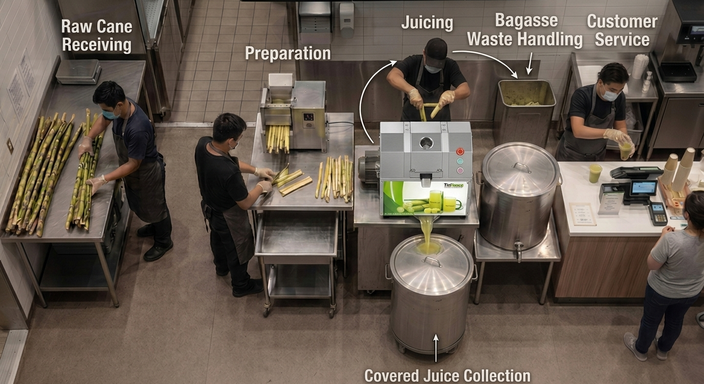
Sugarcane juice bar workflow from cane preparation to customer service

The right sugarcane juice bar equipment checklist starts with the operating workflow. Map the movement of cane from delivery and storage through washing, trimming, crushing, juice collection, serving, cleaning, and waste removal. Equipment should support this sequence without creating cross-contamination risks, unnecessary lifting, or congestion behind the counter.

Before requesting quotations, record the expected service pattern. Consider the number of drinks served during busy periods, the number of operators working at the same time, whether juice is made to order or prepared in batches, and how much space is available. These details affect the required juicer format, preparation area, refrigeration, storage, and cleaning setup.

Also check local requirements for food premises, electrical installation, drainage, water supply, staff hygiene, and waste disposal. Requirements differ by market, so confirm them with the relevant local authority or facility manager rather than relying on a general equipment list.

  • Define the service volume and peak operating period.
  • Measure the available counter, under-counter, and storage space.
  • Confirm the local power supply and plug configuration.
  • Plan separate areas for raw cane, finished juice, cleaning supplies, and waste.
  • Assign responsibility for opening checks, cleaning, and routine maintenance.

Core Sugarcane Juicing Equipment
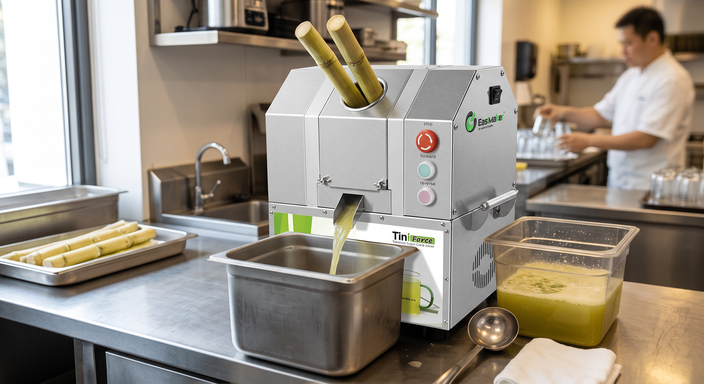
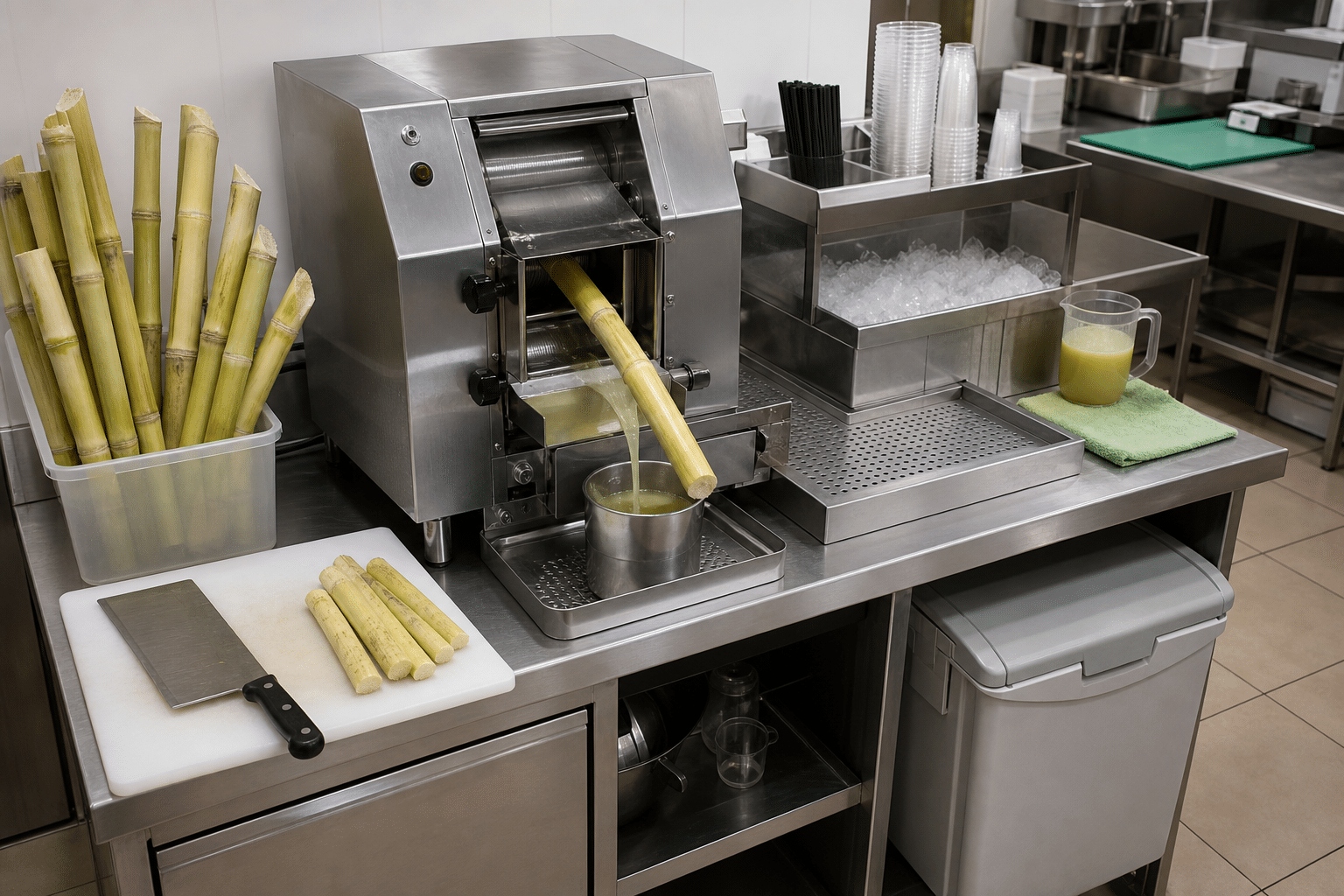
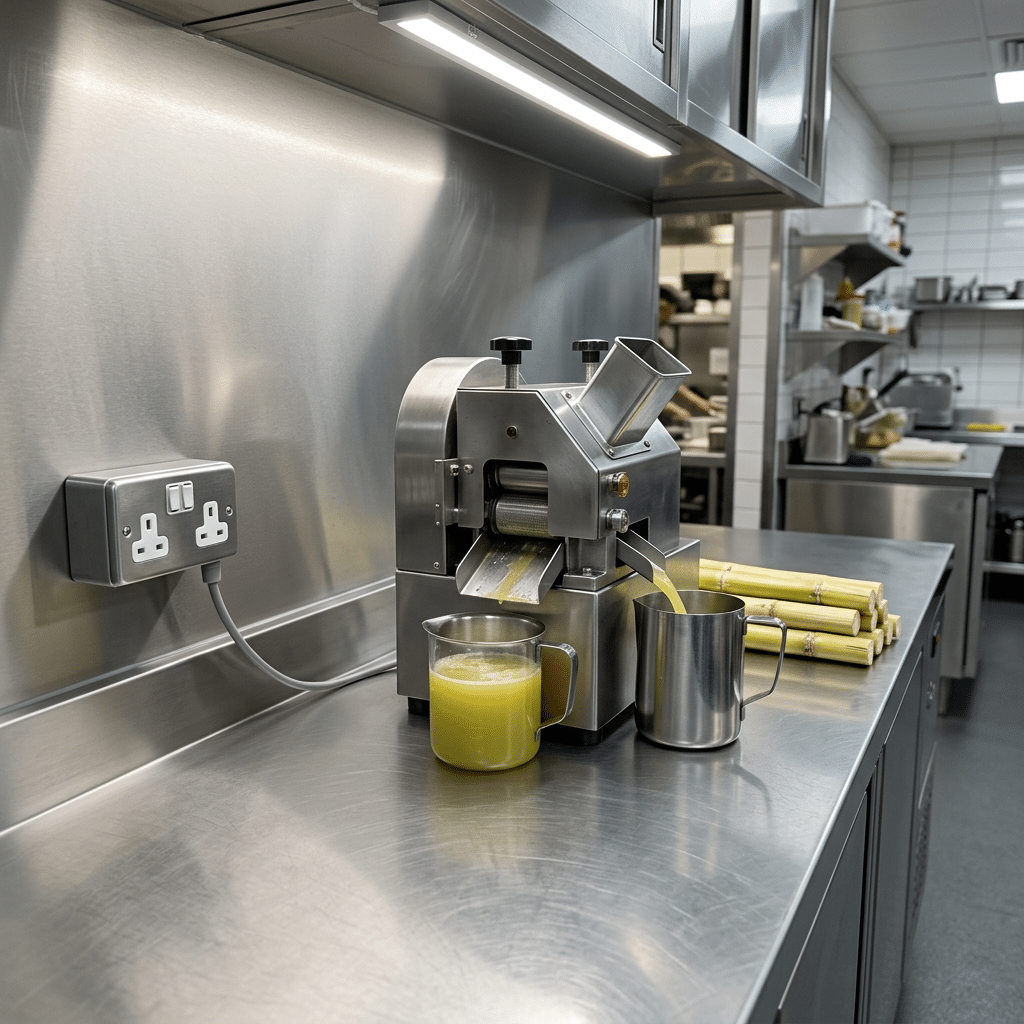
Commercial sugarcane juice machine on a food-service counter

The central item is a commercial sugarcane juice machine designed for repeated operation. It should be selected for the cane format, service pattern, workspace, power supply, cleaning process, and available technical support. A machine that is suitable for a small counter may not be appropriate for a higher-volume location, while an unnecessarily large machine can consume valuable space and complicate installation.

When evaluating a juicer, ask the supplier for the information needed to compare models accurately:

  • Machine dimensions, weight, and required clearance for operation and cleaning.
  • Electrical input, frequency, plug requirements, and any installation conditions.
  • Recommended cane size and preparation requirements.
  • How the extraction components are removed, washed, and reinstalled.
  • Materials used in product-contact areas and the method for inspecting them.
  • Availability of spare parts, operating instructions, troubleshooting support, and service assistance.
  • Noise, vibration, drainage, and splash-control considerations for the proposed location.

Do not compare machines only by a headline capacity figure. Actual service performance depends on cane preparation, operator speed, feeding method, interruptions for cleaning, and the volume of juice required at different times of day. Ask for operating guidance that matches your intended market and product format.

Cane Preparation and Handling Tools
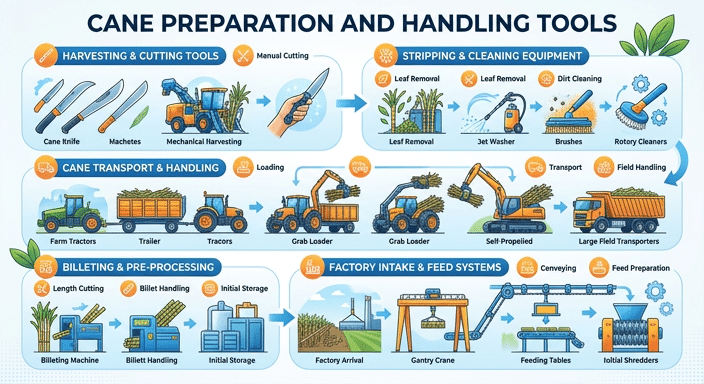
Cane Preparation and Handling Tools

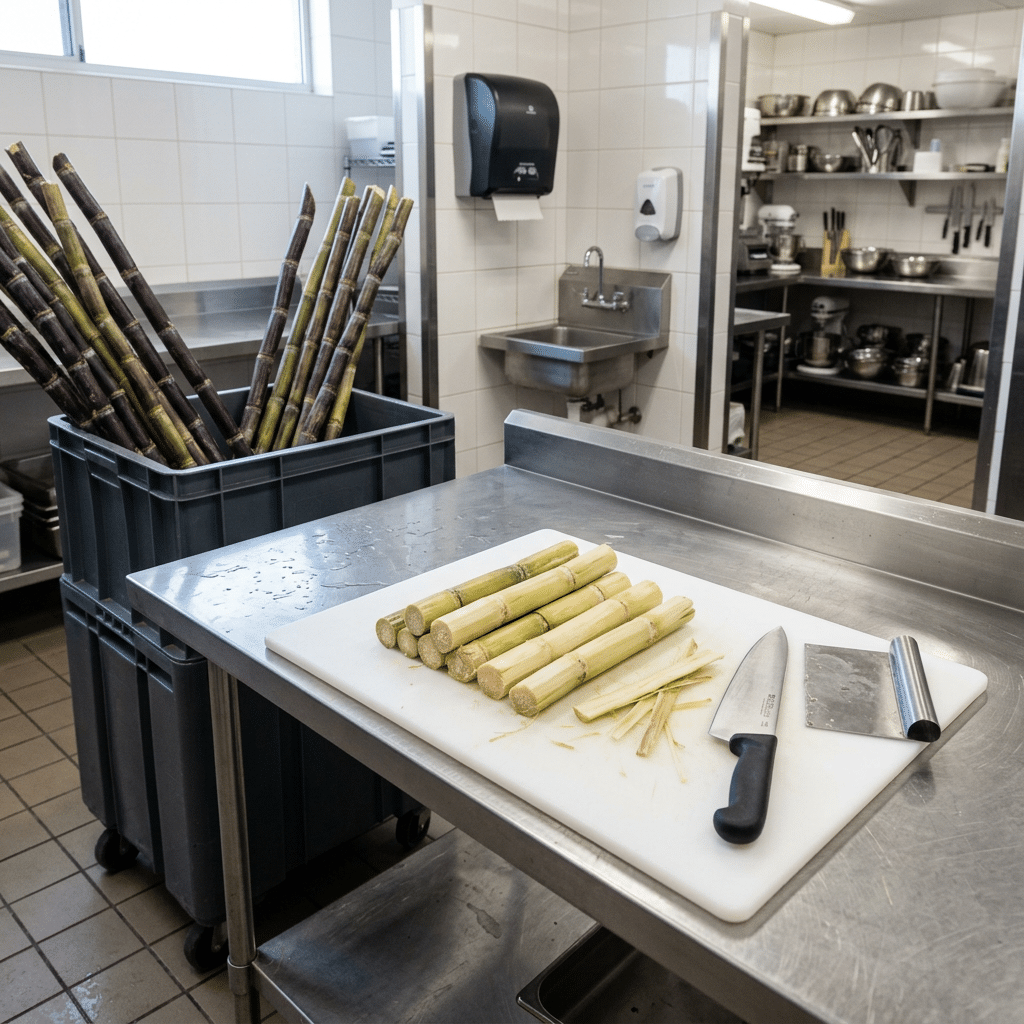
Sugarcane arrives as a raw agricultural product, so the preparation area is an important part of the equipment plan. The exact tools depend on how the cane is supplied and what the selected juicer requires. The goal is to create a controlled process for receiving, inspecting, washing, trimming, and transferring cane to the machine.

Recommended preparation items

  • A food-safe receiving rack, bin, or trolley that keeps cane off the floor.
  • Washable crates or containers for moving prepared cane to the juicing station.
  • A sturdy, cleanable preparation table with enough room for safe handling.
  • Suitable knives, peelers, or cutting tools where trimming is required.
  • A food-safe cutting board or preparation surface that can be cleaned and replaced when worn.
  • A sink or washing station suitable for the site’s approved cleaning process.
  • Labels or containers that distinguish unwashed cane from prepared cane.
  • Protective equipment required by the local risk assessment, such as cut-resistant gloves for suitable preparation tasks.

Keep raw cane storage away from finished cups, lids, straws, and other ready-to-serve items. Avoid storing cane directly on the floor or in a way that blocks access to drains, electrical controls, or emergency routes. Where knives or powered cutters are used, document the handling procedure and train staff before opening.

Juice Collection, Storage, and Service Equipment
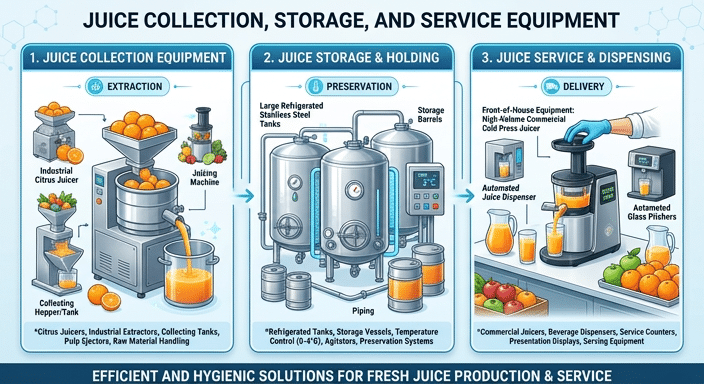
Juice Collection, Storage, and Service Equipment

Juice collection and service equipment should make the handoff from machine to customer clean, consistent, and easy to monitor. The collection container must be compatible with the machine outlet and large enough for the planned serving process without encouraging unnecessary holding time.

  • Food-safe collection containers with smooth, cleanable surfaces.
  • A strainer or filtration component only where it is part of the recipe and approved operating method.
  • Commercial refrigeration or an appropriately sized chilled holding unit when the business requires temporary cold storage.
  • Food-safe cups, lids, straws, stirrers, and serving trays in the required sizes.
  • A dedicated counter area for finished drinks that is separate from raw cane handling.
  • Labels or order controls for drinks with different recipes or service instructions.
  • A thermometer and temperature-recording process where chilled storage or local food rules require them.

Decide whether the bar will serve juice immediately, hold it for a short period, or prepare packaged drinks. Each model affects the required refrigeration, containers, labelling, cleaning frequency, and stock rotation. Follow applicable local food-handling requirements for time and temperature control, and verify the equipment’s operating instructions before placing it into service.

Hygiene and Sanitation Equipment
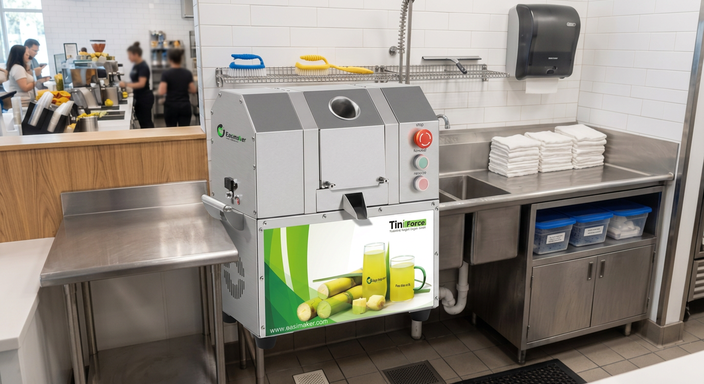
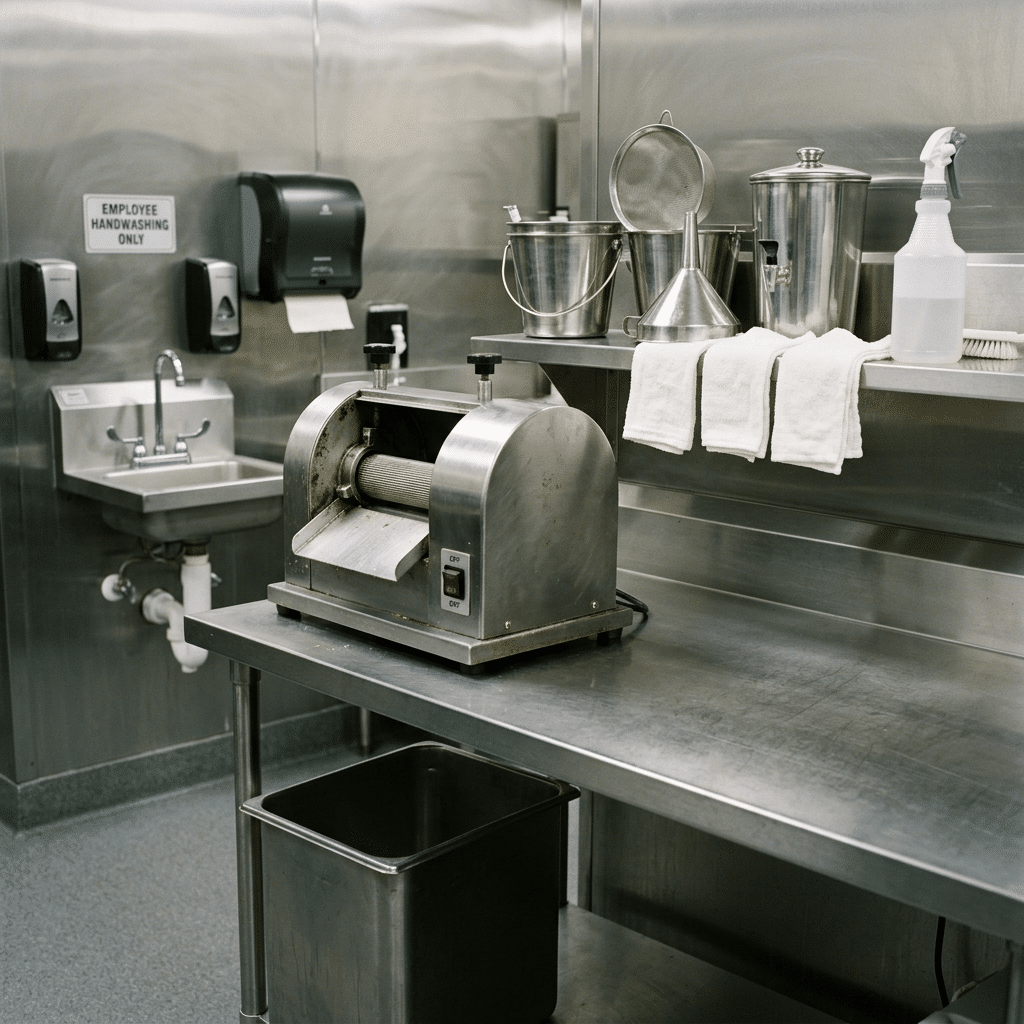
Cleaning and sanitation station beside a commercial sugarcane juicer

A commercial juice bar needs a sanitation setup that is practical during service and thorough after closing. The machine area should be designed so operators can remove product residues, wash accessible parts, sanitise approved food-contact surfaces, and allow components to dry before reassembly or storage.

  • Handwashing facilities with soap, a suitable drying method, and clear access for staff.
  • Separate cleaning containers or sinks for equipment and general premises cleaning where required.
  • Food-safe detergents and approved sanitising products used according to their labels and local rules.
  • Colour-coded or otherwise controlled brushes, cloths, and cleaning tools.
  • Drain-safe waste containers and a method for removing pulp and cane fibre from the work area.
  • Disposable gloves or other protective items when required by the site’s hygiene procedure.
  • Covered storage for clean, dry machine components and service utensils.
  • A written cleaning checklist showing what is cleaned after each service period and at closing.

Cleaning tools are part of the operating equipment, not an afterthought. Staff should know which components may be removed, which areas must remain dry, which chemicals are suitable, and how to check that the machine is fully reassembled before use. Do not use a cleaning method that conflicts with the machine manual or local food-safety requirements.

Utilities, Countertop Space, and Layout
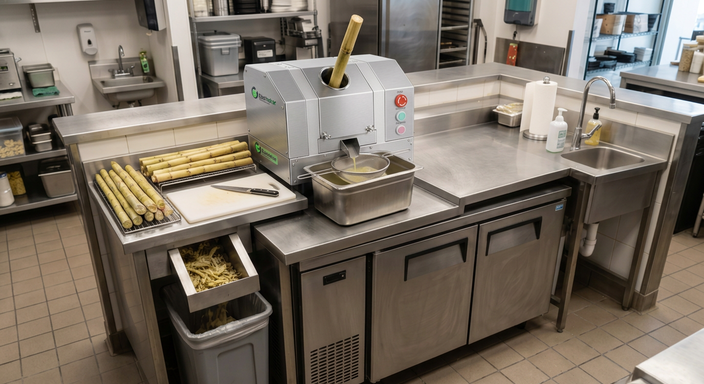
Compact sugarcane juice bar layout with juicer and preparation areas

Many equipment problems begin with an unsuitable installation area. Measure the complete footprint of the machine, including space for feeding cane, collecting juice, opening access panels, removing washable components, and standing safely during operation. The measured footprint should include practical working clearance, not only the dimensions printed on a quotation.

Confirm the following before delivery:

  • Electrical voltage, frequency, socket type, circuit capacity, and grounding requirements.
  • Water access, drainage, and splash control for the proposed cleaning process.
  • Counter strength and stability for the machine’s operating weight.
  • Ventilation and ambient conditions required by the equipment supplier.
  • Clear access for delivery, installation, maintenance, and eventual replacement.
  • Protection from direct exposure to rain, excessive moisture, dust, and nearby heat sources where relevant.

Keep the workflow linear where possible: raw cane receiving, preparation, juicing, finished drink service, and waste removal. A compact bar can still be efficient if tools have assigned locations and operators do not need to cross the clean service area while carrying raw materials or waste.

Waste Handling and Maintenance Planning
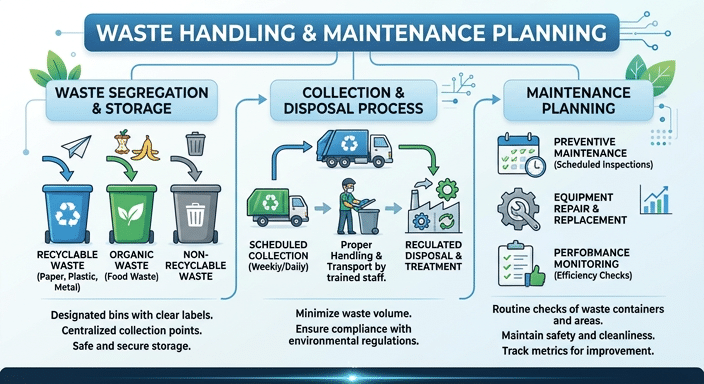
Waste Handling and Maintenance Planning

Cane fibre and other organic waste can accumulate quickly around a juicing station. Provide a covered, washable waste bin with a capacity that matches the collection schedule. The bin should be easy to move, easy to clean, and positioned so staff can remove waste without carrying it through the finished-drink service area.

Maintenance planning should begin before the machine arrives. Keep the operating manual, parts list, supplier contact details, installation record, and warranty information in one accessible location. Identify wear parts and routine inspection points, but replace components according to the supplier’s instructions and observed condition rather than an invented schedule.

Useful maintenance records include:

  • Daily cleaning and end-of-shift checks.
  • Inspection of guards, fasteners, outlets, seals, cables, and accessible product-contact parts.
  • Notes about unusual noise, vibration, leakage, jamming, or changes in operation.
  • Replacement dates for approved wear parts and cleaning tools.
  • Service visits, troubleshooting steps, and parts ordered.
  • Staff training records for operation, cleaning, and basic fault reporting.

Stop using equipment when a fault creates a safety, hygiene, or product-quality concern. Isolate the machine according to the manual and contact qualified service support when the issue cannot be resolved through the approved operating procedure.

Final Pre-Opening Checklist
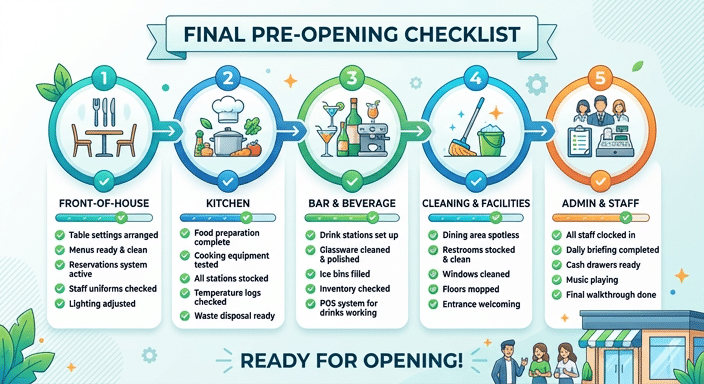
Final Pre-Opening Checklist

Use the following checklist during installation, staff training, and the first test service. Tick each item only after it has been verified at the actual site.

  • The juicer matches the planned service volume, cane preparation method, and workspace.
  • Electrical and installation requirements have been checked by the appropriate person.
  • The machine is stable, accessible for cleaning, and protected from unsuitable environmental conditions.
  • Raw cane receiving and prepared-cane storage areas are ready.
  • Preparation tools are clean, safe, and stored correctly.
  • Juice collection containers and service packaging are available.
  • Refrigeration and temperature controls are ready where required.
  • Handwashing and equipment-cleaning facilities are operational.
  • Cleaning chemicals, brushes, cloths, and drying storage are available.
  • Waste bins and the waste removal process are ready.
  • Staff have practised feeding, stopping, cleaning, and reporting faults.
  • Manuals, spare-parts information, supplier contacts, and warranty documents are accessible.
  • A test run has confirmed the workflow from cane delivery to customer service and end-of-day cleaning.

The checklist should be reviewed after the first week of operation. New operators often discover that the most important adjustments are practical ones, such as relocating a bin, adding a second collection container, changing the position of cleaning tools, or increasing storage for prepared cane and service packaging.
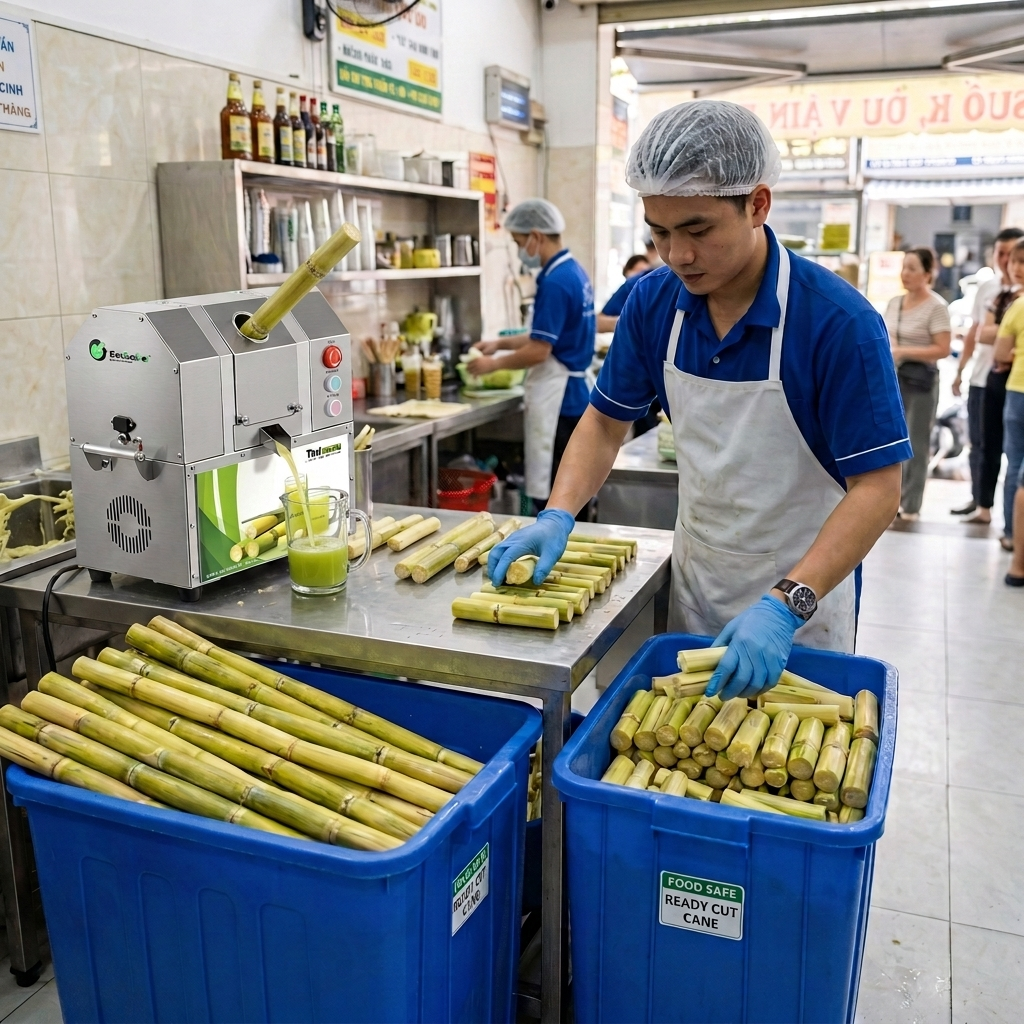
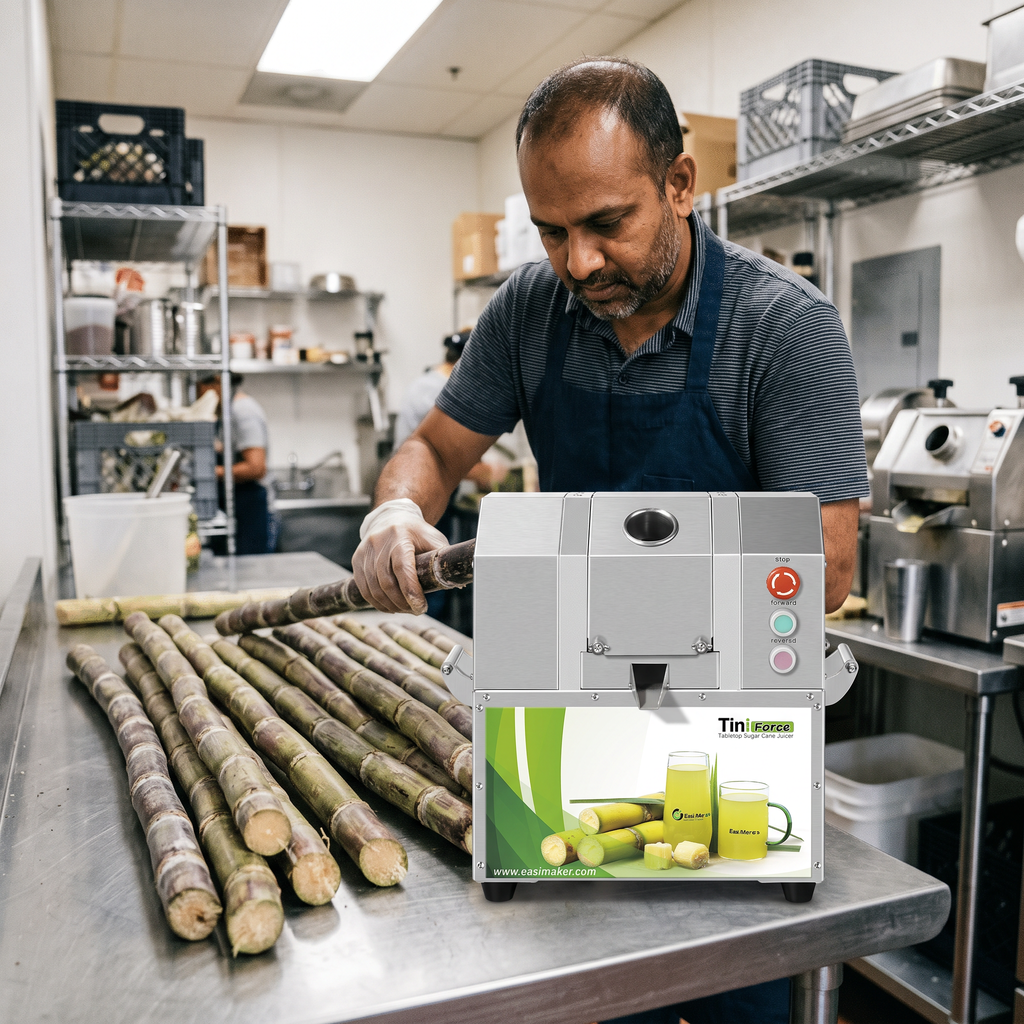
How to Prepare Sugarcane Before Juicing in a Shop

Table of Contents

Proper sugarcane preparation helps a juice shop maintain cleaner handling, smoother service, and more consistent machine operation. Follow a practical process for receiving, washing, trimming, cutting, staging, and cleaning the preparation area.

Quick answer: prepare sugarcane in a controlled sequence

Washed and cut sugarcane separated for commercial juicing

To prepare sugarcane for juicing in a shop, inspect each delivery, reject cane that is visibly spoiled or heavily contaminated, wash the remaining stalks with potable water, trim damaged ends and unwanted material, cut stalks to the feed length required by the juicer, and hold the prepared cane in clean covered containers or a protected food-preparation area. Keep washed cane separate from unwashed stock, and clean the knives, boards, bins, and juicer food-contact surfaces according to the shop’s hygiene procedure.

The aim is not simply to make cane fit into a machine. Good preparation reduces the chance of dirt entering the juice area, prevents avoidable feed interruptions, supports safer handling, and gives operators a more predictable workflow during busy periods. The exact cutting length, whether the rind is left on, and the preferred crushing sequence depend on the juicer model, its feed opening, the supplier’s cane, and local food-handling requirements.

Use the machine manual as the final instruction for feed size and operating limits. A commercial machine should be selected for its expected duty cycle and service workflow, not only for its appearance or initial purchase price. See the practical differences between commercial and home sugarcane juicers when setting up a shop process.

What sugarcane preparation means in a commercial shop

Commercial sugarcane preparation is the controlled work completed before a stalk enters the crushing rollers. It normally includes receiving, visual inspection, dry removal of loose debris, washing, draining, trimming, cutting, temporary storage, and cleaning of the preparation station. In some operations, it may also include separating cane by diameter or cutting longer stalks into feed-ready lengths.

It is important to separate preparation from extraction. Preparation makes the raw material suitable for the machine and the shop’s hygiene workflow; extraction is the crushing process that expresses the juice. When these tasks are mixed together without defined areas or tools, operators can bring outer-surface dirt close to clean cups, ice, fruit garnishes, and finished juice.

A practical layout uses a one-way flow: unwashed receiving area, wash and trim area, clean staging area, then juicer. The flow should not require an operator to carry washed cane back through dirty stock. If space is limited, use clearly labelled containers and clean the work surface between tasks. This simple separation is often more useful than adding unnecessary steps that staff cannot maintain during service.

Before changing the routine, confirm what your local food-safety authority requires for produce washing, chemical use, storage time, and cleaning records. The process should also reflect the instructions supplied with your equipment.

1. Receive, inspect, and sort the sugarcane

Inspecting sugarcane stalks before washing and juicing

Preparation starts when cane arrives, not when a customer orders a drink. Put new deliveries on a receiving surface or in a designated bin rather than directly on the juice counter or floor. Check several stalks from each batch, especially if the supplier, delivery condition, or cane variety has changed.

Look for practical issues that can affect hygiene or feeding:

  • heavy soil, mud, insects, plant matter, twine, labels, or other foreign material;
  • soft, leaking, mouldy, unusually dry, or badly split sections;
  • damaged ends that may need trimming;
  • stalks that are too wide, bent, or long for the planned feed method; and
  • signs that the shipment has been stored or transported poorly.

Do not try to solve every defect by cutting around it. If a stalk has widespread spoilage, unusual odour, or contamination that cannot be removed through normal handling, set it aside and follow the shop’s rejection procedure. Record supplier or batch concerns where your purchasing process requires it. Early inspection prevents staff from discovering unsuitable cane at the juicer during a rush.

Sort acceptable cane into workable groups. For example, keep washed, feed-ready pieces separate from whole, unwashed stalks. Where stalk diameter varies significantly, grouping similar pieces can help staff choose an appropriate feed sequence without forcing large or awkward pieces into the machine. Avoid guessing that all cane should be processed the same way; machine geometry and local service habits matter.

Your output plan also affects receiving volume. The article on budgeting a sugarcane juice business explains why cane handling, cleaning supplies, storage, and workflow should be considered alongside the machine itself.

2. Wash sugarcane and control hygiene risks

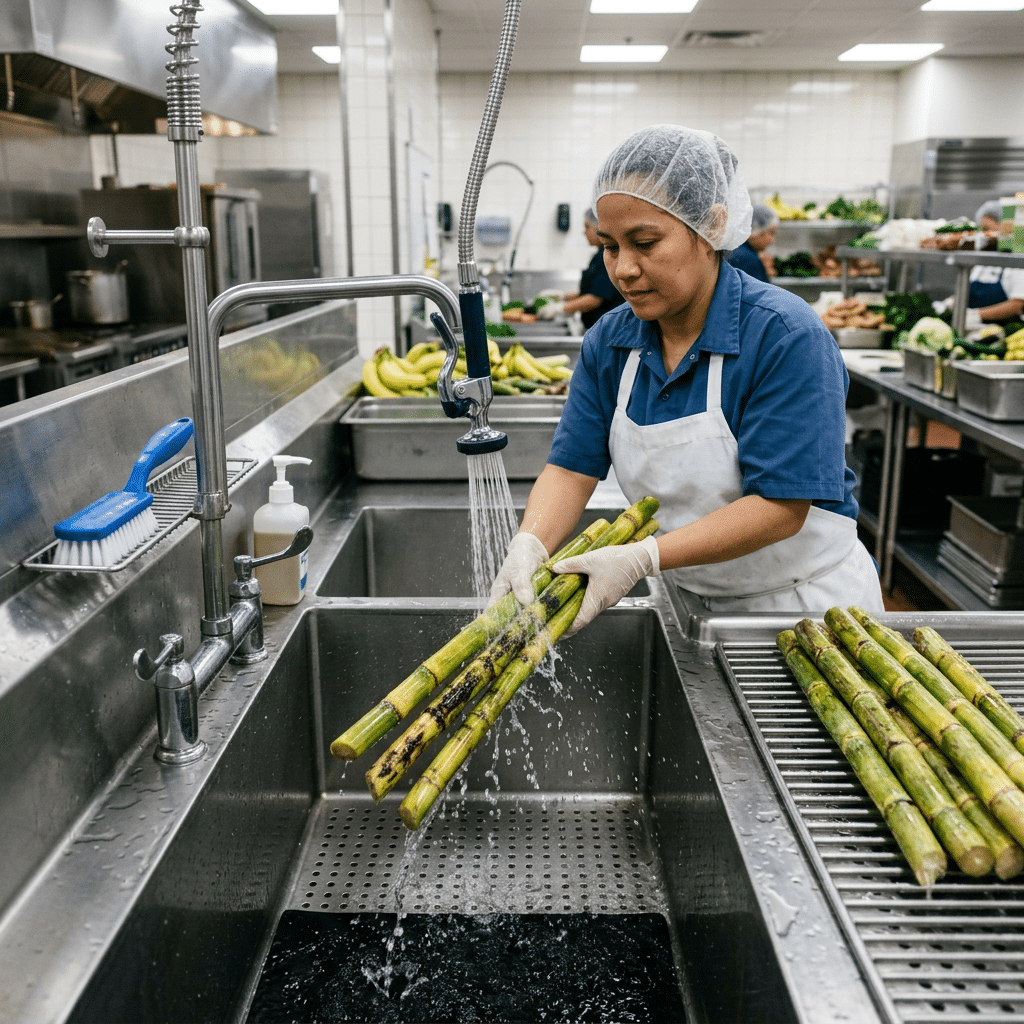
Washing sugarcane at a commercial shop preparation station

Wash suitable sugarcane before it reaches the clean staging area. Use potable water and a clean sink, wash station, or other arrangement appropriate to the shop. Rinse the outside of each stalk thoroughly and remove visible soil from crevices, nodes, and damaged outer areas with a dedicated food-safe brush where needed. The brush, sink, and surrounding work surface must be cleaned and maintained so they do not become a source of contamination.

Do not wash cane in the same container used for waste, floor tools, or dirty equipment parts. Change wash water whenever it becomes visibly dirty if using a basin-based process. Draining is also important: let excess water run off before cutting or staging so work surfaces do not become unnecessarily wet and slippery.

Produce washing and surface sanitising are not interchangeable tasks. Cleaning removes soil and residues. Sanitising is normally applied to cleaned food-contact tools and surfaces at the concentration, contact time, and rinsing condition specified by the product label and local rules. Do not apply a chemical treatment to cane unless it is permitted for that purpose and your procedure clearly controls its use.

Use separate, clearly identified tools for raw-cane receiving and clean preparation where possible. Wash hands when moving from delivery handling to trimming or serving. Keep chemicals, lubricant, cleaning cloths, and non-food tools away from cane and juice-contact items.

A complete commercial sugarcane juicer hygiene guide can help align cane preparation with cleaning of the feed area, rollers, guards, juice collection parts, and surrounding counter.

3. Trim and cut cane to suit the juicer

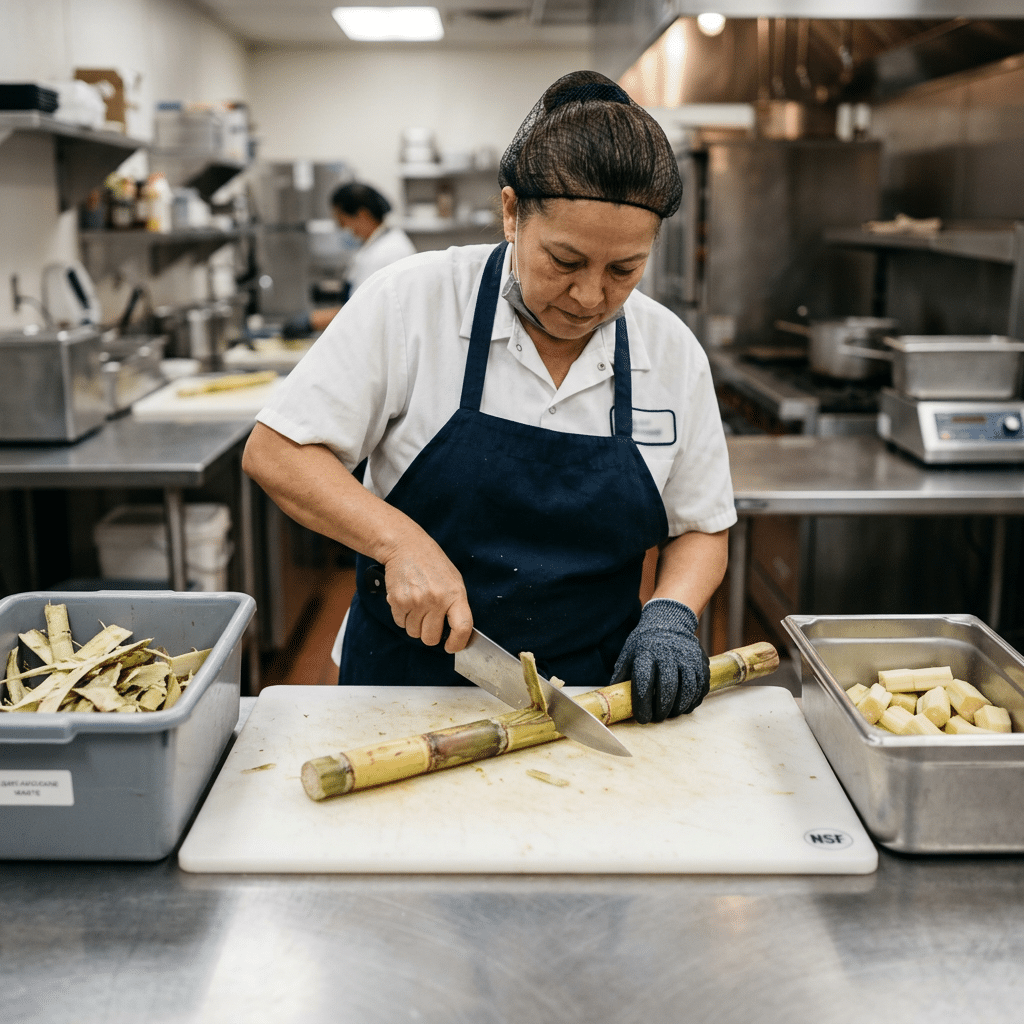
Trimming and cutting sugarcane to fit a commercial juicer

After washing and draining, trim only what needs to be removed for clean, safe, consistent feeding. Remove damaged or questionable ends, loose leaves, roots, ties, packaging remnants, and any material that is not intended to enter the machine. Use a stable cutting board or purpose-built preparation surface, a suitable sharp knife or cutter, and a collection bin for trimmings. Dull tools increase handling effort and can lead to poor control.

Cut stalks to a length that fits the specific juicer’s feed opening and operating instructions. There is no universal commercial cut length. A piece that is too long may be difficult to control in a compact work area; a piece that is too short can be awkward to guide through some feed arrangements. Measure the actual feed path, review the manual, and test the workflow with the machine switched off before setting a staff standard.

Whether to peel cane is also machine- and market-dependent. Some operators process properly washed cane with its outer rind intact, while others use a peeling step to suit their service method or customer preference. Do not assume peeling is mandatory or that it can replace washing. If peeling is used, maintain the same separation between unwashed stock, peel waste, and clean feed-ready cane.

Never use the juicer rollers as a cutting tool, and never use hands or improvised objects to push unsuitable pieces into a feed opening. Equipment guards, push tools, and feed methods must be used exactly as instructed by the manufacturer. The operational considerations in these sugarcane juice machine best practices are useful when defining a safe handoff from preparation to crushing.

4. Stage prepared cane for steady service

Prepared cane should be easy to identify, protected from re-contamination, and close enough to the juicer for efficient service without blocking the operator’s movement. Use clean food-safe containers, racks, or covered bins that are suitable for the site. Avoid placing feed-ready cane directly on counters that are also used for payment, packaging waste, dirty cups, or customer belongings.

Prepare a practical amount for the expected service period rather than cutting every stalk at the start of a long day. Smaller batches make it easier to protect product condition, rotate stock, and identify problems. The appropriate batch size depends on demand pattern, staff numbers, storage conditions, and local requirements. If demand is uncertain, retain more cane whole and wash or cut it in controlled batches.

Label or organise containers so staff can distinguish unwashed cane, washed whole stalks, cut feed-ready pieces, and trimming waste. A simple first-in, first-out approach helps prevent older prepared stock from being overlooked. If a prepared batch becomes contaminated, falls on an unclean surface, or cannot be confidently identified, remove it from the clean workflow and assess it under the shop’s food-safety procedure.

Plan staff roles during peak service. One person can wash and cut while another operates the juicer and handles finished drinks, provided the work areas and hand hygiene remain controlled. In a small kiosk, the same operator may need to pause, clean hands, and reset the surface before switching from raw handling to serving.

5. Protect the machine and operators during preparation

Good preparation protects more than the finished drink. It can reduce the likelihood of loose debris reaching the feed area, help the operator present cane at a workable size, and make cleaning between service periods more manageable. It does not remove the need for correct machine use or scheduled maintenance.

Before opening, check that the juicer is clean, assembled correctly, and ready for operation according to its manual. Confirm that guards and covers are correctly fitted, the collection area is clean, and the work area is dry enough for safe footing. Keep the preparation knife, cutter, brush, and waste bin positioned so the operator does not reach across moving equipment.

During service, stop the machine and isolate its power before clearing a blockage, removing wrapped fibres, inspecting rollers, or cleaning areas that are not intended to be accessed while running. Never bypass a guard or reach into an active feed area. If cane repeatedly fails to feed smoothly, review its cut size, straightness, cleaning condition, and the machine instructions rather than trying to force it through.

Crushing method may also affect how you stage and re-handle bagasse. For a process review, read single-pass versus multi-pass sugarcane crushing. Use only the approach that is appropriate for your machine, product workflow, and local hygiene controls.

Build a repeatable daily preparation routine

The most reliable preparation method is a simple one that every trained operator can follow. Document the sequence in short, observable steps and adapt it after reviewing real service conditions. A practical daily routine can include:

  1. Inspect the preparation area, tools, containers, and juicer before use.
  2. Receive and inspect cane, keeping unwashed stock in its designated area.
  3. Wash acceptable stalks with potable water and allow them to drain.
  4. Trim and cut to the approved feed size for the specific machine.
  5. Stage clean, identified batches near the juicer.
  6. Keep waste moving out of the clean workflow.
  7. Clean and reset the station at defined intervals and at closing.

Train staff on the reason behind each step: separate dirty and clean work, prevent foreign material from reaching the machine, avoid unsafe feeding, and maintain an orderly counter. Supervisors should periodically observe the routine rather than relying only on a written checklist. If staff regularly skip a step, the issue may be poor layout, unclear ownership, inadequate tools, or an unrealistic preparation volume.

Review the procedure whenever the cane supplier changes, a new juicer is installed, the menu changes, or seasonal demand increases. Track recurring problems such as difficult feeding, excess debris, wet floors, or slow cleaning, then adjust the receiving, cutting, staging, or staffing process. This approach keeps sugarcane preparation practical while supporting consistent daily operation.

How to Design a Hygienic Sugarcane Juice Workstation

Table of Contents

A hygienic sugarcane juice workstation separates raw cane handling from juice service, uses cleanable surfaces, provides safe machine clearances, and supports a repeatable cleaning routine. This guide helps foodservice operators design a practical daily-use layout.

What a Hygienic Sugarcane Juice Workstation Requires

Organized commercial sugarcane juice workstation with clean work zones

A hygienic sugarcane juice workstation setup is designed around one principle: raw sugarcane, finished juice, waste and cleaning activities should not cross paths unnecessarily. The workstation should give staff a logical route from cane receiving and washing to trimming, pressing, serving and cleaning.

For most commercial operations, this means using smooth cleanable work surfaces, placing the sugarcane juicer on a stable bench or floor position, keeping a dedicated container for bagasse, and providing convenient access to handwashing and cleaning supplies. The exact layout depends on local food regulations, your premises, service volume and the juicer model, so confirm site requirements with the relevant local authority before installation.

A well-planned station does more than look tidy. It makes daily cleaning easier, reduces avoidable product contact with waste or dirty tools, gives operators sufficient room to work safely, and helps service continue smoothly during busy periods.

Create Clear Workflow Zones

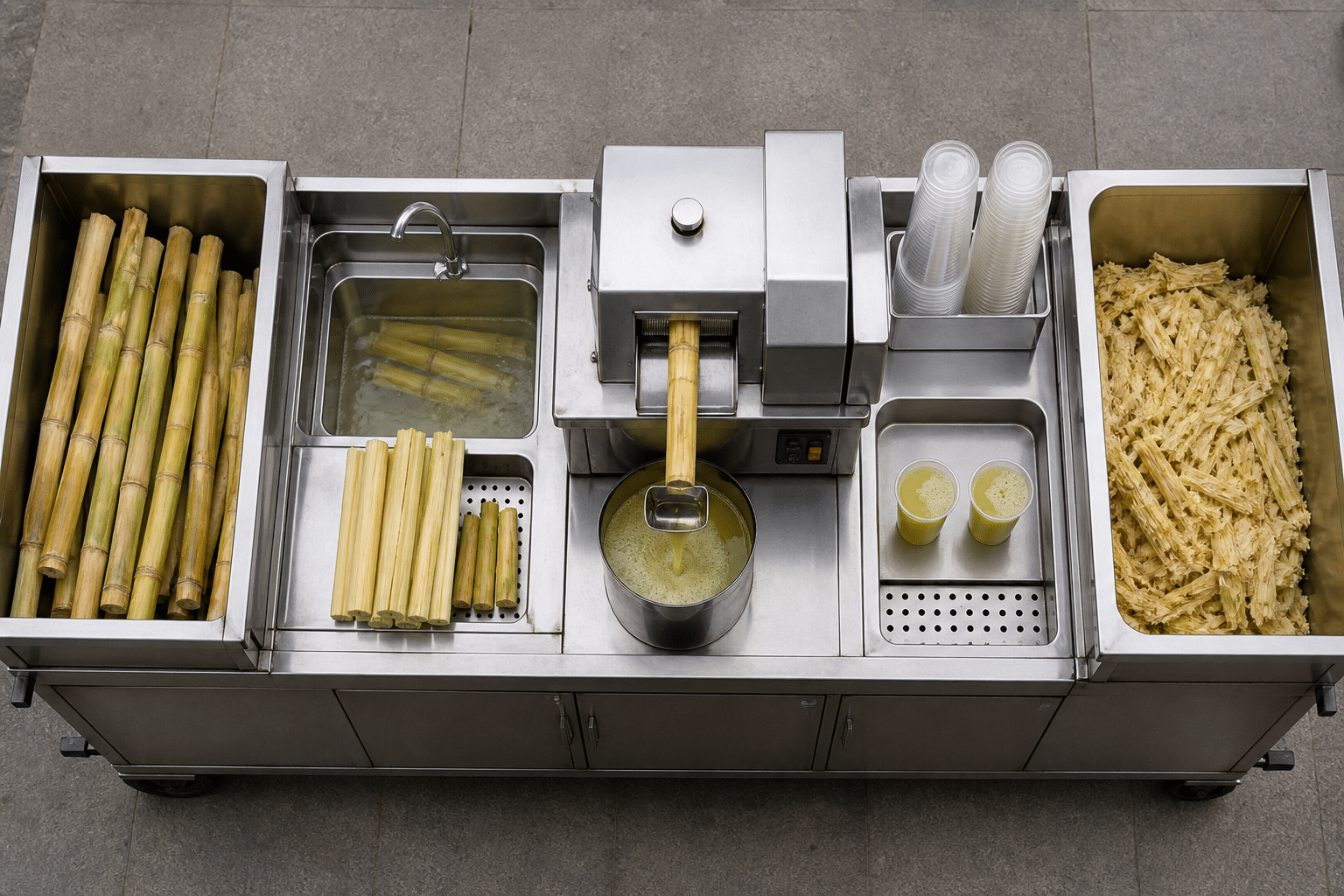
Sugarcane juice counter arranged from raw cane preparation to clean drink service

Divide the station into practical zones before choosing bench sizes or moving equipment into place. A small counter can still work well when each task has a defined location. The goal is a one-direction flow: cane enters at the raw end and prepared drinks leave at the service end.

Recommended workstation sequence

  1. Receiving and inspection: Set aside space to check cane condition and remove visibly damaged or unsuitable pieces.
  2. Raw cane storage: Keep unwashed cane away from cups, lids, ice, garnishes and ready-to-drink juice.
  3. Washing and preparation: Use a designated area for washing, trimming and, where needed, cutting cane to a suitable length for the machine.
  4. Juicing: Place the juicer between preparation and service, with enough operator clearance for safe feeding and collection.
  5. Finishing and serving: Keep clean cups, lids, straws and any permitted flavour ingredients on the finished-product side.
  6. Waste and cleaning: Position bagasse collection and cleaning tools so they are accessible without passing over finished drinks.

In a compact café, the machine may be near the front counter, but the raw-cane side should still be controlled. For additional planning ideas in restricted premises, see this guide to integrating compact sugarcane machines into limited spaces.

Choose a Cleanable Site and Materials

Commercial sugarcane juicer on a cleanable stainless steel preparation surface

Select a location that supports cleaning rather than one that simply fits the machine footprint. The juicer, preparation bench and service counter should be accessible on the sides that staff need to wipe, inspect and maintain. Avoid creating narrow gaps that trap cane fibres, splashes or dust and cannot be cleaned properly.

Use work surfaces that are smooth, durable, non-absorbent and suitable for food preparation. Stainless steel is commonly selected for commercial preparation areas because it is robust and straightforward to clean when maintained correctly. Counter edges, joins and wall junctions should be sealed or detailed to avoid difficult-to-clean crevices.

Provide adequate lighting over the preparation and juicing area. Staff need to see cane condition, surface residue and any damaged cups or utensils. Good ventilation also helps keep the workstation comfortable and can reduce lingering moisture, but it does not replace regular cleaning.

Plan utilities early. Confirm the machine’s electrical requirements from its documentation, use a suitable protected supply installed to local rules, and keep plugs, switches and cables away from wet cleaning areas. Do not use extension leads as a permanent substitute for proper site electrical planning. Where a sink is nearby, ensure the workstation design prevents splash from reaching electrical components.

Position the Sugarcane Juicer Correctly

The juicer should sit on a level, stable support that can safely carry the equipment in normal operation. Do not position it where an operator must twist, reach across a sink, or work around customer traffic to feed cane. The feeding side, juice outlet and bagasse discharge area should all remain clear.

Leave the clearance specified in the machine manual for operation, ventilation, cleaning and service. Clearance needs vary by model, so it is not reliable to use a single distance for every commercial juicer. Keep the operating area free of loose packaging, cleaning bottles, unused utensils and stacked raw cane.

Place a clean food-grade receptacle under or beside the juice collection point as appropriate for the machine and your serving process. Keep finished juice handling separate from the bagasse discharge side. If staff use a separate filter or jug, make it part of the clean service zone and include it in the cleaning schedule.

When planning a complete purchase and installation budget, include benching, electrical work, sinks, drainage, waste containers, cleaning supplies and replacement items—not only the machine cost. Our commercial sugarcane juicer budgeting guide explains these wider setup considerations.

Manage Cane Preparation and Storage

Dedicated sugarcane washing and preparation area separated from service items

Raw sugarcane can carry field debris, soil and surface contamination, so it should be treated as a raw agricultural ingredient until it has been washed and prepared. Keep receiving containers and raw-cane storage separate from clean utensils, packaging and finished beverages.

At the preparation station, inspect the cane and discard material that is visibly spoiled, heavily contaminated or otherwise unsuitable under your food safety procedure. Wash and prepare cane using a method appropriate to local food hygiene guidance and your operating process. Use dedicated knives, cutters and boards where these are needed, and clean them between service periods and whenever contamination is possible.

Avoid preparing more cane than the operation can manage hygienically. Pre-cut cane can improve service flow, but it also needs a covered, clean storage method and clear time-control rules that comply with your local requirements. Labeling prepared batches with the preparation time can help staff follow the correct rotation system.

If you use equipment to cut cane before juicing, position that activity upstream from the juicer and keep cutting debris out of the clean serving area. The same workstation discipline applies to other food-processing equipment: stable placement, clear task separation and a documented cleaning method are essential.

Build Cleaning and Sanitation Into the Layout

Organized cleaning supplies beside a commercial sugarcane juice workstation

A workstation is hygienic only when its cleaning routine is practical enough to complete every day. Designate storage for approved detergent, sanitizer, clean cloths or disposable wiping materials, brushes and personal protective equipment. These items should be close enough for staff to use, but stored so they cannot contaminate ingredients, cups or food-contact surfaces.

Provide a convenient handwashing facility in line with local requirements. A handwashing sink should not be treated as a place to wash cane, rinse tools or dispose of waste. Where the premises requires separate sinks for food preparation, utensil washing or handwashing, the layout should preserve those functions.

Write a cleaning schedule that identifies what is cleaned, when it is cleaned, who is responsible and how completion is checked. The schedule should cover the juicer’s food-contact areas according to the manufacturer instructions, preparation benches, utensils, collection containers, splash areas, handles, waste bins and floor zones around the equipment. Stop and isolate the machine before cleaning or removing parts, and never direct water into electrical areas.

Cleaning methods vary by juicer construction and by local sanitation procedures. Maintain the machine using its manual and keep staff familiar with the required disassembly, washing, rinsing, sanitizing, drying and reassembly sequence. For business continuity planning, use this sugarcane juicer spare parts and support checklist to identify useful documentation and service questions before they become urgent.

Plan for Bagasse, Waste and Drainage

Bagasse—the fibrous residue left after pressing cane—can accumulate quickly during service. Give it a dedicated, easy-to-clean container positioned near the machine’s discharge path without blocking the operator or the finished-juice area. The container should be emptied often enough to prevent overflow, pests, odours and unnecessary handling around customers.

Keep general waste, used cleaning materials and bagasse separate where your waste plan requires it. Use liners or containers suited to the waste stream and local disposal rules. Staff should be able to remove a full container without carrying it across the clean preparation or serving side of the workstation.

Floor drainage and floor finish matter in high-use sites. Juice drips and wash water can create slip risks and sticky residue. Use a floor that can be cleaned effectively, respond promptly to spills, and keep access to any drain clear. Do not assume a floor drain alone solves sanitation issues; regular removal of pulp and residue remains necessary.

Where drainage, plumbing or wastewater discharge requirements are uncertain, discuss them with the building manager, installer and relevant local authority before committing to a final layout. Solving these issues during planning is generally simpler than changing an active service counter later.

Use a Simple Daily Operating Routine

Even a well-designed commercial sugarcane juice station can become unhygienic when staff routines are unclear. Keep a short opening, service and closing checklist at the workstation. It should be easy to read, based on the machine documentation and adjusted to your local food safety plan.

Opening routine

  • Inspect the juicer, guards, feed area and collection point before use.
  • Confirm the workstation, utensils and service containers are clean and dry.
  • Check that cleaning materials, handwashing supplies, cups and waste containers are available.
  • Prepare only the amount of washed or cut cane that can be controlled safely during the service period.

During service

  • Keep raw cane, prepared cane, cups and cleaning items in their assigned zones.
  • Remove bagasse and spills promptly.
  • Replace contaminated utensils or containers rather than returning them to use.
  • Follow hand hygiene procedures after waste handling, cleaning, breaks or other contamination risks.

Closing routine

  • Stop and isolate the machine before cleaning.
  • Remove residue and clean the juicer according to its instructions.
  • Wash, rinse, sanitize and dry applicable food-contact items following your approved procedure.
  • Empty waste, clean the surrounding floor and record issues needing maintenance.

Training should include both normal operation and what to do when cane jams, a component needs attention, or a sanitation step cannot be completed. Staff should not improvise repairs or bypass guards to keep service moving.

Sugarcane Juice Workstation Setup Checklist

Before opening the station for regular service, check the following points:

  • Raw cane receiving, washing, preparation, juicing, serving and waste tasks have defined locations.
  • The process flows from raw cane to finished drink without unnecessary crossover.
  • Worktops, walls and floors around the station are cleanable and accessible.
  • The juicer is level, stable, connected to a suitable electrical supply and positioned with manual-specified clearances.
  • Clean cups, lids, straws and finished-product tools are protected from raw-cane and waste areas.
  • Bagasse has a dedicated collection method and a removal route.
  • Handwashing, cleaning materials and suitable waste containers are available.
  • Staff have a documented opening, service, cleaning and maintenance routine.
  • Machine instructions, service contacts and spare-parts information are stored where the manager can access them.
  • The layout and procedures have been checked against applicable local food safety, building and electrical requirements.

The right workstation is not necessarily the largest one. It is the one that matches your menu, expected service pattern, premises constraints and cleaning capability while giving staff a controlled, repeatable process every day.

Discuss Your Sugarcane Juice Station Layout

If you are planning a new counter or updating an existing juice operation, contact Easimaker to discuss the machine fit, available workspace, workflow and support considerations for your market.

Discuss Your Setup