
Introduction
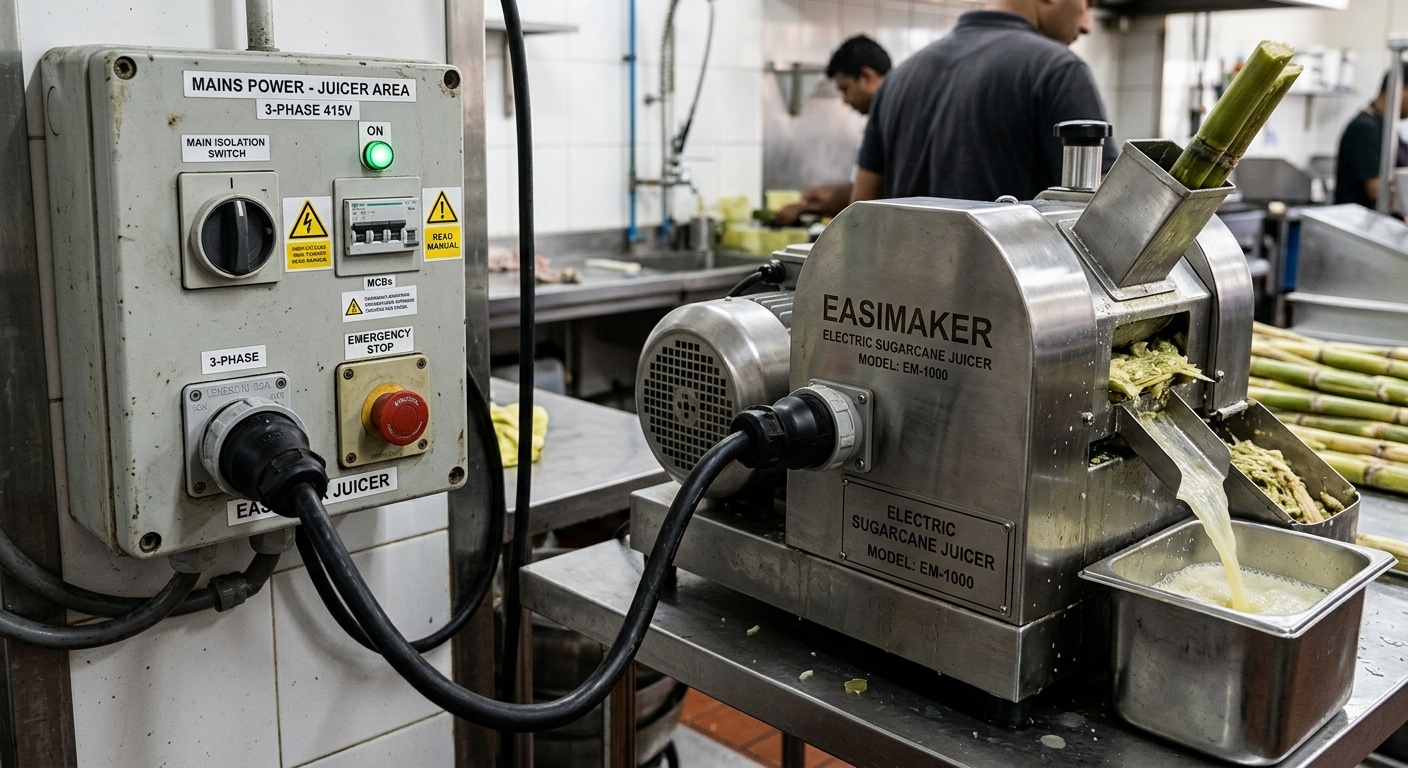
For facility managers, cafe owners, and procurement specialists, selecting the right commercial beverage equipment goes beyond evaluating extraction rates and stainless steel grades. One of the most critical, yet frequently overlooked, factors in equipment longevity and efficiency is the commercial power supply. Understanding juicer voltage requirements is essential to ensure that your machines operate at peak performance without risking premature motor failure or electrical hazards.
In high-demand environments—especially when processing dense, fibrous materials like sugarcane—an electric commercial juicer requires consistent, stable power to maintain the necessary motor torque. This technical guide explores how electrical specifications impact machine performance, outlines common power supply issues, and provides actionable steps for proper industrial juicer setup.
Understanding Core Electrical Specifications
Before installing any heavy-duty equipment, operations teams must verify that the facility’s electrical infrastructure aligns with the machine’s requirements. The three primary specifications to evaluate are:
- Voltage (V): The pressure from an electrical circuit’s power source that pushes charged electrons through a conducting loop. Common global standards include 110V/120V (North America) and 220V/240V (Europe, Asia, and commercial US settings).
- Amperage (A): The strength of the electrical current. High-torque machines draw significant amps, especially during startup or when processing hard produce.
- Frequency (Hz): The rate at which alternating current (AC) changes direction, typically 50Hz or 60Hz. Mismatched frequencies can alter motor speed and cause overheating.
How Power Supply Directly Affects Machine Performance
1. Motor Torque and Extraction Efficiency
Electric commercial juicers rely on high-torque motors to crush and press produce. If a machine experiences a voltage drop (undervoltage), the motor cannot generate its rated torque. For sugarcane juicers, this lack of torque can lead to jamming, incomplete extraction, and a noticeable drop in overall juice yield. Consistent voltage ensures the crushing rollers maintain constant pressure and speed, maximizing profitability per batch.
2. Heat Generation and Thermal Overload
When a motor operates below its required voltage, it draws more current (amperage) to compensate and maintain its power output. This excess current generates significant heat within the motor windings. Over time, this leads to thermal overload, degrading the motor’s insulation and drastically shortening the equipment’s lifespan. Proper industrial juicer setup prevents this by ensuring the power supply matches the manufacturer’s nameplate rating.
3. Component Longevity
It is not just the motor that suffers from poor power quality. Inconsistent power, including voltage spikes and surges, can damage sensitive electronic components such as start capacitors, relays, and digital control boards. Ensuring a clean, stable power supply reduces maintenance intervals and prevents unexpected downtime.
Comparing Power Supply Options: Single-Phase vs. Three-Phase
When procuring equipment for a commercial facility, buyers often choose between single-phase and three-phase power configurations. Here is a breakdown of how they compare for commercial juicing applications:
| Specification | Single-Phase (110V / 220V) | Three-Phase (220V / 380V+) |
|---|---|---|
| Best For | Small to medium cafes, juice bars, mobile setups. | Large-scale industrial facilities, high-volume bottling plants. |
| Motor Efficiency | Standard efficiency; sufficient for intermittent commercial use. | High efficiency; smoother power delivery, ideal for continuous operation. |
| Installation Cost | Lower. Uses standard commercial wiring. | Higher. Requires specialized industrial electrical panels. |
| Equipment Lifespan | Good, provided voltage remains stable. | Excellent. Motors run cooler and experience less vibration. |
Common Electrical Setup Pitfalls
Even with the correct machine specifications, improper installation can compromise performance. Facility managers should watch out for the following issues:
- Using Extension Cords: Long or improperly gauged extension cords cause significant voltage drops. Commercial juicers should always be plugged directly into a wall receptacle.
- Shared Circuits: Plugging a high-draw juicer into the same circuit as refrigerators or espresso machines can trip breakers and cause power fluctuations. Always use a dedicated circuit.
- Improper Grounding: In commercial environments with water and stainless steel equipment, proper grounding is a non-negotiable safety requirement to prevent electrical shock and equipment damage.
Best Practices for Industrial Juicer Setup
Conduct a Pre-Purchase Facility Audit
Before issuing a purchase order, have a licensed electrician audit the installation site. Verify the available voltage, maximum amperage per breaker, and receptacle types (e.g., NEMA plug configurations in the US). This ensures the machine you order can be installed immediately upon delivery.
Install Power Conditioning Equipment
In regions with unstable grid power, installing a voltage regulator or a commercial-grade surge protector is a wise investment. These devices smooth out power delivery, protecting the juicer’s internal components from micro-surges that occur when other heavy machinery cycles on and off.
Specify Requirements During Procurement
For international buyers, communication with the manufacturer is key. Clearly state the destination country’s voltage and frequency requirements during the quoting process. Reputable manufacturers can customize the motor and internal wiring to match your local grid perfectly.
Frequently Asked Questions (FAQs)
Can I use a 220V machine on a 110V circuit with a step-up converter?
While technically possible, it is not recommended for high-draw commercial equipment. Step-up transformers must be rated for at least 1.5 to 2 times the maximum wattage of the juicer to handle startup surges safely. It is much more reliable to purchase a machine built for your native voltage or have an electrician install a 220V line.
What happens if the frequency (Hz) doesn’t match?
Running a 50Hz motor on a 60Hz power supply will cause the motor to spin about 20% faster, which can alter the juicing process and cause premature bearing wear. Conversely, running a 60Hz motor on a 50Hz supply reduces speed and cooling efficiency, leading to rapid overheating. Always match the frequency.
How do I know if my facility has sufficient amperage?
Check the data plate on the juicer for the “Full Load Amps” (FLA). Your dedicated circuit breaker should be rated for at least 125% of this value to accommodate startup surges without tripping.
Does voltage instability affect the juice yield?
Yes. If voltage drops, the motor loses torque. In machines pressing hard materials like sugarcane, this means the rollers cannot apply the necessary crushing force, leaving valuable juice behind in the pulp.
Are electric sugarcane juicers safe to operate in wet environments?
Yes, provided they are properly grounded, plugged into a GFCI (Ground Fault Circuit Interrupter) protected outlet, and feature appropriate IP (Ingress Protection) ratings for their electrical enclosures. Always follow local electrical codes.
Conclusion
The reliability of your commercial beverage operation hinges on the proper alignment of your equipment with your facility’s electrical infrastructure. By understanding your juicer voltage requirements and investing in a proper industrial juicer setup, you protect your investment, ensure consistent product quality, and eliminate costly downtime.
Ready to upgrade your commercial juicing capabilities with equipment tailored to your facility’s specifications? Request a quote / Get a sample today to discuss your technical requirements with our experts.