Transitioning from a Single Location to a Franchise Network
Scaling a successful sugarcane juice bar into a regional or national franchise requires a fundamental shift in business strategy. When operating a single location, brand owners can personally oversee daily operations, monitor juice extraction, and manage equipment maintenance. However, as you scale a sugarcane juice brand, success depends entirely on standardization, reliable commercial equipment fleets, and comprehensive training systems.
For B2B brand owners, procurement managers, and operations directors, franchising means building a replicable model. Franchisees are investing in a proven system. If your equipment fails or juice quality varies between locations, the brand’s reputation suffers. This guide outlines the operational steps necessary to successfully franchise your juice business, focusing on equipment standardization, training, and quality control.
Step 1: Standardizing Your Commercial Juicer Fleet
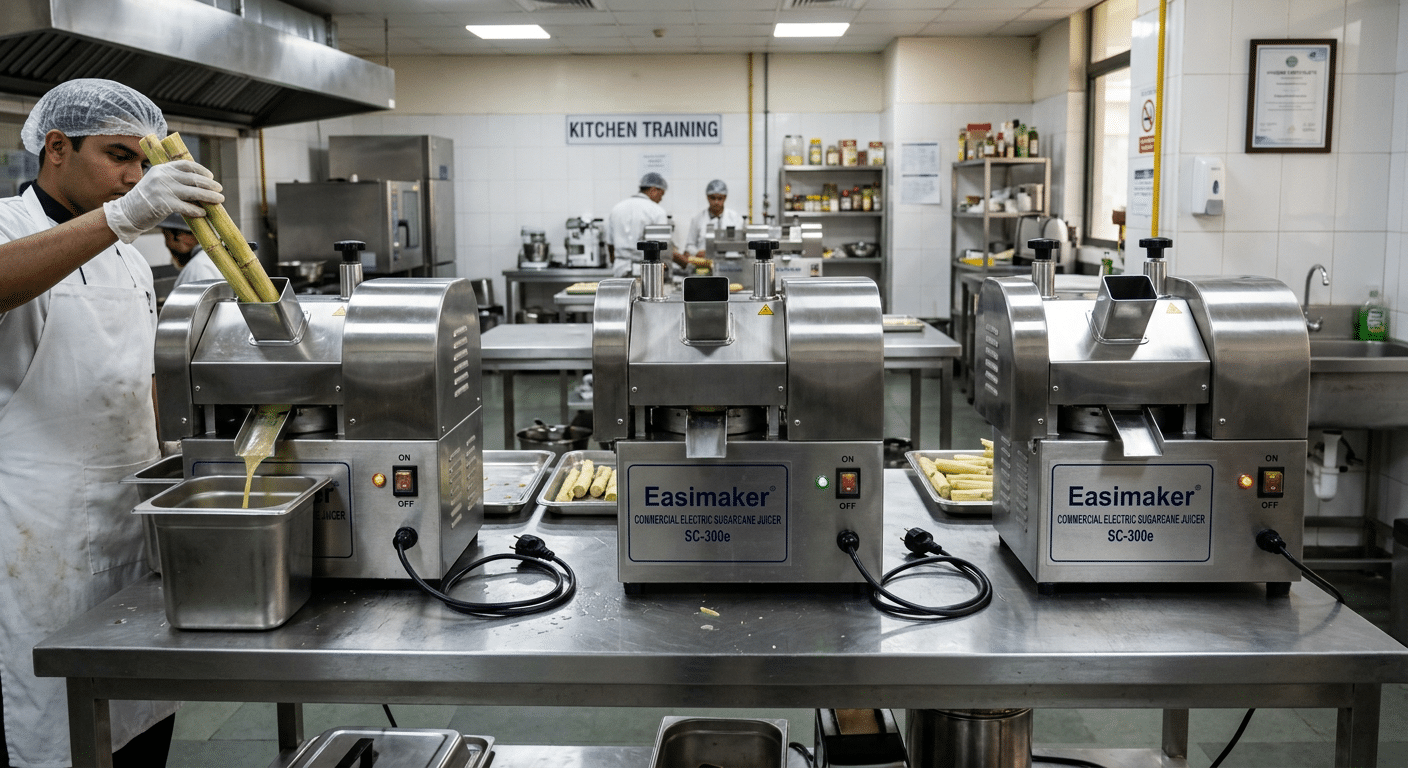
The core of any sugarcane juice franchise is the extraction equipment. You cannot rely on a patchwork of different machines across various franchise locations. Standardizing your commercial juicer fleet ensures consistent yield, identical maintenance schedules, and uniform safety protocols.
Why Electric Commercial Juicers are Mandatory
Manual or light-duty juicers are entirely unsuited for a franchise environment. To maintain high throughput and operational safety, franchises must specify heavy-duty, electric commercial sugarcane juicers in their Franchise Disclosure Document (FDD). When selecting an electric juicer fleet for your franchisees, consider the following technical factors:
- Extraction Yield: High-efficiency electric rollers (typically utilizing a 3-roller or 4-roller system) ensure maximum juice extraction in a single pass, directly impacting the franchisee’s profit margins.
- Material Specifications: Food-grade stainless steel (such as 304 or 316) is non-negotiable for all contact parts to comply with international food safety standards and resist the corrosive nature of natural plant acids.
- Motor Durability: Commercial environments require motors capable of continuous operation during peak hours without overheating. Look for gear-driven electric motors with built-in thermal protection.
- Ease of Cleaning: Machines must feature accessible roller compartments and removable components to allow for rapid, thorough sanitization between shifts.
Step 2: Developing Comprehensive Training Manuals
Franchisees and their staff will have varying levels of food service experience. Standard Operating Procedures (SOPs) must be meticulously documented. A robust training manual for a juice bar operations team should include:
Equipment Operation and Safety
Document the exact startup, operation, and shutdown procedures for the electric sugarcane juicers. Include visual diagrams of emergency stop buttons, reverse functions (to clear jams), and proper feeding techniques to prevent operator injury and machine damage.
Sanitation Protocols
Sugarcane juice is highly susceptible to fermentation and bacterial growth. Your SOPs must dictate cleaning frequencies (e.g., mid-shift wipe downs, end-of-day deep cleans). Specify the exact food-safe sanitizers to be used, the correct dilution ratios, and step-by-step instructions for dismantling and reassembling the juicer’s extraction chamber.
Step 3: Maintaining Consistent Juice Quality
Customers expect the same taste profile whether they visit a franchise in New York or London. Maintaining consistent juice quality across a decentralized network involves strict supply chain management.
- Raw Material Sourcing: Specify the exact cultivars of sugarcane franchisees must purchase, or establish a centralized supply chain. Factors like maturity, soil type, and harvest time drastically affect the Brix level (sugar content).
- Storage and Handling: Sugarcane stalks must be stored at specific temperatures to prevent moisture loss and souring. Outline refrigeration requirements and maximum shelf-life metrics for cut cane.
- Preparation Standards: Define how the cane should be prepped before juicing. This includes washing protocols, peeling requirements (if applicable to your brand standard), and cutting lengths to optimize the electric juicer’s feed rate.
Comparing Equipment Strategies: Standalone vs. Franchise Fleet
Understanding the shift in equipment strategy is vital for operations managers planning a franchise rollout.
| Operational Factor | Standalone Juice Bar | Franchised Juice Brand |
|---|---|---|
| Equipment Sourcing | Ad-hoc purchasing based on immediate local availability. | Centralized procurement; standardized electric juicer fleet. |
| Maintenance | Reactive repairs; potential extended downtime. | Preventative maintenance schedules; stocked spare parts inventory. |
| Yield Consistency | Variable, dependent on the individual operator’s machine. | Highly consistent due to uniform roller calibration across the fleet. |
| Training | On-the-job, informal shadowing. | Documented SOPs tailored to the specific standardized equipment. |
Procurement and Fleet Management for Franchisors
As the franchisor, you must establish a reliable pipeline for equipment. Partnering directly with a manufacturer for your commercial electric juicers offers significant advantages. Negotiating Minimum Order Quantities (MOQs) for fleet rollouts can reduce capital expenditure for new franchisees. Furthermore, establishing a direct line for OEM spare parts (such as replacement rollers, gears, and bearings) ensures that franchisee downtime is minimized.
Frequently Asked Questions (FAQs)
How do I ensure franchisees maintain the equipment properly?
Incorporate mandatory preventative maintenance schedules into the franchise agreement. Require franchisees to log daily cleaning and monthly inspections, and conduct periodic corporate audits to verify compliance.
What is the typical lifespan of a commercial electric sugarcane juicer?
With strict adherence to daily cleaning and regular maintenance of gears and bearings, a high-quality stainless steel electric juicer can operate efficiently for 5 to 10 years in a high-volume commercial setting.
Should the franchisor supply the sugarcane or rely on local distributors?
This depends on geographic scale. Regional franchises often benefit from a centralized commissary or approved local agricultural suppliers to maintain strict control over the cane’s Brix levels and freshness.
How do we handle equipment breakdowns in a franchise network?
Require franchisees to keep essential spare parts (like fuses, switches, and basic seals) on-site. The franchisor should maintain a relationship with the equipment manufacturer to expedite shipping of major replacement components.
Can we customize the juicers with our franchise branding?
Yes, many B2B equipment manufacturers offer customization options for fleet orders, including laser-etched logos, custom housing colors, and branded warning labels to align with your franchise’s visual identity.
Ready to Scale Your Juice Brand?
Standardizing your equipment is the first step toward a successful franchise rollout. Ensure your franchisees have the reliable, high-yield extraction technology they need to succeed. Request a quote today to discuss fleet pricing, technical specifications, and procurement strategies for your commercial electric sugarcane juicers.