
The Efficiency Dilemma in Commercial Sugarcane Juicing
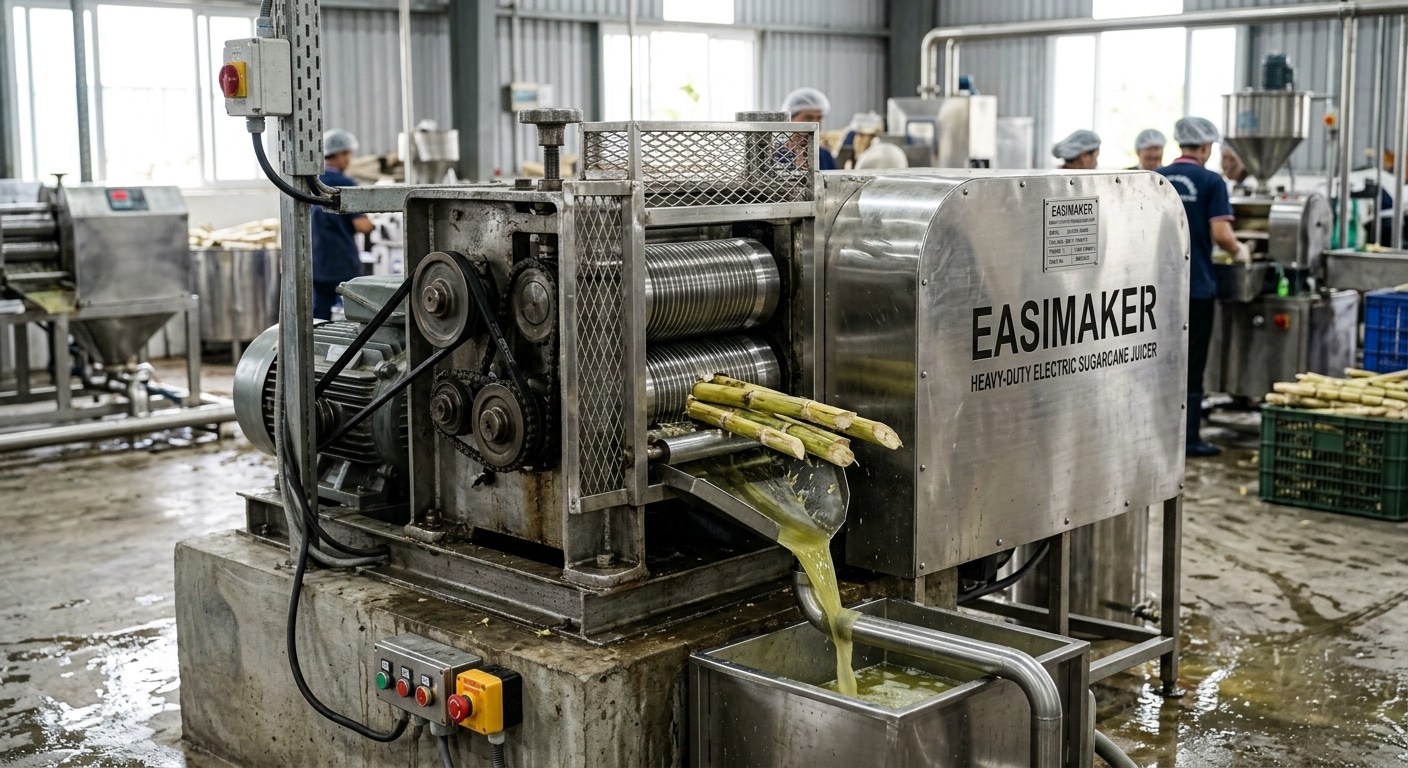
For high-volume beverage operations, commercial juice bars, and industrial food processing facilities, equipment efficiency directly impacts profitability. When scaling sugarcane juice production, one of the most critical equipment decisions is choosing the right extraction method. The debate typically comes down to two primary mechanical designs: single-pass versus multi-pass crushing.
While both methods utilize heavy-duty rollers to press juice from sugarcane stalks, their operational workflows, labor requirements, and ultimate commercial juicer efficiency differ significantly. Understanding the technical mechanics behind these two designs is essential for procurement managers and facility engineers looking to optimize throughput and minimize operational bottlenecks.
Understanding the Mechanics
What is Multi-Pass Crushing?
Multi-pass crushing is the traditional method of sugarcane extraction. In this setup, an electric machine typically features two or three rollers with a wider gap. The operator feeds a sugarcane stalk into the machine, retrieves the partially crushed stalk from the other side, folds it in half, and feeds it through again. This process is repeated three to four times until the maximum juice yield is achieved.
While multi-pass machines are generally simpler in internal gearing and have a lower initial capital expenditure, they rely heavily on manual intervention and constant operator attention.
What is a Single-Pass Sugarcane Juicer?
A single-pass sugarcane juicer is engineered to extract the maximum amount of juice in one continuous motion. These advanced electric machines utilize a precisely calibrated multi-roller system (often three to five rollers) arranged in a specific geometric configuration. As the cane is pulled through the machine, it passes through progressively tighter clearances between the rollers.
This design effectively crushes, presses, and expels the dry bagasse in a single fluid operation, eliminating the need for the operator to handle the crushed cane repeatedly.
Single-Pass vs. Multi-Pass: A Technical Comparison
To make an informed purchasing decision, buyers must evaluate how each method aligns with their production goals. Below is a comparison of key operational metrics:
| Operational Factor | Multi-Pass Crushing | Single-Pass Crushing |
|---|---|---|
| Sugarcane Extraction Rate | High (only after 3-4 manual passes) | High (75%-85% yield by weight in one pass) |
| Labor Requirements | Intensive (operator must fold and re-feed cane) | Minimal (feed once and move to the next stalk) |
| Throughput / Speed | Low to Moderate (bottlenecked by manual re-feeding) | High (ideal for continuous commercial processing) |
| Operator Safety | Lower (frequent handling near feed zones) | Higher (hands-free after initial feed, enclosed rollers) |
| Equipment Cost | Lower initial investment | Higher initial investment, but faster ROI via labor savings |
Key Factors Influencing Sugarcane Extraction Rates
Regardless of the method chosen, the juice yield comparison between machines often comes down to the quality of the internal components. When evaluating commercial juicers, pay close attention to the following engineering specifications:
- Roller Material and Machining: Food-grade stainless steel (such as SUS304) is mandatory for hygiene and corrosion resistance. Rollers with precision-machined knurling or grooving grip the cane better, preventing slippage and ensuring a thorough crush.
- Motor Power and Gearbox Efficiency: Commercial electric juicers require robust motors (typically ranging from 400W to 1500W depending on capacity) paired with heavy-duty gear reducers. A high-torque, low-RPM setup ensures the machine can crush thick, dense cane without stalling.
- Clearance Tolerances: In single-pass machines, the micro-clearance between the final set of rollers dictates the ultimate extraction rate. Tighter tolerances leave the bagasse nearly dry, maximizing yield per kilogram of raw material.
Operational Impact: Labor Costs and Workflow Efficiency
In a B2B context, equipment procurement is rarely just about the machine’s price tag; it is about the total cost of ownership (TCO). Labor is one of the most significant ongoing expenses in any food service or processing operation.
Multi-pass crushing ties an operator to the machine for the entire duration of the extraction process. Conversely, a single-pass sugarcane juicer allows the operator to feed a stalk and immediately prepare the next one, or attend to customers, handle packaging, and manage point-of-sale transactions. For a busy commercial environment, the labor hours saved by utilizing a single-pass system often offset the higher initial equipment cost within the first few months of operation.
Buying Guide: Selecting the Right Commercial Juicer
When sourcing sugarcane extraction equipment for your facility, consider the following checklist to ensure you select the optimal machine:
- Assess Your Volume: If you process hundreds of kilograms of cane daily, a single-pass electric machine is indispensable. For low-volume, occasional use, a multi-pass machine might suffice.
- Hygiene and Cleaning: Look for machines with easily removable rollers or accessible crushing chambers. Daily sanitation is critical to prevent bacterial growth and comply with food safety regulations.
- Durability and Maintenance: Check the availability of spare parts (like seals, bearings, and drive chains). Opt for machines with sealed bearings to prevent juice ingress.
- Power Supply Compatibility: Ensure the machine’s voltage and frequency specifications match your facility’s electrical infrastructure (e.g., 110V/60Hz vs. 220V/50Hz).
Frequently Asked Questions (FAQs)
Does a single-pass machine extract as much juice as a multi-pass machine?
Yes. High-quality single-pass machines are engineered with advanced roller configurations that apply immense, progressive pressure, achieving extraction rates comparable to or exceeding three manual passes through a traditional machine.
Can single-pass juicers handle thick sugarcane stalks?
Commercial electric single-pass juicers are designed with powerful gearboxes and wide feed chutes to accommodate thick stalks. However, exceptionally thick cane may need to be split lengthwise depending on the specific machine’s feed diameter limits.
How often do the rollers need to be replaced?
With proper maintenance and regular cleaning, solid stainless steel rollers can last for years in a commercial setting. Wear and tear typically occur on the bearings or drive gears before the rollers themselves degrade.
Is an electric multi-pass machine safer than a manual one?
While electric multi-pass machines eliminate manual cranking, they still require the operator to repeatedly handle crushed cane near the feed chute. Single-pass machines are generally safer as they minimize operator interaction with the crushing mechanism.
What is the typical ROI for upgrading to a single-pass system?
ROI varies based on local labor rates and daily volume, but many high-volume operations report recovering the cost difference within 3 to 6 months due to reduced labor hours and increased throughput.
Optimize Your Beverage Operations Today
Choosing between single-pass and multi-pass crushing ultimately depends on your operational scale, labor availability, and efficiency goals. For modern commercial facilities focused on high throughput, superior hygiene, and optimized labor costs, a single-pass sugarcane juicer is the clear industry standard.
Ready to upgrade your extraction capabilities with reliable, commercial-grade equipment? Request a quote / Get a sample today to discover how our electric sugarcane juicers can streamline your production line.