
Beyond Beverages: Using Fresh Sugarcane Juice as a Natural Sweetener in Commercial Baking

The Shift Toward Natural Sweeteners in Commercial Baking
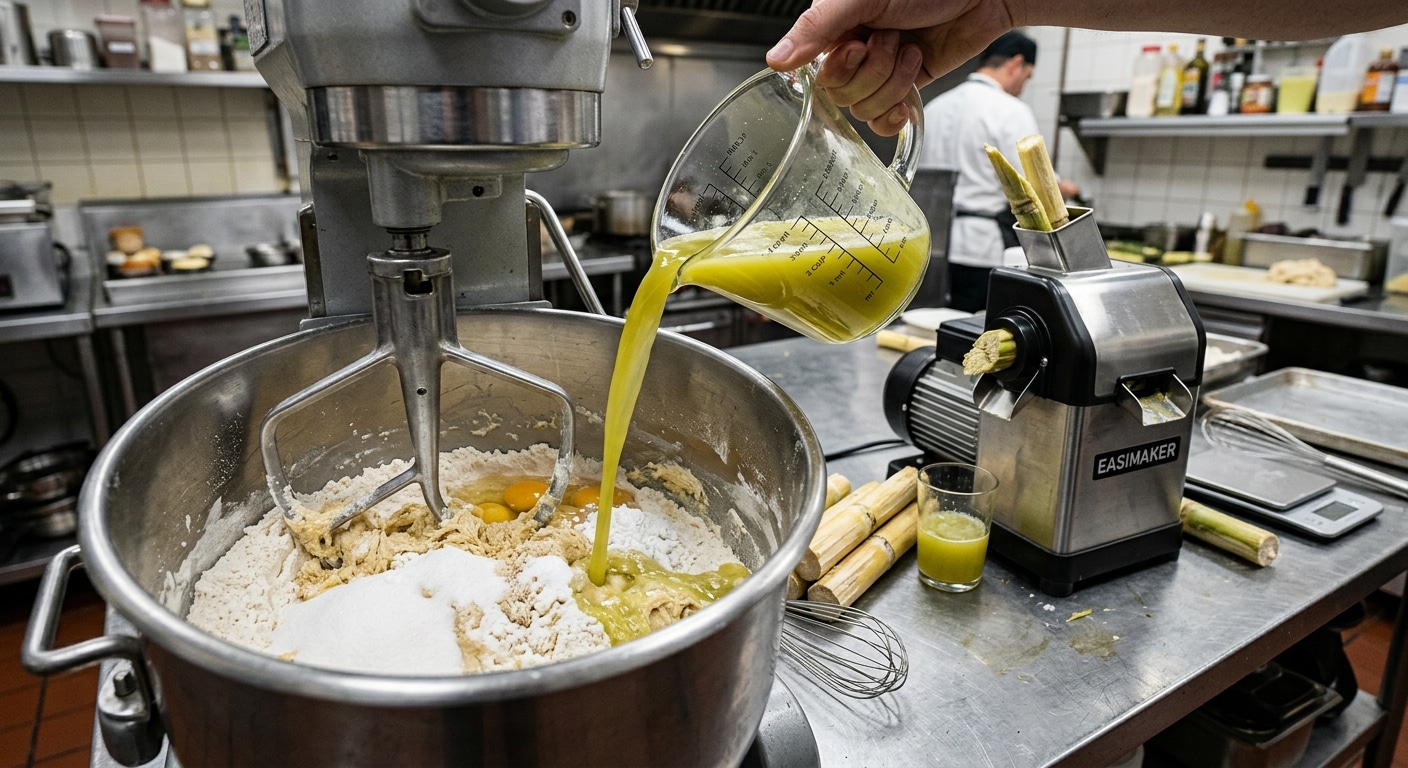
Clean-label initiatives are reshaping the commercial bakery sector. Consumers increasingly scrutinize ingredient lists, driving demand for natural, unrefined alternatives to highly processed white sugar. For commercial bakers and pastry chefs, substituting refined sugar with fresh sugarcane juice offers a dual advantage: it meets consumer demand for natural ingredients while introducing unique, complex flavor profiles to baked goods.

However, transitioning from a dry, crystalline sweetener to a fresh, liquid ingredient requires precise formula adjustments. This guide explores the technical considerations of using fresh sugarcane juice in large-scale baking, focusing on moisture control, flavor pairing, and the electric extraction equipment necessary for on-site processing.

Understanding Fresh Sugarcane Juice in Culinary Applications

Fresh sugarcane juice is the raw, unpasteurized liquid extracted directly from sugarcane stalks. Unlike molasses or refined cane syrup, which undergo extensive boiling and clarification, fresh juice retains its natural grassy notes, vitamins, and a lighter, more delicate sweetness.

Brix and Sugar Concentration

In commercial baking, consistency is critical. Fresh sugarcane juice typically has a Brix level (sugar content) ranging from 15% to 22%, depending on the cane variety, growing region, and harvest time. Because the remaining 78% to 85% is water, bakers must account for this significant liquid volume when reformulating recipes.

Technical Factor 1: Moisture Adjustment and Hydration

Replacing a dry ingredient with a liquid requires recalculating the entire hydration percentage of the dough or batter. Failing to adjust for the water content in sugarcane juice will result in compromised crumb structure, extended bake times, and potential product spoilage.

Recalculating Formulas

  • Direct Substitution Challenges: If a recipe calls for 1,000 grams of granulated sugar, replacing it with fresh juice to achieve the exact same sweetness level would introduce an excessive amount of water.
  • Hydration Compensation: To balance the formula, bakers must reduce other liquids in the recipe (such as water, milk, or eggs) by the exact volume of water introduced by the sugarcane juice.
  • Creating a Fresh Syrup: For recipes with low hydration requirements (like cookies or dense pastries), bakers often gently reduce the fresh sugarcane juice over low heat to create a concentrated fresh syrup. This lowers the water content while preserving the natural flavor profile, making it easier to integrate into standard formulas.

Technical Factor 2: Flavor Profiles and Product Pairing

Refined sugar provides a neutral sweetness. In contrast, fresh sugarcane juice introduces a distinct flavor profile that can elevate artisan baked goods.

Tasting Notes

Fresh juice imparts earthy, slightly grassy, and mild vanilla-like undertones. When baked, it contributes to a richer, more nuanced Maillard reaction, resulting in a deeper, more appealing crust color.

Ideal Bakery Applications

  • Artisan Breads and Sourdoughs: The natural sugars provide excellent food for wild yeast, accelerating fermentation while adding a subtle sweetness that balances sourdough tang.
  • Whole Grain and Rye Goods: The earthy notes of the juice complement the robust flavors of whole wheat, rye, and spelt flours.
  • Gingerbreads and Spiced Cakes: Acts as a lighter, fresher alternative to dark molasses, allowing the spices to remain the focal point.
  • Vegan Pastries: Serves as a premium, plant-based sweetener that appeals to health-conscious consumers.

Technical Factor 3: Equipment and On-Site Processing

To utilize fresh sugarcane juice at a commercial scale, bakeries must integrate efficient processing equipment into their operations. Sourcing pre-bottled juice often means dealing with pasteurization, which alters the fresh flavor profile and degrades natural enzymes. On-site extraction is the preferred method for maintaining quality.

Choosing the Right Commercial Sugarcane Juicer

For high-volume bakery environments, manual extraction is entirely impractical. Facilities require robust, electric sugarcane juicers capable of continuous operation.

  • Electric Operation: Essential for processing hundreds of kilograms of cane per hour without operator fatigue.
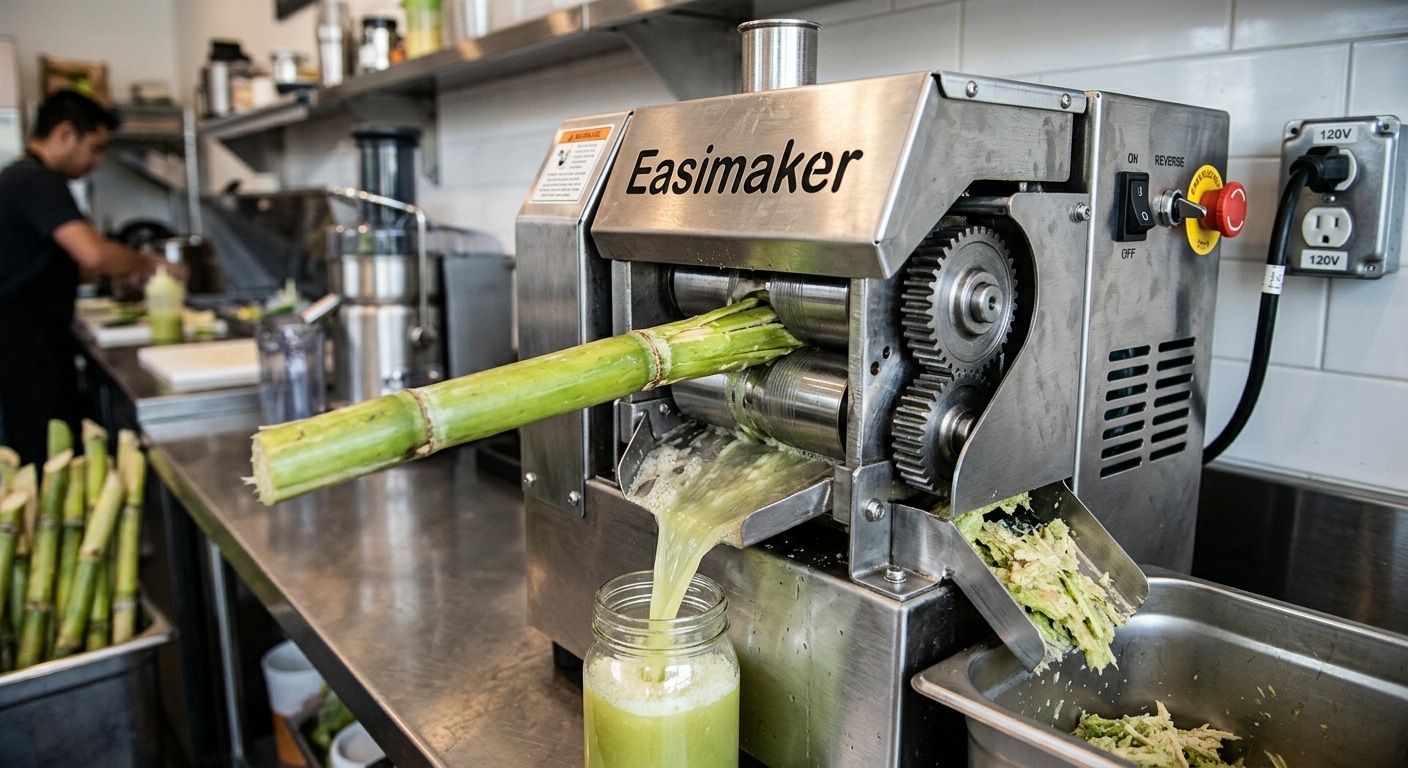
  • High Extraction Efficiency: Top-tier electric juicers utilize multi-roller systems to extract maximum liquid in a single pass, ensuring high yield and minimizing waste.
  • Food-Grade Materials: All contact parts must be constructed from 304 or 316 stainless steel to comply with commercial food safety regulations and resist the natural acidity of the juice.
  • Ease of Cleaning: Bakery environments demand strict sanitation. Look for equipment with removable rollers and accessible internal components to prevent bacterial growth and cross-contamination.

Comparing Sweetener Options

Feature Refined Granulated Sugar Fresh Sugarcane Juice
Moisture Content < 0.5% 78% – 85%
Flavor Profile Neutral, pure sweetness Earthy, grassy, complex
Label Appeal Standard / Highly processed Premium / Clean label / Natural
Processing Needs Ready to use Requires electric extraction equipment
Crumb Impact Standard aeration and structure Requires hydration adjustment; denser crumb if not reduced

Buying Guide: Sourcing and Implementation

Implementing fresh sugarcane juice into a commercial bakery involves strategic sourcing and capital investment.

  • Sourcing Raw Cane: Establish a reliable supply chain with local or regional agricultural distributors. Cane should be processed shortly after harvest to prevent fermentation within the stalk.
  • Equipment Investment: Select an electric juicer sized for your production volume. Consider the footprint, power requirements (e.g., 220V/380V for industrial units), and warranty support.
  • R&D and Sampling: Before rolling out a new product line, conduct small-batch testing to monitor fermentation rates, bake times, and shelf-life stability. The natural enzymes in fresh juice can alter yeast activity, requiring adjustments to proofing schedules.

Frequently Asked Questions (FAQs)

1. Does fresh sugarcane juice affect yeast fermentation?

Yes. The unrefined sugars and natural enzymes in fresh sugarcane juice are highly bioavailable to yeast. Bakers often notice a more vigorous and rapid fermentation process, which may require shortening proofing times or slightly reducing the yeast quantity in the formula.

2. How long does fresh sugarcane juice last before baking?

Fresh, unpasteurized sugarcane juice ferments quickly. In a commercial setting, it should be extracted and used within a few hours, or immediately refrigerated at temperatures below 4°C (39°F) for up to 24 hours. For longer storage, it must be reduced into a syrup or frozen.

3. Can I use manual juicers for a commercial bakery?

No. Manual juicers lack the throughput, pressure, and efficiency required for commercial volumes. An electric, multi-roller sugarcane juicer is mandatory for processing the quantities needed in large-scale baking while maintaining labor efficiency.

4. Will sugarcane juice change the color of my baked goods?

Yes. Because it contains natural molasses and complex sugars, products baked with fresh sugarcane juice will undergo a more intense Maillard reaction, resulting in a darker, richer crust color compared to those baked with refined white sugar.

5. How do I measure the sugar content of the fresh juice?

Commercial bakers should use a digital or optical refractometer to measure the Brix level of each batch of extracted juice. This ensures consistency in sweetness and allows for precise formula hydration adjustments from batch to batch.

Take Your Bakery’s Offerings to the Next Level

Transitioning to natural sweeteners like fresh sugarcane juice can set your bakery apart in a crowded, health-conscious market. By mastering moisture adjustments and utilizing the right electric extraction equipment, you can deliver exceptional, clean-label products with unforgettable flavor profiles.

Ready to upgrade your commercial kitchen with reliable, high-yield extraction technology? Request a quote / Get a sample today to learn more about our industrial electric sugarcane processing solutions.
Tracking Sugarcane Inventory: Software and POS Solutions for High-Volume Juice Bars

The Challenge of Sugarcane Inventory in Commercial Juice Operations

For multi-location juice bar operators, managing raw material inventory is a complex logistical challenge. Unlike pre-packaged syrups or standardized purees, raw sugarcane is a bulk agricultural product. It is purchased by weight or bundle, degrades over time, and yields variable amounts of juice depending on the extraction equipment used.

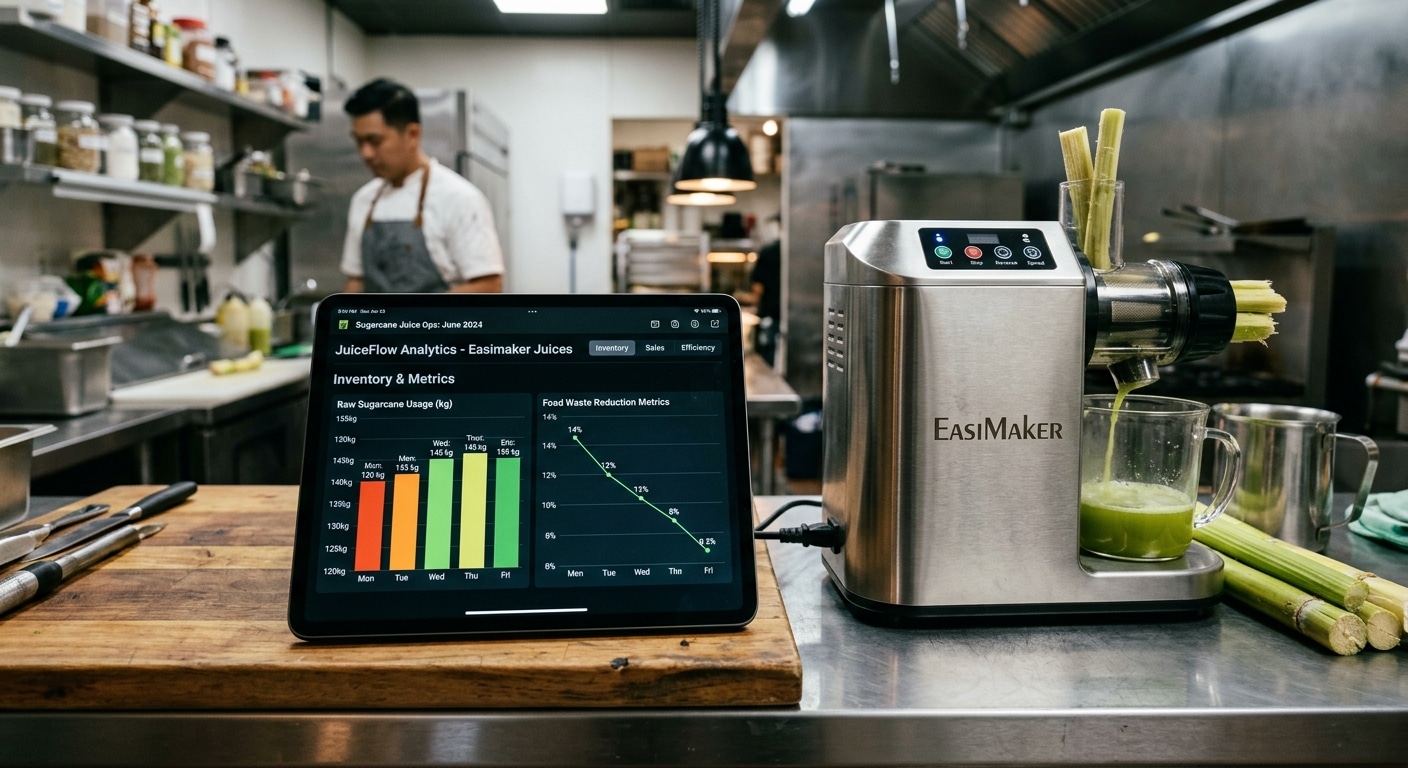
Without precise sugarcane inventory tracking, high-volume juice businesses face significant revenue leakage through food waste, stockouts, and inconsistent product quality. Modern Point of Sale (POS) systems and dedicated juice business software bridge the gap between front-of-house sales and back-of-house raw material depletion, allowing operators to predict reorder dates and maximize profit margins.

Key Metrics for Sugarcane Inventory Tracking

To effectively configure a juice bar POS system, operators must first establish baseline metrics. Tracking software relies on accurate data inputs to generate reliable reorder alerts and spoilage reports.

  • Extraction Yield Percentage: The ratio of extracted juice volume to the weight of raw sugarcane. Consistent yield requires reliable electric extractors. For example, a high-efficiency commercial electric juicer typically yields 60% to 75% juice by weight.
  • Stock Turnover Ratio: Measures how often raw cane inventory is sold and replaced over a given period. High turnover minimizes the risk of the cane drying out or fermenting.
  • Spoilage Rate: The percentage of raw material discarded due to degradation before it can be processed. Advanced POS systems track delivery dates to enforce First-In, First-Out (FIFO) protocols.
  • Par Levels: The minimum amount of raw cane that must be on hand at each location to meet daily demand without risking stockouts or excess spoilage.

Integrating Juice Bar POS Systems with Inventory Software

Effective commercial juice operations rely on seamless integration between sales data and inventory management. When a customer purchases a 16 oz sugarcane juice, the POS system should automatically deduct the corresponding weight of raw cane from the virtual inventory.

Recipe Management and Conversion Factors

Because raw cane is purchased by weight (e.g., kilograms or tons) and sold by volume (e.g., milliliters or ounces), the software requires a precise conversion factor. If your standard electric extractor yields 650ml of juice per kilogram of cane, the POS recipe for a 500ml beverage must be programmed to deduct approximately 0.77 kg of raw cane from the inventory ledger.

Automated Reordering and Predictive Analytics

Modern juice business software utilizes historical sales data, seasonal trends, and current inventory levels to forecast future demand. When stock drops below the established par level, the system can automatically generate purchase orders for regional distributors. This ensures multi-location operators maintain consistent stock across all branches without relying on manual daily counts.

Software Integration Tips for Multi-Location Operators

Scaling a juice business requires centralized oversight. Here are practical steps for implementing inventory software across multiple locations:

  • Centralized Cloud Dashboards: Utilize cloud-based POS systems that allow regional managers to view real-time inventory levels, sales velocity, and spoilage rates across all stores from a single interface.
  • Standardized Equipment: Software tracking is only as accurate as the extraction process. Deploying identical commercial electric sugarcane juicers at all locations ensures the yield conversion factor remains consistent network-wide.
  • API Integrations with Suppliers: Connect your inventory management software directly to your raw material suppliers’ ordering systems via API. This reduces administrative overhead and accelerates the procurement cycle.
  • Staff Training on Waste Logging: Train front-line staff to accurately log any discarded or spoiled cane in the POS system. Unrecorded waste skews inventory data and leads to premature stockouts.

Strategies for Food Waste Reduction in Juice Businesses

Food waste reduction directly impacts the bottom line. Beyond software tracking, operational protocols must be optimized to preserve raw cane quality.

Waste Reduction Strategy Operational Implementation Software/POS Role
FIFO Methodology Store newer cane deliveries behind older stock. Process older stalks first. Track batch delivery dates and flag aging inventory approaching its shelf life.
Optimal Storage Maintain cane in cool, shaded environments to prevent moisture loss and bacterial growth. Log spoilage reasons to identify locations with poor storage compliance.
Consistent Extraction Use high-torque commercial electric juicers to extract maximum liquid per stalk. Monitor yield variances; sudden drops may indicate equipment maintenance is required.

Equipment Synergy: Why Reliable Extractors Matter

The most sophisticated sugarcane inventory tracking software is useless if the physical extraction process is unpredictable. Manual juicers or low-quality machines produce highly variable yields depending on the operator’s strength and the machine’s roller calibration. This variance destroys the accuracy of POS recipe deductions.

For multi-location commercial juice operations, investing in heavy-duty, electric sugarcane juicers—such as those manufactured by Easimaker—is critical. These machines provide a standardized, high-efficiency crush rate. When the hardware delivers a consistent 70% yield, the software can accurately predict raw material depletion, allowing procurement teams to optimize their supply chains with confidence.

FAQs on Juice Business Software and Inventory Management

How often should physical inventory be counted if we use a POS tracker?

Even with advanced juice bar POS systems, multi-location operators should conduct physical inventory counts weekly. This reconciles the software’s virtual data with actual stock, accounting for unlogged waste, staff errors, or variations in cane moisture content.

Can inventory software account for different varieties of sugarcane?

Yes. Advanced systems allow operators to input different raw material SKUs. Since different cane varieties (e.g., black cane vs. green cane) have distinct moisture contents and yield percentages, creating separate conversion recipes ensures accurate tracking.

What is the ideal shelf life for raw sugarcane in a commercial setting?

Unpeeled raw sugarcane can typically be stored for 1 to 2 weeks in a cool, dry, and well-ventilated area. Once peeled or cut, it must be refrigerated and processed within 24 to 48 hours to prevent fermentation.

How does tracking software help with franchise quality control?

By monitoring the ratio of raw cane depleted to juice sold, franchisors can identify locations that may be deviating from standard operating procedures. A significant variance might indicate improper machine calibration, unauthorized recipe changes, or excessive unrecorded waste.

Does POS software integrate with accounting platforms?

Most enterprise-grade B2B POS and inventory systems offer native integrations with major accounting software (like QuickBooks or Xero). This automatically synchronizes Cost of Goods Sold (COGS) and procurement expenses, streamlining financial reporting.

Streamline Your Commercial Juice Operations Today

Optimizing your sugarcane inventory tracking requires a combination of intelligent software and reliable, high-yield extraction hardware. By implementing robust POS systems and outfitting your locations with standardized commercial electric juicers, you can drastically reduce food waste and improve your operational efficiency.

Ready to upgrade your extraction equipment to match your advanced software? Request a quote / Get a sample today to learn how our commercial electric sugarcane juicers can stabilize your yields and boost your bottom line.

Capitalizing on the Zero-Proof Trend: Sugarcane Juice in Alcohol-Free Bars

The Evolution of the Zero-Proof Beverage Market

The hospitality industry is experiencing a fundamental shift in consumer drinking habits. The demand for sophisticated, zero-proof drinks has transitioned from a niche dietary preference to a primary driver of revenue in modern nightlife and dining. Consumers visiting alcohol-free bars expect more than standard sodas or overly sweet fruit punches; they demand complex flavor profiles, unique mouthfeels, and premium ingredients that justify a cocktail-level price point.

For bar owners and beverage directors, sourcing the right base ingredients is the most critical step in menu development. Freshly extracted sugarcane juice is rapidly emerging as a high-value, versatile foundation for zero-proof menus. When processed through commercial-grade electric extractors, raw sugarcane yields a naturally sweet, highly mixable liquid that elevates the non-alcoholic drinking experience.

Why Sugarcane Juice is the Ultimate Zero-Proof Base

Integrating sugarcane juice into a commercial juice business or alcohol-free bar offers several distinct operational and culinary advantages.

Flavor Complexity and Viscosity

Unlike refined simple syrups, fresh sugarcane juice possesses a grassy, slightly earthy flavor profile with hints of vanilla. This natural complexity mimics the depth often provided by base spirits. Furthermore, sugarcane juice has a rich, velvety viscosity that gives mocktails a satisfying mouthfeel—a common missing element in zero-proof drinks.

Health-Conscious Appeal

Modern consumers scrutinize ingredients. Fresh sugarcane juice is unrefined and retains natural trace minerals like calcium, magnesium, and potassium. Positioning drinks as containing “100% fresh-pressed sugarcane” rather than “added sugars” aligns perfectly with the wellness-oriented mindset of the zero-proof demographic.

Developing Your Sugarcane Juice Mocktail Menu

To maximize the profitability of sugarcane juice mocktails, operators should focus on balancing the natural sweetness of the cane with acidic, bitter, or spicy elements. Below is a foundational pairing guide for recipe development:

Flavor Profile Complementary Ingredients Application in Zero-Proof Bars
Acidic & Citrus Calamansi, Yuzu, Lime, Passionfruit Cuts through the sweetness, creating a refreshing, Margarita-style or Mojito-style base.
Spicy & Earthy Fresh Ginger, Turmeric, Jalapeño Adds the “bite” or burn typically associated with alcohol, perfect for Mule alternatives.
Bitter & Herbal Matcha, Gentian Root, Rosemary, Mint Provides aromatic depth and a dry finish, ideal for sophisticated, slow-sipping mocktails.

Commercial Equipment: Selecting an Electric Sugarcane Juicer

The operational viability of a sugarcane-based menu relies entirely on the equipment used. For a high-volume alcohol-free bar, manual presses are completely unsuited due to excessive labor costs, slow processing times, and low extraction yields. Operators must invest in heavy-duty, commercial electric sugarcane juicers.

Key Specifications to Look For

  • Extraction Yield: High-quality electric machines should offer a single-pass extraction rate of 70% to 80%. This maximizes the ROI on raw sugarcane and minimizes waste.
  • Material and Food Safety: The rollers and juice-contact surfaces must be constructed from food-grade stainless steel (typically 304 grade) to resist corrosion and ensure compliance with health department regulations.
  • Motor Power and Gear Systems: Look for machines with robust gear-driven motors. A powerful electric motor ensures the machine can handle thick, hard cane stalks without jamming, which is crucial during peak service hours.
  • Noise Levels: In a bar environment, ambiance is critical. Select an electric juicer engineered for quiet operation so that it does not disrupt the customer experience.
  • Ease of Cleaning: Sanitation is a daily requirement. Machines with easily removable rollers or accessible washing ports drastically reduce end-of-shift labor.

Operational Workflow and Sourcing

Implementing a new raw ingredient requires a streamlined operational workflow. Raw sugarcane stalks must be sourced from reliable agricultural distributors. Upon delivery, the cane should be washed, peeled (if required by the specific machine or recipe), and cut into manageable lengths.

Freshly extracted sugarcane juice oxidizes rapidly, changing color from vibrant green to brown. To maintain visual appeal and optimal flavor, it is highly recommended to press the juice to order, or batch it in small quantities mixed immediately with an acidic component (like lime juice) to stabilize the color during a busy service shift.

Frequently Asked Questions (FAQs)

1. What is the shelf life of fresh sugarcane juice?

For the best flavor and visual appeal, sugarcane juice should be consumed immediately after extraction. If batched, it can be stored in a sealed container under refrigeration for up to 24 hours, though color degradation may occur without the addition of ascorbic acid or citrus.

2. Can I use a standard centrifugal juicer for sugarcane?

No. Sugarcane is extremely dense and fibrous. Standard fruit and vegetable juicers will break if used for sugarcane. You must use a specialized commercial electric sugarcane juicer with heavy-duty stainless steel rollers.

3. Are electric sugarcane juicers difficult to maintain?

Modern commercial electric juicers are designed for easy maintenance. Daily cleaning involves flushing the extraction chamber with water and sanitizing the rollers. Regular lubrication of the gears and chains (depending on the model) is required for long-term durability.

4. What is the typical profit margin on sugarcane juice mocktails?

Because raw sugarcane is relatively inexpensive when purchased wholesale, the cost per ounce of juice is low. When crafted into a premium zero-proof cocktail, profit margins often exceed 80%, rivaling or surpassing traditional alcoholic beverages.

5. Do I need to peel the sugarcane before juicing?

This depends on your equipment. High-end commercial electric juicers can process unpeeled cane, provided it has been thoroughly washed and sanitized. However, some operators prefer to peel the cane to achieve a brighter green juice and a slightly cleaner flavor profile.

Elevate Your Zero-Proof Menu Today

Transitioning to a highly profitable, innovative zero-proof menu requires the right strategy and the right equipment. By leveraging the natural complexity of fresh sugarcane juice and investing in reliable, commercial-grade electric extraction technology, your bar can capture the growing demographic of conscious consumers.

Ready to upgrade your beverage program? Request a quote / Get a sample today to discover how our premium electric sugarcane juicers can transform your operations and boost your bottom line.