The Hidden Cost of Cleaning Commercial Sugarcane Juicers
For high-volume juice bars, beverage brands, and commercial kitchens, maintaining strict hygiene standards is non-negotiable. However, the traditional approach to cleaning commercial sugarcane juicers often involves leaving hoses running continuously to blast away sticky sugar sap and fibrous bagasse. This outdated method not only spikes utility costs but also directly contradicts the growing consumer demand for sustainable business operations.
Implementing eco-friendly cleaning protocols does not mean compromising on food safety. By adopting targeted water conservation techniques and leveraging the right maintenance tools, operators can drastically reduce water consumption, extend the lifespan of their electric juicers, and improve overall operational efficiency. This guide outlines actionable best practices for B2B operators looking to optimize their commercial juicer maintenance.
5 Water-Saving Cleaning Techniques for Commercial Juicers
Transitioning to a sustainable juice bar model requires a shift in daily standard operating procedures (SOPs). Here are five highly effective techniques to reduce water usage during equipment cleanup.
1. Implement a “Dry-Scrape First” Policy
The most common mistake operators make is using water pressure to push solid waste off the machine. Sugarcane fibers (bagasse) act like sponges, absorbing water and becoming heavier and harder to wash away.
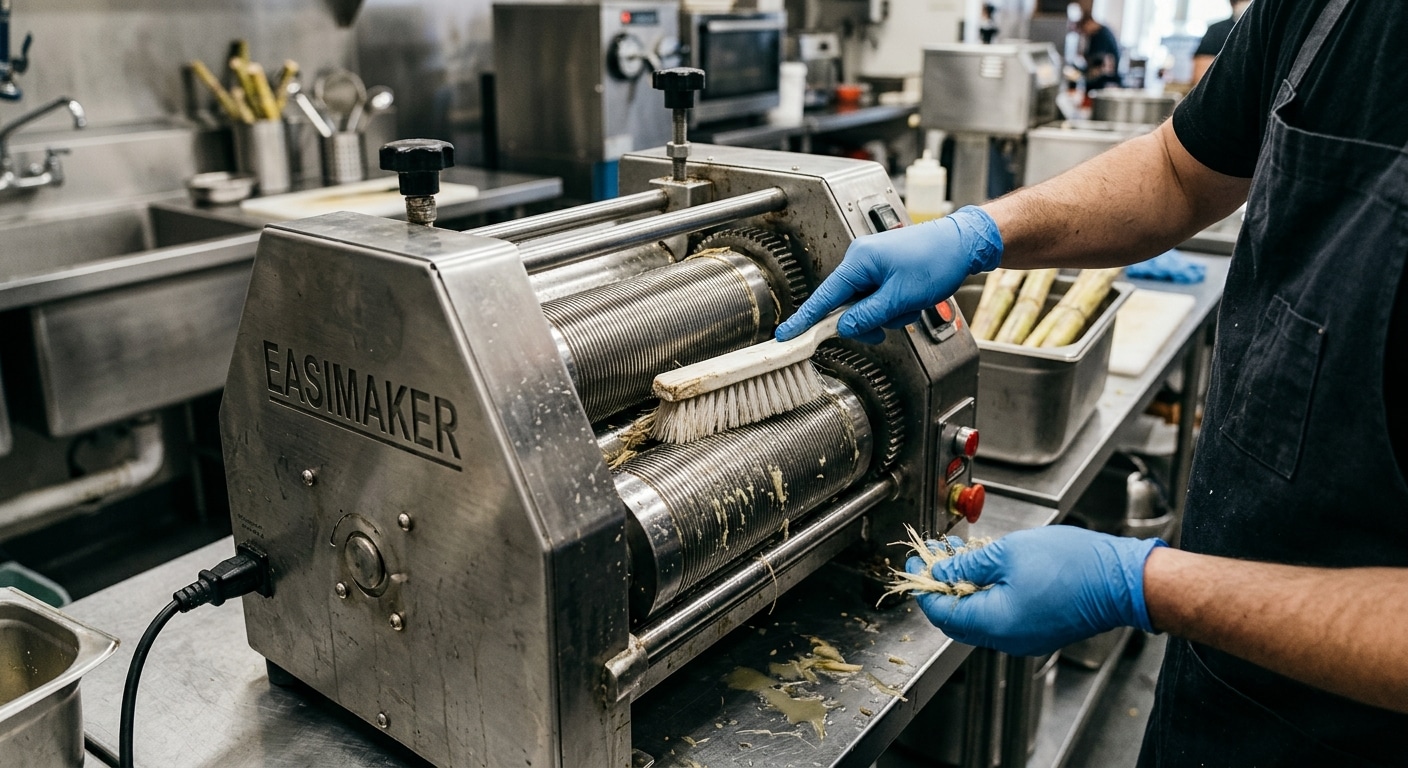
- The Fix: Before a single drop of water is used, operators should use dedicated nylon brushes or food-grade plastic scrapers to remove 90% of the visible bagasse from the rollers, juice trays, and filters.
- The Benefit: This dry-cleaning step prevents drains from clogging and reduces the subsequent water needed for rinsing by up to 50%.
2. Utilize High-Pressure, Low-Volume (HPLV) Spray Nozzles
Standard open-flow hoses can output 15 to 20 liters of water per minute. For commercial juicer maintenance, volume is less important than pressure.
- The Fix: Install commercial-grade HPLV spray guns on your washdown hoses. These nozzles mix air with the water stream to create a forceful spray that cuts through sticky sugar residue using a fraction of the water.
- The Benefit: HPLV nozzles can drop water usage to just 4 to 6 liters per minute while actually improving the speed at which sticky sap is removed from stainless steel surfaces.
3. Adopt the Two-Bucket Wash and Sanitize System
Continuous running water during the scrubbing phase is a massive source of waste. Instead, adopt a modified commercial sink method directly at the juicer station.
- The Fix: Prepare two designated buckets. Bucket A contains warm water mixed with an eco-friendly cleaning solution. Bucket B contains a food-safe sanitizing solution. Operators dip their scrubbing brushes into Bucket A to clean the rollers and casing, followed by a targeted, brief wipe-down using Bucket B.
- The Benefit: This localized approach ensures cleaning agents have time to break down sugars without being immediately washed down the drain, conserving dozens of liters per cleaning cycle.
4. Use Enzyme-Based, Eco-Friendly Detergents
Standard industrial degreasers often require excessive rinsing to ensure no chemical residue is left behind on food-contact surfaces.
- The Fix: Switch to enzyme-based or plant-derived eco-friendly cleaning agents specifically formulated for the food and beverage industry. These solutions actively break down complex sugars and starches rapidly.
- The Benefit: Because they are highly soluble and non-toxic, they require significantly less water to rinse away, ensuring hygiene standards are met with a smaller environmental footprint.
5. Schedule Immediate Post-Operation Rinsing
Sugarcane juice is high in sucrose, which hardens into a stubborn, glue-like substance when exposed to air for prolonged periods.
- The Fix: Train staff to perform a micro-rinse (using a spray bottle of warm water) immediately after a heavy juicing batch, rather than waiting until the end of the shift.
- The Benefit: Preventing the sugar from crystallizing means the end-of-day deep clean requires far less soaking time, less scrubbing effort, and significantly less hot water.
Equipment Design: How Your Juicer Impacts Water Conservation
Not all commercial sugarcane juicers are created equal when it comes to maintenance. Procurement teams should carefully evaluate the engineering of the electric juicers they source. The physical design of the machine plays a critical role in how much water is required to keep it sanitary.
Key Specifications to Look For:
- 304 Food-Grade Stainless Steel: High-quality stainless steel (like SUS304) has a less porous surface than lower-grade metals or plastics. Sugar sap struggles to adhere to it, making it much faster to rinse clean.
- Removable Rollers and Juice Trays: Electric juicers designed with easily detachable components allow operators to soak the parts in a small basin rather than hosing down the entire machine, drastically cutting water waste.
- Fully Sealed Bearings and Gearboxes: Machines with exposed mechanical parts require careful, inefficient manual wiping to avoid water damage. Fully enclosed, IP-rated designs allow for faster, more confident, and more efficient localized spraying.
Comparison: Traditional vs. Eco-Friendly Cleaning
| Factor | Traditional Cleaning Method | Eco-Friendly Cleaning Method |
|---|---|---|
| Pre-cleaning | Hosing down solid bagasse | Dry-scraping and brushing |
| Water Delivery | Open hose (15-20 L/min) | HPLV spray nozzle (4-6 L/min) |
| Chemicals Used | Harsh industrial degreasers | Enzyme-based, low-rinse detergents |
| Labor Time | High (scrubbing crystallized sugar) | Low (preventive micro-rinsing) |
| Environmental Impact | High water waste, chemical runoff | Conserves water, sustainable runoff |
Frequently Asked Questions (FAQs)
How often should a commercial sugarcane juicer be deep cleaned?
To maintain strict hygiene standards, electric commercial juicers should undergo a quick rinse between major batches and a thorough deep clean at the end of every operational shift. Daily sanitization prevents bacterial growth and sugar crystallization.
Does hot water clean sugarcane juicers better than cold water?
Yes. Warm or hot water (around 50°C to 60°C) dissolves sucrose much faster than cold water. Using warm water allows you to use significantly less volume to achieve the same level of cleanliness, aiding in water conservation.
Are eco-friendly cleaning agents safe for stainless steel rollers?
Absolutely. In fact, plant-based and enzyme-based cleaners are often gentler on 304 stainless steel and rubber seals than harsh chlorine-based industrial cleaners, helping to prevent premature corrosion and extending the life of the machine.
Can I pressure wash my electric sugarcane juicer?
You should never use a heavy-duty industrial pressure washer directly on an electric juicer, as high-PSI water can force its way past waterproof seals and damage the motor or bearings. Instead, use a low-volume, medium-pressure spray nozzle specifically designed for commercial kitchen washdowns.
How does dry-scraping save money?
Dry-scraping reduces the amount of water required to clear debris, lowers your monthly utility bills, and prevents dense sugarcane fibers from entering your plumbing system, thereby avoiding costly plumber call-outs for clogged drains.
Upgrade to a Sustainable Juicing Operation
Implementing eco-friendly cleaning protocols is a smart business decision that protects the environment, ensures compliance with hygiene standards, and improves your bottom line. However, the foundation of an efficient maintenance routine starts with high-quality, intelligently designed equipment. Investing in an electric commercial sugarcane juicer engineered for easy, low-water cleaning will pay dividends in reduced labor and utility costs.
Ready to upgrade your equipment or test our latest models? Request a quote / Get a sample today to discover how our advanced electric sugarcane juicers can streamline your operations.