
Creating a Comfortable Indoor Juice Bar Around Sugarcane Machines
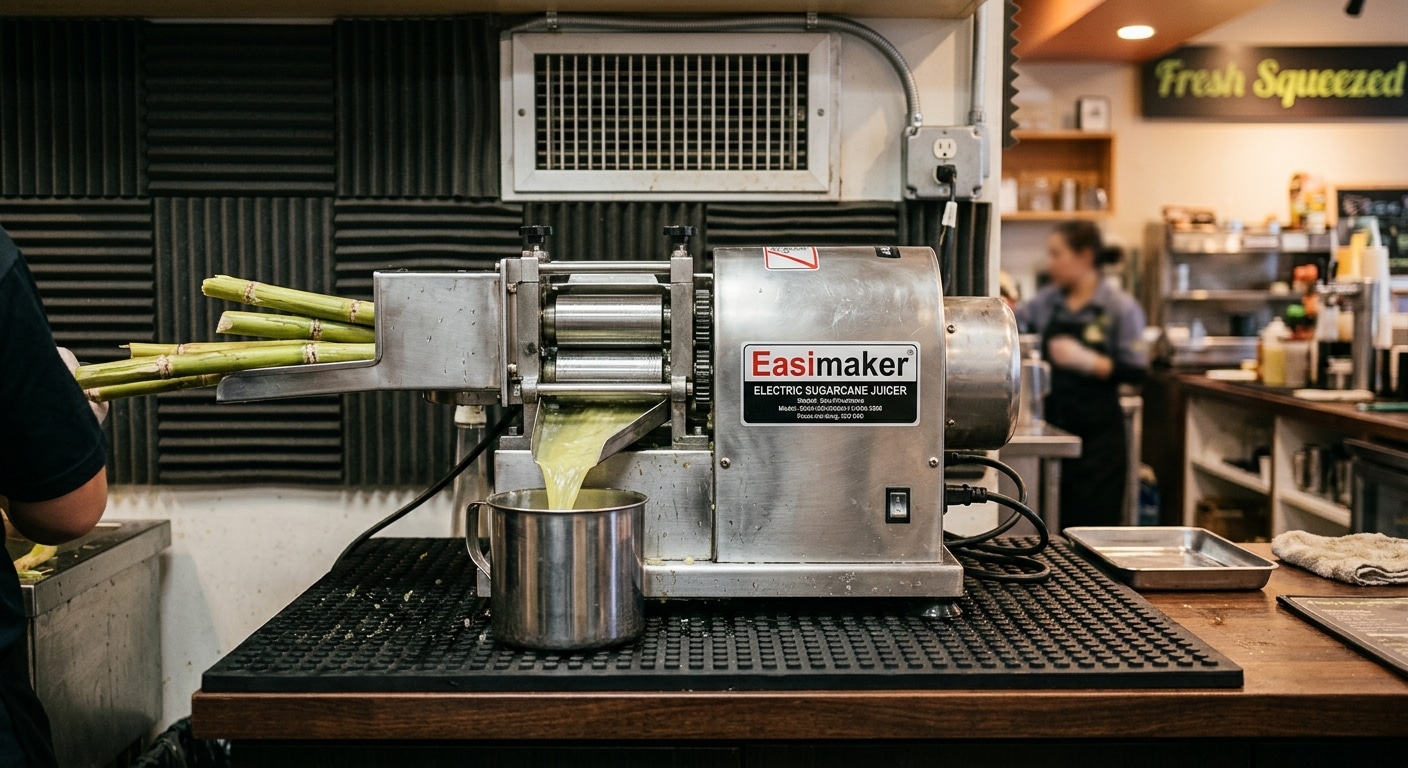
Indoor juice bars and cafés love the theatre of fresh sugarcane juice, but a commercial electric sugarcane juicer can introduce noise, heat, and vibration that quickly disturb staff and customers if not managed correctly.
This guide is written for shop owners, designers, and franchise operators planning or upgrading premises that use electric Easimaker sugarcane juicers. It focuses on practical, layout-level and equipment-level solutions to improve staff comfort, protect equipment, and create a pleasant customer experience.
Key Discomfort Sources: What Really Happens Around a Sugarcane Machine
An indoor setup with one or more electric sugarcane juicers typically faces three main issues:
- Noise – From motors, gearboxes, and cane feeding; noticeable when the shop is small or ceiling is low.
- Heat – From the machine’s motor, refrigeration units, and compact front-of-house layouts.
- Vibration – Transmitted through counters and flooring, affecting operator comfort and long‑term machine stability.
Managing these at the design stage is far more effective (and cheaper) than trying to fix them once the bar is already built.
Noise Management Around Electric Sugarcane Machines
1. Choose the Right Location in the Shop
Placement is your first line of defense. For most indoor juice bars, it is better to avoid positioning the sugarcane machine directly next to:
- Customer seating zones.
- Cashier areas where staff must talk with customers continuously.
- Thin partition walls shared with neighboring tenants.
Instead, consider:
- Locating the machine closer to the back bar, but still visible for the “fresh juice” experience.
- Installing a short divider panel (e.g., laminated wood or composite) between the machine and the nearest seating.
- Grouping noisy equipment together (blenders, ice crushers, sugarcane machine) so acoustic treatments can be applied in one zone.
2. Use Countertop Isolation and Acoustic Layers
An electric Easimaker sugarcane juicer is typically installed on a countertop or stainless worktable. The counter can amplify mechanical noise. To reduce this:
- Isolation mat: Place a dense rubber or neoprene mat under the machine footprint. Thickness in the range of 5–10 mm is usually enough to cut high‑frequency vibration and reduce resonance.
- Non-hollow counter design: If you are building a new bar, avoid thin hollow counters directly under the machine; these behave like a drum. A solid core or filled cavity (e.g., with mineral wool) dampens noise.
- Secure mounting: Ensure the machine feet sit flat and stable. Any rocking will increase both noise and vibration.
3. Add Targeted Acoustic Treatment
For very compact indoor spaces, consider basic acoustic treatment around the machine area:
- Soft finishes on the ceiling above the bar – acoustic panels or baffles help absorb reflected sound.
- Upholstered or acoustic wall panels behind the bar where feasible.
- Sound‑absorbing menu boards or decorative elements (for example, fabric‑backed panels) facing the machine area.
These do not silence the juicer but can reduce the overall echo and make the noise less intrusive in the seating area.
4. Operational Practices to Keep Noise Under Control
Several small operational decisions also help:
- Avoid overloading – feeding too much sugarcane at once can cause the motor to strain and generate higher noise.
- Regular maintenance – keep rollers, gears, and bearings clean and lubricated according to manufacturer instructions; worn components are usually noisier.
- Train staff – a consistent way of feeding cane and running cycles helps keep noise predictable and manageable.
Managing Heat in Indoor Juice Bars
Heat is often underestimated, especially when several pieces of electrical equipment are packed into a small front‑of‑house bar. A typical electric sugarcane machine will add to the thermal load, especially during busy periods.
1. Plan Airflow Around the Machine
Check where the Easimaker sugarcane juicer vents warm air and ensure:
- There is enough clearance around the vents for air to circulate.
- The back of the machine is not pushed tight against a wall or a solid splashback.
- The machine is not fully enclosed in a sealed cabinet; any enclosure should have intake and exhaust openings.
Poor airflow leads to higher motor temperatures, reduced efficiency, and extra heat released into the workspace.
2. Integrate with HVAC and Local Ventilation
For indoor bars, consider the sugarcane juicer when calculating cooling and ventilation requirements:
- Position under an A/C supply outlet rather than near a return grille, so the area gets direct cooling.
- Use a low‑noise exhaust fan or ducted hood over the hottest equipment cluster (sugarcane machine, refrigeration, dishwashers where applicable).
- Allow for extra cooling capacity in very small shops where heat from equipment and customers accumulates quickly.
The goal is not just to protect equipment but to keep the standing operator comfortable during long shifts.
3. Thermal Zoning for Staff Comfort
If you are fitting out a new location, discuss thermal zoning with your designer or HVAC contractor:
- Define a dedicated cooling zone for the “production line” area (sugarcane juicer, blenders, prep station).
- Separate customer seating temperature control where possible so you are not forced to overcool guests just to keep staff comfortable.
Even small temperature reductions near the juicer area can significantly affect staff fatigue and productivity.
Vibration Control: Protecting Staff and Equipment
1. Stable, Level Installation
Vibration problems often start with basic installation issues:
- Level the counter before placing the machine. A spirit level check is usually enough.
- Adjust machine feet (if adjustable) so all four sit firmly. No rocking should be felt when the machine is off.
- Avoid weak tables – a thin, flexible table or shelf will amplify vibration and can shorten the equipment’s service life.
2. Use Vibration‑Damping Interfaces
Beyond a simple rubber mat, certain setups benefit from more robust vibration isolation:
- Anti‑vibration mounts – small rubber or elastomer feet between the juicer and counter can absorb mid‑frequency vibration.
- Heavier base plates – placing the juicer on a solid stainless or stone slab (with rubber under the slab) increases mass and reduces movement.
- Separate machine stand – for very sensitive counters, consider a short, heavy-duty stand isolated from the main bar structure.
3. Protecting Nearby Equipment and Fixtures
Vibration can gradually loosen adjacent fixtures if not controlled. When designing your bar, place the sugarcane machine away from:
- Delicate POS equipment or touchscreens mounted on light brackets.
- Glass display cabinets resting on the same flexible counter section.
- Tall, narrow shelving that could resonate or rattle.
Where space is limited, a heavier, well‑braced section of counter under the machine helps avoid these issues.
Designing the Bar Layout for Comfort and Performance
1. Positioning the Sugarcane Machine in the Workflow
When planning a new shop or remodeling, consider:
- Distance from seating – aim for at least a small buffer between the juicer and the quietest seating area.
- Direct line of sight – customers can see the fresh juice being prepared without standing directly next to the noise and heat source.
- Operator movement – staff should not need to twist awkwardly or walk across the main customer path to operate the machine.
2. Materials and Finishes Around the Machine
Material choices strongly influence both noise and heat behavior:
- Countertops – solid surface, compact laminate, or stone with a dense core are better for vibration control than hollow metal alone.
- Front panels – consider adding acoustic backing (e.g., foam or mineral wool) behind decorative panels under the counter.
- Flooring – resilient floors (e.g., vinyl with underlay) reduce vibration transmission to neighboring spaces and are more comfortable for staff standing long hours.
3. Clearances and Service Access
Leave adequate space around the electric Easimaker sugarcane juicer for cleaning, ventilation, and service access:
- Follow manufacturer recommendations for minimum side and rear clearances.
- Ensure cable routing is safe and does not cause trip hazards or resonant rattling against walls.
- Keep hoses, bins, or other accessories from touching vibrating surfaces where they can create additional noise.
Staff Comfort: Ergonomics, Fatigue, and Safety
1. Ergonomic Setup
Reduce fatigue and musculoskeletal strain by:
- Setting counter height so staff can feed sugarcane without lifting arms too high.
- Using anti‑fatigue mats on the floor where operators stand most of the time.
- Ensuring good lighting around the machine for safe operation and cleaning.
2. Work/Rest Rotation and Noise Exposure
In high‑volume locations where the sugarcane juicer runs almost continuously, consider:
- Rotating staff between the machine station and quieter tasks.
- Scheduling heavy production periods away from times when the shop is used for meetings or events.
These simple management measures help keep perceived noise levels acceptable over long shifts.
Buying and Upgrading: What to Ask Before You Install
When selecting or upgrading an electric Easimaker sugarcane juicer for an indoor environment, consider including comfort-related questions alongside capacity and power requirements.
1. Specification Points to Clarify
- Power and expected heat output – higher power usually means higher potential heat; confirm typical running conditions with your supplier.
- Recommended installation method – ask for guidance on counter type, isolation mats, and clearances.
- Maintenance intervals – regular maintenance helps keep noise and vibration within expected ranges.
2. Discussing Layout and Comfort with Your Supplier
Share your floor plan, bar length, and typical daily volume with the equipment provider. This allows them to:
- Recommend machine models and configurations suitable for your space.
- Suggest practical noise and vibration control measures tailored to your bar design.
- Help you plan electrical and ventilation provisions before construction.
FAQs: Noise, Heat, and Vibration Around Sugarcane Machines
1. How loud is a commercial electric sugarcane machine in an indoor bar?
Actual noise levels vary by model and installation. In most indoor juice bars, the sound is comparable to other food preparation equipment such as blenders. Proper placement, countertop isolation, and acoustic finishes can significantly reduce perceived noise at customer seating.
2. Will a sugarcane juicer make my air conditioning work harder?
Any electric motor adds heat to the room. In small, enclosed shops with multiple machines, the sugarcane juicer can contribute to overall heat load. Good airflow around the machine and adequate A/C capacity help maintain comfortable temperatures for staff and customers.
3. How can I reduce vibration felt through my counter?
Use a dense rubber mat or dedicated anti‑vibration mounts under the machine, ensure the counter is rigid and not hollow, and check that the machine is level and stable. These steps usually resolve most vibration issues.
4. Can I put the sugarcane machine inside a closed cabinet to reduce noise?
Fully enclosing the machine is not recommended unless the enclosure is specifically designed for ventilation and access. Restricted airflow can cause overheating and may affect performance. A partial enclosure with open back or louvered panels is usually a better approach.
5. What is the best counter height for operating a sugarcane machine?
Optimal counter height depends on your staff, but a typical working height is similar to other commercial prep counters. Operators should be able to feed sugarcane without lifting above shoulder level and without bending excessively.
6. Do I need special flooring under the sugarcane machine area?
Not necessarily, but a resilient, non‑slip floor with an anti‑fatigue mat improves comfort for staff who stand at the machine for long periods. It can also help moderate vibration transmission to neighboring spaces.
7. How important is regular maintenance for noise and vibration control?
Very important. Worn or dirty components can increase friction and cause abnormal noise or vibration over time. Follow the maintenance schedule provided with your Easimaker sugarcane juicer to keep performance and comfort at expected levels.
Plan Your Next Shop with Comfort Built In
Noise, heat, and vibration are normal by‑products of a powerful electric sugarcane machine, but with the right layout, materials, and installation practices, they can be kept well within comfortable limits. Address these topics during design, not after opening, and your staff and customers will enjoy the benefits of fresh sugarcane juice without unnecessary discomfort.
If you are planning a new juice bar or upgrading an existing site and want to optimize your setup around Easimaker sugarcane juicers, contact our team for practical guidance on equipment selection and layout.
Request a quote / Get a sample to discuss your project and explore suitable electric sugarcane machine solutions for your indoor environment.