
TiniForce S3 vs. EasiDeMax S4: Which Sugarcane Juicer Fits Your Operation?

Table of Contents

The right choice between the TiniForce S3 and EasiDeMax S4 depends on your service volume, cane preparation process, counter space, cleaning routine and local electrical requirements. Compare the actual supplied configurations before buying rather than relying on model names alone.

Quick Answer: How to Choose Between the Two Models
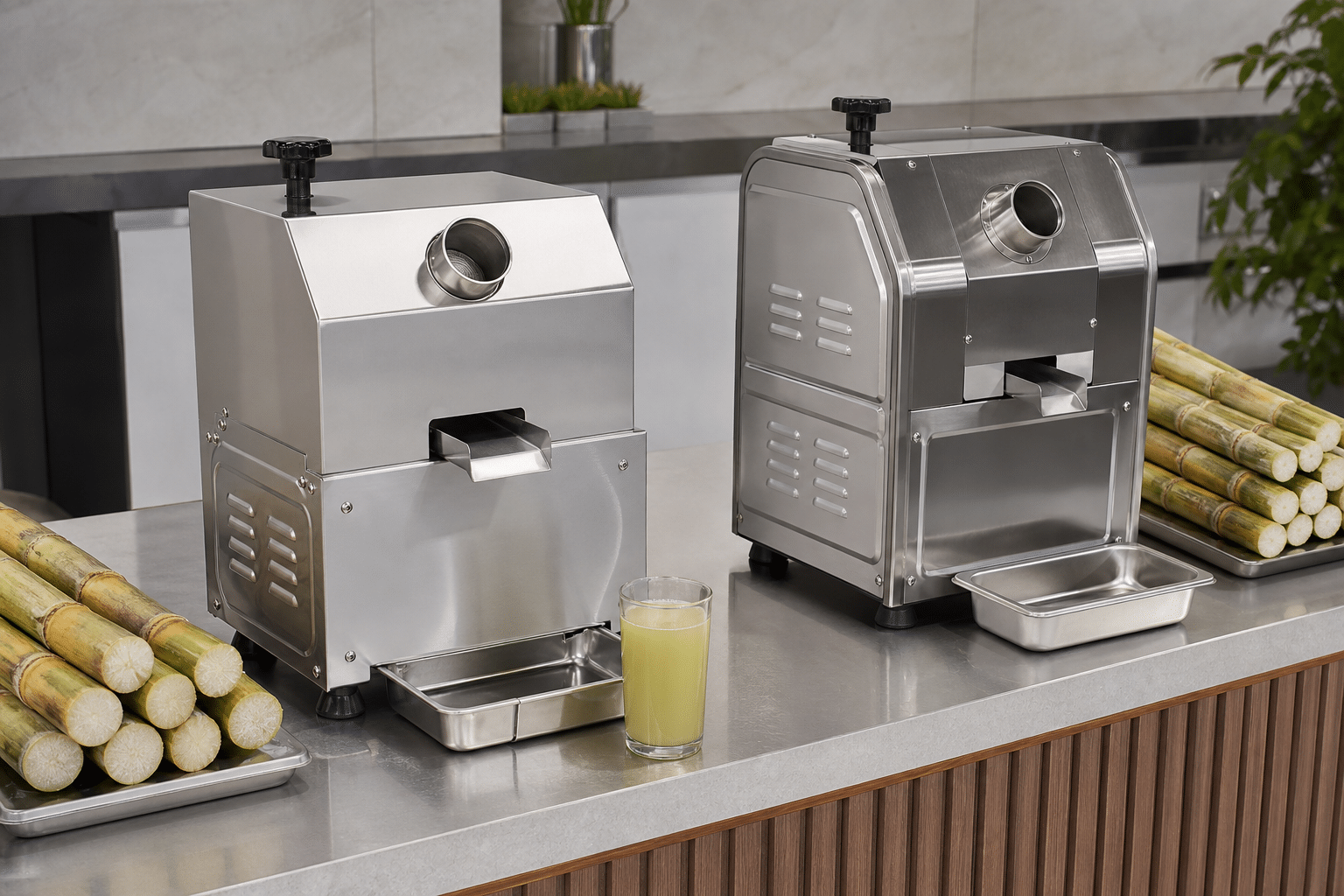
Two commercial sugarcane juicer configurations on a clean service counter

Choose the TiniForce S3 or EasiDeMax S4 only after matching the supplied machine configuration to your actual service conditions. For a lower-volume counter, a compact workflow and straightforward staff operation may be the main priorities. For a busier outlet, the better fit may be the machine configuration that supports your intended service pace, cane size, operator routine and cleaning schedule.

A model name alone does not confirm every purchasing detail. Motor specification, electrical requirement, dimensions, roller arrangement, guards, included accessories and regional configuration can vary by version or market. Ask for the current product specification, dimensional drawing, electrical details and operating documentation for the exact unit being quoted.

In this sugarcane juicer comparison, the most useful question is not simply, “Which model is better?” It is, “Which machine can our team operate, clean and support reliably in our own location?” A good answer considers daily demand, counter layout, cane preparation, local food-service rules and access to service parts.

What This Sugarcane Juicer Comparison Should Cover

Both the TiniForce S3 and EasiDeMax S4 should be assessed as commercial sugarcane crushing equipment: machines designed to press prepared cane and collect fresh juice for immediate service or a controlled downstream process. They are not general-purpose fruit juicers. Their suitability depends on how cane enters the machine, how operators manage feeding and collection, and how the machine is cleaned between service periods.

For a fair comparison, avoid reducing the decision to a single headline figure. A machine that appears suitable on paper can still be a poor operational fit if the counter is too shallow, the available power supply is incorrect, the cane is not prepared consistently, or the outlet has no practical wash-up procedure. Conversely, a configuration that looks more substantial than your present need can create unnecessary cost, space pressure or training complexity.

Compare the TiniForce S3 and EasiDeMax S4 against the same written brief: expected demand by time period, cane length and diameter range, number of operators, available preparation space, juice serving method, cleaning access and local utility conditions. This makes supplier quotations easier to evaluate and reduces assumptions before installation.

Match the Machine to Your Daily Workflow
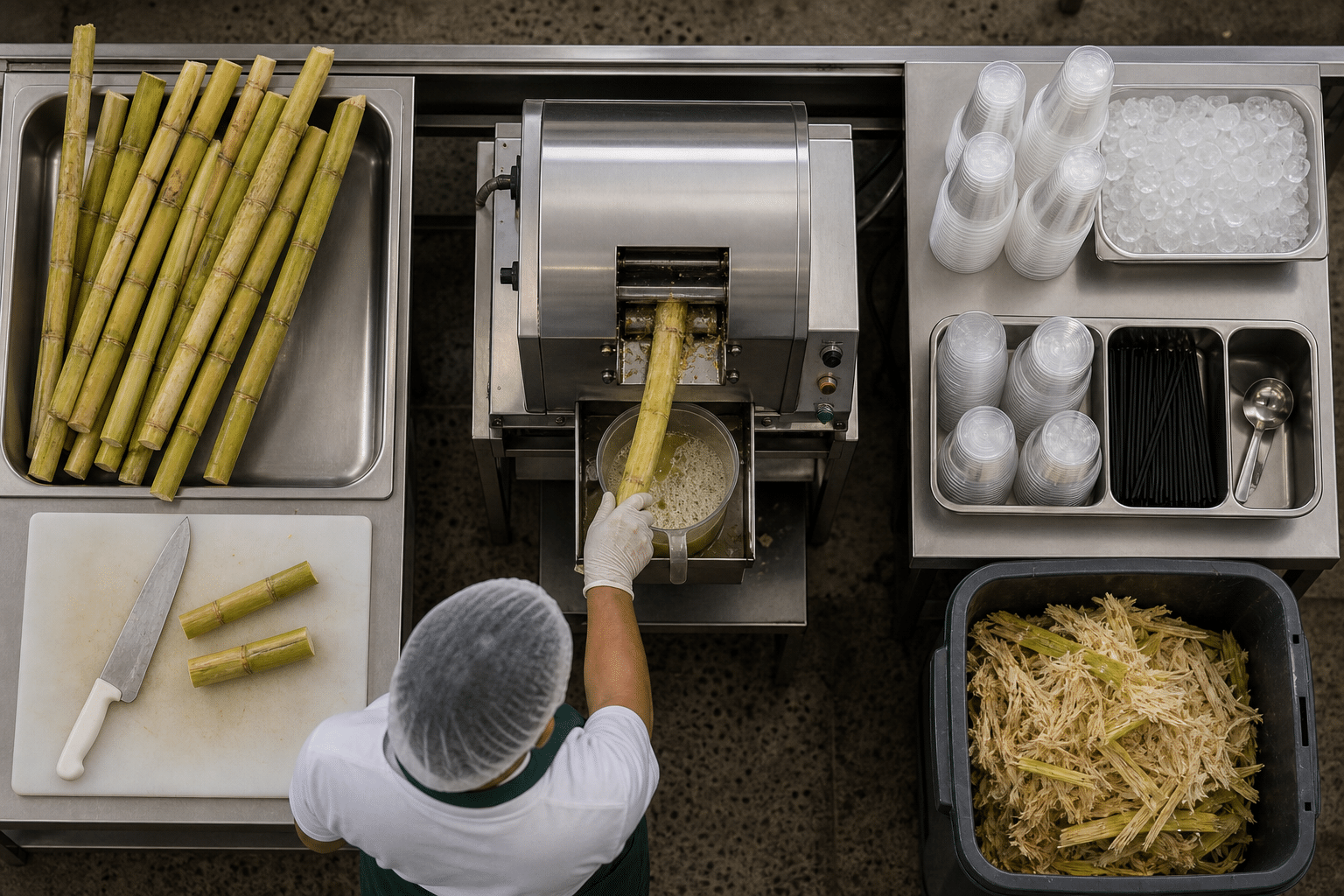
Organised commercial sugarcane juice preparation and serving workflow

Start with demand patterns rather than estimated total sales. A kiosk with steady daytime orders places different demands on a machine than a market stall that experiences short, intense queues. Record your busiest 15- to 30-minute periods, not only your average day. Then consider whether one operator will prepare cane, crush it, handle payment and serve drinks, or whether those tasks will be shared.

For the TiniForce S3 and EasiDeMax S4, ask the supplier to explain the intended operating sequence for the precise configuration offered. Confirm the recommended cane preparation, feeding approach, pass arrangement where applicable, juice collection method, stopping procedure and daily cleaning process. This reveals whether the equipment fits your staff workflow.

A smaller operation often benefits from a simple, repeatable process: wash and trim cane in a separate prep area, keep only a manageable quantity at the service counter, crush to order and clean the food-contact areas at the required intervals. A high-traffic operation may need a more deliberate division of work, with prepared cane held in a suitable food-safe manner and one team member focused on operating the machine.

Do not plan service around a machine running continuously without breaks for wiping, checking and safe cane handling. Build these steps into the operating standard. The aim is consistent service, not an unrealistic theoretical pace.

Compare the Supplied Configuration, Not Just the Model Name

Request like-for-like quotation details for both models. This is the most important step in a commercial sugarcane juicer comparison because the usable machine is the delivered configuration, not the name used in a brochure or conversation.

Use the following questions when reviewing TiniForce S3 and EasiDeMax S4 proposals:

  • Electrical compatibility: What voltage, frequency, plug or hard-wiring arrangement is quoted? Does it match the site supply and local installation rules?
  • Physical dimensions: What are the machine width, depth, height and required clearance? Include room for feeding cane, removing residues and cleaning.
  • Food-contact and cleaning access: Which components contact juice or cane? Which parts can be removed or accessed for washing under the documented procedure?
  • Operating controls and safety guarding: What controls, guards and emergency-stop arrangements are supplied on the quoted version? Operators should understand their intended use before service begins.
  • Cane acceptance: What preparation is recommended for the cane you source? Confirm this with samples or representative measurements where possible.
  • Included items: Check the scope of supply, such as collection containers, tools, consumable items, manuals and any optional accessories. Do not assume these are identical across quotations.
  • Support scope: Ask what installation guidance, remote troubleshooting, spare-parts availability and warranty terms apply in your market.

If one quotation provides more complete documentation, clearer operating guidance and better alignment with your site, that operational certainty can be more valuable than a small initial price difference.

Check Site, Counter and Utility Requirements
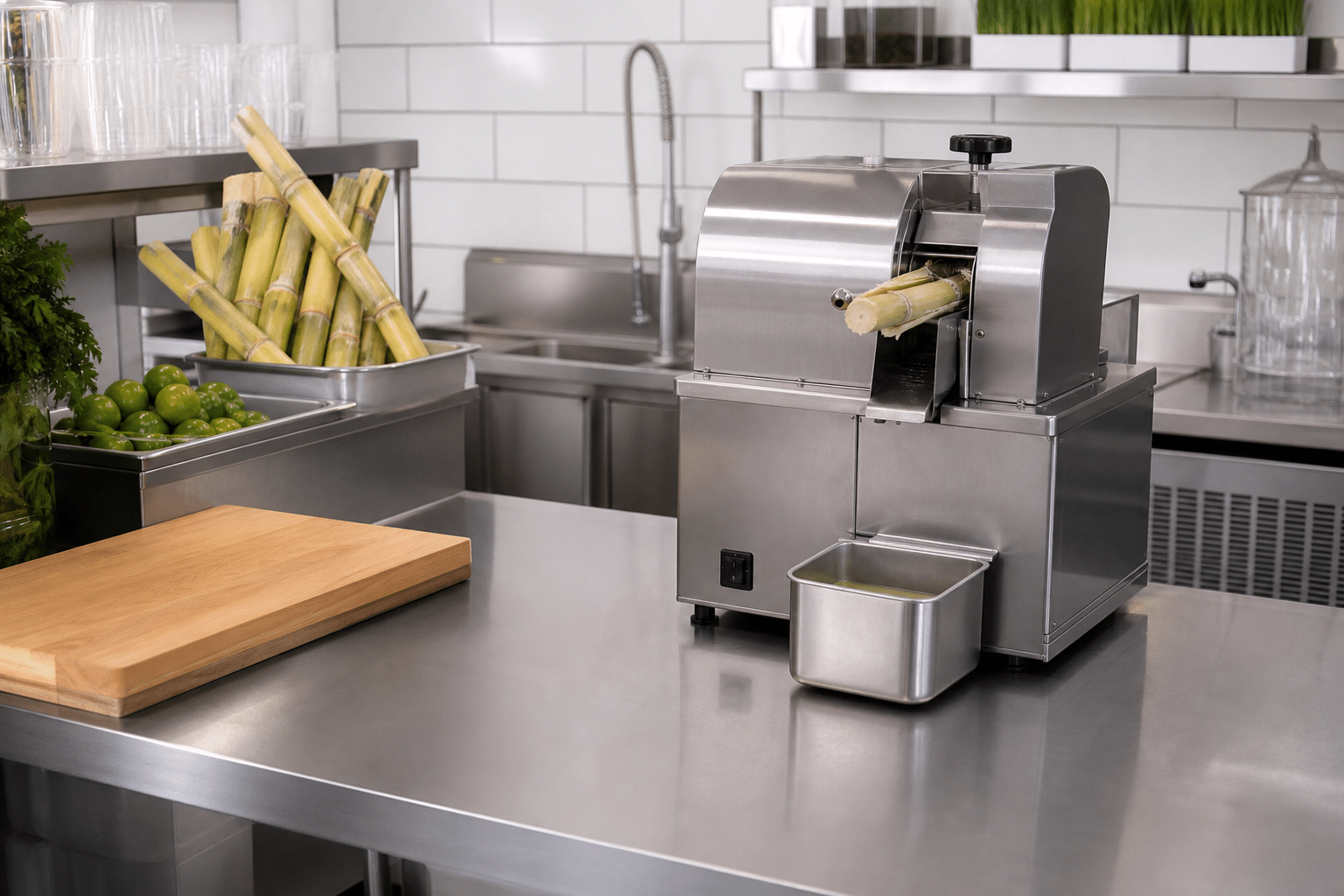
Commercial sugarcane juicer positioned with practical counter and cleaning access

Machine choice should be confirmed against the physical site. Begin with a scaled plan of the work area, including counters, hand-wash facilities, sinks, refrigerators, drains, service windows and staff routes. A sugarcane juicer needs more than a place to stand: it needs practical access for cane loading, juice handling, cleaning and maintenance.

Leave enough clear working space around the unit for the operator to feed cane safely and remove pressed cane material without reaching awkwardly across the machine. Think through where whole cane arrives, where it is washed and cut, where prepared pieces wait, and how residues move to a waste container. These movements should not cross unnecessarily with clean cups, ice or finished drinks.

Confirm the electrical supply with a qualified local professional where required. Do not use an unapproved voltage conversion method or an extension arrangement that is unsuitable for commercial equipment. The machine’s quoted electrical information should be checked before shipping and again before commissioning.

Also assess the counter material and load-bearing capacity, ventilation around the workspace, lighting for cleaning inspection and access to water for the documented sanitation routine. Requirements differ by country and premises type, so local food-service and electrical rules take priority.

Plan Cane Preparation and Juice Service Together

Neither model can compensate for inconsistent raw material preparation. Cane may vary by variety, growing region, storage condition, diameter, fibrousness and straightness. Before selecting a machine, document the cane you expect to use and ask whether the supplier recommends a specific cutting or preparation method for the quoted model.

Use clean, sound cane from a controlled supplier. Establish a receiving check for visible damage, excessive dirt and deterioration. Your preparation team should follow a defined procedure for washing, trimming and cutting according to your local food-safety plan and the machine instructions. Do not force oversized, badly bent or unsuitable pieces into a feed opening.

Extraction approach also affects the workflow. Some operations may use a single pass while others may use more than one pass according to the equipment instructions and their commercial process. The relevant choice is not simply which method sounds more productive; it is whether the method is repeatable, hygienic and realistic during a queue. Review the practical differences in single-pass and multi-pass sugarcane crushing when setting your service standard.

Fresh cane juice is a perishable beverage. If you plan to hold, bottle or transport juice rather than serve it immediately, develop the process with appropriate local food-safety advice. Machine selection is only one part of that wider production system.

Cleaning, Training and After-Sales Support

For daily-use equipment, cleaning access and operator discipline often have as much influence on long-term usability as the purchase specification. Include cleaning in the comparison from the first conversation. Ask each supplier how the quoted TiniForce S3 and EasiDeMax S4 units are shut down, which areas are cleaned during service, which components require end-of-day attention, and which tools or materials are recommended.

Set clear responsibility for the routine. A practical cleaning schedule normally identifies who performs each task, when it is done, how it is verified and where the procedure is recorded. Follow the official machine instructions and your local hygiene requirements. Disconnect or isolate equipment as instructed before cleaning, and never put hands or tools into moving or energized machine areas.

Staff training should cover more than starting the machine. Operators need to know safe feeding practices, what type of cane should not be processed, when to stop work, how to respond to an abnormal sound or obstruction, and how to report a maintenance issue. Supervisors should retain the applicable manual and supplier contact information at the site.

Before ordering, ask about the route for technical support and replacement parts in your sales region. A well-documented parts identification process, responsive communication and a sensible preventive-maintenance routine help reduce avoidable disruption.

A Practical Buying Checklist

Use this checklist to make the TiniForce S3 versus EasiDeMax S4 decision more objective:

  1. Describe your peak service periods and expected operating days.
  2. Measure the full work zone, not only the empty counter surface.
  3. Confirm local voltage, frequency, plug type and installation requirements.
  4. Provide representative cane dimensions and explain how cane will be washed, trimmed and cut.
  5. Request the current specification sheet and dimensional drawing for each quoted model.
  6. Clarify the exact scope of supply, including accessories, tools, documents and optional items.
  7. Review the feeding, stopping, residue-handling and cleaning steps with the people who will operate the unit.
  8. Confirm support contacts, spare-parts procedures and warranty terms for your destination market.
  9. Check that your planned juice handling and storage process meets local food-service requirements.
  10. Keep a written record of assumptions used to select the machine.

This approach protects against an avoidable mismatch. It also gives purchasing, operations and site teams one shared basis for approving the equipment.

Making the Final Decision

The best outcome from this sugarcane juicer comparison is a machine that fits your operational reality. Select the TiniForce S3 if its confirmed configuration, physical footprint, operating procedure and support arrangement align most closely with your outlet. Select the EasiDeMax S4 if its confirmed configuration is the stronger match for the same criteria. Do not treat a model number as proof of suitability without reviewing the current quotation and documentation.

For buyers planning a fleet, private-label programme or market-specific configuration, discuss the commercial requirements early. Topics such as electrical versions, documentation, branding, packaging and after-sales planning are easier to address before production and shipment arrangements are finalised.

A careful pre-purchase comparison helps create a safer, cleaner and more manageable juice operation from the first day of service.


How to Choose the Best Sugarcane Juicer Model for Your Juice Shop: The Ultimate Buyer’s Guide

Introduction: The Engine of Your Juice Business

In the competitive beverage industry, fresh sugarcane juice stands out as a high-margin, high-demand product. However, the profitability of your juice shop depends almost entirely on one piece of equipment: your sugarcane juicer. Unlike blending soft fruits, crushing sugarcane requires immense torque and robust engineering. A sub-par machine leads to frequent breakdowns, low juice yield (wasted inventory), and safety hazards.

For B2B buyers—whether you are setting up a standalone juice bar, upgrading a restaurant beverage station, or procuring equipment for a franchise network—selecting the right model is an operational decision, not just a purchase. This guide provides a comprehensive framework to evaluate commercial sugarcane juice machines, ensuring you invest in equipment that maximizes throughput, hygiene, and longevity.

Step 1: Assessing Your Throughput Requirements

Before analyzing specifications, you must quantify your operational needs. Buying a machine that is too small creates bottlenecks during rush hours, while an oversized machine may waste valuable counter space and capital.

Calculating Cups Per Day

Start by estimating your peak demand. A typical commercial setting falls into one of three categories:

  • Low Volume / Startup (Under 100 cups/day): Cafés or restaurants where sugarcane juice is a secondary menu item. A compact, tabletop unit is often sufficient.
  • Medium Volume (100–300 cups/day): Dedicated juice kiosks or busy food court stalls. You need a machine capable of continuous operation without overheating.
  • High Volume (300+ cups/day): Specialized sugarcane juice bars or wholesale bottling operations. These require heavy-duty motors and advanced cooling systems to run for hours non-stop.

If you are unsure where to start, read our guide on how to choose a sugarcane juice machine based on business size.

Step 2: Understanding Roller Technology

The core of any sugarcane juicer is the roller mechanism. The number and configuration of rollers determine the extraction efficiency (yield) and the speed of service.

2-Roller vs. 3-Roller vs. 4-Roller Systems

2-Roller Machines: These are often entry-level units. The downside is efficiency; you typically have to pass the cane through the machine 2 or 3 times to extract all the juice. This increases labor time and slows down service during a rush.

3-Roller Machines: This is the industry standard for compact commercial units. The cane is crushed in stages, usually achieving a high extraction rate in a single pass. For businesses with limited space but moderate demand, models like the Tiniforce S3 offer an excellent balance of torque and size, utilizing a 3-roller system to maximize yield without a massive footprint.

4-Roller Machines: These are designed for maximum extraction and speed. The additional roller allows for a more gradual and thorough crushing process. This often results in the driest possible bagasse (waste fiber) in a single pass, maximizing your profit per stick of cane. For high-traffic locations, the Easidemax S4 is engineered to handle heavy loads with its 4-roller configuration, ensuring you get every drop of revenue from your raw material.

Solid vs. Hollow Rollers

Always verify that the rollers are solid stainless steel (preferably Grade 304). Hollow rollers can dent or crack under the immense pressure required to crush mature sugarcane, leading to costly replacements.

Step 3: Motor Torque and Drive Systems

Sugarcane is a fibrous, tough material. A high-speed blender motor will burn out instantly. You need torque (rotational force), not just RPM.

Gearbox vs. Chain/Belt Drive

  • Chain/Belt Drive: Older or cheaper models use chains and belts. These stretch over time, require frequent tension adjustments, and are noisy. They are also prone to slipping when a particularly thick cane is inserted.
  • Gearbox Direct Drive: Modern, high-quality commercial juicers use a gearbox reduction system. This multiplies the motor’s torque, allowing a relatively small motor to crush thick cane effortlessly. Gearboxes are quieter, require less maintenance (no belts to replace), and provide consistent power.

Power Consumption and Efficiency

For commercial shops, electricity costs matter. An efficient gearbox system allows the machine to consume less power while delivering higher crushing force. Look for machines that operate on standard voltage but utilize high-efficiency motors to keep operating costs low.

Step 4: Hygiene and Food Safety Design

In the post-pandemic era, hygiene is a top priority for consumers. A machine that looks dirty or is hard to clean can ruin your brand’s reputation.

Closed vs. Open Design

Traditional manual crushers are often open, exposing the juice and rollers to dust, flies, and contaminants. Modern commercial electric machines should have a closed loop design where the extraction area is sealed off from the environment.

Cleaning Efficiency

Ask the following questions regarding maintenance:

  • Are the rollers easily accessible for washing?
  • Can the juice extraction chamber be flushed with water without damaging the motor?
  • Are there hidden crevices where sugar can ferment and grow bacteria?

For a deeper dive into sanitary features, review the top 5 features to look for in a reliable sugarcane juicer.

Step 5: Noise Levels and Customer Experience

If your juice machine is located front-of-house (which is recommended for the “freshness” appeal), noise is a critical factor. An excessively loud machine disrupts customer conversation and creates an unpleasant environment.

Gearbox-driven machines are significantly quieter than chain-driven ones. When selecting a model, look for specifications regarding decibel levels or descriptions emphasizing “low noise” or “silent operation.” This is particularly important for indoor juice bars in malls or quiet cafés.

Comparison: Compact Tabletop vs. Floor-Standing Commercial

Choosing the form factor is often dictated by your available real estate.

Feature Compact Tabletop (e.g., Tiniforce S3) Heavy-Duty Commercial (e.g., Easidemax S4)
Footprint Small, fits on standard counters. Larger, often requires dedicated space or sturdy stand.
Portability High. Easy to move for events or cleaning. Low. Stationary installation recommended.
Capacity Ideal for 50-300 cups/day. Ideal for 300+ cups/day.
Roller Count Typically 3 rollers. Typically 3 or 4 rollers.
Best For Cafés, food trucks, limited space kiosks. Dedicated juice bars, busy food courts.

Step 6: Safety Features

Industrial machinery poses risks if not designed correctly. Ensure your chosen model includes:

  • Emergency Stop Button: A prominent, easy-to-hit button to cut power instantly.
  • Reverse Function: Essential for clearing jams. If a piece of cane is too thick or hard, the machine should be able to reverse rollers to release it safely.
  • Inlet Guard: The feeding inlet should be designed to accept sugarcane stalks but prevent human hands from reaching the rollers.

Step 7: After-Sales Support and Spare Parts

A machine is only as good as its support. Even the best machines need maintenance eventually (bearings, seals, etc.).

  • Spare Parts Availability: Does the manufacturer stock standard parts? Proprietary parts that are out of stock can shut your business down for weeks.
  • Warranty: Look for a clear warranty policy that covers the motor and gearbox, as these are the most expensive components.
  • Technical Support: Can you reach the supplier for troubleshooting?

The ROI of Quality: Why “Cheap” Machines Cost More

It is tempting to buy the cheapest imported machine available, but in the sugarcane business, this is a false economy. Here is the math:

  1. Yield Loss: A cheap machine with poor roller pressure might leave 15-20% of the juice in the waste (bagasse). Over a year, that is thousands of dollars in lost revenue from cane you bought but threw away.
  2. Downtime: If a cheap nylon gear strips during a Saturday afternoon rush, you lose not just the repair cost, but the entire day’s sales and customer trust.
  3. Lifespan: A quality SS304 machine with a gearbox can last 5-10 years. A cheap unit often rusts or fails within 12 months.

Frequently Asked Questions (FAQs)

1. Can I use a regular fruit juicer for sugarcane?

No. Sugarcane is extremely fibrous and hard. Standard centrifugal or masticating juicers designed for apples or carrots will break immediately. You must use a specialized sugarcane crusher.

2. How often do I need to clean the machine?

Ideally, you should rinse the rollers every few hours to prevent stickiness and attract insects. A full deep clean should be done at the end of every business day.

3. What is the difference between the Easidemax S4 and Tiniforce S3?

The Easidemax S4 is a 4-roller heavy-duty machine designed for high volume and maximum extraction. The Tiniforce S3 is a compact, 3-roller machine perfect for businesses with space constraints that still require commercial durability.

4. Does the machine peel the sugarcane?

No, the machine crushes the cane. You must peel the hard outer skin of the sugarcane before feeding it into the machine for the best taste and hygiene, although some heavy-duty machines can crush unpeeled cane (not recommended for taste).

5. Is the machine battery operated or electric?

Most commercial models are mains-powered (electric) for consistent torque. Battery-operated models exist for mobile carts but typically have lower throughput.

6. How do I maintain the rollers?

Rollers should be washed daily. Periodically, you may need to check the bearings and lubricate the chain or gears (if applicable, though gearbox models are sealed).

Final Recommendation Checklist

Ready to make a decision? Use this checklist to ensure you have covered all bases:

  • [ ] Capacity Check: Does the machine handle your peak hour cup volume?
  • [ ] Space Check: Have you measured your counter space? (Compare dimensions of S3 vs S4).
  • [ ] Hygiene Check: Is the machine made of food-grade 304 Stainless Steel?
  • [ ] Safety Check: Does it have an emergency stop and reverse switch?
  • [ ] Yield Check: Does it use at least 3 rollers for single-pass extraction?
  • [ ] Noise Check: Is it quiet enough for your shop environment?

Get Expert Advice

Choosing the right equipment is the first step toward a profitable juice business. If you are still unsure which model fits your specific workflow, or if you need a custom quote for bulk orders, our team is here to help.

Request a quote / Get a sample today and ensure your juice shop is powered by the best technology in the market.

What Makes a Sugarcane Juicer Ideal for Juice Bars? A Comprehensive Guide for Operators

In the competitive world of beverage retail, the equipment you choose is more than just a tool; it is the engine of your business. For juice bars, cafes, and beverage kiosks, the resurgence of sugarcane juice as a premium, health-conscious drink offers a significant revenue opportunity. However, processing raw sugarcane requires specialized engineering. Unlike soft fruits, sugarcane is a fibrous, tough grass that demands high torque and robust mechanics to extract juice efficiently.

Choosing the right sugarcane juicer for juice bars is a critical decision that impacts workflow, hygiene, customer experience, and ultimately, your bottom line. An underpowered machine can lead to frequent jams and downtime, while a machine difficult to clean can become a health hazard. This guide explores the essential features, technical specifications, and operational considerations for selecting the ideal commercial sugarcane juice machine.

The Juice Bar Environment: Unique Operational Challenges

Before diving into machine specifications, it is vital to understand the environment in which the machine will operate. A dedicated juice bar or a mall kiosk operates differently from a roadside stall or a large industrial processing plant. The constraints of a retail environment dictate specific requirements for your equipment.

1. Space Constraints and Footprint

Retail real estate is expensive. Every square inch of counter space must generate revenue. A bulky machine that dominates the counter leaves little room for preparation, point-of-sale systems, or customer interaction. Compact designs that do not compromise on power are essential. Vertical form factors often work better than horizontal ones in tight kiosks.

2. The "Theater" of Juicing

Modern consumers want to see what they are drinking. The process of crushing cane is visually appealing and validates the freshness of the product. Therefore, the machine must be presentable. An industrial-looking, open-gear machine may look out of place in a premium juice bar. Machines with transparent windows and sleek stainless steel finishes allow customers to watch the hygiene and extraction process, turning production into a marketing tool.

3. Noise Sensitivity

In a mall or a quiet café, the roar of a heavy industrial motor is disruptive. It hinders communication between staff and customers and ruins the ambiance. A low noise cane machine is not a luxury; it is a necessity for indoor operations. Gearbox precision and motor quality play huge roles in decibel levels.

Critical Features for Commercial Sugarcane Juicers

When evaluating options, look beyond the price tag. The total cost of ownership includes cleaning time, maintenance, and reliability. Here are the non-negotiable features for a professional juice bar setup.

Hygiene and Cleaning Efficiency

Sugarcane juice is rich in natural sugars, which can ferment quickly if residues are left in the machine. Hygiene is the number one concern for health inspectors and operators alike.

  • Closed Loop vs. Open Rollers: Traditional machines often have exposed rollers which attract flies and dust. A hygienic sugarcane juicer for a retail setting should have a fully enclosed juicing area to prevent contamination.
  • Washability: How long does it take to clean the machine at the end of a shift? If it takes 30 minutes to disassemble parts, staff costs increase. Look for machines where the juicing compartment can be rinsed easily or where parts are detachable for washing.
  • Material Quality: Contact parts must be food-grade. 304 stainless steel is the industry standard for corrosion resistance and hygiene. Avoid machines with plastic rollers or non-food-grade metal components that can rust or degrade over time.

Safety Mechanisms

Sugarcane crushing involves immense pressure. Safety is paramount to protect staff from injury and the machine from damage.

  • Emergency Stop: A prominent, easily accessible e-stop button is mandatory for immediate shutdown in case of emergencies.
  • Overload Protection: Cane density varies. Sometimes a knotty, thick stalk can stall the motor. Overload protection prevents the motor from burning out by automatically cutting power or reversing the rollers when torque limits are exceeded.
  • Restricted Inlet: The feeding inlet should be designed to accept cane but prevent human hands from reaching the rollers. This passive safety feature is crucial in fast-paced environments.

Yield and One-Pass Extraction

Efficiency is defined by how much juice you get from a kilogram of cane. "One-pass" technology means the machine extracts the maximum amount of juice (often 95%+) in a single feed. This improves speed of service—you don’t have to fold the cane and feed it through again—and ensures the dry bagasse (waste fiber) is easily discarded. A high yield cane juicer directly reduces your raw material costs.

Product Comparisons: Choosing the Right Model

Different setups require different capacities. Easimaker offers distinct models tailored to specific volume needs. For a detailed guide on selection, you can refer to our commercial sugarcane machine buying guide.

For Compact Spaces: The TiniForce S3

For kiosks, mobile carts, or cafes where space is at a premium, the TiniForce S3 is engineered to deliver power in a small footprint. Despite its compact size, it utilizes a robust gear system to handle commercial loads without the bulk of traditional industrial units. It is ideal for businesses with moderate volume or limited counter depth.

For High Volume: The EasiDemax S4

Busy juice bars in high-traffic malls or dedicated beverage outlets require a workhorse. The EasiDemax S4 is designed for heavy-duty continuous operation. It typically features enhanced cooling for the motor, larger roller dimensions for faster throughput, and a more robust chassis to withstand constant vibration. If your business model relies on speed—serving hundreds of cups during peak hours—the S4 ensures you don’t face bottlenecks.

The Juice Bar Checklist: Operational Readiness

Buying the machine is step one. Integrating it into your workflow is step two. Use this checklist to ensure your facility is ready.

1. Electrical Specifications

Commercial juicers require stable power. Check the voltage and amperage requirements of your chosen model. While many modern units like the S3 and S4 are designed for standard outlets, ensuring a dedicated circuit can prevent tripping during peak loads when other appliances (blenders, fridges) are running.

2. Waste Management (Bagasse)

Sugarcane juicing generates a large volume of dry fiber waste (bagasse). For every 10kg of cane, you might have 3-5kg of waste.

  • Through-Counter Chute: Ideally, position the machine over a hole in the counter so waste falls directly into a large bin below. This keeps the countertop clean and speeds up service.
  • Bin Capacity: Ensure your under-counter bin is large enough to handle a full shift, or plan for frequent emptying schedules.

3. Drainage and Cleaning Station

Even with an easy clean cane juicer, you need a water source nearby. A spray hose or a sink within arm’s reach allows for quick rinsing of the inlet and outlet between batches to prevent stickiness and attractants for pests.

4. Cane Preparation Area

Raw cane often needs to be scraped or washed before juicing. Do you have a wet prep area? If you are buying pre-peeled cane, you need adequate refrigeration space, as peeled cane oxidizes and ferments faster than unpeeled stalks.

Enhancing Customer Experience

The machine contributes to the ambiance. A quiet, clean machine signals quality. Furthermore, the visual aspect of a compact footprint juice kiosk with a transparent crushing chamber allows customers to see the fresh cane entering and the juice flowing out. This transparency builds trust.

To see these machines in action and understand the noise levels and workflow, check out our reviews and videos page. Seeing the speed of extraction can help you visualize the throughput for your specific layout.

Maintenance, Uptime, and Warranty

In B2B operations, uptime is currency. If your machine fails on a Saturday afternoon, you lose weekend revenue. Reliability is built into the design—high-quality bearings, solid steel gears (instead of nylon), and moisture-sealed electronics.

However, even the best machines need support. Verify the warranty terms before purchase. Does the supplier offer spare parts? Is there technical support available? A comprehensive warranty policy is a sign of manufacturer confidence. Regular maintenance, such as checking lubrication levels (if applicable) and inspecting seals, will extend the lifespan of your investment significantly.

ROI and Cost Considerations

A cheaper machine often costs more in the long run due to lower yield. If a budget machine extracts 70% of the juice and a premium machine extracts 90%, you are throwing away 20% of your inventory with every stalk. Over a year, the cost of wasted cane far exceeds the price difference of the machine.

Example ROI Calculation:
If you process 50kg of cane daily at $1/kg cost.
Machine A (75% yield) produces 37.5L juice.
Machine B (90% yield) produces 45L juice.
Difference: 7.5L per day. At a sales price of $10/L, that is $75/day in lost revenue opportunity.

Investing in high-yield, durable juice bar equipment pays for itself through efficiency and waste reduction.

Frequently Asked Questions

Can I juice other ingredients with a sugarcane machine?

Commercial sugarcane juicers are specifically designed for the fibrous nature of cane. While some operators add small pieces of ginger or lemon (halved) alongside the cane for flavor, the machine is not designed for soft fruits like oranges or apples, nor for hard roots like carrots, unless specified. Always consult the manual.

How often should I clean the machine?

For food safety, a full clean should be done at the end of every operational day. During the day, a quick water flush (running water through the machine while it runs) is recommended every few hours to keep the rollers sticky-free.

What power supply do I need?

Most compact commercial units run on standard single-phase power (110V or 220V depending on the region). However, always check the specific amperage, especially for heavy-duty models like the S4.

Why is the machine jamming?

Jamming usually occurs if the cane is too thick for the inlet or if the motor lacks torque. Using a machine with overload protection and a reverse function helps clear jams quickly without damaging the gearbox.

Conclusion

Selecting the right sugarcane juicer is about balancing performance, hygiene, and customer experience. Whether you choose the compact TiniForce S3 for a tight kiosk or the robust EasiDemax S4 for a high-volume bar, ensure your choice features 304 stainless steel construction, safety protections, and a design that facilitates easy cleaning.

Ready to upgrade your juice bar operations? Contact us today to discuss which model fits your business plan.

Request a Quote / Get a Sample

5 Reasons EasiDeMax S4 Is the Right Commercial Sugarcane Juicer

In the beverage industry, few products offer the profit margins of fresh sugarcane juice. With raw material costs often negligible compared to the retail price of a cup, it is a lucrative addition to juice bars, restaurants, and hotels. However, the profitability of this venture relies heavily on one piece of equipment: the commercial sugar cane juicer.

Selecting the right machine is not just about crushing cane; it is about extraction efficiency (yield), hygiene, and operational reliability. If your machine leaves juice in the fiber (bagasse), you are throwing money away. If it breaks down during a rush or is difficult to clean, it becomes a liability rather than an asset.

Enter the EasiDeMax S4. Designed specifically for high-demand commercial environments, the S4 addresses the most common pain points faced by business owners: low yield, noise, and sanitation concerns. In this guide, we explore the five engineering and operational reasons why the EasiDeMax S4 is the strategic choice for your business.

1. Maximum Extraction: The Power of the 4-Roller System

The primary metric for any commercial juicer is yield: how much juice can you extract from a specific weight of cane? Standard machines often utilize a 2-roller or 3-roller system. While these can crush cane, they often require multiple passes to extract all the liquid, or they simply discard wet bagasse, resulting in significant product loss.

The EasiDeMax S4 utilizes a 4-roller system designed to maximize throughput and extraction in a single pass.

How the 4-Roller System Works

The mechanics are progressive. The first set of rollers acts as the initial crusher, breaking the hard outer bark of the sugarcane and flattening the stalk. The second set applies immense pressure to squeeze the fiber dry. This multi-stage compression ensures a juicing yield of up to 75%.

Business Impact:

  • Higher Margins: A 75% yield means you get more product from the same inventory compared to machines offering only 60-65% yield. Over a year, this difference equates to substantial savings in raw material costs.
  • Speed: Because the extraction is efficient in a single pass, operators do not need to feed the cane through multiple times, speeding up service during peak hours.

2. Food Safety & Durability: 304 Stainless Steel Construction

In the food processing industry, material quality is non-negotiable. Cheaper alternatives often use 201 stainless steel or even galvanized iron for internal components. These materials are prone to rust and corrosion when exposed to the acidic nature of sugarcane juice, posing serious health risks and leading to equipment failure.

The EasiDeMax S4 is constructed with food-grade 304 stainless steel. This applies to the cabinet and, crucially, the rollers and juice contact areas.

Why 304 Stainless Steel Matters

  • Corrosion Resistance: 304 stainless steel contains a high percentage of chromium and nickel, making it highly resistant to oxidation and rust. This ensures the machine remains hygienic and visually appealing for years.
  • Compliance: Using food-grade materials helps your business meet strict local health department regulations and international food safety standards.
  • Aesthetics: The polished finish looks professional in front-of-house settings, reassuring customers about the cleanliness of your operation.

For more insights on material importance, read our guide on how to choose a commercial sugar cane juice machine.

3. Reliability: Heavy-Duty Copper Motor & Overload Protection

A commercial machine must withstand continuous operation. The heart of the EasiDeMax S4 is its built-in all-copper motor, rated at a minimum of 1/2 HP (Horsepower). Unlike aluminum-wound motors found in budget units, copper motors conduct electricity more efficiently, generate less heat, and offer a significantly longer lifespan.

Engineered for Longevity

The S4 is not just powerful; it is smart. It features an integrated overload protection system. If an operator accidentally feeds an oversized stalk or a hard object that jams the rollers, the system automatically cuts power to prevent motor burnout. This safety feature protects your investment and minimizes downtime.

Super Low Noise Operation

Many industrial juicers sound like tractors, making them unsuitable for juice bars, cafes, or hotel lobbies where ambiance is key. The EasiDeMax S4 is engineered for super low noise. The precision gear reduction box and high-quality motor ensure quiet operation, allowing your staff to communicate with customers without shouting over the machine.

4. Hygiene & Maintenance: The Removable Roller Advantage

Cleaning is often the most dreaded task for juice bar operators. In many traditional machines, the rollers are fixed inside the cabinet. To clean them, staff must reach into the machine with a hose or brush, often missing crevices where sugar residue can ferment and grow bacteria.

The EasiDeMax S4 solves this with a removable roller design. The roller assembly can be easily detached and removed from the cabinet. This allows for:

  • Deep Cleaning: You can wash the rollers thoroughly in a sink, ensuring 100% removal of sticky residue.
  • Sanitation: Prevents cross-contamination and the buildup of mold or yeast.
  • Maintenance Access: Makes it easier to inspect bearings and seals without dismantling the entire unit.

5. Operational Efficiency: Designed for the Front-of-House

The EasiDeMax S4 is designed not just for the kitchen, but for the customer experience. The machine features a transparent window on the front. This serves a dual purpose:

  1. Operational Safety: The operator can visually monitor the crushing process.
  2. Marketing Theater: Customers love to see their juice being made fresh. Seeing the cane crushed and the juice flowing creates an authentic, fresh appeal that drives sales.

Furthermore, the control system is simplified into a two-button control (Forward/Reverse). This simplicity reduces the training time required for new staff. If a piece of cane is tricky, the reverse function allows the operator to back it out instantly.

Comparison: EasiDeMax S4 (4-Roller) vs. Standard 2-Roller Machines

To understand the value proposition of the S4, it is helpful to compare it directly with entry-level 2-roller machines often found in the market.

Feature Standard 2-Roller Machine EasiDeMax S4 (4-Roller)
Juicing Yield 60% – 65% (Wet bagasse) Up to 75% (Dry bagasse)
Passes Required Often requires 2-3 passes Single pass efficiency
Motor Type Often Aluminum or low torque All-Copper, High Torque (1/2 HP+)
Hygiene Fixed rollers (Hard to clean) Removable rollers (Easy clean)
Noise Level Loud, mechanical noise Super low noise operation
Durability Plastic or 201 Stainless components Full 304 Stainless Steel

Buyer’s Checklist: What to Ask Before You Buy

Before finalizing your procurement of a sugarcane juicer, ensure you have checked the following specifications to guarantee compatibility with your business needs.

  • Voltage & Plug Type: Ensure the machine matches your local power grid (e.g., 110V/60Hz for US, 220V/50Hz for EU/Asia).
  • Spare Parts Availability: Does the supplier stock gears, chains, and bearings?
  • Warranty Terms: Understand what is covered. Check the warranty policy to ensure the motor and gearbox are protected.
  • Capacity Requirements: Estimate your peak hour demand. The S4 is designed for high volume, but ensure your workflow can handle the output.

Frequently Asked Questions (FAQ)

Does the EasiDeMax S4 require peeling the sugarcane before juicing?

While the heavy-duty rollers can crush unpeeled cane, it is generally recommended to lightly peel or clean the cane for the best taste and hygiene. Hard outer skins can sometimes impart a bitter taste, but the machine has the power to process them if required.

How often should the machine be cleaned?

Due to the high sugar content of the juice, the machine must be cleaned every few hours during operation (flushing with water) and deep cleaned at the end of every shift. The removable rollers on the S4 make this end-of-day process significantly faster.

Can this machine handle different sizes of sugarcane?

Yes, the roller gap is designed to accommodate various diameters of sugarcane stalks, from thin to thick varieties. The automatic adjustment mechanism ensures consistent pressure regardless of stalk size.

Is the machine suitable for mobile juice carts?

Yes, provided there is a stable power source. Its compact footprint, low noise, and enclosed hygienic design make it ideal for mobile setups, food trucks, and kiosks.

Conclusion

The EasiDeMax S4 represents a balance of heavy-duty industrial capability and user-friendly design. By combining a high-yield 4-roller system with 304 stainless steel hygiene and a quiet, powerful copper motor, it eliminates the inefficiencies of older juicing methods.

For businesses looking to scale their operations and ensure a consistent, high-quality product, the S4 is a verified investment. Don’t let profits disappear with wet bagasse or downtime.

Ready to upgrade your production?

Request a quote or schedule a live demo today