Table of Contents
- Daily cleaning SOP at a glance
- Why daily cleaning matters
- Prepare the machine safely
- Step-by-step daily cleaning SOP
- Sanitize, dry, and reassemble
- Daily inspection before restart
- Common cleaning mistakes to avoid
- Create a repeatable cleaning record
A daily cleaning SOP for commercial sugarcane juice machines: isolate power, remove cane residue, clean accessible food-contact parts, rinse, sanitize, dry, inspect, and reassemble according to the machine manual.
Daily Cleaning SOP at a Glance
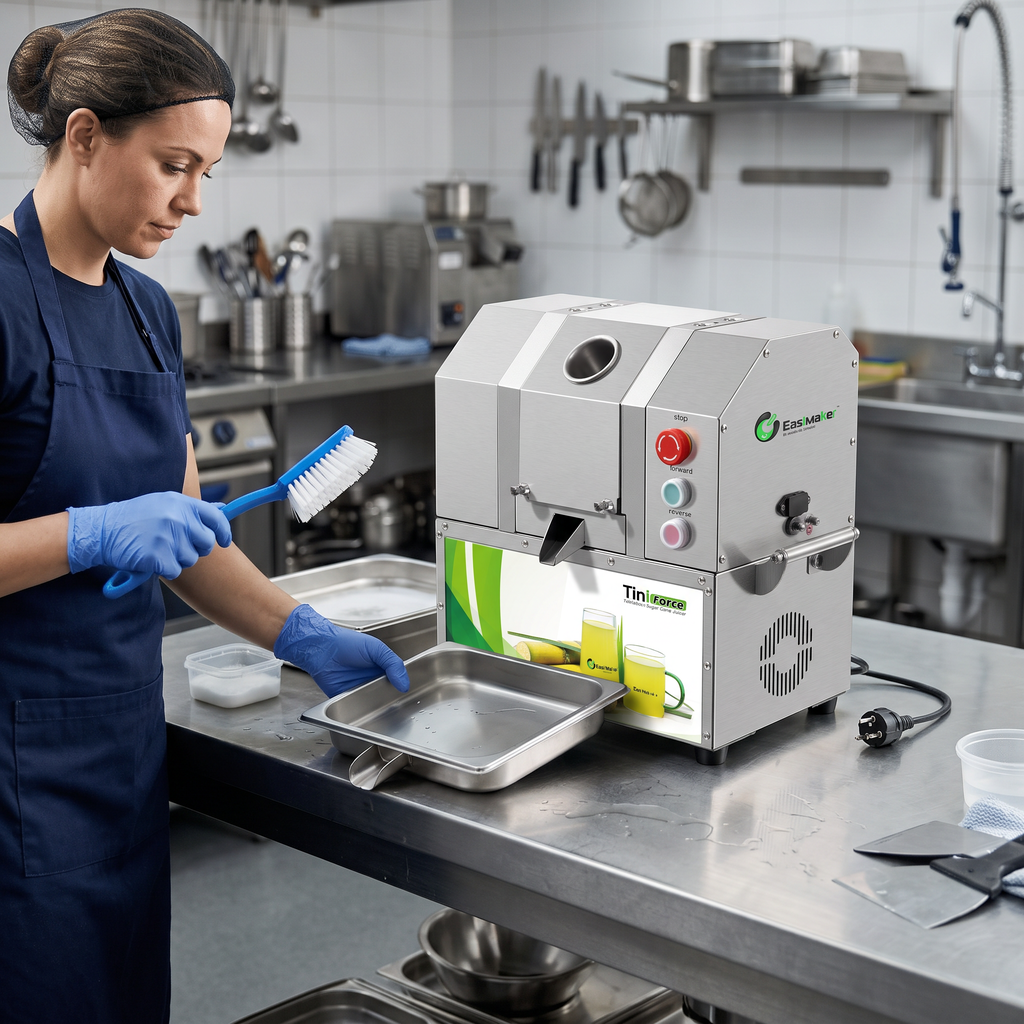
To clean a sugarcane juice machine each day, stop production, switch off and isolate the power supply, remove remaining cane fibre, and clean all accessible food-contact areas following the machine manual. Wash removable parts with a food-equipment-safe detergent, rinse with clean water, apply a suitable food-contact sanitizer at its labelled concentration and contact time, then allow parts to air dry before reassembly.
The exact disassembly points, cleaning tools, and approved chemicals depend on the machine model and local food-safety requirements. Never direct high-pressure water at motors, switches, electrical connections, bearings, or sealed areas unless the manufacturer specifically permits it. A consistent end-of-day routine is more reliable than attempting to remove dried residue at the next opening.
This SOP is intended for commercial operators. It should be adapted to the instructions supplied with the machine and to the hygiene procedures required by the local authority, site manager, or food business.
Why Daily Cleaning Matters
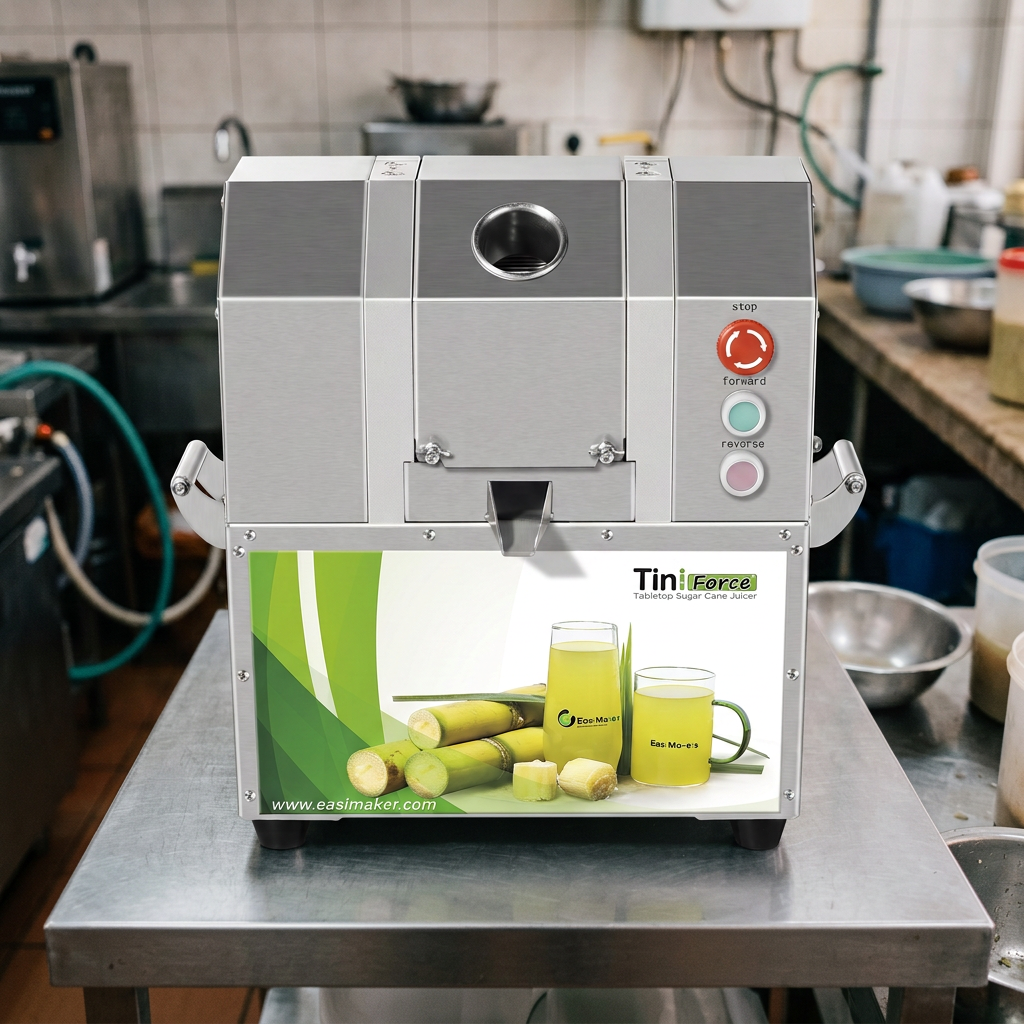
Sugarcane juice leaves fibrous bagasse, juice film, and fine particles around rollers, feed openings, juice paths, guards, trays, and collection containers. Once residue dries, it is harder to remove and can interfere with normal operation. A daily cleaning routine helps operators keep food-contact surfaces ready for the next service period and makes early wear or damage easier to spot.
Cleaning and maintenance are connected, but they are not the same task. Cleaning removes visible residue and soil. Sanitizing is a separate step performed after effective cleaning and rinsing. Maintenance covers inspection, adjustment, replacement, and service activities. Combining these terms can lead to missed steps, especially when staff change shifts.
Before setting a cleaning routine, review the equipment documentation and identify the parts the operator may remove safely. For buyers evaluating access, parts availability, and support before purchase, this guide on questions to ask a sugarcane juicer manufacturer can help define the practical points to confirm.
Prepare the Machine Safely
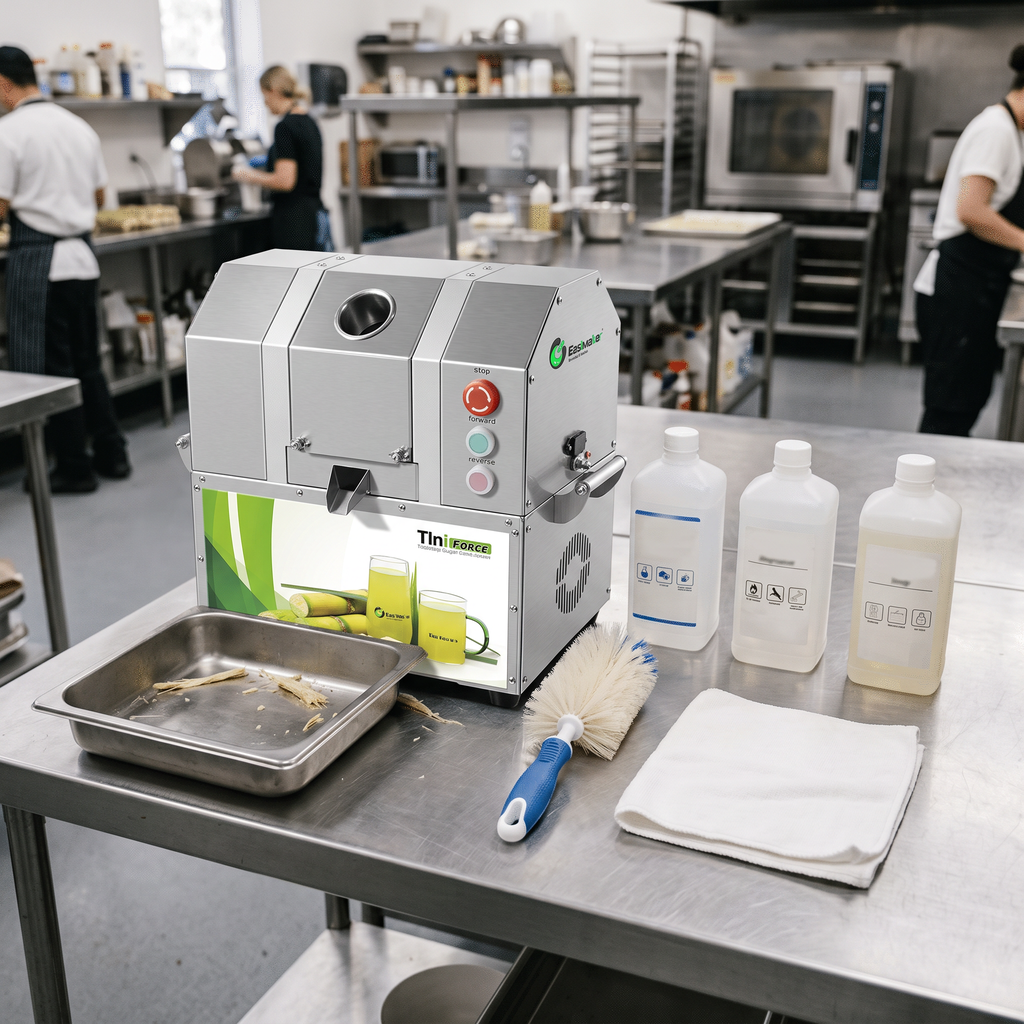
Begin cleaning only after the final cane has passed through the machine and the rollers or crushing mechanism have stopped completely. Switch the machine off using its normal control, then isolate it from the electrical supply. Follow the site lockout procedure where one is used. Do not clean a moving machine, reach into a feed opening, or rely only on an operator switch when removing guards or accessing the crushing area.
Prepare the supplies before dismantling anything:
- Clean food-equipment brushes sized for the machine’s accessible areas.
- A non-abrasive cloth or sponge for smooth external surfaces.
- A food-equipment-safe detergent used as directed by its supplier.
- Clean potable water for rinsing where the manual permits wet cleaning.
- A food-contact sanitizer compatible with the surface materials.
- Clean drain trays, containers, and a designated area for removable parts.
- Disposable gloves or other personal protective equipment required by the cleaning chemical instructions and site policy.
Avoid improvised metal tools, steel wool, aggressive scouring pads, or chemicals that may damage stainless steel, coatings, plastics, seals, or labels. Do not mix cleaning chemicals. If a chemical label, safety data sheet, or local procedure gives a different dilution, protective-equipment, or rinse requirement, follow that instruction.
Step-by-Step Daily Cleaning SOP
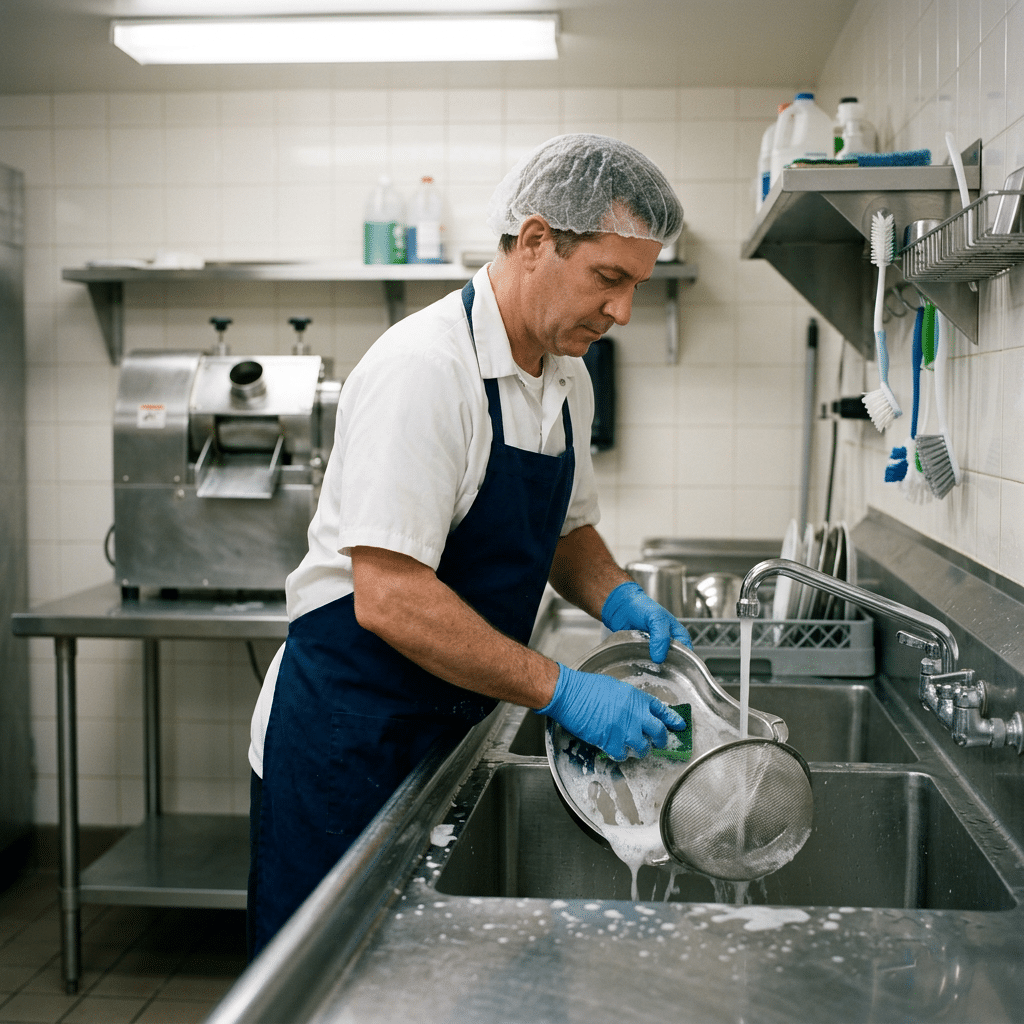
- Clear product residue. With the machine isolated, remove loose cane fibre from the feed area, discharge area, tray, splash guards, and other accessible locations. Use a designated brush or scraper that is approved for the machine. Collect bagasse and waste promptly so it does not spread over clean surfaces.
- Remove operator-serviceable parts. Take off only the guards, covers, juice trays, strainers, collection containers, or other removable components identified in the manual. Place small items in a clean container so fasteners and parts are not lost. Do not force components that do not release normally.
- Wash removable food-contact parts. Apply detergent according to its instructions. Brush joints, corners, mesh, juice channels, and the undersides of trays where residue may collect. A detergent wash should physically remove soil; sanitizer is not a substitute for this step.
- Clean fixed accessible surfaces. Wipe or brush the accessible roller area, feed chute, discharge area, external housing, handles, and surrounding splash zones using the method approved for the machine. Use a controlled amount of water. Keep liquid away from electrical controls, motor ventilation, transmission components, and any area not designed for washdown.
- Rinse when required. Rinse detergent from parts and surfaces with clean water, following the detergent label and machine instructions. Residual detergent can affect the sanitizer step and may leave an unwanted residue.
- Clean the work area. Empty and clean the waste container, wash the drip area, and clean the bench or stand around the machine. A clean machine placed back into an unclean splash zone can quickly become contaminated again.
Where a model has enclosed rollers, internal juice pathways, or parts that require tools to access, do not assume they should be opened during every shift. Follow the manufacturer schedule. Unauthorized dismantling can create safety risks, introduce alignment problems, or compromise components that need trained service.
Sanitize, Dry, and Reassemble
After surfaces are visibly clean and rinsed as required, sanitize food-contact parts and accessible food-contact surfaces with a product suitable for the material and intended use. Use the concentration, application method, contact time, and rinse instruction on the sanitizer label. More chemical is not automatically better: an incorrect concentration can be ineffective, leave residue, damage materials, or create unnecessary handling risk.
Allow cleaned parts to air dry on a clean rack or protected surface. Drying with an unclean cloth can reintroduce residue. If a site procedure permits cloth drying, use only a clean designated cloth and replace it when soiled. Ensure juice containers, strainers, trays, and any removable guards are fully dry before reassembly.
Reinstall parts in the correct orientation and secure guards before restoring power. Confirm that no brush, cloth, fastener, packaging, or cleaning item remains in the feed or crushing area. Reassembly is a functional safety step, not just the end of cleaning.
For distributors or brands establishing documented product specifications and service expectations, the OEM sugarcane juicer guide for distributors and brands outlines considerations such as target market, electrical configuration, parts planning, and after-sales support.
Daily Inspection Before Restart
Once the machine is clean, dry, and assembled, carry out a short visual inspection before the next production period. Check that guards and trays are correctly fitted, controls are dry and unobstructed, and the power cable shows no visible damage. Look for loose fasteners, cracked covers, damaged seals, unusual roller surface wear, leaks, or parts that no longer fit correctly.
During the next start-up, listen for unusual noise and observe the machine from a safe position. If a guard will not close, a part binds, a control behaves unexpectedly, or the machine makes an unfamiliar sound, stop using it and follow the service process specified by the supplier or manufacturer. Cleaning staff should report these observations rather than attempting an unapproved repair.
Keep a distinction between normal operator checks and technical service. Routine wiping, approved removable-part washing, and visual inspection belong in a daily SOP. Electrical work, roller alignment, drive-system service, and repairs should be handled by qualified personnel following the applicable documentation.
Common Cleaning Mistakes to Avoid
- Cleaning after residue has dried: End-of-day cleaning is usually easier and more controlled when completed promptly after service.
- Using sanitizer on visibly dirty surfaces: Soil should be removed first with the correct washing process.
- Flooding the machine: Excess water can reach areas that are not intended for washdown, including controls and drive components.
- Using abrasive tools: Scratches and damaged surfaces may become harder to clean and can shorten the usable life of parts.
- Skipping hidden but accessible areas: Tray undersides, strainer mesh, juice collection points, guard edges, and splash zones need deliberate attention.
- Reassembling while wet or incomplete: Missing or incorrectly fitted guards can create operational and safety problems.
- Using a generic SOP without checking the model manual: Similar-looking machines can have different safe disassembly, cleaning, and service requirements.
Train every operator on the same sequence, including what they are permitted to remove and when they must escalate an issue. A short, clear SOP posted in the cleaning area is generally more useful than a long procedure that staff cannot follow during a busy close-down.
Create a Repeatable Cleaning Record
A simple record supports consistency across shifts and locations. The form can include the date, machine identification, cleaning start and finish time, operator initials, detergent and sanitizer used, any visible issue, and the action taken. Keep the form practical: the aim is to confirm that the required work happened and to make recurring issues visible.
For example, repeated notes about difficult-to-clean residue around a tray, a loose guard, or a worn seal may indicate a training need, a replacement part requirement, or a need for service. Records also help managers verify that opening and closing responsibilities are clear.
When selecting a commercial sugarcane juice machine, consider cleaning access alongside output needs, electrical compatibility, local service arrangements, spare parts, and intended operating environment. For machine selection, technical questions, or support planning, contact Easimaker to discuss the appropriate equipment and service requirements for your market.