
Introduction to Bone Saw Operational Excellence
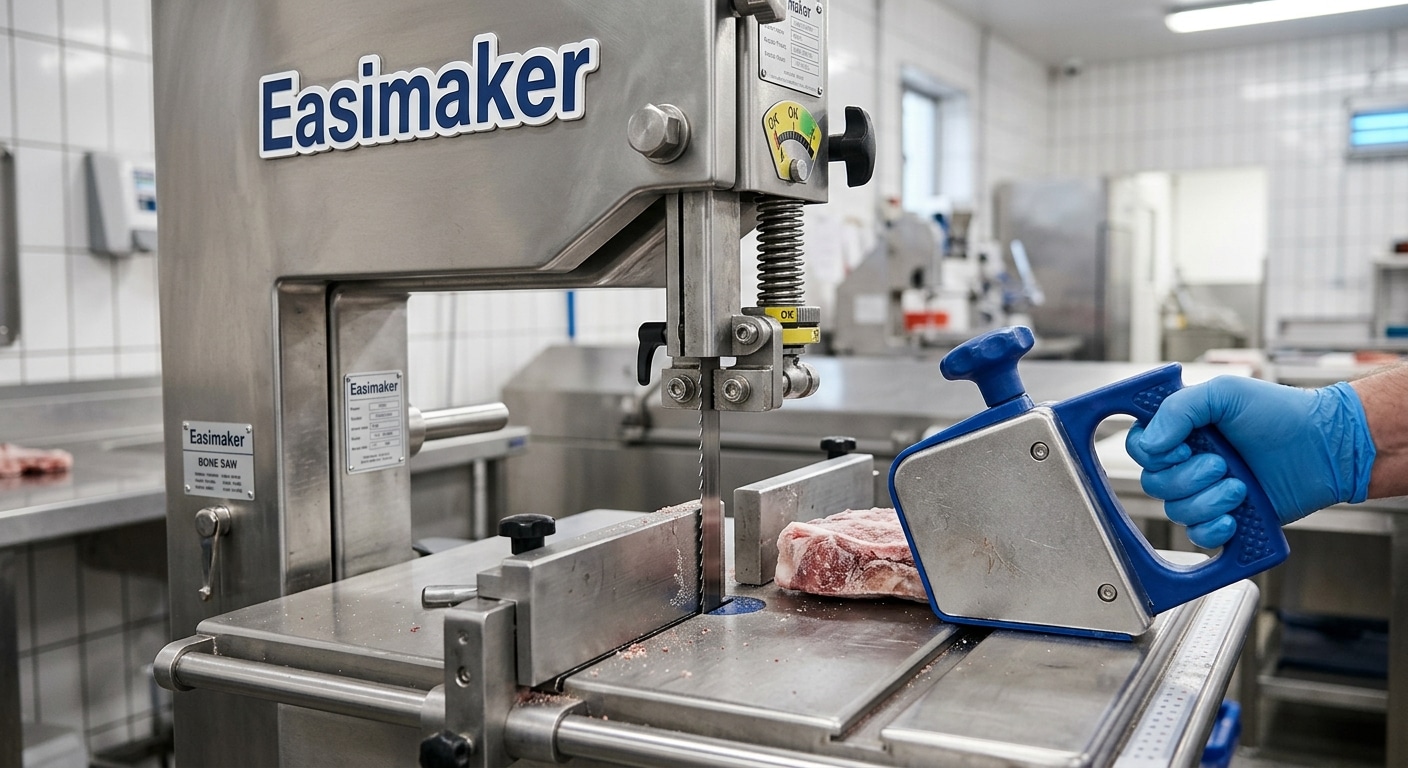
In high-volume meat processing facilities and professional butcher shops, the commercial bone saw machine is an indispensable asset. These powerful units slice through frozen meat, dense bone, and thick cuts with precision and speed, directly impacting production efficiency and product yield. However, the sheer power of this equipment introduces significant workplace risks if not managed correctly.
Establishing rigorous bone saw safety protocols and consistent maintenance routines is not just about regulatory compliance; it is a fundamental requirement for protecting operators, extending machine lifespan, and maintaining the hygiene standards critical to food processing. This guide provides facility managers and butcher shop owners with actionable protocols for safe operation, blade tensioning, and daily sanitation.
Essential Operator Safety Gear
Human error or momentary lapses in concentration can lead to severe injuries when operating heavy-duty butcher shop machinery. Equipping operators with the correct Personal Protective Equipment (PPE) is the first line of defense.
- Cut-Resistant Chainmail Gloves: Operators must wear stainless steel mesh gloves on the non-dominant hand (the hand guiding the meat, though always using a pusher when possible). Note that chainmail protects against slicing but will not stop a powered band saw blade, making spatial awareness paramount.
- Safety Glasses or Face Shields: Bone fragments and meat shards can become high-velocity projectiles during cutting. Industrial-grade eye protection is mandatory.
- Heavy-Duty Cut-Resistant Aprons: A reinforced apron protects the operator’s torso from accidental slips or kickbacks from the cutting table.
- Slip-Resistant Footwear: Meat processing floors frequently become slick with water, fat, and debris. High-traction, steel-toed boots prevent falls near operating machinery.
Safe Operation Guidelines for Commercial Bone Saws
Implementing strict operational procedures ensures that meat processing equipment is used efficiently and safely. Train all personnel on the following protocols before allowing them to operate the saw.
Pre-Operation Inspection
Before powering on the machine, operators should conduct a brief visual and physical inspection:
- Verify that all safety guards and wheel covers are securely locked in place.
- Check the cutting table for stability and ensure the sliding mechanism (if applicable) moves smoothly.
- Inspect the blade for missing teeth, cracks, or dullness.
- Ensure the scrapers are properly aligned to keep the wheels free of fat buildup.
Feeding and Cutting Techniques
The most common injuries occur during the feeding process. Operators should never push meat through the blade using their bare hands. Always use the integrated pusher block or a dedicated meat pusher tool to guide the product. Maintain a steady, consistent feed rate; forcing the meat through the blade too quickly can cause the blade to jump, bind, or snap, while feeding too slowly can cause the meat to burn or smear.
Bone Saw Blade Maintenance and Tensioning
Proper bone saw blade maintenance is critical for achieving clean cuts, minimizing meat waste, and preventing dangerous blade failures.
How to Check and Adjust Blade Tension
Blade tension directly affects the performance of your commercial bone saw machine. A loose blade will wander, creating wavy cuts and potentially slipping off the drive wheels. An overtensioned blade is prone to snapping under load and causes premature wear on the wheel bearings.
- Disconnect Power: Always utilize lockout/tagout (LOTO) procedures before opening the machine cabinet.
- Locate the Tension Mechanism: Most commercial saws feature a tensioning knob at the top of the upper wheel housing.
- Adjust the Tension: Turn the knob to tighten the blade. Many modern industrial saws include a built-in tension gauge or a spring-loaded mechanism that clicks or aligns with a marker when the optimal tension is reached.
- Test the Deflection: If your machine lacks a gauge, a general industry rule of thumb is that the blade should deflect no more than 1/8 to 1/4 inch when pressed lightly in the center of the longest exposed span. (Always consult your specific manufacturer’s manual for exact tolerances.)
- Manually Track the Blade: Spin the upper wheel by hand (while wearing protective gloves) to ensure the blade tracks perfectly in the center of the wheel without rubbing against the back flange.
Signs It Is Time to Replace the Blade
Do not wait for a blade to break before replacing it. Replace the blade immediately if you notice:
- The machine requires significantly more physical effort to push the meat through.
- The cuts are jagged, uneven, or producing excessive bone dust.
- Visible hairline cracks along the back edge or gullets of the blade.
- Missing or chipped teeth.
Daily Cleaning Procedures for Meat Processing Equipment
Sanitation is a non-negotiable aspect of meat processing. Bone saws accumulate fat, marrow, and meat particles that rapidly harbor bacteria if not thoroughly cleaned. Follow this daily teardown and sanitization protocol:
Step-by-Step Sanitation Protocol
- Power Down and LOTO: Disconnect the machine from the power source.
- Disassemble Components: Remove the blade, upper and lower wheels, scrapers, sliding table, and thickness guide. Handle the blade with extreme care and store it safely or discard it if worn.
- Remove Debris: Use a plastic scraper or brush to remove large chunks of meat and fat from the machine housing and components.
- Apply Detergent: Use an industry-approved, foaming degreaser. Allow it to sit for the recommended contact time to break down stubborn proteins and fats.
- Scrub and Rinse: Scrub all surfaces, paying special attention to the wheel grooves, scraper mounts, and the blade guide blocks. Rinse thoroughly with warm water. Note: Unless your machine is specifically IP-rated for high-pressure washdowns, avoid spraying high-pressure water directly into the motor housing or electrical switches.
- Sanitize and Air Dry: Apply a food-safe sanitizer (such as a quaternary ammonium solution) and allow all components to air dry completely before reassembly to prevent corrosion.
Troubleshooting Common Bone Saw Issues
Quickly identifying and resolving operational issues keeps production lines moving and prevents equipment damage.
| Symptom | Potential Cause | Solution |
|---|---|---|
| Blade slipping off wheels | Insufficient blade tension or worn wheel flanges | Re-tension the blade. Inspect wheels for wear and replace if grooved. |
| Wavy or uneven cuts | Dull blade or worn blade guides | Replace the blade. Check and replace worn upper/lower guide blocks. |
| Motor stalls during cutting | Forcing meat too fast or improper power supply | Reduce feed rate. Verify the machine is connected to the correct voltage phase. |
| Excessive squealing noise | Friction in blade guides or dry wheel bearings | Clean and adjust blade guides. Inspect bearings and lubricate per manual. |
Buying Guide: What to Look for in Butcher Shop Machinery
When upgrading or expanding your facility, selecting the right commercial bone saw machine is critical for long-term ROI. Look for the following specifications:
- Material Construction: The entire body, table, and internal components should be constructed from 304 food-grade stainless steel to resist corrosion and withstand harsh chemical cleaners.
- Integrated Safety Features: Modern machines should include magnetic safety switches that prevent the motor from running when the door is open, easily accessible emergency stop (E-stop) buttons, and robust meat pushers.
- Ease of Maintenance: Look for tool-less disassembly features. Machines that allow operators to remove the wheels, scrapers, and tables without wrenches significantly reduce daily cleaning times.
- Motor Power: Ensure the horsepower (HP) matches your throughput needs. High-volume processing of frozen sub-primals typically requires a 2HP to 3HP motor to prevent stalling and ensure clean cuts.
Frequently Asked Questions (FAQs)
How often should I change the blade on a commercial bone saw?
Blade lifespan depends entirely on usage volume and the type of product being cut. In a high-volume processing plant cutting frozen bones, blades may need replacement every few days. In a standard butcher shop, a blade might last one to two weeks. Inspect daily and replace at the first sign of dullness.
Can I cut fresh, unfrozen meat with a bone saw?
Yes, but it is generally less efficient than using a slicer or butcher knife, as the high-speed blade can tear soft, fresh meat and cause excessive smearing. Bone saws are optimized for frozen meat, dense bones, and hard cartilage.
What is the best way to prevent rust on the machine?
Ensure the machine is made of high-quality 304 stainless steel. After daily cleaning and sanitizing, ensure all parts are thoroughly air-dried. Applying a light coating of food-grade mineral oil to the blade and bare metal moving parts can further prevent oxidation.
Why is my bone saw producing so much bone dust?
Excessive bone dust is usually a symptom of a dull blade or an incorrect tooth pitch (TPI) for the product being cut. Ensure you are using a sharp blade with the correct tooth configuration for your specific meat type.
Are specialized electrical connections required?
Most industrial bone saws require a 220V/240V single-phase or three-phase power supply due to their high-torque motors. Always verify your facility’s electrical capacity before purchasing and have a certified electrician handle the installation.
Upgrade Your Meat Processing Capabilities
Maintaining rigorous safety and maintenance protocols ensures your commercial bone saw machine delivers years of reliable, high-yield performance. If you are looking to upgrade your facility with robust, easy-to-clean, and operator-safe meat processing equipment, we are here to help you find the perfect solution for your operational needs.
Request a quote / Get a sample today to learn more about our advanced machinery options.