
Table of Contents
- How to choose the right commercial bone saw
- Start with the products and workflow
- Choose between tabletop and floor models
- Check cutting area, clearance, and machine layout
- Match the blade and electrical supply
- Prioritise hygiene and practical cleaning
- Review operator safety requirements
- Consider service, spares, and total operating cost
- Commercial bone saw purchase checklist
Choose a commercial meat bone saw machine around the products you cut, the size of each cut, daily workload, available space, cleaning routine, and local power supply. A suitable machine should fit the operator’s real workflow rather than simply offering the largest table or motor.
How to choose the right commercial bone saw
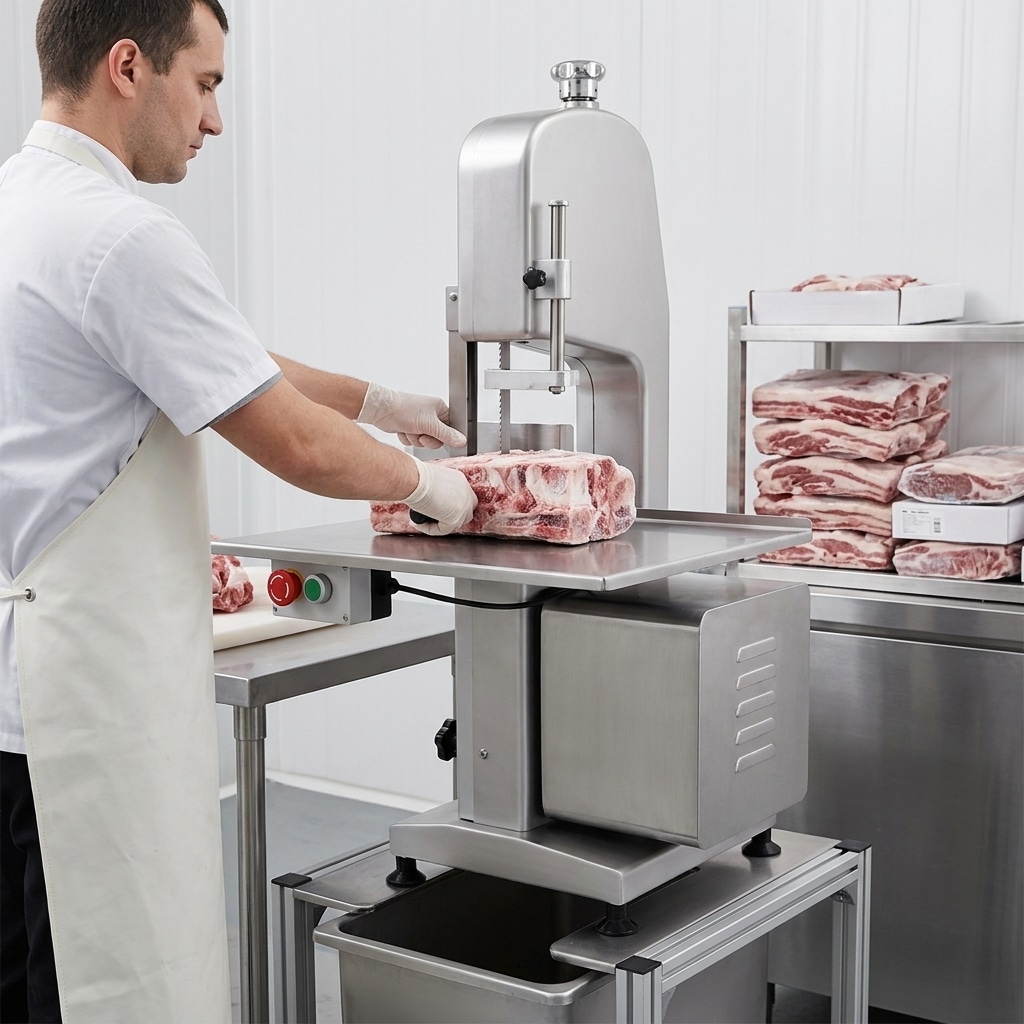
Choose a commercial meat bone saw machine by first defining what you will cut: fresh meat, frozen meat, bone-in portions, poultry, fish, or larger primal cuts. Then confirm the maximum product dimensions, expected cutting periods, available counter or floor space, electrical supply, cleaning process, and the support available after installation.
The best choice is not automatically the largest machine. A compact butcher counter may need a tabletop saw that is easy to position and clean. A dedicated processing room may need a floor-standing machine with a larger working area and more space around the cutting zone. In both cases, the machine, blade, guards, worktable, and operator procedures must suit the actual product and daily routine.
Before comparing models, make a simple list of your hardest product, largest product, busiest service period, staff experience level, and site limitations. This turns a broad equipment search into a practical specification that a supplier can assess accurately.
Start with the products and workflow
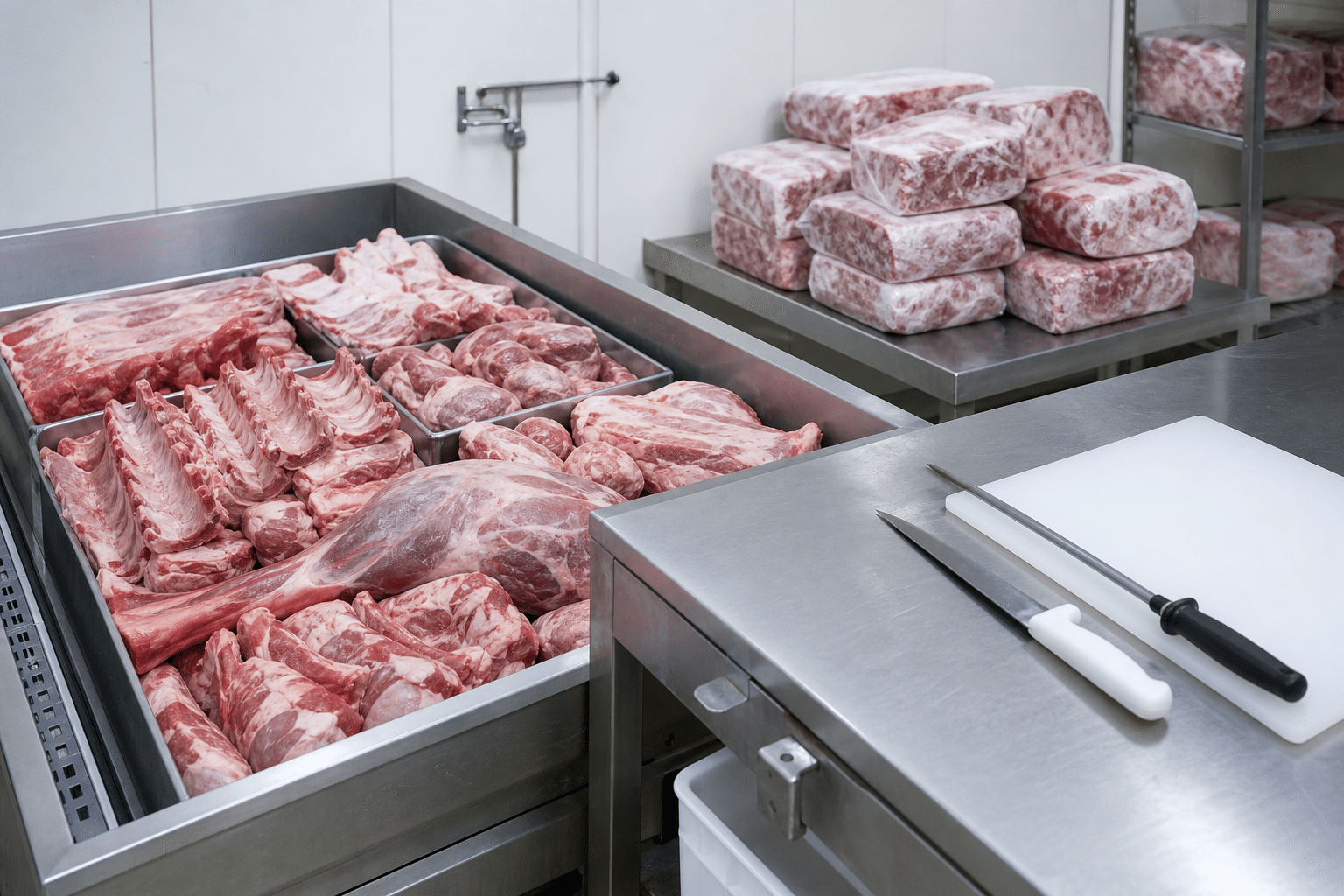
Product condition has a major effect on saw selection. Fresh cuts, chilled meat, frozen blocks, and bone-in products do not present the same cutting resistance or handling requirements. A machine intended for occasional trimming of chilled cuts may not be the right fit for repeated cutting of hard frozen products. Be precise about the temperature condition in which product normally reaches the cutting station.
Also consider the cut you need to produce. Portioning ribs, cutting poultry, splitting bone-in meat, and reducing larger blocks can require different table support, clearance, blade characteristics, and operator handling. Bring sample dimensions or a written range of product sizes to the supplier discussion. The maximum width, height, and length matter more than an average piece.
Workflow is equally important. Ask whether staff will make intermittent cuts during retail service or process batches in a preparation period. A busy batch operation needs a clear route for receiving product, cutting, collecting portions, packing, and cleaning down. A poorly planned layout can slow work even when the saw itself is capable of the required cut.
For a more detailed assessment of product hardness and handling, review this guide to choosing a bone saw for fresh versus frozen meat. It is useful when one operation handles both chilled and frozen inventory.
Choose between tabletop and floor models
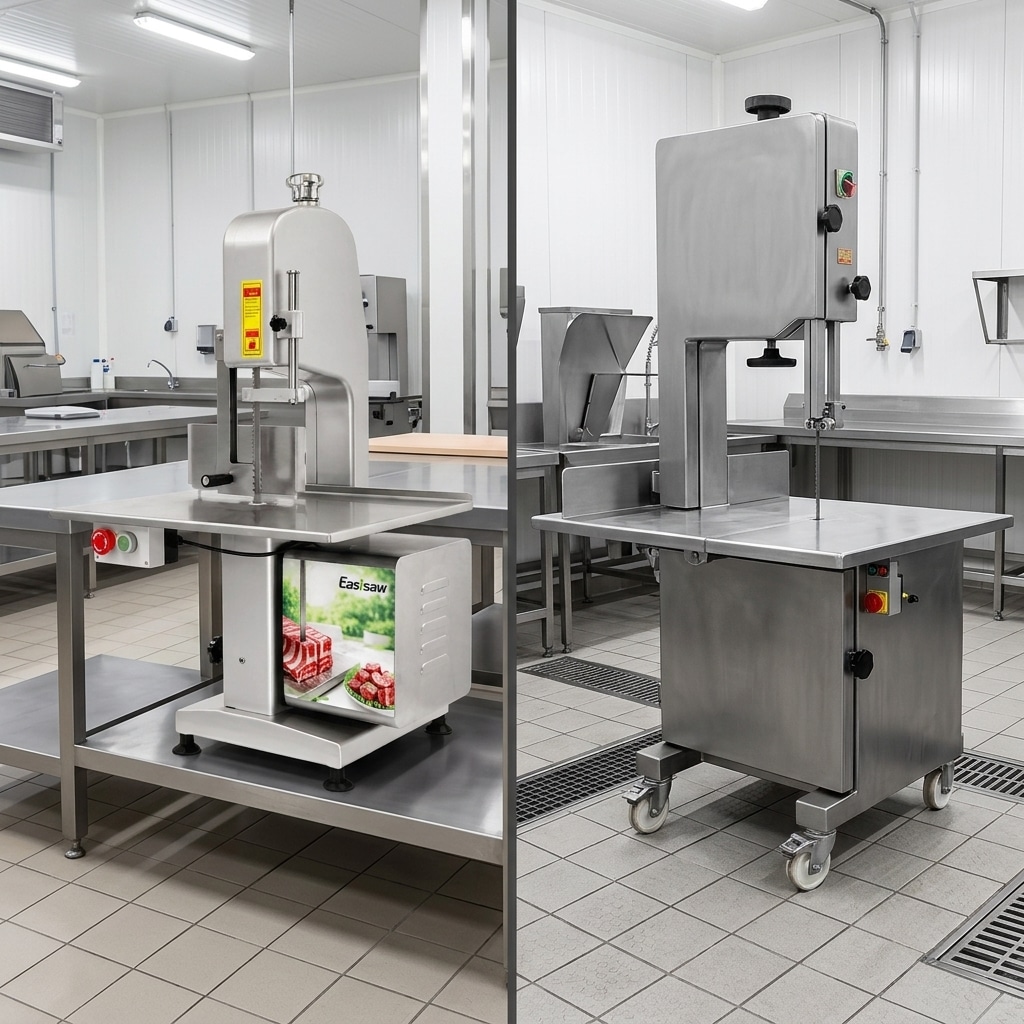
The first format decision is usually tabletop versus floor-standing. A tabletop commercial bone saw can be a practical option where counter space is available, product sizes are moderate, and the cutting station must fit into a compact butcher shop, market, restaurant, or deli preparation area. The supporting bench must be stable, level, capable of carrying the equipment safely, and positioned to allow cleaning around the machine.
A floor-standing bone saw is generally better suited to a dedicated cutting area where operators need more working room, a larger table surface, or easier handling of larger products. It can also simplify workstation planning by creating a permanent processing position rather than occupying a multi-use counter.
Do not decide by footprint alone. Measure the full operating envelope, including access for loading product, using the pusher, collecting cut portions, opening removable parts for cleaning, changing blades, and allowing staff to move safely. Confirm doorways, delivery routes, floor condition, drainage arrangements, and the distance to refrigerated storage.
See the practical comparison of tabletop and floor bone saws for commercial operations before choosing a format. It can help buyers match the machine style to available room and expected workload.
Check cutting area, clearance, and machine layout
Evaluate the usable cutting area rather than relying on overall machine dimensions. The worktable must support the product securely while leaving the operator enough room to guide it with the intended pusher or feeding aid. If the product overhangs the table or cannot be held in a controlled position, the cutting task may be unsuitable for that model.
Confirm the manufacturer’s stated cutting clearance and compare it with the largest product you expect to process, including irregular shapes. A large bone-in cut may need more height or throat clearance than a regular frozen block. Allow a sensible margin rather than selecting a machine that only just accommodates the largest item.
Look at the layout of the table, fence, blade area, scrap collection zone, and product exit path. An adjustable guide can support consistent portion sizes, but it should be easy for staff to set, verify, and clean. The collection area should prevent cut pieces from falling into an unsuitable location or interrupting the operator’s movement.
Where repeatable portioning is important, establish a documented setting and check it during the shift. This is often more reliable than expecting operators to judge every cut by eye. Training, product preparation, and a stable guide setting all contribute to a consistent result.
Match the blade and electrical supply
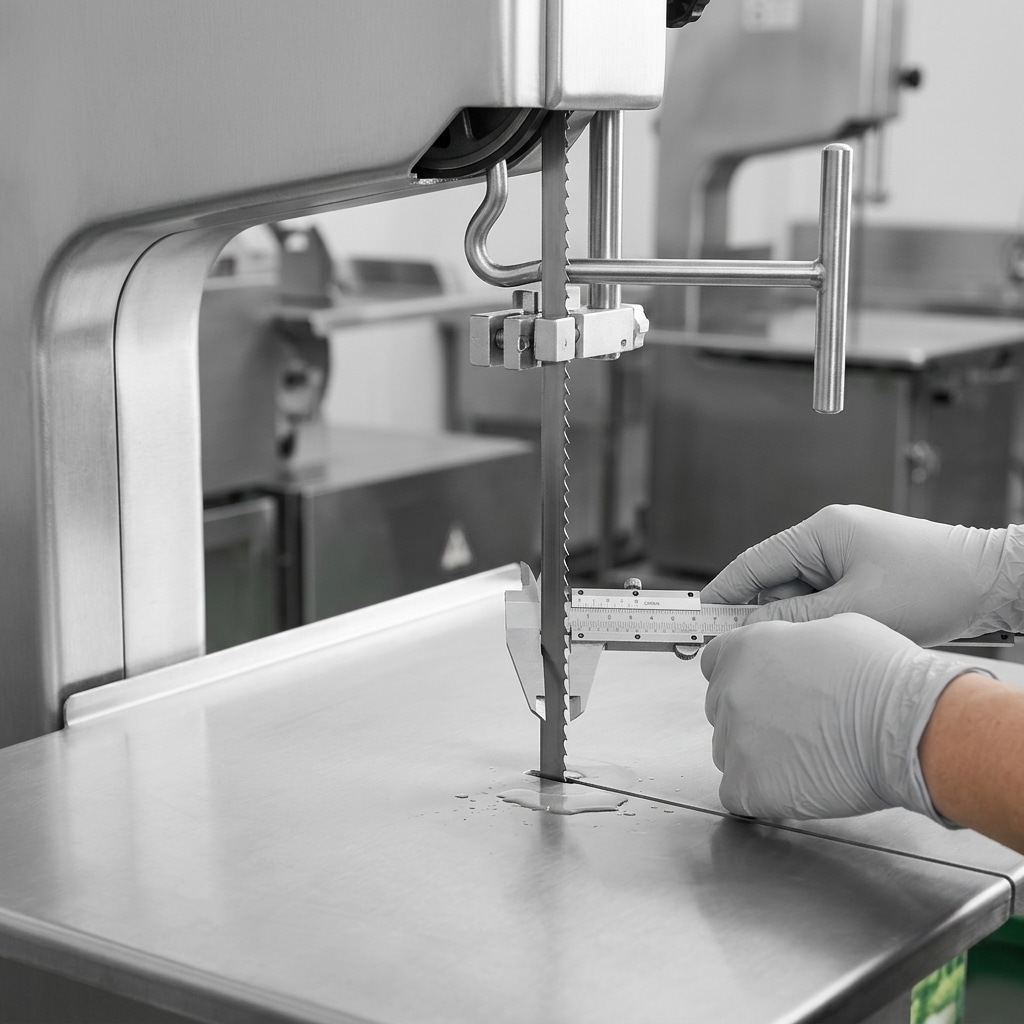
The blade is a working component, not an afterthought. Its dimensions must match the saw manufacturer’s requirements exactly. Blade tooth form and tooth pitch should be selected for the product being cut, especially where frozen meat, bone, or different product types are involved. An unsuitable or worn blade can reduce cut quality, increase product handling time, and place unnecessary stress on the equipment.
Ask the supplier which blade specification is recommended for your planned products, whether replacements are readily available in your market, and what the correct fitting procedure is. Keep replacement blades in suitable storage and establish a clear inspection routine. Staff should know when to stop using a blade because of damage, poor cutting performance, or other visible concerns.
This commercial meat band saw blade selection guide explains why blade size and tooth configuration need to match both the machine and the product.
Electrical compatibility also requires careful confirmation. Check the rating plate requirements for voltage, frequency, phase, plug type, and any installation requirements against the actual supply at the intended location. Do not assume that a machine supplied for one market will connect correctly in another. A qualified local professional should assess site electrical work where required by local rules.
Prioritise hygiene and practical cleaning
A commercial meat bone saw machine should be selected with the cleaning routine in mind. Meat and bone residue can collect on the table, guide, blade area, guards, wheels, and nearby surfaces. The machine should be positioned so that operators can access the parts that need cleaning without unsafe reaching or moving heavy equipment unnecessarily.
Before purchase, ask which components are removable for routine cleaning, how they are removed, whether tools are needed, and how parts should be reassembled. Request the operating and cleaning instructions for the specific model. A cleaning process that is too complex for the available shift time is less likely to be carried out consistently.
Plan cleaning as part of the work schedule rather than treating it as an extra task. Separate clean and unclean tools, use food-contact-safe cleaning and sanitising products according to their instructions, and allow parts to dry appropriately before reassembly. Follow local food hygiene regulations and your site’s documented sanitation procedures.
Also review the floor and surrounding workstation. Splash control, waste handling, drainage, handwashing access, and cleaning-tool storage all influence whether the saw can be maintained hygienically in day-to-day use.
Review operator safety requirements
Bone saw selection must include operator safety from the beginning. Confirm that the machine configuration, guards, intended pusher or product-holding methods, controls, and emergency-stop arrangements are suitable for your local requirements and workplace risk assessment. The operator needs a clear, stable position with adequate lighting and enough space to handle product without rushing.
Never treat training as optional. Operators should be trained on startup and shutdown, correct product feeding, use of guards and pushers, blade awareness, cleaning, blade replacement procedures, fault reporting, and isolation before maintenance. Supervisors should verify that the documented operating method is followed, particularly when new staff start work or product types change.
Do not use a damaged blade, missing guard, loose component, or machine that behaves unexpectedly. Remove the equipment from service, isolate it as required by site procedure, and arrange inspection by an appropriately competent person. Routine checks before a shift can identify visible issues before they become an operating problem.
For an operational reference, read the essential safety and maintenance protocols for commercial bone saw machines. Always follow the instructions supplied with the specific machine and applicable local rules.
Consider service, spares, and total operating cost
Purchase price is only one part of the decision. A dependable commercial bone saw programme also considers delivery, installation preparation, operator training, routine cleaning time, blades, wear parts, planned maintenance, repair support, and possible downtime. The lowest initial price may not offer the best value if replacement parts or technical guidance are difficult to obtain.
Ask practical support questions before placing an order: Which routine parts are expected to require replacement? How can the correct blade be identified and ordered? What information is needed when requesting technical help? Are manuals and parts diagrams available? Who will provide support in your region? Clear answers help the buyer plan rather than react to a stoppage.
For multi-site businesses, standardising equipment and consumables can simplify staff training, blade purchasing, cleaning documentation, and maintenance records. For a single site, it is still useful to keep a machine record containing model details, serial information, installation date, blade specification, service history, and reported issues.
When comparing quotations, ensure they describe the same scope. Check whether the quoted configuration, electrical version, included accessories, blade supply, documentation, packaging, shipping terms, and support arrangements are directly comparable.
Commercial bone saw purchase checklist
Use this checklist when speaking with a commercial meat bone saw machine supplier:
- What fresh, chilled, frozen, and bone-in products will be cut?
- What are the maximum product dimensions and approximate product weights?
- Will cutting be occasional service work or regular batch processing?
- Is a tabletop or floor-standing layout more suitable for the site?
- What usable cutting area and clearance are required?
- What blade dimensions and tooth configuration are specified for the planned products?
- Does the site electrical supply match the machine rating requirements?
- Can staff access all required cleaning areas and carry out reassembly correctly?
- What training, safety procedures, spare parts, and technical support will be available?
- Does the proposed machine fit local food hygiene and workplace requirements?
A well-defined brief helps a supplier recommend an appropriate configuration and reduces the risk of selecting a machine that is oversized, undersized, or unsuitable for the product mix. Keep product details and site photographs ready when requesting a quotation, as they can help clarify fit before delivery.