
Introduction: Elevating Frozen Desserts with Natural Ingredients
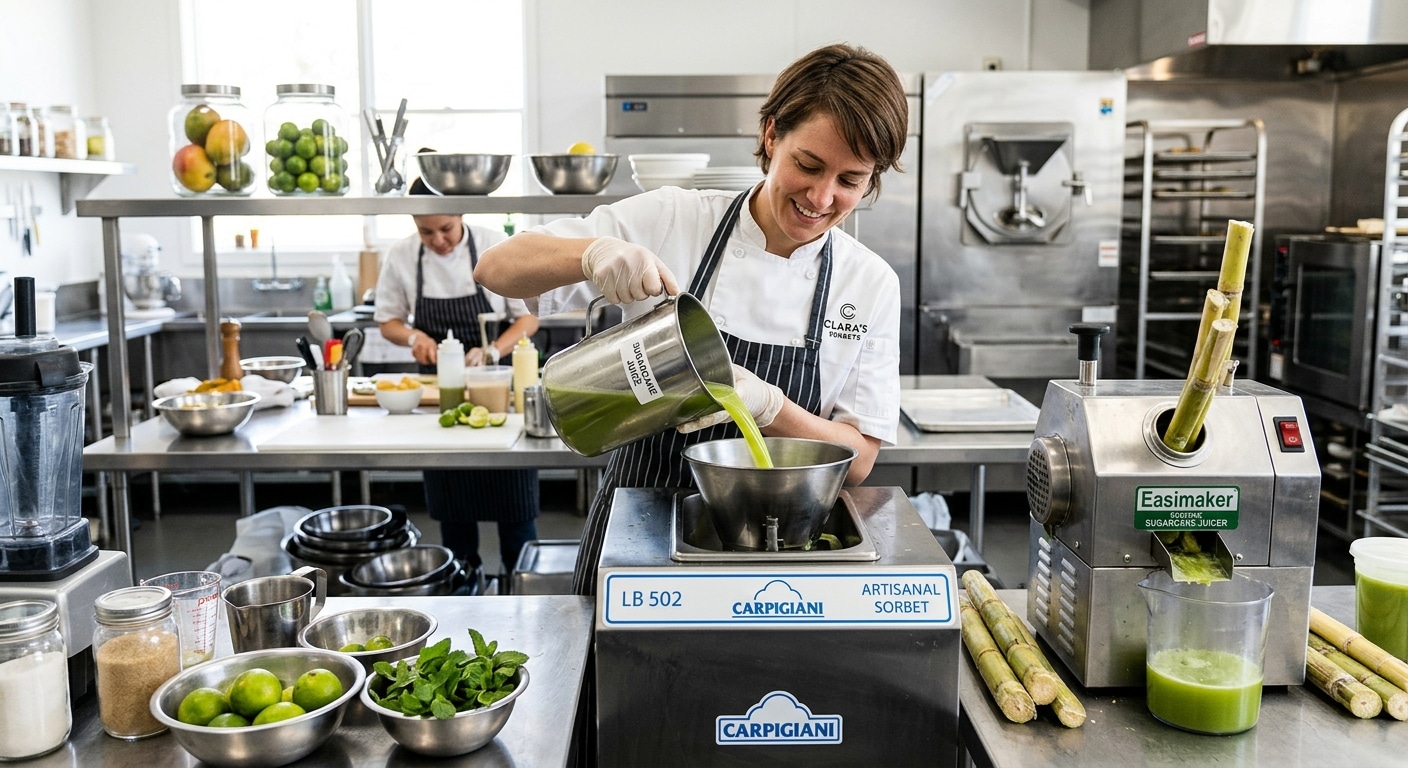
As consumer preferences shift toward clean-label products and unrefined ingredients, dessert shop owners and pastry chefs are constantly seeking innovative ways to differentiate their offerings. One of the most promising developments in the frozen dessert sector is the use of fresh sugarcane juice. By integrating this complex, plant-based liquid into a dessert shop menu, culinary professionals can craft unique flavor profiles while appealing to the growing demand for natural sweeteners.
This guide explores the technical and culinary potential of sugarcane juice gelato and sorbet, detailing how to balance formulations, select the right commercial juicing equipment, and scale production for your artisanal business.
Key Concepts: Why Sugarcane Juice?
Unlike refined white sugar (sucrose), fresh sugarcane juice retains its natural molasses, vitamins, and minerals. This provides a distinct, mildly grassy flavor with subtle vanilla and caramel notes that pair exceptionally well with dairy and fruit bases.
The Role of Natural Sweeteners in Gelato
In gelato and sorbet production, sugars do more than just sweeten; they control the freezing point depression (PAC) and determine the texture. Sugarcane juice typically has a Brix level (sugar content) of 15° to 20°, depending on the crop and season. When used as a base liquid, it introduces natural sucrose, fructose, and glucose, requiring chefs to adjust their standard base recipes to maintain a smooth, scoopable consistency.
Applications: Sugarcane Juice Gelato vs. Artisanal Sorbet
Integrating sugarcane juice into your frozen dessert line requires understanding how it interacts with other ingredients.
Sugarcane Juice Gelato
When creating a milk-based gelato, sugarcane juice can replace a portion of the added sugars and milk. The natural earthy notes of the juice complement rich dairy fats. However, because the juice adds water content, pastry chefs must balance the total solids (typically aiming for 36-42% total solids in gelato) by incorporating skim milk powder or natural stabilizers like locust bean gum to prevent ice crystal formation.
Artisanal Sorbet Ingredients
Sorbet offers the purest expression of sugarcane juice. By using the juice as the primary liquid base—replacing water entirely—you create a vibrant, intensely flavored frozen treat. Sugarcane pairs beautifully with acidic and aromatic artisanal sorbet ingredients such as:
- Citrus: Calamansi, yuzu, lime, or passionfruit cut the natural sweetness and prevent oxidation.
- Herbs & Spices: Fresh ginger, mint, or lemongrass add a refreshing, palate-cleansing kick.
- Tropical Fruits: Mango, lychee, and coconut milk blend seamlessly with the grassy notes of the cane.
Technical Considerations for Pastry Chefs
Formulating recipes with fresh sugarcane juice requires precision. Below is a general comparison of how substituting sugarcane juice impacts key structural factors in frozen desserts.
| Ingredient Base | Sweetening Power (POD) | Anti-Freezing Power (PAC) | Total Solids Impact | Flavor Profile |
|---|---|---|---|---|
| Standard Simple Syrup (50 Brix) | High (approx. 50) | High | Adds 50% solids | Neutral / Pure Sweet |
| Fresh Sugarcane Juice (18 Brix) | Moderate (approx. 18) | Moderate | Adds 18% solids (high water) | Grassy, vanilla, caramel |
Note: Because sugarcane juice introduces more water than a standard syrup, chefs must carefully calculate their PAC and POD, often supplementing with dextrose or maltodextrin to achieve the perfect scoopability without making the dessert overly sweet.
Commercial Juicing Applications & Equipment
To successfully introduce sugarcane-based items to your menu, relying on pre-packaged, pasteurized juice is often insufficient, as heat treatment destroys the delicate, fresh flavor. In-house extraction is essential. This is where commercial juicing applications come into play.
The Importance of Electric Sugarcane Juicers
For a commercial kitchen, efficiency, yield, and hygiene are paramount. Manual juicers are labor-intensive and lack the extraction power needed for high-volume dessert production. High-performance electric juicers, such as those manufactured by Easimaker, are designed specifically for commercial environments.
- High Extraction Yield: Advanced electric rollers extract up to 80% of the juice in a single pass, reducing waste and ingredient costs.
- Food-Safe Materials: Constructed with 304 food-grade stainless steel, ensuring compliance with health department regulations and preventing flavor contamination.
- Ease of Cleaning: Removable rollers and accessible juicing chambers allow for rapid sanitation between batches, crucial for preventing bacterial growth in high-sugar environments.
Equipment Buying Guide for Dessert Shops
When selecting a sugarcane juicer for your gelato shop or commercial kitchen, consider the following factors:
- Capacity and Throughput: Determine how many liters of juice you need per hour. A robust electric juicer can process hundreds of kilograms of cane per hour, supporting both batch freezing and fresh beverage sales.
- Footprint: Countertop models are ideal for front-of-house operations where customers can see the fresh extraction process, while floor-standing models suit larger back-of-house prep kitchens.
- Motor Power & Durability: Look for heavy-duty gearboxes and powerful motors (e.g., 400W to 750W) that can handle hard, thick sugarcane stalks without jamming or overheating during continuous use.
- Supplier Reliability: Partner with a manufacturer that provides clear specifications, warranties, and accessible spare parts.
Frequently Asked Questions (FAQs)
1. Does sugarcane juice alter the texture of gelato?
Yes, because it is primarily water (around 80-85%), it can cause iciness if not balanced correctly. You must adjust your recipe’s total solids by adding ingredients like skim milk powder, inulin, or plant-based fibers.
2. How do I prevent the fresh juice from turning brown?
Sugarcane juice oxidizes rapidly. To maintain a vibrant green/yellow color in your sorbet, add a small amount of ascorbic acid (Vitamin C) or fresh citrus juice immediately after extraction.
3. Can sugarcane juice completely replace refined sugar in my recipes?
While it can replace the flavor-enhancing sugars, it often cannot replace 100% of the structural sugars due to its high water content. Most chefs use it as a base liquid and supplement with specialized sugars like dextrose or trehalose to manage the freezing point.
4. Is an electric sugarcane juicer difficult to maintain?
Modern commercial electric juicers are designed for easy maintenance. Units with removable stainless steel rollers can be washed and sanitized daily in a standard commercial sink, ensuring optimal food safety.
5. What is the shelf life of fresh sugarcane juice?
Raw sugarcane juice ferments quickly. It should be kept at temperatures below 4°C (39°F) and used within 24 hours of extraction, or immediately processed into your frozen dessert base and pasteurized.
Conclusion
Incorporating fresh sugarcane juice into your frozen dessert offerings is a powerful way to tap into the natural foods movement while delivering an unforgettable culinary experience. By understanding the technical balance of your recipes and investing in reliable, commercial-grade electric juicing equipment, you can seamlessly integrate this versatile ingredient into your production line.
Ready to upgrade your commercial kitchen with high-efficiency extraction equipment? Request a quote / Get a sample today to discover how our electric juicing solutions can elevate your artisanal dessert business.