
Turning Raw Cane into Profit: The Economics of Extraction
In the commercial sugarcane processing industry, the difference between a profitable operation and a wasteful one often lies in the bagasse bin. If the discarded fiber (bagasse) is heavy, wet, and dripping, you are essentially throwing raw material costs into the waste stream. For juice bars, beverage manufacturers, and industrial processors, the goal is simple: maximize juice yield to lower the cost per liter.
Achieving a high extraction rate is not just about operator skill; it is fundamentally a mechanical challenge. It requires machinery designed with precision engineering, specifically focusing on roller dynamics and gear torque. This guide explores the technical factors that ensure every stalk of cane is fully processed, leaving behind only dry, lightweight fiber.
The Mechanics of High-Yield Extraction
Sugarcane is a tough, fibrous material. Extracting the liquid stored within its cells requires significant compressive force and shear. Standard crushers often fail to break the internal cell walls completely, resulting in yields as low as 60-65% by weight. High-efficiency industrial juicers, however, target extraction rates closer to 75-80% (depending on cane variety).
1. Roller Geometry and Material
The rollers are the heart of the extraction process. To strip the cane effectively, the rollers must grip, crush, and press simultaneously.
- Micro-Grooving and Knurling: Smooth rollers slip against the hard outer rind of the cane. High-performance machines utilize rollers with precision-machined grooves or diamond knurling. This texture grabs the cane instantly, feeding it through the crushing zone without manual force, which improves safety and throughput.
- Solid Stainless Steel: Rollers made from solid 304 stainless steel prevent deflection under load. Hollow or composite rollers may flex when processing thick stalks, creating gaps where juice remains trapped in the fiber.
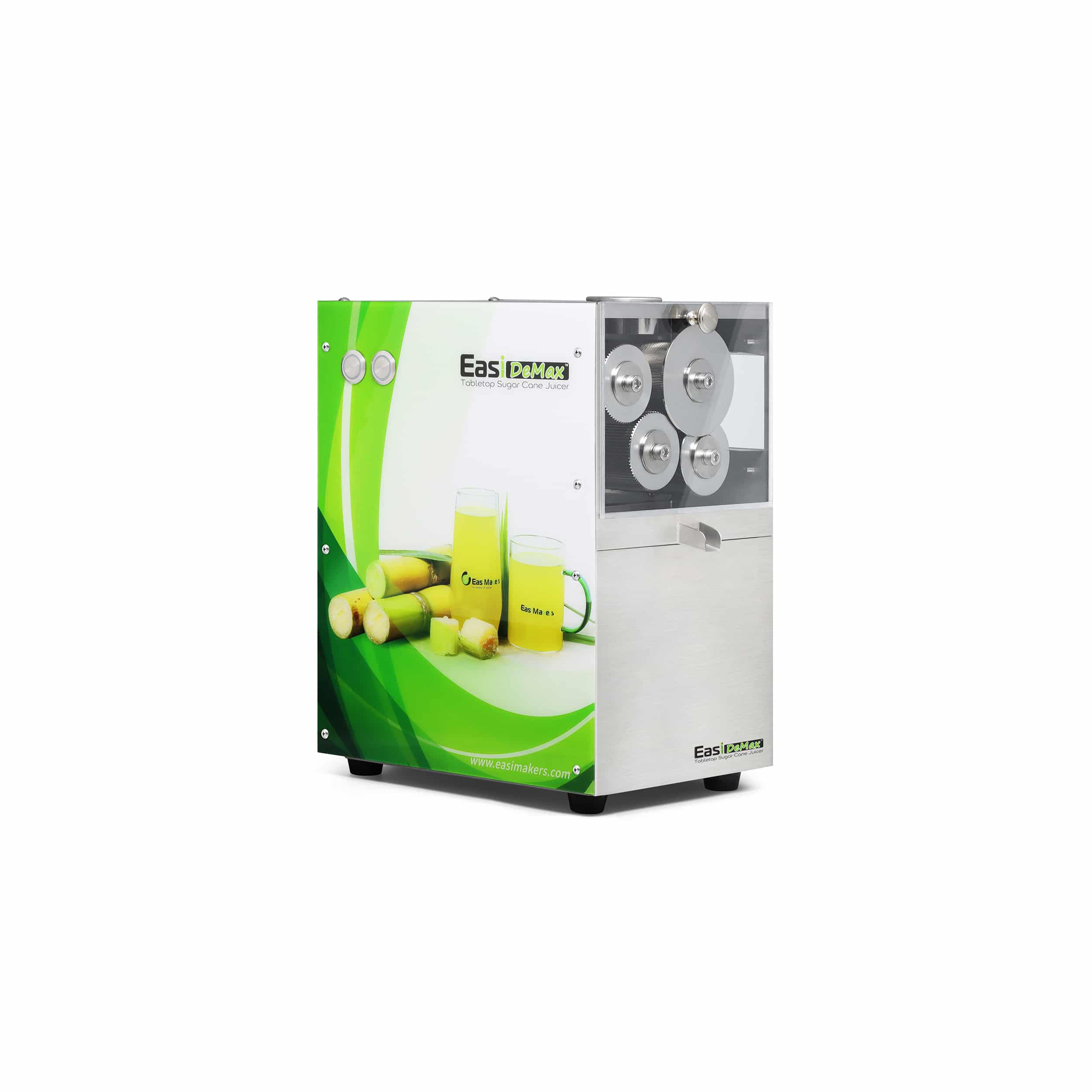
- Multi-Stage Compression: Systems utilizing 3 or 4 rollers create multiple pressure points. The first set breaks the cane structure, while the subsequent rollers apply extreme pressure to squeeze out the remaining liquid.
2. Gear Systems and Torque Transmission
Speed is often a misconception in juicing. High speed can actually reduce yield and increase foam. The critical factor is torque.
Efficient extraction requires a gear reduction system that converts motor speed into crushing power. Heavy-duty gearboxes—often utilizing helical or planetary gears—ensure that the rollers continue to turn at a steady pace even when fed multiple thick stalks. If a machine stalls or slows significantly under load, the compression drops, and juice is lost to the bagasse.
The “Dry Bagasse” Test
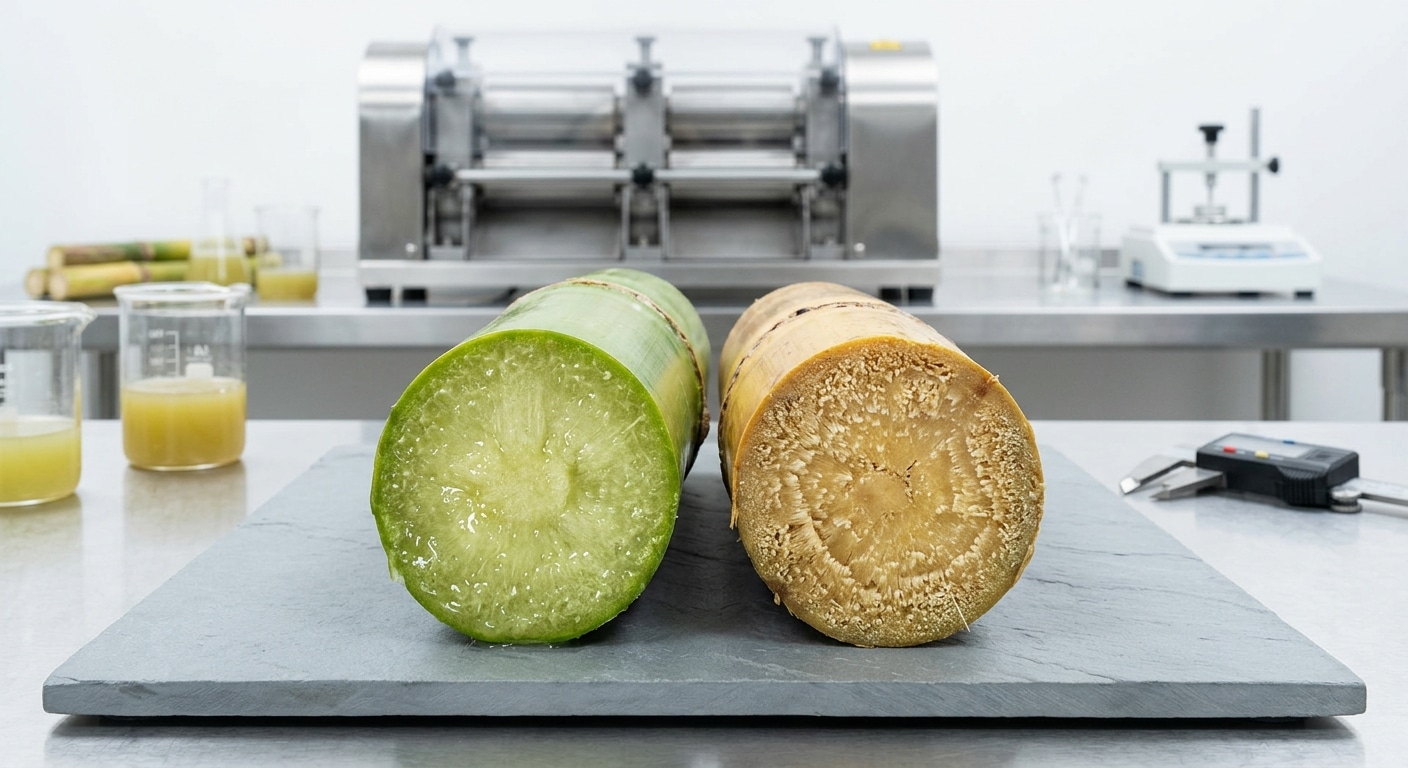
The most reliable indicator of machine efficiency is the condition of the bagasse. In a high-yield system, the exiting fiber should be:
- Lightweight and Fluffy: It should expand immediately upon exiting.
- Dry to the Touch: When squeezed by hand, no moisture should appear.
- Pale in Color: Dark, wet spots indicate areas where the cane was not fully compressed.
Achieving this level of dryness means the machine is mechanically stripping the maximum possible liquid from the plant material, directly impacting your bottom line.
Technical Considerations for Buyers
When sourcing sugarcane juice machines, procurement teams and engineers should evaluate the following specifications to ensure long-term efficiency.
Roller Gap Adjustability
Different cane varieties (e.g., thick purple cane vs. thin yellow cane) require different pressure settings. Machines with fixed gaps may struggle to process varying diameters efficiently. Look for systems that offer adjustable roller spacing or spring-loaded tensioning systems that automatically adapt to the stalk thickness while maintaining constant pressure.
Bearing Protection
High extraction rates generate immense pressure, which is transferred to the bearings. Superior machines use sealed, heavy-duty bearings isolated from the juice compartment. This prevents juice ingress (which causes rust and failure) and ensures the rollers maintain precise alignment over years of operation.
Motor Efficiency vs. Power Consumption
A higher wattage motor does not always equal better extraction. The efficiency of the gearbox determines how much of that power reaches the rollers. A well-engineered 1HP motor with a high-ratio gearbox can often outperform a 2HP motor with a direct drive system, offering lower energy costs for the same juice output.
Maintenance for Consistent Yields
Even the best machinery requires maintenance to sustain peak extraction rates.
- Daily Cleaning: Sugar residue hardens quickly. If left on rollers or gears, it can alter the gap tolerances and reduce grip.
- Lubrication Checks: Gearboxes and chains must be kept lubricated to prevent friction loss.
- Roller Inspection: Over time, the knurling on rollers can wear down. Regular inspection ensures that the grip remains aggressive enough to feed cane effectively.
FAQ: Optimizing Sugarcane Processing
Q: Can I re-run bagasse through the machine to get more juice?
A: With a high-efficiency machine, re-running bagasse should yield almost no juice. If you can extract significant liquid on a second pass, your machine’s single-pass efficiency is likely too low, or the roller gap is too wide.
Q: Does the freshness of the cane affect extraction rate?
A: Yes. Cane that has been harvested and left to sit dries out, hardening the fiber and reducing juice content. For maximum yield, process cane within 24-48 hours of harvest.
Q: Why is my bagasse coming out wet?
A: This usually indicates worn rollers, incorrect gap settings, or a slipping gear system. Check the tension springs and ensure the rollers are clean of debris.
Q: What is the ideal RPM for maximizing yield?
A: Slower speeds (typically 10-20 RPM for the rollers) generally produce higher yields than high-speed centrifugal methods. Slow crushing allows more time for the liquid to flow away from the fiber before the pressure is released.
Conclusion
Maximizing juice yield is a function of mechanical precision. By investing in equipment with solid stainless steel rollers, high-torque gear systems, and adjustable compression settings, operators can significantly reduce waste. Dry bagasse is the ultimate proof of a process that respects raw material costs and maximizes profitability.
Ready to upgrade your extraction line? Contact us today to discuss high-efficiency sugarcane machines tailored to your production volume.