The Strategic Shift to Sustainable Juice Packaging
Fresh sugarcane juice is inherently marketed as a natural, raw, and health-conscious beverage. However, serving a pure, earth-derived drink in single-use petroleum-based plastic creates a stark disconnect for environmentally conscious consumers. For B2B operators—ranging from juice bar franchises to bottled beverage distributors—transitioning to sustainable juice packaging is no longer just an environmental initiative; it is a critical component of brand integrity and regulatory compliance.
As local governments globally implement stricter single-use plastic bans, securing a reliable supply chain of eco-friendly packaging ensures business continuity. This guide explores the most viable commercial packaging materials for sugarcane juice, comparing their technical specifications, operational impacts, and branding potential.
Key Concepts in Eco-Friendly Business Practices
Before sourcing materials, procurement teams must understand the distinct categories of sustainable packaging to avoid greenwashing and ensure alignment with local waste infrastructure:
- Biodegradable: Materials that naturally break down over time through microbial action. Note: Without a specified timeframe, this term can be vague.
- Compostable (Commercial): Requires specific industrial conditions (high heat, specific humidity) to break down, typically within 90 to 180 days (e.g., PLA).
- Compostable (Home): Breaks down in lower-temperature backyard compost bins (e.g., certain unlined paper or bagasse products).
- Recyclable: Can be processed and reused in manufacturing (e.g., PET plastic, glass).
Top Packaging Materials for Cold Sugarcane Juice
Sugarcane juice presents unique packaging challenges: it is served cold (often over ice), meaning the container must withstand prolonged condensation without losing structural integrity. Here are the leading commercial options.
1. PLA (Polylactic Acid) Clear Cups
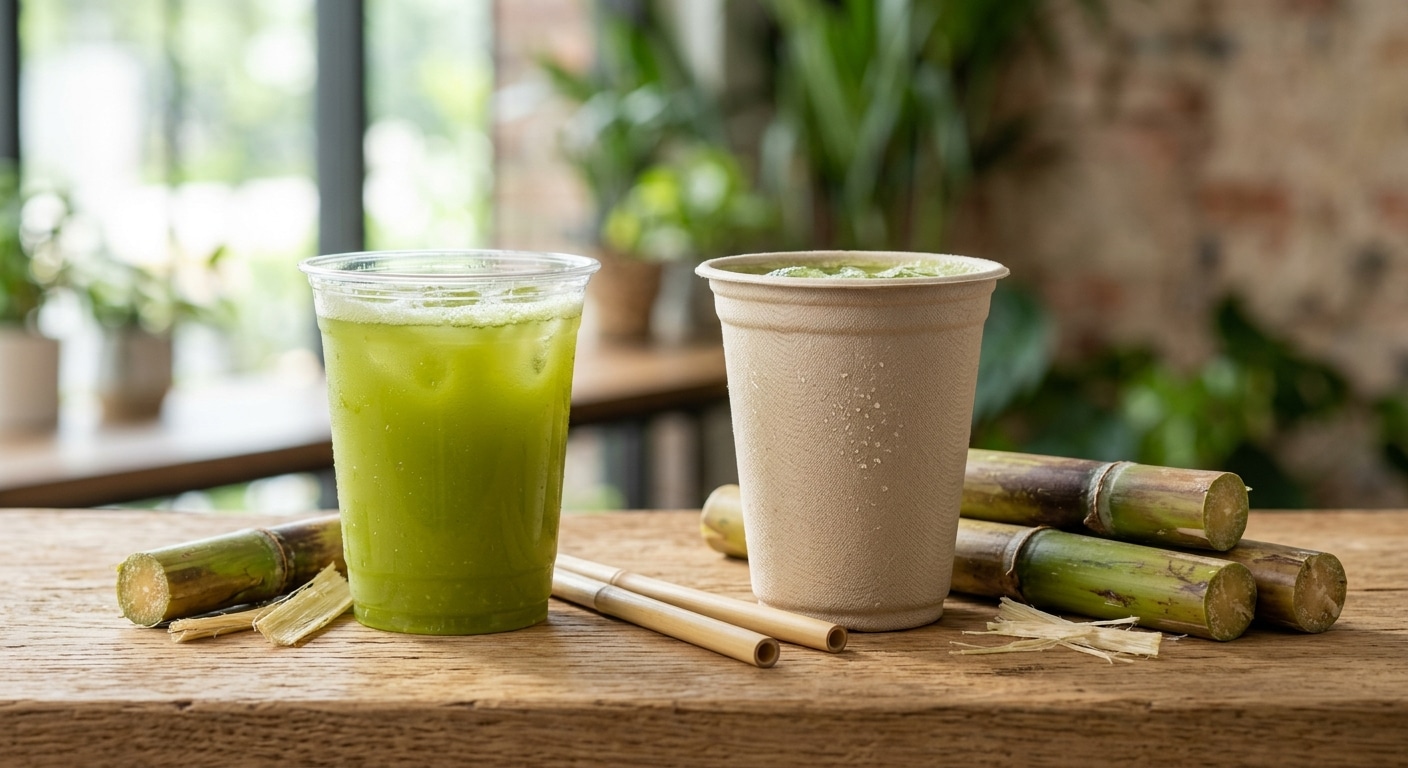
PLA is a bioplastic derived from renewable resources like corn starch or sugarcane. It perfectly mimics the look and feel of traditional PET plastic.
- Pros: High clarity allows the vibrant green color of fresh sugarcane juice to remain visible, which is crucial for consumer appeal. It offers excellent moisture resistance and will not become soggy.
- Cons: PLA has low heat tolerance (typically deforming above 105°F / 40°C). It requires temperature-controlled logistics and storage to prevent melting before use. It also requires commercial composting facilities to degrade properly.
2. Bagasse (Sugarcane Fiber) Cups
Using bagasse—the fibrous byproduct of sugarcane extraction—to serve sugarcane juice offers unparalleled sugarcane juice branding synergy. It creates a closed-loop narrative that resonates deeply with consumers.
- Pros: Highly sustainable, utilizes agricultural waste, and is often home-compostable. It handles both cold and warm temperatures well and provides a natural, textured aesthetic.
- Cons: Bagasse is opaque. Customers cannot see the juice inside, which requires brands to rely heavily on exterior printing or lid design to showcase the product.
3. Aqueous-Coated Paper Cups
Traditional paper cups use a PE (polyethylene) or PLA lining to prevent leaks. Aqueous coating uses a water-based barrier that breaks down much faster and is widely accepted in standard paper recycling streams.
- Pros: Excellent printability for branding, widely recyclable, and handles cold beverage condensation effectively.
- Cons: Lacks the transparency of PLA and the unique closed-loop story of bagasse.
Compostable Straws & Accessories
A sustainable cup paired with a plastic straw negates the eco-friendly effort. Procurement should focus on accessories that match the cup’s end-of-life profile.
- Compostable Straws: PLA straws offer the closest experience to plastic (no sogginess) but face the same disposal challenges as PLA cups. Premium alternatives include bamboo fiber, agave fiber, or high-durability multi-ply paper straws.
- Eco-Friendly Lids: Options include PLA flat or dome lids (for iced drinks) or molded fiber sip lids. Ensure the lid material matches the cup rim specifications to prevent leaks during transit, especially for delivery orders.
Material Comparison Matrix
| Material | Clarity | Condensation Resistance | Storage Temp Limit | End-of-Life |
|---|---|---|---|---|
| PLA Bioplastic | High (Transparent) | Excellent | < 105°F / 40°C | Commercial Compost |
| Bagasse (Sugarcane) | Opaque | Good | High (Microwave safe) | Home/Commercial Compost |
| Aqueous Paper | Opaque | Very Good | High | Recyclable / Compostable |
Sugarcane Juice Branding & Customization
Eco-friendly packaging serves as a tangible marketing asset. When customizing biodegradable cups, operators should consider:
- Inks and Dyes: Specify soy-based or water-based inks with your manufacturer to ensure the final product remains compostable.
- Embossing: For bagasse cups, embossing your logo directly into the mold is a premium, ink-free branding method that enhances the tactile experience.
- Messaging: Clearly print disposal instructions (e.g., “100% Compostable Cup”) to educate consumers and validate your eco-friendly business practices.
Procurement Guide: Sourcing Sustainable Packaging
Transitioning to eco-friendly packaging requires careful supply chain planning. Keep the following B2B purchasing factors in mind:
- Minimum Order Quantities (MOQs): Custom-printed eco-cups typically carry higher MOQs (often 30,000 to 50,000 units) compared to generic stock. Unprinted stock can usually be sourced in smaller cases (1,000 units).
- Quality Assurance: Request samples to conduct real-world testing. Fill the samples with iced sugarcane juice and let them sit for 2-3 hours to evaluate condensation management, rim seal integrity, and straw durability.
- Certifications: Verify supplier claims by asking for recognized certifications such as BPI (Biodegradable Products Institute), OK Compost (EN 13432), or FSC (Forest Stewardship Council) for paper products.
- Lead Times: Custom sustainable packaging often requires 6 to 8 weeks for production and shipping. Maintain adequate safety stock during the transition period.
Frequently Asked Questions (FAQs)
Will PLA cups melt in standard warehouse storage?
Yes, PLA is sensitive to heat. If your warehouse or shipping container exceeds 105°F (40°C), the cups can warp or fuse together. Climate-controlled storage is highly recommended.
Can I use bagasse cups for cold, iced sugarcane juice?
Absolutely. While bagasse is renowned for hot foods, high-quality, densely molded bagasse cups handle cold drinks and condensation very well without degrading during the time it takes to consume the beverage.
Are paper straws suitable for thick juices?
Standard paper straws may struggle with thick or heavily iced beverages. Opt for wide-bore (smoothie-style) 4-ply paper straws, or consider agave and bamboo fiber straws which offer superior structural integrity.
Does eco-friendly packaging cost significantly more?
Historically, sustainable packaging carried a 30-50% premium over traditional PET. However, increased manufacturing scale has narrowed this gap. Furthermore, the cost can often be offset by the premium brand positioning it affords your juice product.
How do I verify a supplier’s compostability claims?
Always request current, verifiable certification documents (like BPI or DIN CERTCO) rather than relying on marketing terms like “earth-friendly.” Ensure the certification applies to the finished product, not just the raw resin.
Conclusion
Aligning your product’s natural health benefits with eco-friendly business practices is a proven strategy to build customer loyalty and future-proof your operations against plastic regulations. By carefully selecting the right materials—whether high-clarity PLA or narrative-driven bagasse—you can elevate your sugarcane juice brand while minimizing environmental impact.
Ready to upgrade your packaging supply chain? Request a quote / Get a sample today to test these sustainable solutions with your products.